
Warm, Reliable Heat for Montgomery's Long Winters.
Instant, on-demand warmth for Fox Valley homes—find the right gas fireplace or insert and get matched with a trusted local dealer.
Every Project Starts From One of These Five Situations
The practical choice for Kane County winters.
Montgomery sits along the Fox River in Kane County, roughly 45 minutes west of Chicago, where winter lows average 16°F and the region faces a heating season about as demanding as Madison, WI. Most of the city's housing stock dates from the last few decades of suburban growth, and the newer subdivisions here were built with forced-air furnaces and natural gas service as the default, not wood-burning chimneys.
That's part of why gas is the standard hearth choice in Montgomery while wood and pellet appliances are genuinely uncommon—Nicor Gas serves most of the area, running lines to nearly every subdivision, while easy access to bulk firewood or a place to season it is scarce in a built-out suburb surrounded by farmland and other homes. A direct-vent gas fireplace or insert gives Montgomery homeowners instant heat at the flip of a switch, no ash or creosote to manage, and a zone-heating boost that takes pressure off the furnace during the coldest stretches of a Fox Valley January.
Three steps. No salesperson until you're ready.
Tell us about your project
Your zip code, your situation, and the fuel you're leaning toward—or let the answers point you to one.
See what's actually available
The brands dealers within 100 miles genuinely carry—real options, never a catalog mirage.
Get your dealer & Project Guide
A trusted local dealer, plus the free Project Guide & Parts List that names every component of the job.
Frequently Asked Questions
How much does a gas fireplace installation cost in Montgomery?
Most gas fireplace and insert installations in the Montgomery area run between roughly $4,500 and $10,500, depending on the unit, whether an existing gas line is nearby, and the venting path. A direct-vent insert dropped into an existing masonry fireplace with gas already run to that wall sits toward the lower end. New construction or a fireplace added to a room without existing gas service—requiring a line extension from the meter and full framing for a direct-vent unit—lands toward the higher end. A local dealer will give you a firm number after seeing the space in person.
Can I convert my existing wood fireplace to gas?
Yes, and it's one of the more common projects local dealers see in Montgomery's older homes, particularly those built before the newer Fox River subdivisions went in. A gas insert typically slides into the existing masonry firebox and vents through a stainless liner run up the original chimney. Since wood-burning appliances are uncommon here to begin with, most homeowners doing this conversion are retiring a fireplace that rarely got used and replacing it with something that will actually get lit on a regular basis through the winter.
Do I need natural gas, or can I use propane?
Most homes in Montgomery are already connected to the natural gas distribution network serving Kane County, so if you have a gas furnace, water heater, or range, adding a gas fireplace usually just means extending a line from your existing meter. Propane is a viable backup for the rare property outside a serviced pocket, but it's not the norm here the way it is in more rural parts of Illinois. Nearly every gas fireplace and insert on the market can be configured for either fuel—your installer sets the orifice and regulator to match whichever you have.
Will my gas fireplace work if the power goes out?
Most modern gas fireplaces will, as long as they use a standing pilot or an intermittent pilot ignition (IPI) system with battery backup. IPI units run on AA batteries that automatically take over when ComEd power drops, so the fireplace still lights on demand during an outage. Fully electronic ignition systems without battery backup, by contrast, go dark along with everything else. If reliable heat during winter storm outages matters to you, ask your local dealer specifically about the ignition type before you buy—it's an easy detail to overlook.
What's the difference between a gas fireplace, gas insert, and gas stove?
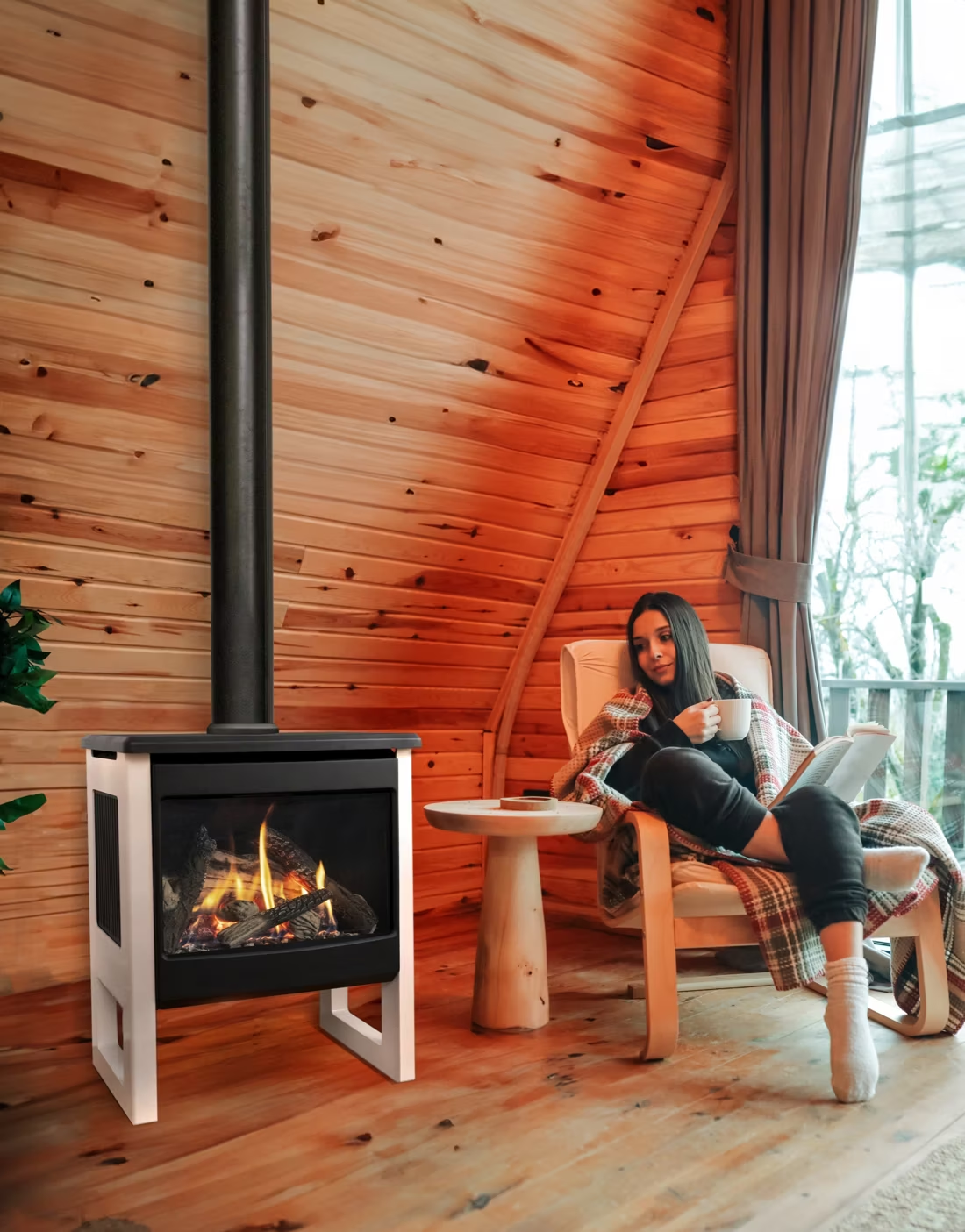
A gas fireplace is a fully built-in unit framed into a wall—the right call for new construction or a room being remodeled from scratch. A gas insert is built to slide into an existing masonry firebox, sealing it up and using the chimney as a vent chase, which makes it the natural fit for Montgomery's older homes with a fireplace that's rarely used. A gas stove is a freestanding cabinet unit that sits on the floor, similar in footprint to a wood stove, and works well in a room with no existing fireplace or chimney at all.
Do I need a permit to install a gas fireplace in Montgomery?
Yes—the City of Montgomery Building Department requires a permit for new gas fireplace installations, and any new gas line work needs sign-off through the same process, typically coordinated with Kane County code requirements for combustion venting and clearances. Reputable local dealers handle the permit application and inspection scheduling as part of the installation, so in practice you're not the one filing paperwork—but it's worth confirming any installer you're considering actually pulls permits rather than skipping the step.
What's the difference between vented and vent-free gas fireplaces?
Vented (direct-vent) gas fireplaces pull combustion air from outside and exhaust it back outside through a sealed pipe—they're the cleanest, safest option and the standard choice for Illinois installations. Vent-free units burn gas directly into the room air without any exterior venting; they're legal in Illinois with proper room-sizing and oxygen-depletion sensors, but they release some water vapor and combustion byproducts indoors, which matters more in a tightly sealed, well-insulated Montgomery home built to modern energy codes. For most homeowners here, a direct-vent unit is the easier and more universally recommended choice—ask your local dealer to walk through both if you're weighing it.
How often should a gas fireplace be serviced?
Plan on an annual inspection, ideally in early fall before the furnace and fireplace are both running hard through a Kane County winter. A technician checks the burner, pilot assembly, gas connections, and venting, and cleans the glass and interior—a much lighter job than a wood chimney sweep, but still important, since a dirty pilot or degraded gasket is the most common cause of a fireplace that won't reliably light. Most local service providers charge somewhere in the $150–$250 range for a standard annual visit.
Should I consider a wood-burning fireplace instead of gas?
For most Montgomery homes, no—wood-burning appliances are genuinely uncommon here. Unlike more rural parts of Illinois with forest access and cutting land nearby, Montgomery is a built-out Fox Valley suburb where sourcing, seasoning, and storing cordwood (even common regional species like oak, hickory, or maple) isn't practical for most lots, and the newer subdivisions were designed around forced-air and gas service rather than chimneys. Gas gives you the instant heat, clean glass front, and zero ash cleanup that fits suburban living here, which is why it's the default hearth choice across the city.
Can I put a TV above my fireplace?
Yes—with an asterisk. Fireplaces are hot and TVs don't like heat. Either put a mantel between them to deflect rising warmth, or choose a fireplace with heat-management technology that creates a cool zone on the wall above—the wall stays around 125 degrees, barely warm, while the room still gets full heat. If you like clean lines and don't want a mantel, heat management is the answer.
Why is a fireplace insert so efficient?
An insert does two things: it seals the chimney completely, so you stop losing air you already paid to heat, and it radiates warmth into the room through the firebox and glass. Most add a heat-exchange fan that pulls cool room air underneath, wraps it around the hot firebox, and pushes it back out warm. Your home is more efficient before you've even lit the first fire.
Can I install a fireplace myself?
If you're putting a fire in your house on purpose, it's best to work with an expert. Unless you're genuinely experienced in framing, gas line, vent pipe, and the national code on clearances to combustibles, have a professional do it—and ideally the same company that sells you the fireplace, so warranty, service, and liability all live under one roof.
What is an in-home preview and do I need one?
It's a visit where a hearth professional measures your space, confirms the model you picked actually works in your home, and walks the specs—framing, gas line, venting, finish work—before anything is ordered. Some details you just can't know until you see the house. Never make a down payment without one; it's the single most-skipped step that burns buyers.
Nearby Dealers
Hearth shops serving Montgomery and the surrounding area. Every listing shows whether it is a WhyFire partner, a dealer we have verified as authorized for the brands we recommend, or a local business carrying hearth products. No manufacturer pays for placement. How we verify dealers →
A Cozy Fireplace
A Fireplace Store And More
Ember Glow
Find your gas fireplace in Montgomery.
Tell us about your home and we'll put together a free Project Guide & Parts List—the right gas fireplace or insert, the exact vent kit, and a trusted local Montgomery dealer to install it.
Find Your Fireplace →