
Pellet stoves are uncommon in Beecher, Illinois—but they still have a place.
Most Beecher homes heat with natural gas or electric service from ComEd, so pellet stoves stay a niche choice here. If you want one anyway, we'll connect you with a dealer who can actually get you parts and service.
Every Project Starts From One of These Five Situations
Beecher runs on natural gas—pellet stoves are the exception, not the rule.
Beecher sits in Will County at about 737 feet of elevation, in climate zone 5A with a winter heating season about as demanding as Madison, Wisconsin's and average winter lows around 15°F—cold enough that a Midwest city like Madison, Wisconsin faces a similar heating season. But unlike parts of the country where pellet stoves fill a gap between wood and gas, Beecher's housing stock is built around natural gas service and Commonwealth Edison electric power, and that's where most local heating dollars go.
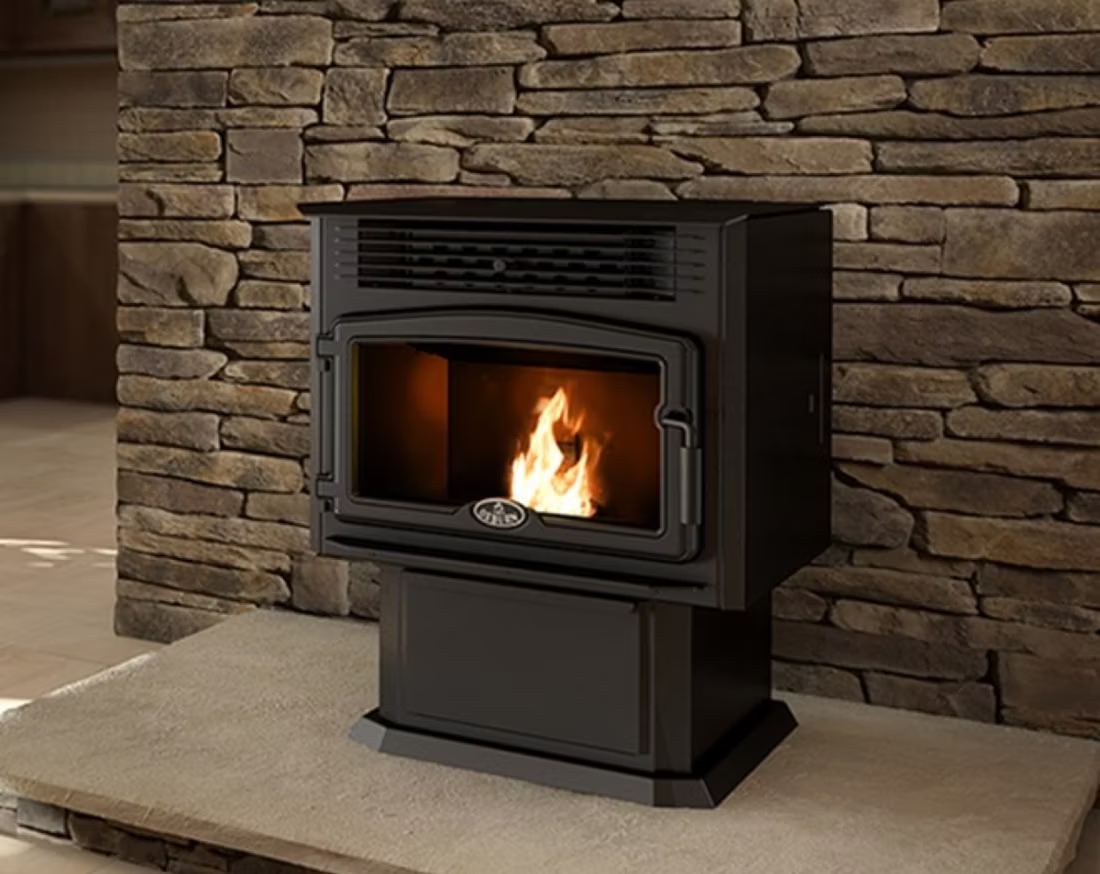
That doesn't mean pellet heat is off the table. A small number of Beecher homeowners install a pellet stove or insert for supplemental heat in a sunroom or finished basement, for the lower ash and lower maintenance compared to a wood stove, or simply because they like the look of a real flame without cutting and hauling firewood. Regional pellet suppliers like Indeck Energy Services, Lignetics, and Somerset Pellet Fuel keep bagged fuel available in the broader Chicagoland and northern Illinois market, so fuel access isn't the obstacle—local dealer density and service support are the bigger hurdles.
Three steps. No salesperson until you're ready.
Tell us about your project
Your zip code, your situation, and the fuel you're leaning toward—or let the answers point you to one.
See what's actually available
The brands dealers within 100 miles genuinely carry—real options, never a catalog mirage.
Get your dealer & Project Guide
A trusted local dealer, plus the free Project Guide & Parts List that names every component of the job.
Frequently Asked Questions
How much does a pellet stove installation cost near Beecher?
Nationally, a pellet stove or insert installation typically runs $3,000 to $6,000 depending on the unit, venting requirements, and whether an existing chimney or masonry fireplace is being converted. Because pellet stoves aren't a common install in Beecher itself, most homeowners end up working with a dealer based in Joliet or the greater Chicago suburbs who can quote a firm number after seeing your home. Expect the estimate to lean toward the higher end if you need new through-wall venting rather than reusing an existing flue.
Why are pellet stoves so uncommon in Beecher compared to other cold climates?
Beecher's winter heating season, about as demanding as Madison, Wisconsin's, and 15°F average winter lows are genuinely cold—comparable to Madison, Wisconsin—so the climate alone doesn't explain it. The bigger factor is that most Beecher and Will County homes are already built around natural gas furnaces and ComEd electric service, which covers heating needs reliably without homeowners needing a secondary appliance. In regions where wood and pellet fuel are part of the local heating culture, pellet stoves fill a real gap. In Beecher, that gap is mostly filled by the gas furnace already in the house.
What size pellet stove would I need if I installed one in Beecher?
Sizing follows the same rules as anywhere else: small units (rated for up to about 1,000 sq ft) suit a single room or finished basement, while larger units (1,500+ sq ft) can supplement a whole floor. Given that most Beecher installs are supplemental rather than primary heat, homeowners here more often land on a smaller or mid-size unit meant to take the edge off a cold room rather than replace the furnace. A dealer can size this properly during an in-home visit—don't guess based on square footage alone, since insulation and ceiling height matter just as much.
Do I need a permit to install a pellet stove in Beecher?
Most likely yes—solid-fuel and pellet-burning appliances typically require a building permit through Will County or the Village of Beecher building department, along with an inspection of the venting once installed. Because pellet installs are infrequent locally, it's worth confirming directly with the village office before you buy, since permit requirements and inspection timelines can vary depending on whether the unit vents through an existing chimney or a new wall penetration.
What pellet stove brands should I look at?
Because there isn't a dense local pellet-stove retail market in Beecher, your best bet is a dealer serving the wider Chicago suburbs who regularly stocks and services brands like Harman, Quadra-Fire, or England's Stove Works—all of which have long track records for reliable auger and igniter components, which matters more here than flame aesthetics since parts availability is the real long-term cost of pellet ownership in an area where the appliance is uncommon.
Where can I buy pellet fuel near Beecher?
Regional pellet producers including Indeck Energy Services, Lignetics, and Somerset Pellet Fuel supply bagged hardwood and softwood pellets throughout northern Illinois, and most farm supply or hardware stores in the Joliet area carry at least one of these brands seasonally. Because pellet stoves are a minority heating choice in Beecher, don't expect year-round shelf stock at every local store—buying a season's supply (roughly 100-150 bags for a full winter of supplemental use) in early fall before demand picks up is the safer move.
Will a pellet stove work if the power goes out?
Not without help. Pellet stoves rely on an electric auger to feed fuel and a blower to move heat, so a ComEd outage shuts the unit down unless you have a battery backup or small generator running it. This is worth factoring in if your reason for wanting a pellet stove in Beecher is backup heat during winter storms—a wood stove or a battery-backed gas fireplace insert is a more reliable outage option, and it's a fair question to raise with any dealer quoting a pellet install.
Pellet stove vs. sticking with natural gas—does it make sense in Beecher?
For most Beecher homes already on natural gas through the existing furnace, adding a pellet stove is a supplemental or aesthetic choice rather than a cost-saving one—gas heat is generally cheaper per BTU here and requires no fuel storage or ash cleanup. Pellet makes more sense if you want a self-contained secondary heat source for a specific room, enjoy tending a stove, or want backup capacity for a finished basement that the furnace doesn't reach well. If your only goal is lower heating bills, a gas insert or upgraded furnace efficiency is usually the more direct route.
How often does a pellet stove need to be serviced?
Plan on cleaning the burn pot and ash removal weekly during regular use, plus a full professional service—checking the auger motor, exhaust blower, and gaskets—once a year, ideally before the start of winter. Because service techs specializing in pellet appliances are less common in Will County than gas or HVAC techs, it's worth asking your dealer about service turnaround time before you buy, since a broken auger motor in January with a two-week wait for a part is the real downside of choosing an uncommon appliance in this area.
How often does a pellet stove need cleaning?
A clean pellet stove is a happy pellet stove. Plan on cleaning the burn pot about once a week when you're burning regularly—ash and clinkers gum up the air holes just like a pellet barbecue. Most pellet stove problems trace back to skipped cleaning that nobody explained up front. Some designs make it easy with a trapdoor burn pot: pull a lever and the gunk drops into the ash pan.
Why is a fireplace insert so efficient?
An insert does two things: it seals the chimney completely, so you stop losing air you already paid to heat, and it radiates warmth into the room through the firebox and glass. Most add a heat-exchange fan that pulls cool room air underneath, wraps it around the hot firebox, and pushes it back out warm. Your home is more efficient before you've even lit the first fire.
What is an in-home preview and do I need one?
It's a visit where a hearth professional measures your space, confirms the model you picked actually works in your home, and walks the specs—framing, gas line, venting, finish work—before anything is ordered. Some details you just can't know until you see the house. Never make a down payment without one; it's the single most-skipped step that burns buyers.
Can a fireplace actually lower my heating bill?
Yes—by creating a comfort zone. A furnace heats every square foot of the house just to warm the one room you're in; a gas fireplace on low burns roughly a sixth of the gas a typical furnace does. Set the furnace around 55–60 degrees as a baseline, then heat the rooms your family actually uses. Families who heat this way commonly save $20–$60 a month.
Nearby Dealers
Hearth shops serving Beecher and the surrounding area. Every listing shows whether it is a WhyFire partner, a dealer we have verified as authorized for the brands we recommend, or a local business carrying hearth products. No manufacturer pays for placement. How we verify dealers →
Cugini Woodworking
Judd & Son Chimney Services
Von Tobel Lumber & Hardware
Fireside Hearth & Home - Merrillville
A Cozy Fireplace
Pellet Brands Stocked Around Beecher
Manufacturers will point you to the nearest stocking dealer.
Find your pellet stove option near Beecher.
Tell us about your home and we'll connect you with a dealer who actually stocks and services pellet stoves in the Will County area—plus a free Project Guide & Parts List with the exact vent kit and parts your install needs.
Find Your Fireplace →