
Warmth That Keeps Up With a Will County Winter.
Instant, reliable gas heat for Beecher's long, cold winters—find the right fireplace or insert and connect with a trusted local dealer.
Every Project Starts From One of These Five Situations
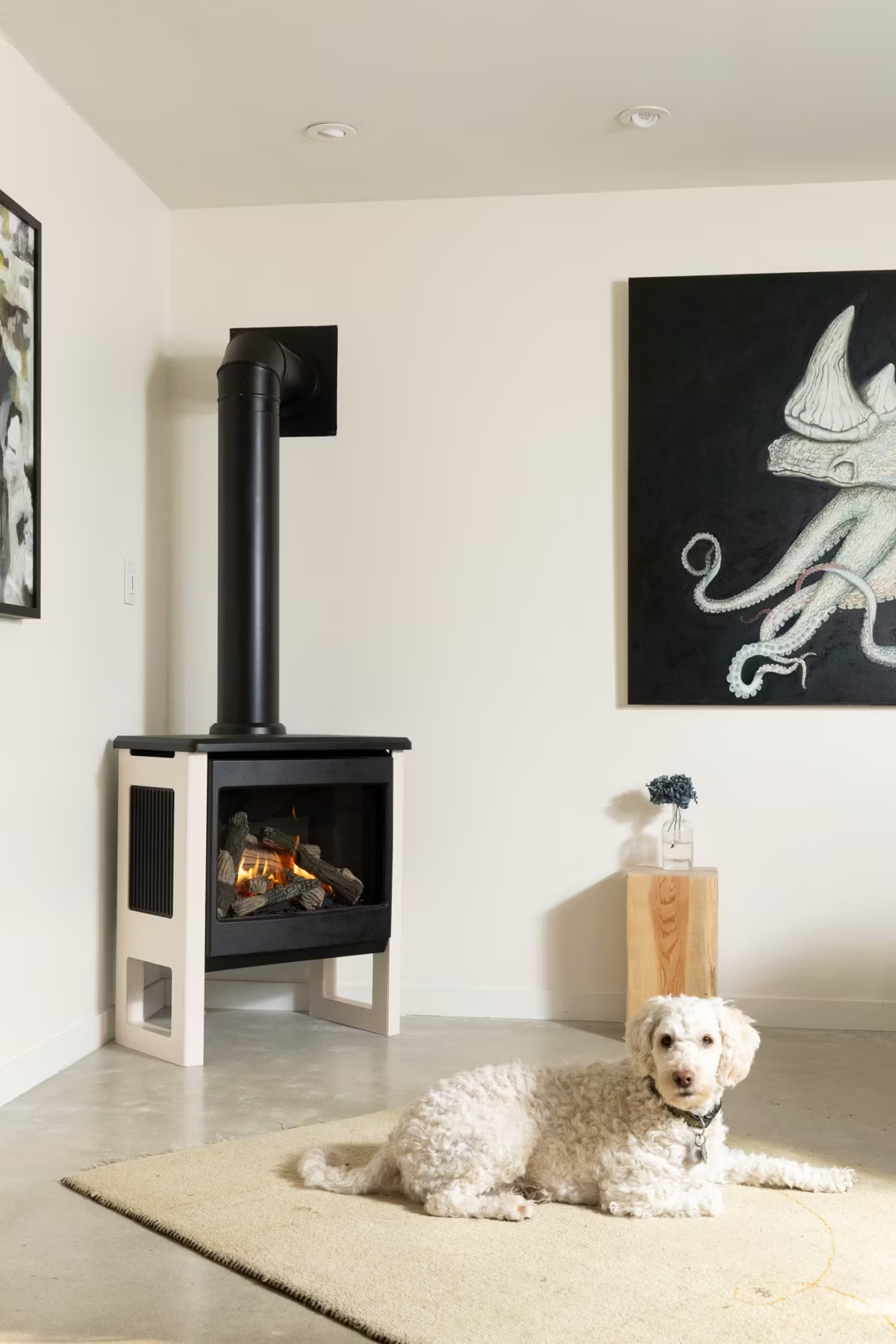
Gas Fireplaces Are the Local Standard, Not the Exception.
Beecher sits in southeastern Will County, a farming community of about 4,560 people roughly 40 miles south of Chicago. At climate zone 5A and 737 feet of elevation, winters here are long and genuinely cold—the average January low hovers around 15°F, and the area faces a heating season about as demanding as Madison, Wisconsin or Fargo, North Dakota. That kind of sustained cold is exactly the environment gas fireplaces and inserts were built for: heat on demand, no wood to split or stack, no ash to haul out on a January morning.
Beecher's rural character means fuel infrastructure varies by address. In-village homes typically have municipal natural gas service, while outlying farm properties on the edges of Will County more often run on propane with a tank installed on-site—both work equally well in a modern gas fireplace or insert, and your local dealer will fit the right orifice and regulator for whichever you have. Wood-burning setups are uncommon around Beecher; there's no nearby public forest land with cutting permits, and much of the surrounding land is farmland rather than woodlot, so most homeowners go straight to gas for both primary and supplemental heat. Electric fireplaces on Commonwealth Edison service, at roughly $0.1339 per kWh, fill in for homeowners who want a plug-in ambiance unit without venting, but for real heat output on a 15-degree night, gas remains the workhorse.
Three steps. No salesperson until you're ready.
Tell us about your project
Your zip code, your situation, and the fuel you're leaning toward—or let the answers point you to one.
See what's actually available
The brands dealers within 100 miles genuinely carry—real options, never a catalog mirage.
Get your dealer & Project Guide
A trusted local dealer, plus the free Project Guide & Parts List that names every component of the job.
Frequently Asked Questions
How much does a gas fireplace installation cost in Beecher?
Costs vary with the unit, venting, and whether new gas line work is needed, but most Beecher-area installations land between roughly $4,000 and $10,000. A direct-vent gas insert dropped into an existing masonry fireplace with a gas line already run to that wall sits toward the low end. A new built-in gas fireplace for a remodel or addition—with framing, venting, and a fresh gas line—runs toward the middle. Properties on propane that need a new tank set, or homes needing a longer gas line run from the meter, land at the higher end. A local hearth dealer will give you a firm number after seeing your specific setup.
Do I need natural gas, or does propane work for a gas fireplace?
Either works fine. Homes inside Beecher village limits with municipal gas service can run a fireplace off the existing gas line, often the same line feeding a furnace or water heater. Many properties on the outskirts of Beecher and elsewhere in rural Will County aren't on a gas main and run on propane instead, with a tank installed on-site. Almost every gas fireplace, insert, and stove on the market today can be set up for either fuel—your installer just fits the correct orifice and regulator for the gas type you have.
Will a gas fireplace still work if the power goes out?
Most will, with a caveat. Units built with a standing pilot light work with zero electricity—the flame stays lit and the fireplace fires up regardless of outage status. Units with intermittent pilot ignition (IPI) need a battery backup, typically AA batteries built into the control module, to strike the pilot without utility power; keep fresh batteries in there year-round. ComEd territory does see ice-storm and high-wind outages in a typical Will County winter, so if backup heat matters to you, ask your dealer specifically about standing-pilot models or units with battery-backed IPI before you buy.
What's the difference between a gas fireplace, insert, and stove?
A gas fireplace is a built-in unit framed into a wall—the right choice for new construction or a full remodel. A gas insert is sized to slide into an existing masonry firebox, sealing it up and using the existing chimney (fitted with a liner) as the vent path—this is the common upgrade for older Beecher farmhouses that already have a wood-burning fireplace sitting unused. A gas stove is a freestanding cast-iron or steel unit that sits on the floor like a wood stove but burns gas. For most homes around Beecher with an existing but rarely-used fireplace, an insert delivers the biggest jump in heat output for the investment.
Do I need a permit to install a gas fireplace in Beecher?
Yes. New gas fireplace and insert installations require a building permit, and the gas line itself needs a licensed gas-fitter—coordinated through the Village of Beecher Building Department for in-village properties, or the Will County Land Use Department for unincorporated areas nearby. A certified hearth dealer typically pulls the permit and schedules the inspection as part of the installation, so you're not left coordinating separate trades for venting, framing, and gas line work.
Should I get a vented or vent-free gas fireplace?
Vented (direct-vent) units draw combustion air from outside and exhaust it back outside through sealed pipe—they're the most common choice in Illinois and deliver real, sustained heat output. Vent-free units burn without any outside venting and release some combustion byproducts into the room; Illinois allows them but requires oxygen-depletion sensors and specific room-volume rules. For a Beecher winter where you might run a fireplace for hours at a stretch on a 15-degree day, direct-vent is the more common and generally recommended option—it doesn't compete with your home's indoor air for combustion oxygen.
How often does a gas fireplace need to be serviced?
Plan on an annual inspection, ideally in early fall before the heating season ramps up. A technician checks the burner, pilot assembly, venting, and gas connections, and cleans the glass and interior—a much lighter lift than chimney sweeping for a wood stove, but just as important for safe operation. Local gas appliance technicians typically charge in the $150–$250 range for a standard annual service call.
Can I install a wood-burning fireplace in Beecher instead?
It's uncommon, and most local dealers will steer you toward gas instead. Beecher isn't near public forest land with cutting permits, most surrounding land is farmland rather than woodlot, and firewood delivery in this part of Will County is limited and pricier than in timber country. A small number of homeowners with existing masonry fireplaces still burn oak, hickory, or walnut sourced from local tree services, but as a primary heat strategy, wood isn't really part of how Beecher heats its homes—gas and electric are the standard options here.
Gas vs. electric fireplace—which is right for my Beecher home?
Gas delivers real heat output—enough to warm a room on a 15-degree January day—plus the option to keep working through a power outage with the right ignition system. Electric fireplaces plug into a standard outlet, need no venting or gas line at all, and cost far less to install, but at Commonwealth Edison's residential rate of roughly $0.134 per kWh, they're best treated as supplemental or ambiance heat rather than a primary heat source in a cold Will County winter. Many Beecher homeowners run gas in the main living space and add a plug-in electric unit in a bedroom or basement where running a gas line isn't practical.
Can I put a TV above my fireplace?
Yes—with an asterisk. Fireplaces are hot and TVs don't like heat. Either put a mantel between them to deflect rising warmth, or choose a fireplace with heat-management technology that creates a cool zone on the wall above—the wall stays around 125 degrees, barely warm, while the room still gets full heat. If you like clean lines and don't want a mantel, heat management is the answer.
Is my gas fireplace wasting gas?
If it was installed more than 15 years ago, probably. Older gas fireplaces keep a standing pilot light burning all the time, and that little flame can cost a couple hundred dollars a year. Newer models use pilot-on-demand ignition—the pilot lights only when you use the fireplace and goes out when you turn it off.
What is an in-home preview and do I need one?
It's a visit where a hearth professional measures your space, confirms the model you picked actually works in your home, and walks the specs—framing, gas line, venting, finish work—before anything is ordered. Some details you just can't know until you see the house. Never make a down payment without one; it's the single most-skipped step that burns buyers.
How much should I budget for a fireplace?
For an average home—covering the fireplace, the vent pipe, and basic installation—a budget between $3,900 and $5,500 gives you a lot of options across wood, gas, and pellet. By the time you add finish work, gas line, and electrical, the average complete installation lands between $5,000 and $12,000 all-in. In a remodel or new build, a good rule is to put about 2.5% of the total project cost toward the fireplace.
Nearby Dealers
Hearth shops serving Beecher and the surrounding area. Every listing shows whether it is a WhyFire partner, a dealer we have verified as authorized for the brands we recommend, or a local business carrying hearth products. No manufacturer pays for placement. How we verify dealers →
Cugini Woodworking
Judd & Son Chimney Services
Von Tobel Lumber & Hardware
Fireside Hearth & Home - Merrillville
A Cozy Fireplace
Find your gas fireplace in Beecher.
Tell us about your home and we'll match you with a trusted local dealer and send over your free Project Guide & Parts List—the exact parts, vent kit, and recommended installer for your Beecher gas fireplace project.
Find Your Fireplace →