
Steady pellet heat for Clark County's high desert winters.
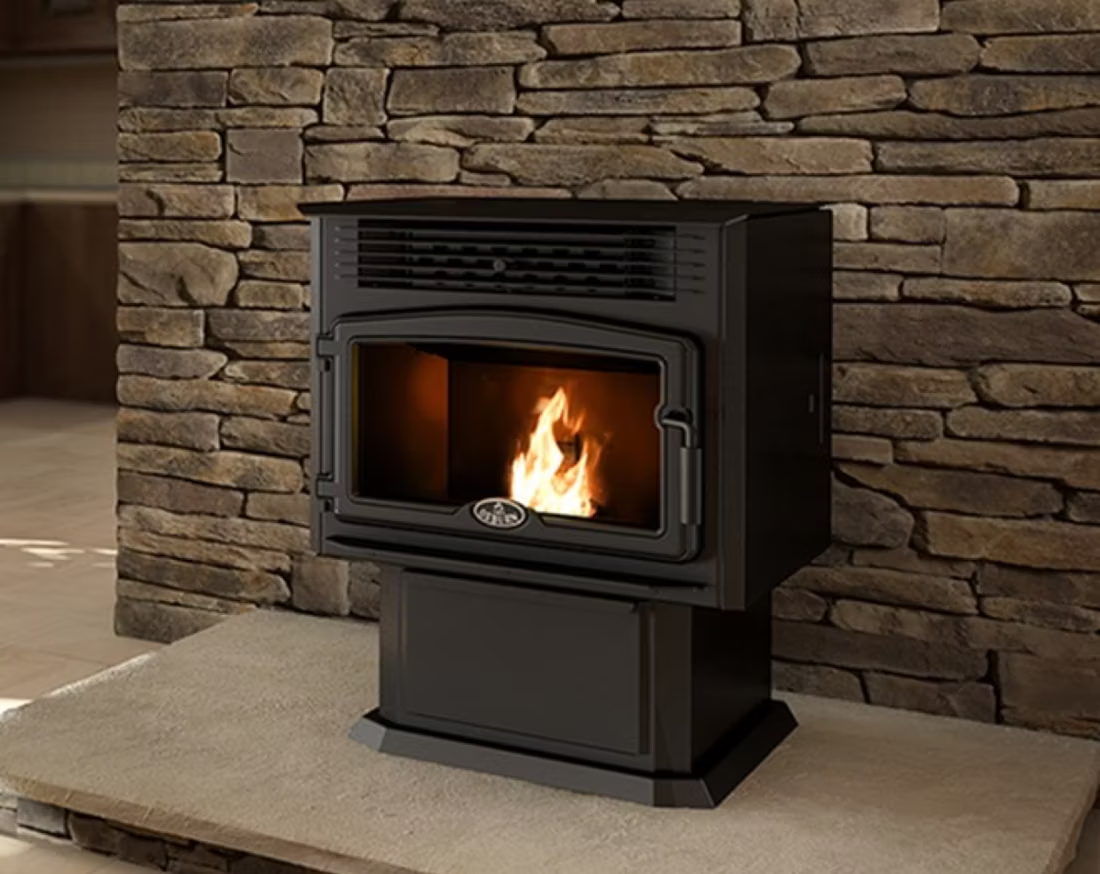
Clark County is sagebrush steppe and lodgepole-pine foothills at roughly 5,400 feet, with a population under 600 and no hearth dealer inside the county line. A pellet stove gives ranch houses and cabins around Dubois thermostat-set heat without the woodpile—and I can match you with a real dealer who'll actually make the trip out.
Every Project Starts From One of These Five Situations
Convenient heat for a county with more cattle than people.
Clark County is one of Idaho's least populated counties—about 553 people spread across sagebrush flats and foothill timber near the Centennial Mountains, with Dubois as the county seat. Climate zone 6B means long, hard winters that settle in early and don't loosen their grip until spring; clear, still nights at this elevation regularly drop well below zero. Lodgepole pine, ponderosa pine, Douglas fir, and larch cover the higher ground toward the Caribou-Targhee National Forest, and plenty of local households still burn cordwood. But for ranch homes that want to set a temperature and walk away—or for anyone tired of splitting and stacking wood in a county where daylight and good weather windows are short—a pellet stove has become a practical second option.
Because Clark County doesn't have a hearth retailer of its own, most homeowners here end up working with a certified dealer based out of Idaho Falls or Rexburg, roughly 45 minutes south. Regional pellet fuel—brands like Bear Mountain, Lignetics, and Pacific Pellet—is generally sold through farm and ranch supply stores along that same corridor rather than in bulk locally, so most Clark County owners plan ahead and stock a season's worth before the first big snow closes in. A pellet stove burns cleaner than cordwood too, which matters in a county where summer wildfire smoke is a recurring air quality concern.
Three steps. No salesperson until you're ready.
Tell us about your project
Your zip code, your situation, and the fuel you're leaning toward—or let the answers point you to one.
See what's actually available
The brands dealers within 100 miles genuinely carry—real options, never a catalog mirage.
Get your dealer & Project Guide
A trusted local dealer, plus the free Project Guide & Parts List that names every component of the job.
Frequently Asked Questions
How much does a pellet stove installation cost in Clark County?
There's no dealer physically inside Clark County, so pricing typically comes from an installer based in Idaho Falls or Rexburg who travels out to Dubois or the surrounding ranch roads. Across eastern Idaho generally, a freestanding pellet stove installation runs somewhere in the $3,000 to $6,000 range depending on the unit, whether a new hearth pad is needed, and how far the venting has to run through an exterior wall. Given the drive time involved, ask upfront whether a trip charge applies—most installers will still quote a firm number after seeing photos or doing a video walkthrough of your home.
What size pellet stove do I need for a Clark County home?
Sizing depends on square footage, ceiling height, and how well-insulated the structure is—and older ranch houses and outbuildings-turned-living-space around Clark County are often larger and draftier than a stove's rated square footage would suggest. At 5,400 feet with regular subzero nights, it's common to size up a step from what a manufacturer chart recommends for a similar home at lower elevation. A stove intended as the primary heat source for a drafty farmhouse needs more capacity than one meant to supplement a propane furnace in a tighter, newer build. A dealer can size this properly from a floor plan or a quick home visit rather than guesswork off a box label.
Where can I find a certified pellet stove dealer near Clark County?
Given the county's population, there isn't a hearth shop within Clark County itself—the nearest certified dealers are in Idaho Falls and Rexburg, both within about an hour's drive of Dubois. Look for NFI-certified installers specifically, since pellet appliances have their own venting and electrical requirements distinct from wood stoves. Because the drive is real, it's worth confirming a dealer services your specific address before you commit—some installers limit how far out from Idaho Falls they'll travel for warranty or service calls, which matters as much as the initial install.
Will my pellet stove work during a power outage?
No—and this is the one honest tradeoff worth understanding before you buy. Pellet stoves rely on an electric auger to feed fuel and a fan to run combustion air and distribute heat, so they shut down the moment power drops. That matters in a county this rural, where winter storms can take out power lines serving just a handful of ranch properties for hours or longer before a crew reaches you. If a pellet stove will be your primary heat source, it's worth pairing it with a small backup generator or battery inverter sized to run the stove's electronics—your dealer can tell you the actual wattage draw for the model you're considering. Homes that need heat with zero dependence on the grid are usually better served by a wood stove instead.
Do I need a permit to install a pellet stove in Clark County?
Most likely yes—new pellet stove installations typically require a building permit through Clark County's building department in Dubois, covering the appliance clearance, hearth pad, and through-wall venting. Because this is a small rural jurisdiction, permitting can move a little differently than in a larger city office, so it's worth calling ahead rather than assuming. Most dealers who work this part of eastern Idaho are used to coordinating that paperwork themselves as part of the install, which is one reason working with an established installer—rather than a DIY kit—is worth the extra cost out here.
What's the best pellet stove for Clark County's climate?
For homes at this elevation with genuinely cold, long winters, look at higher-BTU freestanding stoves from established manufacturers like Harman, Lopi, or Quadra-Fire, which are built for sustained cold-climate output rather than light supplemental use. A larger hopper matters too—Clark County's remote roads and occasional storm closures mean fewer convenient trips to refill or restock pellets, so a model that can run longer between hopper loads and burns efficiently on standard hardwood pellet blends (Bear Mountain and Lignetics are both common in eastern Idaho) is a practical advantage. A local dealer can match hopper capacity and BTU output to your actual square footage and insulation.
How often does a pellet stove need to be serviced?
Plan on an annual professional service—typically in late summer before the county's early snow arrives—covering the burn pot, exhaust venting, auger mechanism, and gaskets. Between professional visits, the ash pot and burn pot need regular owner cleaning, more often for a stove running as primary heat through a full Clark County winter than one used occasionally. Given the distance to the nearest certified service tech, it's worth asking your dealer about scheduling service proactively each fall rather than waiting for something to fail mid-winter, when a service call could mean a multi-hour wait for someone to make the trip out.
Where can I buy pellets in or near Clark County?
Clark County itself has limited retail, so most residents buy bagged pellets—regional brands like Bear Mountain, Lignetics, and Pacific Pellet are the ones most commonly stocked—through farm and ranch supply stores in Idaho Falls or Rexburg rather than picking them up locally. Bulk or pallet delivery direct to a Clark County address is less common simply because of the distances involved, so most owners buy a season's supply in fall before roads and weather make the trip less convenient. Buying early, before the first real snow, is standard practice here rather than an inconvenience to plan around later.
Pellet stove vs. wood stove—which is right for my Clark County home?
Wood is the traditional choice out here for good reason: it works with zero electricity, which matters when winter storms take down rural power lines, and lodgepole pine and Douglas fir from the surrounding national forest are locally familiar fuels. Pellet stoves trade that outage resilience for convenience—a thermostat-controlled, consistent burn with far less daily tending, no splitting or stacking, and less ash. For a primary residence where reliable heat during an outage is non-negotiable, wood typically wins. For a secondary living space, a ranch office, or a household that wants set-and-forget heat and is comfortable pairing it with backup power, pellet is often the better fit. Plenty of Clark County homes end up running both.
Why is a fireplace insert so efficient?
An insert does two things: it seals the chimney completely, so you stop losing air you already paid to heat, and it radiates warmth into the room through the firebox and glass. Most add a heat-exchange fan that pulls cool room air underneath, wraps it around the hot firebox, and pushes it back out warm. Your home is more efficient before you've even lit the first fire.
What's the difference between an insert and a zero-clearance fireplace?
An insert is a fireplace that slides into a pre-existing wood-burning fireplace—if you don't have one, there's nothing to insert it into. A zero-clearance fireplace is built into a framed wall, which makes it the answer for remodels and new construction. Simple test: existing masonry fireplace means insert; blank or framed wall means zero-clearance.
How much should I budget for a fireplace?
For an average home—covering the fireplace, the vent pipe, and basic installation—a budget between $3,900 and $5,500 gives you a lot of options across wood, gas, and pellet. By the time you add finish work, gas line, and electrical, the average complete installation lands between $5,000 and $12,000 all-in. In a remodel or new build, a good rule is to put about 2.5% of the total project cost toward the fireplace.
What is an in-home preview and do I need one?
It's a visit where a hearth professional measures your space, confirms the model you picked actually works in your home, and walks the specs—framing, gas line, venting, finish work—before anything is ordered. Some details you just can't know until you see the house. Never make a down payment without one; it's the single most-skipped step that burns buyers.
Pellet Brands Stocked Around Clark County
Manufacturers will point you to the nearest stocking dealer.
Find your pellet stove in Clark County.
Tell me about your home near Dubois or elsewhere in Clark County, and I'll match you with a real local dealer—one who actually services this part of eastern Idaho—plus a free Project Guide & Parts List covering the exact stove, venting, and hearth components your project needs.
Find Your Fireplace →