
Warm the room that matters most in Clark County.
Zone heat and clean-looking ambiance for Dubois-area homes and the ranches scattered across Clark County's sagebrush flats—with no chimney, no venting, and no gas line required. I'll match you with a local dealer who can size it right.
Every Project Starts From One of These Five Situations
Electric heat for the county's harshest winters.
Clark County is one of the least populated counties in Idaho—about 553 people spread across high desert and sagebrush rangeland near the Continental Divide, with Dubois as the only real town. Climate zone 6B means genuinely brutal winters here, and most homes lean on wood cut from nearby stands of lodgepole pine, ponderosa pine, Douglas fir, and larch, or on propane, since no natural gas infrastructure reaches this far into rural eastern Idaho. Electric fireplaces don't replace that primary heat—but they fill a real gap.
For a spare bedroom, a den, or a manufactured home where running a chimney isn't practical, a plug-in or built-in electric unit adds instant, controllable warmth without touching your existing heating system. Power in Clark County comes through rural electric cooperatives serving the Dubois area and outlying ranches, and service can be interrupted during hard winter storms—worth knowing, since an electric fireplace draws on the same grid as everything else in the house and won't function as backup heat the way a wood stove will. Most Clark County households treat electric as the convenient, zero-clearance option for one room, not the whole-house answer to a 6B winter.
Three steps. No salesperson until you're ready.
Tell us about your project
Your zip code, your situation, and the fuel you're leaning toward—or let the answers point you to one.
See what's actually available
The brands dealers within 100 miles genuinely carry—real options, never a catalog mirage.
Get your dealer & Project Guide
A trusted local dealer, plus the free Project Guide & Parts List that names every component of the job.
Frequently Asked Questions
How much does an electric fireplace installation cost in Clark County?
A basic plug-in electric fireplace or insert that drops into an existing opening runs $300 to $900 installed, since there's no venting or gas line to run. A built-in wall unit that requires framing an opening and running a dedicated circuit typically lands between $1,200 and $2,500, depending on the size of the unit and whether an electrician needs to add a new 120V or 240V circuit. Given how few licensed contractors serve Clark County's population, expect a modest travel charge if your installer is coming from Rexburg, Idaho Falls, or another Fremont County community.
Will an electric fireplace actually heat my room in a Clark County winter?
It will comfortably heat a single room—most units are rated for 400 to 1,500 square feet on their built-in heater. But climate zone 6B means outdoor temperatures here regularly sit well below what an electric heater alone can offset in a drafty older ranch house. Most Clark County homeowners use electric fireplaces to supplement a wood stove or propane furnace in a den, bedroom, or add-on room, not as the primary heat source for the whole house. If you're trying to heat an entire home on electric resistance heat alone in this climate, talk to a local dealer about realistic expectations before you buy.
Do I need a permit to install an electric fireplace in Clark County?
In most cases, no—a plug-in unit that uses an existing outlet requires no permit at all. If your installation calls for a new dedicated electrical circuit, that electrical work typically does need a permit, handled through the county courthouse in Dubois rather than a dedicated building department, since Clark County's small population doesn't support a full-time permitting office. A licensed electrician doing the circuit work will usually know exactly what's required and can pull the paperwork for you.
What's the difference between an electric insert and a wall-mounted electric fireplace?
An electric insert is built to slide into an existing fireplace opening—masonry or zero-clearance wood firebox—and is the easiest option if you're converting an old wood fireplace that's rarely used. A wall-mounted or built-in unit is framed into a wall like a flat-screen TV and works well in newer construction or a remodel where there's no existing firebox. For the handful of older homes in and around Dubois with an unused masonry fireplace, an insert is usually the simpler, less expensive route.
Will my electric fireplace work if the power goes out?
No—and this matters more in Clark County than almost anywhere, given how isolated the area is and how hard winter storms can hit. An electric fireplace runs entirely on grid power, so if a storm knocks out the line serving your part of the county, the unit goes dark along with everything else. This is exactly why most households here keep a wood stove or propane heater as the real backup, and use electric fireplaces for everyday convenience and ambiance rather than emergency heat.
Are electric fireplaces a good fit for manufactured and mobile homes in Clark County?
Yes—and it's one of the more common installs we see requests for in rural, sparsely built counties like this one. Electric units generate no combustion byproducts, need no chimney or roof penetration, and many models are rated for direct wall mounting with minimal clearance, which suits manufactured housing construction well. A local dealer can confirm the electrical panel has capacity for a dedicated circuit before installing a larger built-in unit.
How does an electric fireplace compare to a wood stove for a Clark County home?
Wood stoves burn cordwood cut from the lodgepole pine, ponderosa pine, Douglas fir, and larch common on the surrounding forest land, produce genuine sustained heat, and keep working through a power outage—a real consideration this far from town. Electric fireplaces need zero venting, zero fuel handling, and turn on and off instantly, but they draw grid power and can't heat a whole home through a hard eastern Idaho winter the way a properly sized wood stove can. Many Clark County households run both: wood or propane for real heat, electric for the room where they want clean, easy warmth without hauling firewood.
How does an electric fireplace compare to a pellet stove out here?
Pellet stoves—running on bagged fuel from regional brands like Bear Mountain, Lignetics, or Pacific Pellet—burn cleaner than cordwood and put out real, sustained heat for a room or small home, but like electric units they need power to run the auger and blower, so neither one keeps working in an outage without a battery backup or generator. If you want heat that survives a downed line in Clark County, wood remains the more dependable choice; if convenience and low ash matter more than storm resilience, pellet or electric both work well for supplemental heat.
What's the best electric fireplace for a Clark County home?
Look for a unit with a true resistance heater rated for the square footage of the specific room you're heating, rather than judging by flame appearance alone—the realistic-flame effect and the heating output are sold separately in most product lines. For a den or bedroom addition, a 1,500-watt insert or wall unit from a mainstream brand is usually plenty; for a larger open living area, ask a local dealer about stacking a larger unit with your existing wood or propane heat rather than trying to make electric carry the whole load in a 6B winter.
Can I put a TV above my fireplace?
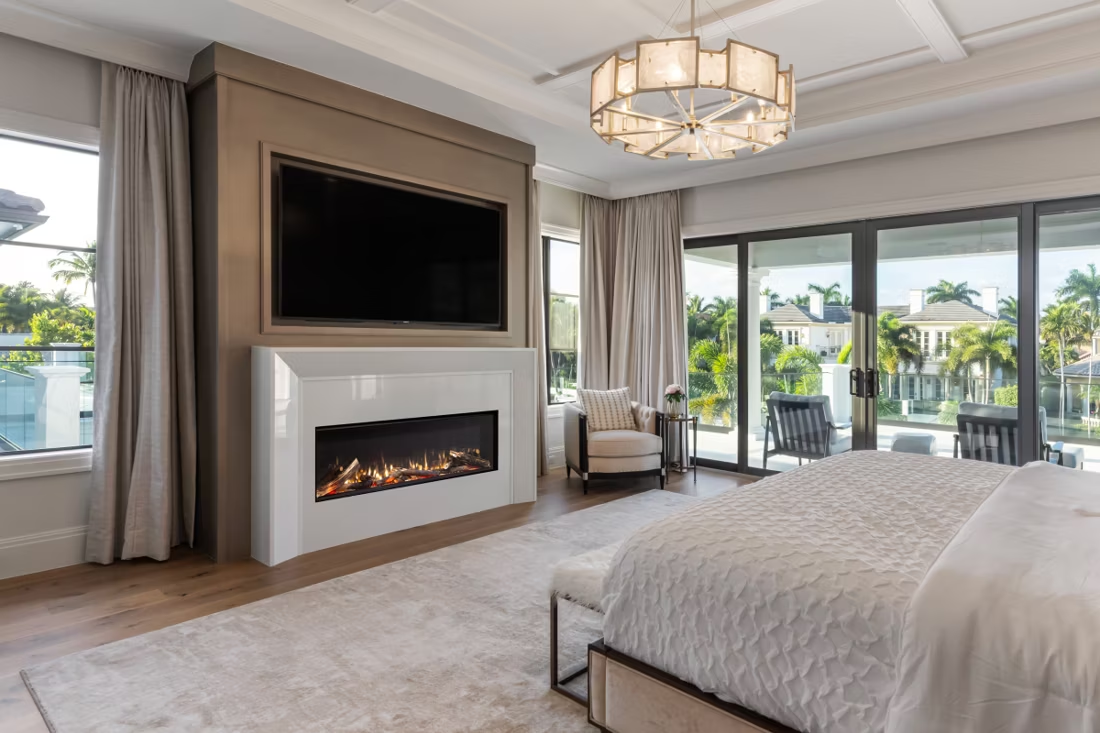
Yes—with an asterisk. Fireplaces are hot and TVs don't like heat. Either put a mantel between them to deflect rising warmth, or choose a fireplace with heat-management technology that creates a cool zone on the wall above—the wall stays around 125 degrees, barely warm, while the room still gets full heat. If you like clean lines and don't want a mantel, heat management is the answer.
Does an electric fireplace need a vent or chimney?
No—that's its superpower. An electric fireplace needs a wall and an outlet, period. No vent pipe, no gas line, no clearances to design around, which is why it works in bedrooms, offices, apartments, and walls where venting a gas or wood unit would be impractical or impossible. Installation is typically the simplest and least expensive of any fireplace type.
What is an in-home preview and do I need one?
It's a visit where a hearth professional measures your space, confirms the model you picked actually works in your home, and walks the specs—framing, gas line, venting, finish work—before anything is ordered. Some details you just can't know until you see the house. Never make a down payment without one; it's the single most-skipped step that burns buyers.
How much should I budget for a fireplace?
For an average home—covering the fireplace, the vent pipe, and basic installation—a budget between $3,900 and $5,500 gives you a lot of options across wood, gas, and pellet. By the time you add finish work, gas line, and electrical, the average complete installation lands between $5,000 and $12,000 all-in. In a remodel or new build, a good rule is to put about 2.5% of the total project cost toward the fireplace.
Find your electric fireplace in Clark County.
Tell me a bit about your home and the room you're heating, and I'll match you with a local dealer and send over a free Project Guide & Parts List—sized right for Clark County's climate.
Find Your Fireplace →