
Find your fireplace in Clark County, Idaho.
Wood, gas, pellet, and electric fireplace resources for Idaho's least-populated county—from Dubois down through Spencer, Kilgore, and the ranch roads along Interstate 15. Pick a fuel and get matched with a dealer who actually makes the drive out here.
Every Project Starts From One of These Five Situations
A sagebrush plateau county of 553 people, and a climate that doesn't go easy on anyone.
Clark County sits on a high sagebrush plateau in eastern Idaho, ringed by the Centennial Mountains and Caribou-Targhee National Forest land near the Montana state line. With 553 residents spread across roughly 1,750 square miles, it's the least populated county in Idaho, and that sparseness shapes almost everything about how hearth service works here. The climate zone is 6B—the same cold-climate category as Bozeman, Montana, just over the border—with long, genuinely hard winters. Lodgepole pine, ponderosa pine, Douglas fir, and larch are the wood species most local households burn, much of it standing-dead timber cut under Forest Service permits on the Caribou-Targhee land surrounding the county.
There aren't enough year-round households here to support a resident hearth retailer or full-time service tech, so most installation and repair work comes from crews based in Idaho Falls or over the line near Dillon, Montana, who route out to Dubois, Spencer, Kilgore, and the scattered ranches along Highway 22 and I-15. Wildfire smoke—not winter inversion—is the county's primary air-quality concern, which affects late-summer outdoor burning more than it restricts what stove you can run in January. This hub rolls up wood, gas, pellet, and electric resources for the whole county; pick a fuel below to see dealer coverage, typical install costs, and what genuinely works in a place this remote.
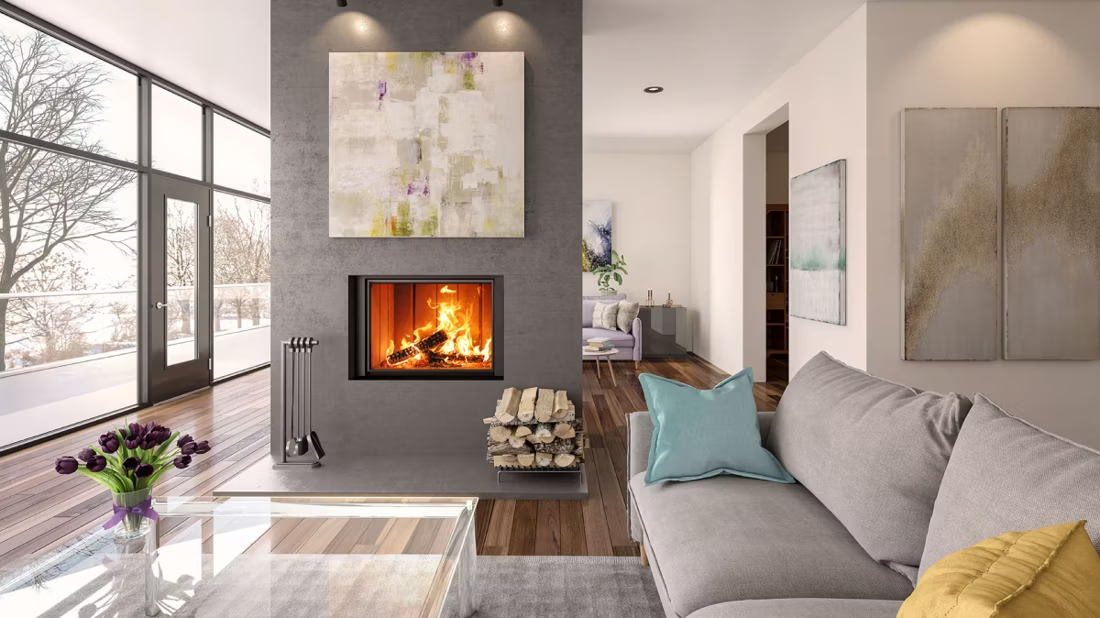
Four fuels. One honest answer for Clark County.
Three steps. No salesperson until you're ready.
Tell us about your project
Your zip code, your situation, and the fuel you're leaning toward—or let the answers point you to one.
See what's actually available
The brands dealers within 100 miles genuinely carry—real options, never a catalog mirage.
Get your dealer & Project Guide
A trusted local dealer, plus the free Project Guide & Parts List that names every component of the job.
Frequently Asked Questions
Which fireplace fuel makes the most sense in Clark County?
All four fuels see real use here, but the right one depends on how remote your place is and how much hauling you're willing to do. Wood is the practical backbone for most rural households—lodgepole pine, Douglas fir, and larch are abundant on the Caribou-Targhee land ringing the county, and a lot of it is cut under standing-dead permits rather than purchased. Gas here means propane, not piped natural gas, since there's no gas utility infrastructure this far out; it's the low-effort option for a ranch house that doesn't want to manage a woodpile. Pellet stoves have a following for the same reason—Bear Mountain and Lignetics pellets are stocked through Idaho Falls suppliers, and an automated hopper feed matters when the nearest neighbor is a mile away and you can't always get back to reload a firebox. Electric fireplaces are supplemental only; in a 6B climate zone as cold as this, comparable to Bozeman, Montana, an electric unit isn't sized to carry a home through winter on its own.
Do I need a permit to install a wood stove in Clark County?
Yes—new wood stoves and inserts still need to meet EPA emissions standards and go through the county building department for a permit, the same as anywhere in Idaho. That's a separate process from the Forest Service cutting permit you'd get through Caribou-Targhee National Forest to harvest your own firewood; one covers the appliance install, the other covers where your fuel comes from. Propane-fired gas units need a licensed installer for the tank and line connection. Given how few contractors work this county regularly, it's worth confirming your installer is comfortable pulling permits remotely rather than assuming it happens automatically.
Is natural gas available in Clark County, or is everything propane?
Everything is propane. There's no piped natural gas utility serving a county with 553 residents spread across 1,750 square miles—it simply doesn't pencil out for a gas company to run mains out here. If you want a gas fireplace, insert, or stove, plan on a propane tank sized for your household's overall heating load, not just the fireplace, and factor in delivery scheduling since winter roads along I-15 and Highway 22 can slow a fuel truck down when it matters most.
How does installation and service actually work in a county this rural?
Slower, and with more lead time than you'd deal with in a bigger town. Retailers and technicians are based in Idaho Falls or over the Montana line near Dillon, and they typically batch service calls to Dubois, Spencer, and Kilgore rather than making a one-off trip for a single sweep or inspection. Expect a trip fee built into remote quotes, and expect scheduling to tighten up fast once the first real snow hits—booking your annual chimney sweep or propane appliance check in late summer, well before cold weather sets in, is the difference between getting served this season or waiting for a thaw.
Does wildfire smoke affect what stove I should install?
Clark County's main air-quality concern is wildfire smoke, not the winter inversion pattern you'd see in a basin county—so there's no curtailment-day restriction on burning here in January. That said, choosing an EPA-certified stove still matters for efficiency and lower particulate output, especially if you're burning lodgepole pine that's come off beetle-kill stands and can run drier and hotter than fresh-cut wood. During dry late-summer and fall stretches, temporary outdoor burning restrictions can apply to slash piles and open burns, but that's a separate issue from your indoor wood stove.
What does a fireplace installation typically cost in Clark County?
Costs run close to regional norms for the unit itself, but expect the labor line to carry a travel premium since installers are coming from Idaho Falls or across the Montana line. Wood stove or insert installs generally run $4,500–$9,500 including EPA-certified equipment. Propane fireplaces, inserts, and stoves typically land at $4,500–$11,000 depending on tank setup and line work. Pellet stove installs run roughly $4,500–$8,000. Electric fireplaces are the cheapest entry point—$200–$3,000 for the unit, plus $400–$1,200 in labor if it's more than a plug-and-play placement—but remember they're supplemental heat, not a primary system, in a winter this cold.
Wood, gas, pellet, or electric—how do I choose?
Match the fuel to your life, not the other way around. Wood: lowest fuel cost and total power-outage independence, but you're hauling and stacking. Gas: press a button, set a thermostat, no maintenance to speak of. Pellet: wood economics with automatic feeding, in exchange for weekly cleaning and a need for electricity. Electric: plugs in anywhere with honest supplemental heat. Nobody regrets the fuel that fits how they actually live.
How much should I budget for a fireplace?
For an average home—covering the fireplace, the vent pipe, and basic installation—a budget between $3,900 and $5,500 gives you a lot of options across wood, gas, and pellet. By the time you add finish work, gas line, and electrical, the average complete installation lands between $5,000 and $12,000 all-in. In a remodel or new build, a good rule is to put about 2.5% of the total project cost toward the fireplace.
Can I install a fireplace myself?
If you're putting a fire in your house on purpose, it's best to work with an expert. Unless you're genuinely experienced in framing, gas line, vent pipe, and the national code on clearances to combustibles, have a professional do it—and ideally the same company that sells you the fireplace, so warranty, service, and liability all live under one roof.
What is an in-home preview and do I need one?
It's a visit where a hearth professional measures your space, confirms the model you picked actually works in your home, and walks the specs—framing, gas line, venting, finish work—before anything is ordered. Some details you just can't know until you see the house. Never make a down payment without one; it's the single most-skipped step that burns buyers.
Stove and Fireplace Dealers in Clark County
Listings include WhyFire partner dealers, dealers we have verified as authorized for the brands we recommend, and established local businesses that carry hearth products. Every listing shows which one it is. The ones marked Preferred run on WhyFire's software, so they can show you real pricing and book your appointment right here. No manufacturer pays for placement. How we verify dealers →
Quality Heating, Inc
Romaine's Mattress
Get matched with a dealer who covers Clark County.
Pick your fuel below and we'll build a free Project Guide & Parts List—the right unit, the vent kit it needs, and the dealer we recommend who's willing to make the drive to Dubois, Spencer, or wherever you are in the county.
Find Your Fireplace →