
Keep Your Family Warm and Safe—No Matter What
With winter lows averaging 33°F and a modest overall heating load for the year, most homes here don't need wood heat to get through winter. Some homeowners still want it—for backup power, ambiance, or the smell of an oak fire on a cold December night.
Every Project Starts From One of These Five Situations
Why most Peachtree Corners homes don't need wood heat—and some still want it.
Peachtree Corners sits in climate zone 3A, at just under 1,000 feet elevation, where the average winter low hovers around 33°F and the whole heating season is short and mild, adding up to a modest overall heating load for the year. Compare that to a place like Duluth, Minnesota, which faces a heating load more than three times as large in a single winter, and it's clear why wood stoves aren't a fixture of daily life here the way they are farther north. Central HVAC, run on Georgia Power's grid, handles the vast majority of heating in Gwinnett County without much trouble.
That said, wood isn't irrelevant here—it's just not primary heat. Some homeowners want a wood-burning insert or stove specifically as backup during the ice storms that occasionally knock out power across metro Atlanta for a day or two at a time. Others simply prefer the look and feel of a real wood fire in a living room fireplace over a gas alternative. Oak, hickory, and pine are all cut and sold locally, and with no air quality non-attainment status or winter burn restrictions in Gwinnett County, there's nothing stopping a homeowner who wants one from having one—it's a lifestyle choice here, not a heating requirement.
Three steps. No salesperson until you're ready.
Tell us about your project
Your zip code, your situation, and the fuel you're leaning toward—or let the answers point you to one.
See what's actually available
The brands dealers within 100 miles genuinely carry—real options, never a catalog mirage.
Get your dealer & Project Guide
A trusted local dealer, plus the free Project Guide & Parts List that names every component of the job.
Frequently Asked Questions
Does it even make sense to install a wood stove in Peachtree Corners?
For most homes, no—not as a primary heat source. With winter lows averaging 33°F and a modest overall heating load for the year, a heat pump or gas furnace comfortably covers the season without a wood stove running in the background. Where it does make sense is as a secondary option: backup heat for the occasional multi-day power outage after an ice storm, or a real wood-burning fireplace insert chosen for ambiance rather than BTUs. If you're weighing wood purely for heating performance, a gas insert or a heat pump upgrade will usually serve you better and cost less to run day to day.
What does a wood stove or insert installation cost in Peachtree Corners?
Expect somewhere in the $3,000 to $7,500 range for a wood-burning insert into an existing masonry fireplace, or a freestanding stove with a new chimney chase, depending on the unit and how much venting work is involved. Homes in Peachtree Corners built from the 1970s through the 2000s often already have a masonry fireplace and flue, which keeps costs toward the lower end since the chimney structure is already in place. New construction without an existing flue runs higher once a full Class A chimney system is added. A local hearth dealer can give you a firm number after seeing your fireplace or the wall you're working with.
Do I need a permit to install a wood stove in Peachtree Corners?
Yes. New wood-burning appliance installations require a building permit, and depending on your address that means either the City of Peachtree Corners Community Development Department or Gwinnett County's permitting office, since the city's zip codes overlap unincorporated county land. The stove itself needs to meet current EPA emissions standards. Unlike some Western cities, Gwinnett County has no winter burn curtailment periods or air quality non-attainment designation, so once installed, there's no seasonal restriction on when you can use it.
What firewood is actually available around Peachtree Corners?
Oak, hickory, and pine are the three species you'll most commonly find from firewood sellers around Gwinnett County and the broader Atlanta metro. Oak and hickory split into dense, long-burning cordwood well suited to overnight fires; pine is more common as kindling or shoulder-season wood since it burns faster and produces more resin buildup in the flue. Because wood isn't primary heat here, sellers tend to be smaller, seasonal operations rather than large commercial suppliers—expect to pay somewhere in the neighborhood of $250 to $350 a cord, more for kiln-dried or delivered-and-stacked wood.
Should I get a wood fireplace or a gas insert instead?
For most Peachtree Corners homeowners, gas is the more practical daily-use choice—natural gas and propane inserts light instantly, need no wood handling, and pair cleanly with the central heating most homes already run. Wood earns its place when the priority is a backup heat source that works without electricity, or when the appeal is the experience of a real fire rather than efficiency. If your main goal is a warm, low-maintenance living room upgrade, ask a local dealer about gas options alongside wood before deciding—many homeowners here end up choosing gas once they compare the day-to-day upkeep.
Is a wood stove worth it just for power outages?
It's one of the more common reasons Peachtree Corners homeowners look into wood heat at all. Ice storms move through metro Atlanta every few winters and can knock out Georgia Power service for a day or more at a time, and a wood stove or insert is one of the few heating options that keeps working with the grid down. If that's your main driver, look at a simple, efficient stove rather than a high-end unit—you're buying resilience, not daily heating capacity, and a local dealer can help you size something modest that does the job without over-investing in a fuel source you'll rarely need.
What's the difference between a wood stove and a wood insert for my home?
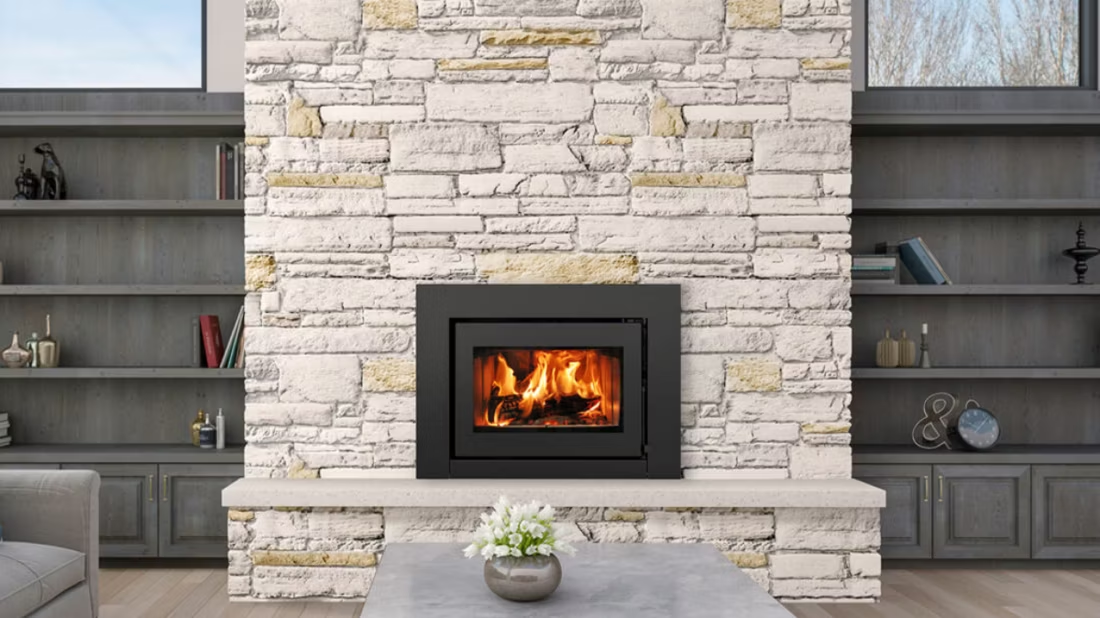
A wood insert slides into an existing masonry fireplace opening and uses your current chimney, which fits well with the many Peachtree Corners homes built with a traditional brick fireplace already in place. A freestanding wood stove sits out from the wall on its own hearth pad and needs a new chimney run if one doesn't already exist, which usually costs more but gives you flexibility on where it's placed. If you already have a working fireplace you rarely use, an insert is almost always the simpler and less expensive path.
How often does a wood-burning fireplace need chimney maintenance here?
Even with light, occasional use—which is typical in a mild climate like this one—the Chimney Safety Institute of America recommends an annual inspection before burning season. Creosote can build up even from just a handful of fires a year, and a chimney that sits unused most of the year is also more prone to animal nests, debris, and moisture damage. A local sweep can do a Level 1 inspection and cleaning in under an hour, and it's worth doing every fall even if you only plan to use the fireplace a few times over the winter.
Why not a pellet stove instead of wood in Peachtree Corners?
Pellet stoves face the same basic problem as wood here—a mild climate with a modest overall heating load doesn't generate much demand, so pellet fuel isn't widely stocked locally the way it is in colder regions, and you may need to order bags online or drive further to find a consistent supplier. Pellet stoves also require electricity to run the auger and blower, which defeats the main reason a lot of local homeowners consider wood in the first place: heat during a power outage. If backup heat is the goal, a wood stove or insert is the more logical fit for this area.
Why is my open fireplace making my house colder?
Open fireplaces suck—literally. As the fire burns, it consumes air your furnace already paid to heat and pulls it out through the chimney, so the house is actually colder after the fire goes out than before you lit it. An insert fixes this: it seals the chimney, puts fixed glass across the front, and turns that hole in your house into a real heat source.
What's the difference between an insert and a zero-clearance fireplace?
An insert is a fireplace that slides into a pre-existing wood-burning fireplace—if you don't have one, there's nothing to insert it into. A zero-clearance fireplace is built into a framed wall, which makes it the answer for remodels and new construction. Simple test: existing masonry fireplace means insert; blank or framed wall means zero-clearance.
Can I install a fireplace myself?
If you're putting a fire in your house on purpose, it's best to work with an expert. Unless you're genuinely experienced in framing, gas line, vent pipe, and the national code on clearances to combustibles, have a professional do it—and ideally the same company that sells you the fireplace, so warranty, service, and liability all live under one roof.
Can a fireplace actually lower my heating bill?
Yes—by creating a comfort zone. A furnace heats every square foot of the house just to warm the one room you're in; a gas fireplace on low burns roughly a sixth of the gas a typical furnace does. Set the furnace around 55–60 degrees as a baseline, then heat the rooms your family actually uses. Families who heat this way commonly save $20–$60 a month.
Preferred Dealer in Peachtree Corners
See what's possible for a wood fireplace in Peachtree Corners.
Tell us about your home and how you'd actually use a wood-burning stove or insert—ambiance, backup heat, or both—and we'll match you with a trusted local dealer and a free Project Guide & Parts List built for your project.
Find Your Fireplace →