
Gas warmth that fits Peachtree Corners' mild winters.
With winter lows averaging 33°F, gas gives Gwinnett County homeowners real ambiance and instant heat on the cold snaps that matter—without a wood pile to manage. Find the right unit and get matched with a trusted local dealer.
Every Project Starts From One of These Five Situations
Comfort heat for a mild-winter climate.
Peachtree Corners sits at just under 1,000 feet in Gwinnett County, in climate zone 3A, where the average winter low is a mild 33°F and the whole heating season adds up to a fairly light winter heating load overall. Compare that to Minneapolis or Buffalo, which face nearly two and a half times the winter heating load in a normal winter, and it's clear why wood stoves and pellet stoves barely register here—there's simply not enough sustained cold to justify a cord of firewood or a hopper of pellets as a heat source. Gas is a different story. It doesn't need cold weather to make sense.
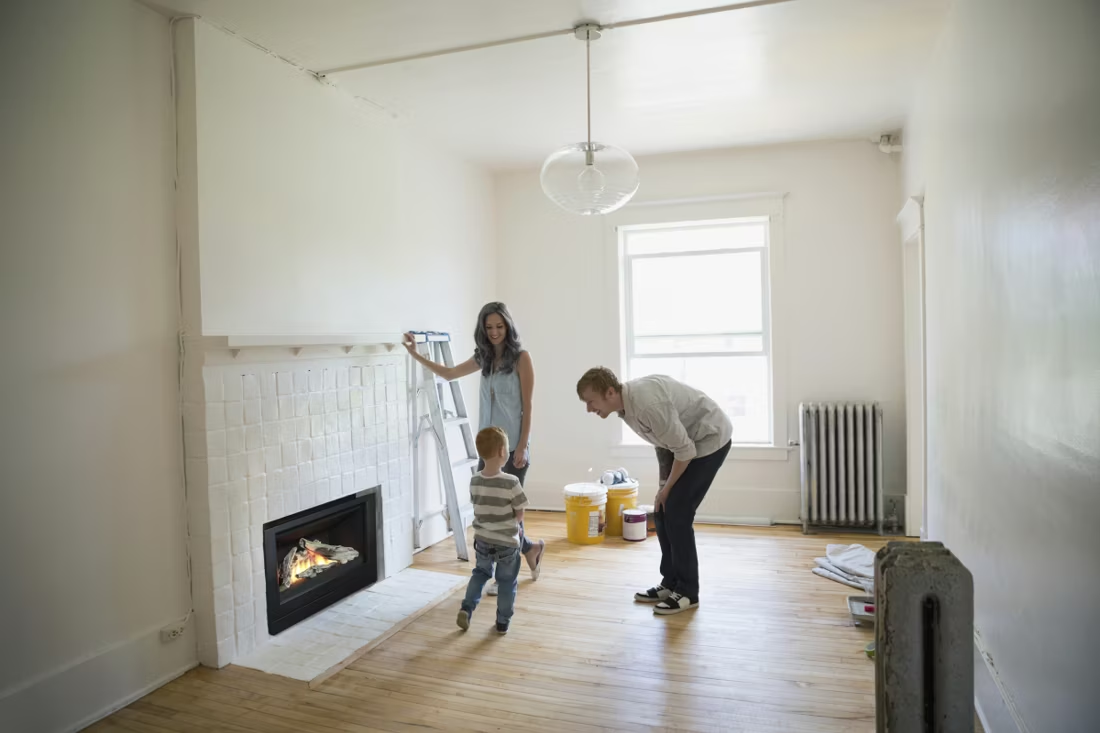
A lot of homes in Peachtree Corners' established neighborhoods were built with open masonry fireplaces designed to burn oak, pine, or hickory—the same species still sold at local firewood stands. Many of those owners are now converting to gas logs or a gas insert because it's cleaner, it lights with a switch, and it still delivers real heat during the occasional hard freeze or ice event that rolls through metro Atlanta. In newer construction, direct-vent gas fireplaces are often installed from the start as a design feature and a genuine backup heat source. Either way, the appeal in a zone 3A climate is less about survival heat and more about comfort, resale value, and having warmth on demand without dealing with ash or a chimney full of creosote.
Three steps. No salesperson until you're ready.
Tell us about your project
Your zip code, your situation, and the fuel you're leaning toward—or let the answers point you to one.
See what's actually available
The brands dealers within 100 miles genuinely carry—real options, never a catalog mirage.
Get your dealer & Project Guide
A trusted local dealer, plus the free Project Guide & Parts List that names every component of the job.
Frequently Asked Questions
How much does a gas fireplace installation cost in Peachtree Corners?
Most gas fireplace and insert installations in the Peachtree Corners area run roughly $3,500 to $9,000, depending on the unit, whether you're converting an existing masonry fireplace or building new, and how much gas line work is involved. A gas log set or insert going into a chimney that already has a gas line nearby sits at the lower end. A new direct-vent fireplace in a remodel—with framing, venting, and a fresh gas line run from the meter—lands in the middle to upper end. A local hearth dealer will give you a firm number after seeing your chimney and gas service in person.
Can I convert my existing wood-burning fireplace to gas?
Yes, and it's one of the most common projects in Peachtree Corners' older neighborhoods, where many homes have open masonry fireplaces originally built to burn oak or hickory. A gas insert or a vented log set can go into that same firebox, using the existing chimney (often with a stainless liner) as the venting path. Because wood and pellet heat are essentially non-factors in this climate, homeowners converting are almost always doing it for convenience and ambiance rather than replacing a primary heat source—which simplifies the decision considerably.
Is natural gas available in Peachtree Corners, or do I need propane?
Most established neighborhoods inside Peachtree Corners' zip codes (30071, 30092, 30360, 30010) already have natural gas service run to the street, which makes adding a gas fireplace to a home with an existing gas water heater or range fairly straightforward. Newer subdivisions or homes on the edges of Gwinnett County that were built all-electric sometimes don't have a gas line at all—in those cases a propane tank is the standard workaround, and most gas fireplace models can be configured for either fuel. Your local installer can confirm what's actually running to your specific address.
Will my gas fireplace still work if the power goes out?
Most modern gas fireplaces will, which matters more in this area than people expect—metro Atlanta gets the occasional ice storm that knocks out power for days even though deep cold is rare. Units with intermittent pilot ignition (IPI) run on a small battery backup that kicks in automatically when the power drops, so the fireplace still lights on demand. Valor's gas fireplaces go a step further: the pilot's thermocouple generates its own electricity, so there's no battery to remember at all. Either way, a gas fireplace is one of the few heat sources in a Peachtree Corners home that keeps working when Georgia Power's lines go down.
What's the difference between a gas fireplace, gas insert, and gas stove?
A gas fireplace is a fully built-in unit framed into a wall—the typical choice for new construction or a full remodel in Peachtree Corners' newer subdivisions. A gas insert drops into an existing masonry firebox, which is the more common upgrade in the city's older, established neighborhoods with original wood-burning chimneys. A gas stove is a freestanding cast-iron or steel unit that sits on the floor like a wood stove but runs on gas—less common here, but occasionally used in sunrooms or additions without an existing chimney.
Do I need a permit to install a gas fireplace in Peachtree Corners?
Yes. Depending on your exact address, permitting runs through either the City of Peachtree Corners or Gwinnett County's Department of Planning and Development, and a licensed gas-fitter is required for any new gas line work. Most local hearth dealers pull the permit and coordinate the gas line and inspection as part of the installation, so you're not left managing separate trades yourself. It's worth confirming with your installer which jurisdiction actually covers your street before work begins.
Vented vs. vent-free gas fireplaces—what should I know?
Vented (direct-vent) gas fireplaces pull combustion air from outside and exhaust it back outside through a sealed pipe—they're the cleanest and most universally recommended option, and they're what most Peachtree Corners installers default to. Vent-free gas fireplaces burn directly into the room without external venting; they're legal in Georgia but come with strict sizing rules and are generally better suited to occasional-use spaces than a room where you'll run the fireplace for hours. Given how mild the climate is here, a lot of homeowners lean toward vent-free for a den or bonus room specifically because it doesn't require any chimney or venting work—but a direct-vent unit remains the safer default for a primary living space.
How often does a gas fireplace need to be serviced?
An annual inspection is the standard recommendation, even in a climate like Peachtree Corners' where a gas fireplace might only see heavy use for a few months a year. A technician checks the burner, pilot assembly, venting, and gas connections, and cleans the glass and interior—a light-duty job compared to a wood chimney sweep, but still important since gas lines and ignition components need occasional attention. Expect to pay somewhere in the $150–$250 range for a standard annual visit from a certified technician.
Gas vs. electric fireplace—which makes more sense here?
Gas gives you real flame, higher heat output, and the ability to keep running during a power outage—a real consideration given Georgia Power's occasional storm-related outages. Electric fireplaces plug into a standard outlet, need no venting or gas line at all, and cost very little to install (often under $1,000), but they run on Georgia Power's residential rate of about 15.5 cents per kWh and produce less genuine heat than a gas unit. For a primary living space where you want a fireplace to actually warm the room on a cold snap, gas usually wins. For a bedroom, basement, or rental property where ease of install matters more than heat output, electric is often the simpler call.
Why is a fireplace insert so efficient?
An insert does two things: it seals the chimney completely, so you stop losing air you already paid to heat, and it radiates warmth into the room through the firebox and glass. Most add a heat-exchange fan that pulls cool room air underneath, wraps it around the hot firebox, and pushes it back out warm. Your home is more efficient before you've even lit the first fire.
Is my gas fireplace wasting gas?
If it was installed more than 15 years ago, probably. Older gas fireplaces keep a standing pilot light burning all the time, and that little flame can cost a couple hundred dollars a year. Newer models use pilot-on-demand ignition—the pilot lights only when you use the fireplace and goes out when you turn it off.
Can a fireplace actually lower my heating bill?
Yes—by creating a comfort zone. A furnace heats every square foot of the house just to warm the one room you're in; a gas fireplace on low burns roughly a sixth of the gas a typical furnace does. Set the furnace around 55–60 degrees as a baseline, then heat the rooms your family actually uses. Families who heat this way commonly save $20–$60 a month.
Does a fireplace add value to my home?
On average, a fireplace adds back to the home about the same amount you spent installing it. Add the monthly savings from heating the rooms you actually use instead of the whole house—often hundreds of dollars a year—and the value case is strong before you even count what a fire does for how your family uses the room.
Preferred Dealer in Peachtree Corners
Find your gas fireplace in Peachtree Corners.
Tell us a bit about your home and we'll match you with a trusted local dealer and send over your free Project Guide & Parts List—the exact parts, vent kit, and recommended installer for your Peachtree Corners project.
Find Your Fireplace →