
Pellet heat is rare in Peachtree Corners—but not unheard of.
With about 2,980 heating degree days a year and winter lows that average 33°F, most Gwinnett County homes lean on gas or electric heat. A pellet stove can still make sense for a specific homeowner—we'll help you find out if that's you.
Every Project Starts From One of These Five Situations
Metro Atlanta's mild winters rarely call for solid-fuel backup heat.
Peachtree Corners sits at just under 1,000 feet in Gwinnett County, in climate zone 3A, where the average winter low hovers around 33°F and the area logs roughly 2,980 heating degree days a year. Compare that to a place like Bozeman, Montana, which racks up two to three times that number, and it's clear why the calculus around a pellet stove is different here. A hopper-fed appliance built to hold a steady burn through weeks of sub-zero weather doesn't have much of a job to do when the coldest stretch of a typical Peachtree Corners winter lasts a few days, not a few months.
That's why pellet stoves show up on our radar for Peachtree Corners far less often than gas fireplaces or electric units—both of which are standard, well-supported choices here through Georgia Power and the local gas utilities. When a pellet stove does make sense, it's usually for a specific reason: a homeowner who likes the look and ritual of a real flame without the wood storage and chimney maintenance, a household that wants a backup heat source that doesn't rely on natural gas, or someone splitting time between Peachtree Corners and a second property in the North Georgia mountains where solid fuel heat is more common. Pellets themselves aren't hard to source regionally—Lignetics, Hamer Pellet Fuel, and Greenway Renewable Energy all supply the Southeast—but stove selection and installers who specialize in pellet venting are thinner on the ground in Gwinnett County than they are in colder parts of the country.
Three steps. No salesperson until you're ready.
Tell us about your project
Your zip code, your situation, and the fuel you're leaning toward—or let the answers point you to one.
See what's actually available
The brands dealers within 100 miles genuinely carry—real options, never a catalog mirage.
Get your dealer & Project Guide
A trusted local dealer, plus the free Project Guide & Parts List that names every component of the job.
Frequently Asked Questions
Are pellet stoves actually installed in Peachtree Corners homes?
Occasionally, but they're not common. With Gwinnett County's mild winter profile—an average low around 33°F and roughly 2,980 heating degree days per season—most homeowners here get by fine on the gas or electric heat already built into the house, and pellet stove relevance for this area is genuinely low. The homeowners who do install one are usually after the ambiance of a real flame, a fuel option that doesn't depend on the natural gas line, or a unit for a second home further north where winters run longer. If that's your situation, it's still worth doing right rather than skipping the planning.
What does a pellet stove installation typically cost?
Because pellet installs are infrequent in this area, there isn't a deep pool of local pricing data the way there is for gas fireplace conversions. Nationally, a pellet stove or insert installation—unit, venting, and labor—commonly runs in the $3,000 to $6,000 range depending on the model and whether you're venting through an existing chimney or a new wall penetration. In Peachtree Corners specifically, expect to pay a bit of a premium for specialized labor simply because fewer local crews install pellet appliances regularly. A trusted dealer can give you a firm number once they've seen your space.
Will a pellet stove keep working if the power goes out?
Not on its own, and this matters more in Gwinnett County than people expect—ice storms here can knock out power for days even though the winters are mild overall. A pellet stove's auger, igniter, and combustion blower all run on household electricity, so a standard unit goes dark the moment the power does. Some manufacturers sell battery-backup packages that can run the stove for a limited window during an outage, but it's not automatic the way a wood stove's radiant heat is. If backup heat during an outage is your main goal, that's worth discussing directly with a dealer before you commit to pellet over another fuel.
Why would I choose pellet over the gas or electric options that are standard here?
Gas and electric are the default recommendations for Peachtree Corners because they're well-supported by existing utility infrastructure—Georgia Power for electric, and natural gas lines through much of Gwinnett County—and they involve far less specialized installation. A pellet stove earns its place when a homeowner specifically wants a real, visible flame with a wood-like feel but without cutting, storing, and hauling firewood. It's a narrower use case here than in colder climates, so it usually comes down to personal preference rather than a heating necessity.
Where do I buy pellet fuel if I install a stove in Peachtree Corners?
Pellet fuel itself isn't hard to find even though stoves are uncommon locally. Lignetics, Hamer Pellet Fuel, and Greenway Renewable Energy all distribute through the Southeast, and hearth retailers in the broader metro Atlanta area typically stock bagged pellets by the ton or can order them. Because demand is lower here than in a pellet-heavy market, it's worth confirming with your dealer that they can keep you supplied through a full winter before you commit to the appliance.
Do I need a permit to install a pellet stove in Peachtree Corners?
Yes—any new solid-fuel or vented appliance typically requires a building permit through Gwinnett County, covering the unit's clearances and the venting penetration through the wall or roof. Because pellet installs are less routine here than gas fireplace work, it's especially important to use an installer who's pulled permits for this type of appliance before, rather than a general contractor unfamiliar with pellet venting requirements.
What pellet stove brands are available through Southeast dealers?
National manufacturers like Harman and Englander are the most commonly available through hearth dealers who service the Atlanta metro, and most can special-order a model if it's not on the showroom floor. Given how few installs happen in Gwinnett County relative to colder regions, don't expect a large local inventory—plan on your dealer ordering the specific unit that fits your space rather than choosing from stock.
If pellet and wood are both uncommon here, what do most Peachtree Corners homeowners actually install?
Gas fireplaces and electric units dominate here for good reason—both fuel relevance flags for this area are standard, backed by Georgia Power's electric grid and the natural gas utilities serving Gwinnett County. Most homeowners want instant, low-maintenance heat for a mild climate, and gas or electric delivers that without wood storage, ash cleanup, or pellet deliveries. Pellet and wood both remain available options through local dealers, but they're the exception rather than the default here.
I have a cabin in the North Georgia mountains too—does pellet make more sense there?
Often, yes. If you split time between Peachtree Corners and a cabin further north—around Blue Ridge, Ellijay, or the Blairsville area—winters at elevation run meaningfully colder and longer than Gwinnett County's, and a pellet stove's steady, thermostatically controlled heat can be a genuinely good fit there. It's worth having that separate conversation with a dealer, since sizing and venting for a mountain cabin look different from what we'd recommend for a primary Peachtree Corners residence.
Why is a fireplace insert so efficient?
An insert does two things: it seals the chimney completely, so you stop losing air you already paid to heat, and it radiates warmth into the room through the firebox and glass. Most add a heat-exchange fan that pulls cool room air underneath, wraps it around the hot firebox, and pushes it back out warm. Your home is more efficient before you've even lit the first fire.
What's the difference between an insert and a zero-clearance fireplace?
An insert is a fireplace that slides into a pre-existing wood-burning fireplace—if you don't have one, there's nothing to insert it into. A zero-clearance fireplace is built into a framed wall, which makes it the answer for remodels and new construction. Simple test: existing masonry fireplace means insert; blank or framed wall means zero-clearance.
Can a fireplace actually lower my heating bill?
Yes—by creating a comfort zone. A furnace heats every square foot of the house just to warm the one room you're in; a gas fireplace on low burns roughly a sixth of the gas a typical furnace does. Set the furnace around 55–60 degrees as a baseline, then heat the rooms your family actually uses. Families who heat this way commonly save $20–$60 a month.
Does a fireplace add value to my home?
On average, a fireplace adds back to the home about the same amount you spent installing it. Add the monthly savings from heating the rooms you actually use instead of the whole house—often hundreds of dollars a year—and the value case is strong before you even count what a fire does for how your family uses the room.
Preferred Dealer in Peachtree Corners
Pellet Brands Stocked Around Peachtree Corners
Manufacturers will point you to the nearest stocking dealer.
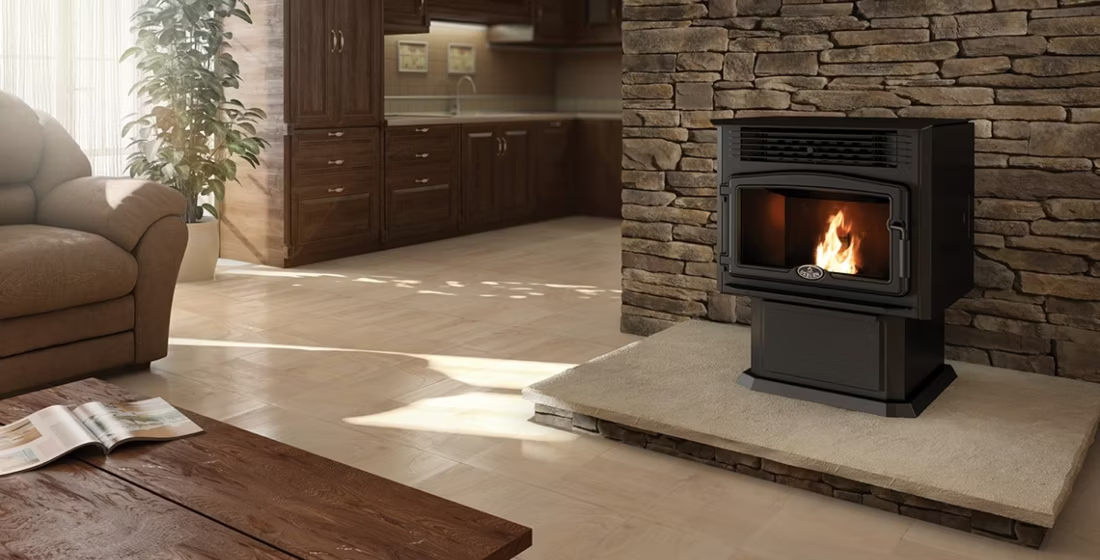
See what pellet heat could look like in Peachtree Corners.
Tell us about your home and how you'd use a pellet stove, and we'll match you with a trusted local dealer and send over a free Project Guide & Parts List—including venting and a straight answer on whether pellet is the right call for your situation.
Find Your Fireplace →