
Electric Heat Built for Peachtree Corners' Mild Winters.
With winter lows averaging 33°F and no chimney to maintain, electric is the low-hassle way to add warmth and ambiance to a Peachtree Corners home. Find the right unit and connect with a trusted local dealer.
Every Project Starts From One of These Five Situations
A mild climate built for electric heat.
Peachtree Corners sits at just under 1,000 feet elevation in Gwinnett County, in climate zone 3A, where winters are short and mild—average lows hover around 33°F and the city has a winter heating load that's less than half what a city like Minneapolis, MN sees in a typical winter. That's not a climate that demands a cast-iron wood stove or a high-BTU furnace insert. It's a climate where a well-placed electric fireplace can carry the ambiance and the occasional cold snap without much fuss.
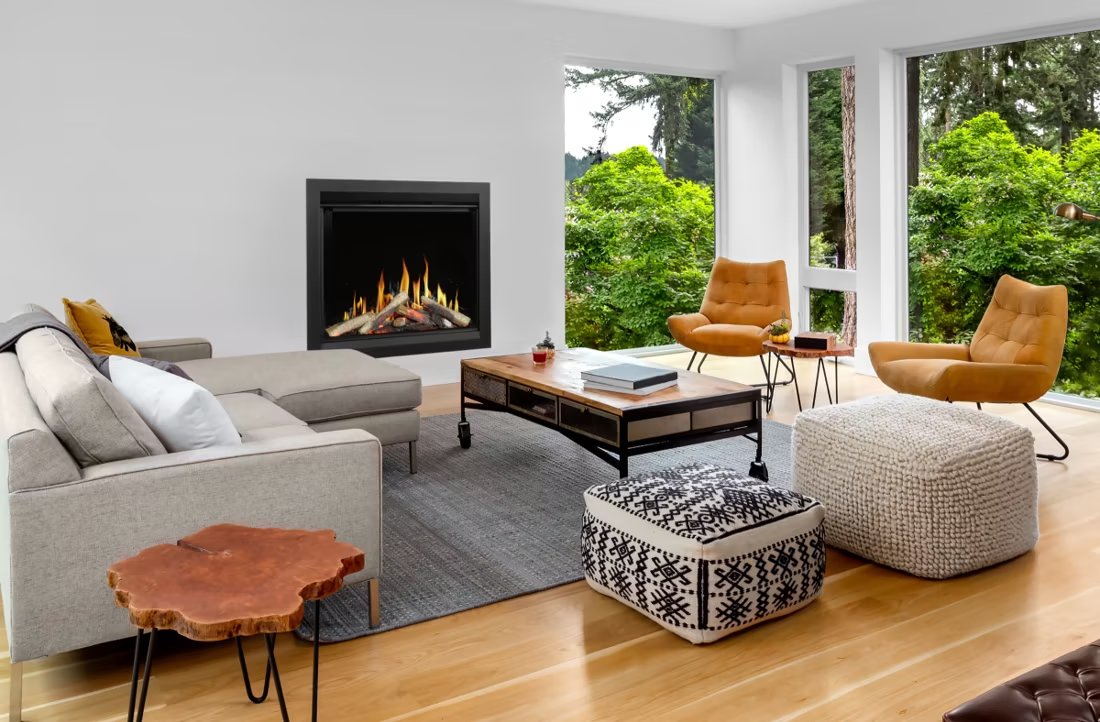
Older homes in the area may still have a masonry firebox built for burning local oak, pine, or hickory, but wood heat has never been a practical necessity here the way it is farther north—and in a newer, fast-growing city built around townhomes, condos, and planned communities, running a chimney or storing cordwood often isn't realistic anyway. Electric fireplaces sidestep all of that: no venting, no combustion byproducts, and installation that ranges from a simple plug-in unit to a built-in linear model wired by a licensed electrician. Georgia Power serves the area at a residential rate of about $0.1549 per kWh, which keeps even daily use of a heat-producing unit inexpensive.
Three steps. No salesperson until you're ready.
Tell us about your project
Your zip code, your situation, and the fuel you're leaning toward—or let the answers point you to one.
See what's actually available
The brands dealers within 100 miles genuinely carry—real options, never a catalog mirage.
Get your dealer & Project Guide
A trusted local dealer, plus the free Project Guide & Parts List that names every component of the job.
Frequently Asked Questions
How much does it cost to install an electric fireplace in Peachtree Corners?
It depends heavily on the type of unit. A freestanding or wall-mounted electric fireplace that plugs into an existing outlet typically runs $150 to $800 installed, since there's no wiring or venting involved. A built-in electric fireplace—recessed into a wall or custom surround, often requiring a new dedicated circuit—usually runs $1,200 to $3,500 once you include the electrician's time. Larger linear models with custom millwork or stone surrounds can push toward $5,000 to $6,000. Local dealers can walk you through the tradeoffs during an in-home or virtual consultation before you commit to a model.
Do I need a permit or a licensed electrician to install an electric fireplace?
If you're plugging a freestanding or mantel-style electric fireplace into an existing standard outlet, no permit is needed. If you're installing a built-in unit that requires a new dedicated 20-amp circuit or any wall wiring, you'll need a licensed electrician, and because Peachtree Corners incorporated as its own city in 2012, that electrical permit generally runs through the City of Peachtree Corners' permitting process rather than unincorporated Gwinnett County. Most hearth dealers either employ licensed electricians or coordinate directly with one as part of the installation, so you're not left managing the permit yourself.
Will an electric fireplace actually heat my room, or is it just for looks?
Most electric fireplaces sold for real heating output run a 1,500-watt heater on high, which is enough to noticeably warm a 300- to 400-square-foot room—plenty for the occasional 30-degree night Peachtree Corners sees each winter. At Georgia Power's residential rate of $0.1549 per kWh, running that heater on high costs roughly $0.23 an hour. Many homeowners here run the flame effect alone (using 100 to 150 watts, closer to $0.02 an hour) for ambiance and only switch on the heater during a genuine cold snap, using it as a supplement to their central heat pump rather than a primary heat source.
What's the difference between an electric insert, a built-in, and a freestanding electric fireplace?
An electric insert is sized to slot into an existing masonry firebox or wood-stove opening, making it a popular choice for older Peachtree Corners homes with an unused wood fireplace. A built-in electric fireplace is designed to be framed into a wall from scratch—common in new construction and remodels—and typically needs a dedicated circuit run by an electrician. A freestanding or mantel-style unit needs no installation beyond an outlet and can be moved between rooms, which makes it a favorite in the area's townhomes and condos where owners may not want to alter walls.
Is an electric fireplace a good fit for a townhome or condo in Peachtree Corners?
Yes—electric is often the best fit for the townhome and condo stock common in newer Peachtree Corners developments. There's no chimney or exterior venting to coordinate with an HOA, no combustion byproducts to worry about in a shared-wall building, and no permit hassle for a plug-in unit. Wall-mounted and recessed linear models are especially popular in these settings because they add a focal point to a living room without eating into square footage the way a freestanding stove would.
Electric vs. gas fireplace—which is right for my home?
Both are common choices in Peachtree Corners, and the right one depends on what you're solving for. Gas fireplaces (natural gas or propane) put out real, sustained heat and can serve as genuine supplemental heat during a cold front, but they require venting and gas line work, which raises install cost and complexity. Electric fireplaces install in a fraction of the time, cost less upfront for simpler units, and never need servicing for gas lines or venting—but their heat output is more modest and best suited to zone heating rather than replacing a furnace. In a mild climate like this one, many homeowners choose electric for secondary rooms, bedrooms, or basements, and reserve gas for the main living area.
How long do electric fireplaces last, and what maintenance do they need?
A quality electric fireplace typically lasts 10 to 15 years, though the LED flame technology in many current models is rated for 20,000+ hours of use before the light effect needs attention. Maintenance is minimal compared to a wood or gas unit—no annual chimney sweep, no gas line inspection. Most upkeep is limited to occasionally dusting the heater vents and cleaning the glass front, plus replacing the blower fan if it eventually gets noisy, which a local dealer can typically handle as a straightforward parts swap.
Can I convert an old wood-burning fireplace to electric?
Yes, and it's a common request from owners of older Peachtree Corners homes with a masonry firebox that hasn't seen a real wood fire built with local oak or hickory in years. An electric insert is sized to fit directly into the existing opening, usually plugging into a nearby outlet or a new dedicated circuit if the unit calls for more power. There's no need to line or reline the chimney the way a gas conversion would require, which keeps the project simpler and generally cheaper—often in the $800 to $2,500 range depending on the insert and whether new wiring is needed.
What should I look for in an electric fireplace given Peachtree Corners' climate?
Since winters here are mild—average lows around 33°F and a winter heating load well under half that of a place like Minneapolis—prioritize a unit with a strong flame-effect display and good build quality over raw heat output; you won't be relying on it to carry the house through a hard freeze. A model with a thermostat and multiple heat settings gives you flexibility to run ambiance-only most nights and dial up the heater during the occasional cold snap. A local dealer can also advise on units that pair well with a heat pump system, which is the standard central heating setup in most Peachtree Corners homes.
Can I put a TV above my fireplace?
Yes—with an asterisk. Fireplaces are hot and TVs don't like heat. Either put a mantel between them to deflect rising warmth, or choose a fireplace with heat-management technology that creates a cool zone on the wall above—the wall stays around 125 degrees, barely warm, while the room still gets full heat. If you like clean lines and don't want a mantel, heat management is the answer.
Does an electric fireplace need a vent or chimney?
No—that's its superpower. An electric fireplace needs a wall and an outlet, period. No vent pipe, no gas line, no clearances to design around, which is why it works in bedrooms, offices, apartments, and walls where venting a gas or wood unit would be impractical or impossible. Installation is typically the simplest and least expensive of any fireplace type.
How much should I budget for a fireplace?
For an average home—covering the fireplace, the vent pipe, and basic installation—a budget between $3,900 and $5,500 gives you a lot of options across wood, gas, and pellet. By the time you add finish work, gas line, and electrical, the average complete installation lands between $5,000 and $12,000 all-in. In a remodel or new build, a good rule is to put about 2.5% of the total project cost toward the fireplace.
Should the dealer who sells my fireplace also install it?
Ideally, yes. A fireplace project involves vent pipe, gas line, electrical, and often tile or stone. Hire three or four separate trades and you own the liability and the game of telephone between them. One company selling and installing means one accountable party, start to finish—ask about factory training, on-time completion records, and what happens if an inspection fails.
Preferred Dealer in Peachtree Corners
Electric Service in Peachtree Corners
An electric fireplace's heater draws about 1,500 watts—pennies per hour at local rates.
Georgia Power Co
Find your electric fireplace in Peachtree Corners.
Tell us a bit about your home and we'll put together a free Project Guide & Parts List—the exact components, including any electrical work needed, plus your recommended local dealer in Peachtree Corners.
Find Your Fireplace →