
Instant ambiance, zero venting, real warmth.
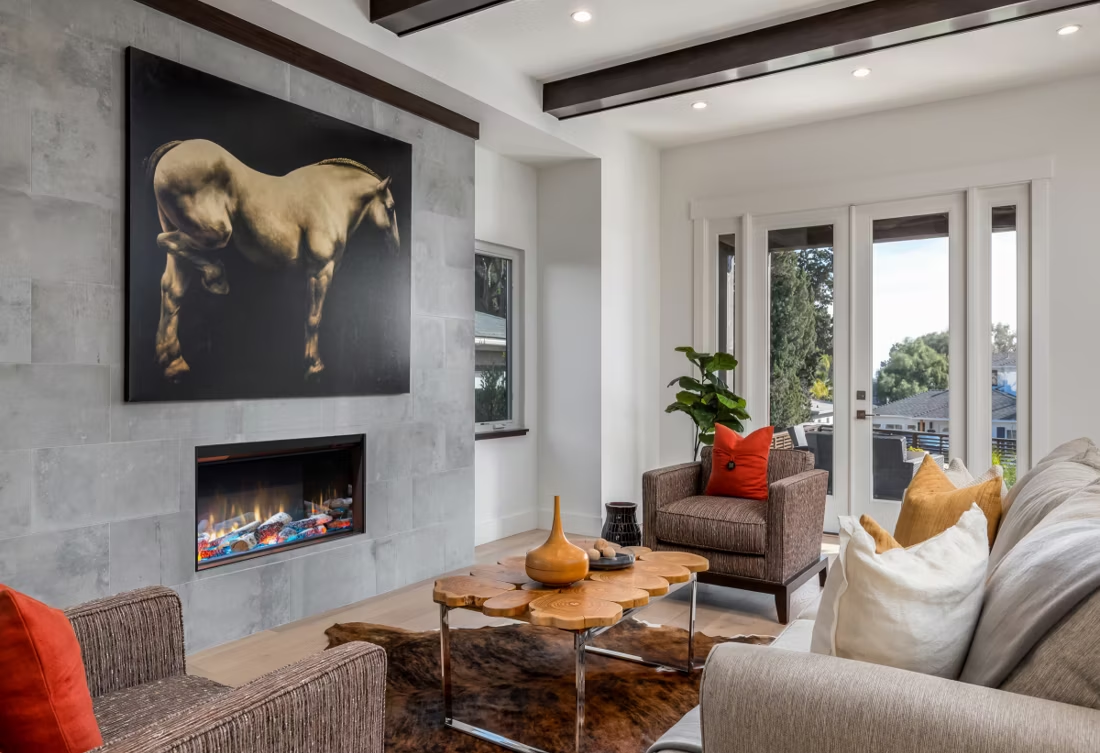
With winter lows averaging 33°F and just under 3,000 heating degree days, Gwinnett County rarely needs a full wood-burning setup—but an electric fireplace adds real ambiance and useful zone heat to any room, from Suwanee townhomes to Lawrenceville family rooms. Find the right unit and connect with a trusted local dealer.
Every Project Starts From One of These Five Situations
The right fit for Atlanta's fastest-growing suburbs.
Gwinnett County sits in climate zone 3A with an average winter low around 33°F and roughly 2,980 heating degree days a year—a fraction of what a place like Duluth, MN or Burlington, VT sees in a single winter. That mild profile, combined with a population that's grown past 248,000 households across Lawrenceville, Duluth, Suwanee, Buford, Snellville, and Peachtree Corners, means most homes here rely on central HVAC for primary heat and want a fireplace for the look and feel of a fire rather than survival heat. Electric fireplaces fit that job well: no chimney, no gas line, no combustion byproducts to vent, and a plug-in or hardwired unit that goes in almost anywhere.
Much of Gwinnett's newest housing stock—the condos, townhomes, and slab-on-grade single-family homes going up around Suwanee and Peachtree Corners—was never built with a masonry chimney or a gas stub for a fireplace. Retrofitting either is expensive and, for many HOA communities, not an option at all. An electric insert or wall-mount unit sidesteps all of that. It runs on the county's existing electrical service—Georgia Power for most of the county, with Jackson EMC and Walton EMC serving pockets on the eastern and southern edges—and it delivers instant, adjustable heat to a bedroom, basement, or family room without any structural work beyond, at most, a dedicated circuit.
Three steps. No salesperson until you're ready.
Tell us about your project
Your zip code, your situation, and the fuel you're leaning toward—or let the answers point you to one.
See what's actually available
The brands dealers within 100 miles genuinely carry—real options, never a catalog mirage.
Get your dealer & Project Guide
A trusted local dealer, plus the free Project Guide & Parts List that names every component of the job.
Frequently Asked Questions
How much does an electric fireplace installation cost in Gwinnett County?
Plug-in electric inserts and freestanding units typically run $300 to $800 installed, since they use a standard household outlet and require no wiring changes. Built-in wall units or larger linear models that need a dedicated 20-amp circuit run higher—usually $1,200 to $2,500 once an electrician runs new wiring and a local dealer handles the surround or mantel finish work. New-construction installs, where the unit is framed in during a remodel, tend to land in the same range since most of the cost is the finish carpentry rather than the appliance itself.
Do electric fireplaces provide enough heat for Gwinnett County winters?
For most Gwinnett County homes, yes—as supplemental, zone-specific heat rather than a whole-house solution. With average winter lows around 33°F and heating degree days well under 3,000 a year, central HVAC comfortably handles primary heating for the season, and an electric fireplace's 4,000-to-5,000 BTU heater is plenty to warm a single room (roughly 400 to 1,000 square feet) on the occasional cold night. If you're trying to heat an entire finished basement or an addition without ductwork, talk to a local dealer about a larger insert or a secondary mini-split—an electric fireplace alone won't carry that load.
Do I need a permit for an electric fireplace in Gwinnett County?
A plug-in electric fireplace that uses an existing outlet doesn't require a permit. A built-in or wall-recessed unit that needs a new dedicated circuit does require an electrical permit, pulled through Gwinnett County's Department of Planning and Development for unincorporated areas, or the relevant city building department if you're inside Lawrenceville, Duluth, Suwanee, or another incorporated city limit. Most licensed electricians and hearth dealers handle that paperwork as part of the install, so it's rarely something homeowners have to manage themselves.
What's the difference between an electric insert, a wall-mount unit, and a mantel package?
An electric insert is designed to slide into an existing fireplace opening—a common retrofit for older Gwinnett County homes in Lilburn or Norcross that have a masonry firebox but no interest in burning wood. A wall-mount unit hangs flush against a wall like a large-format TV and works well in newer townhomes without an existing hearth. A mantel package pairs a smaller electric firebox with a freestanding cabinet or surround, giving you a traditional fireplace look with zero installation beyond plugging it in. Which one fits depends on whether you're renovating an existing fireplace or starting from a blank wall.
Will an electric fireplace work during a power outage?
No—electric fireplaces need grid power to run the heater and flame effect, so they shut off along with everything else during an outage. Georgia Power, Jackson EMC, and Walton EMC all serve parts of Gwinnett County, and outages here are typically short and tied to summer thunderstorms or the occasional ice event rather than sustained winter cold. If backup heat during an outage is a priority for your household, a vented gas fireplace or insert is the better fit—electric is really about everyday ambiance and convenience, not emergency heat.
Electric vs. gas—which is right for my Gwinnett County home?
Gas fireplaces put out real heat—enough to serve as supplemental heat for a whole living area—and many stay operational during a power outage with a battery-backup ignition system. They require either natural gas service or a propane tank, plus venting and a gas line permit. Electric fireplaces install almost anywhere with no venting and no fuel line, cost less up front, and are the only realistic option in condos, HOA communities, or interior rooms where running gas or venting isn't practical. Given Gwinnett's mild climate zone 3A winters, plenty of homeowners choose electric purely for the look and the modest supplemental warmth, saving the bigger gas installation for a primary living space if they want it.
Can I put an electric fireplace in a home without a chimney?
Yes—that's one of the main reasons electric fireplaces have become common across Gwinnett County's newer housing stock. Townhomes in Suwanee and Peachtree Corners, condos near Duluth, and slab-built single-family homes throughout the county were often built without a masonry chimney or a gas fireplace stub, and retrofitting either is costly and sometimes restricted by HOA rules. An electric wall-mount unit or mantel package needs nothing more than a nearby outlet or a new dedicated circuit, making it the practical choice for homes that were never designed around a fireplace.
What electric fireplace brands do local dealers carry in Gwinnett County?
Local hearth dealers in the Gwinnett area typically carry established electric fireplace lines such as Dimplex, Napoleon, and SimpliFire, spanning everything from compact plug-in inserts to large linear wall units with realistic flame technology. The right brand and model depends on the size of the space, whether you need a specific heat output, and whether you're retrofitting an existing opening or building into a wall from scratch—a local dealer will walk through those specifics during an in-home or in-showroom consultation.
Are wood or pellet stoves an option in Gwinnett County?
They're uncommon here, and for good reason. Gwinnett County's climate zone 3A winters are mild—an average low of 33°F and under 3,000 heating degree days a year—so wood and pellet heat never became the default the way it is in colder parts of the country. Local oak, pine, and hickory are plentiful, but most of that wood ends up as landscaping mulch or the occasional backyard fire pit rather than a primary heat source, and pellet fuel from regional suppliers like Lignetics or Hamer Pellet Fuel is more often used farther north in Georgia's mountain counties. A handful of older homes in Lawrenceville or Buford still have a traditional wood-burning fireplace, but for new installs, gas and electric are the practical choices in Gwinnett County today.
Can I put a TV above my fireplace?
Yes—with an asterisk. Fireplaces are hot and TVs don't like heat. Either put a mantel between them to deflect rising warmth, or choose a fireplace with heat-management technology that creates a cool zone on the wall above—the wall stays around 125 degrees, barely warm, while the room still gets full heat. If you like clean lines and don't want a mantel, heat management is the answer.
Do electric fireplaces actually produce heat?
Yes—most put out around 4,800–5,000 BTUs from a standard outlet, which comfortably warms a bedroom, office, or den as a comfort-zone heater. What they won't do is carry a whole house the way wood, gas, or pellet can. Think of electric as ambiance-first with honest supplemental heat: flames on with no heat in July, flames plus warmth in January.
How much should I budget for a fireplace?
For an average home—covering the fireplace, the vent pipe, and basic installation—a budget between $3,900 and $5,500 gives you a lot of options across wood, gas, and pellet. By the time you add finish work, gas line, and electrical, the average complete installation lands between $5,000 and $12,000 all-in. In a remodel or new build, a good rule is to put about 2.5% of the total project cost toward the fireplace.
Does a fireplace add value to my home?
On average, a fireplace adds back to the home about the same amount you spent installing it. Add the monthly savings from heating the rooms you actually use instead of the whole house—often hundreds of dollars a year—and the value case is strong before you even count what a fire does for how your family uses the room.
Stove and Fireplace Dealers in Gwinnett County
Gas Equipment Company - Lawrenceville
Find your electric fireplace in Gwinnett County.
Tell us a bit about your home and we'll match you with the right electric fireplace, insert, or wall unit—plus a free Project Guide & Parts List and a trusted local dealer to install it.eyebrow_fix
Find Your Fireplace →