
Add ambiance to your Chatham County home without touching the chimney.
Savannah's historic homes, Tybee Island cottages, and Pooler new-builds all handle electric heat differently. Find the right unit and get matched with a trusted local dealer who knows the difference.
Every Project Starts From One of These Five Situations
Mild winters make electric the low-hassle choice.
Chatham County sits in climate zone 2A with a short, mild winter heating season and a winter low averaging 40 degrees—nothing close to the sub-zero nights that drive homeowners in places like Bismarck or Duluth toward a wood-burning primary heat source. Here, a fireplace is almost always about atmosphere and supplemental warmth on the occasional 30-degree Savannah morning, not survival heat. That reality shapes which fuel makes sense: electric units deliver instant flame-effect ambiance without a flue, without combustion byproducts, and without any real seasonal fuel cost.
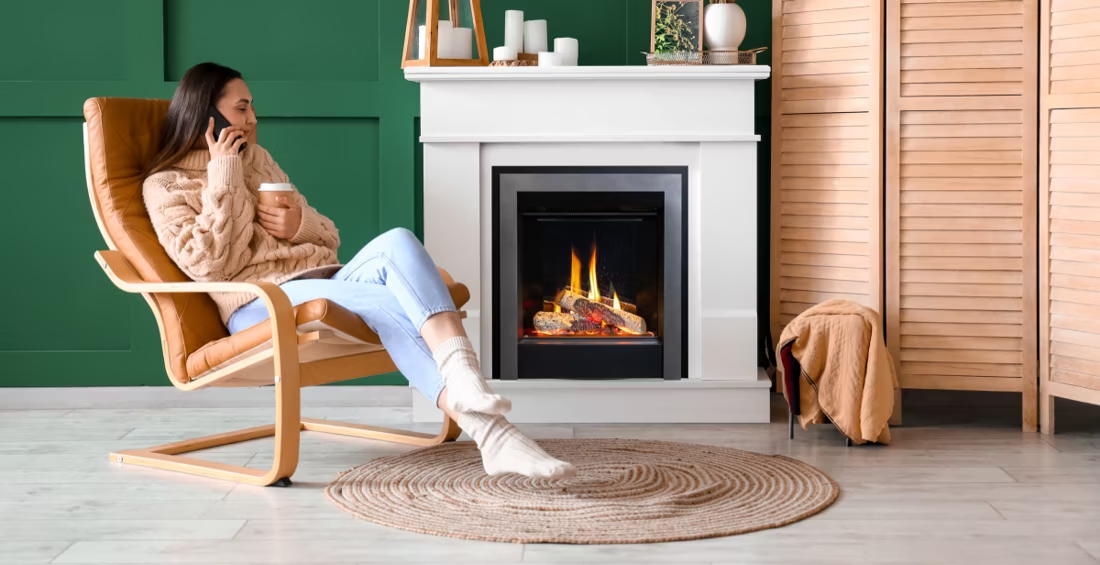
Electric is also the fuel of choice for the historic housing stock that defines much of Savannah's downtown and the Victorian District, where many homes have decorative chimneys that were never built for modern venting or have masonry that a homeowner doesn't want to open up. An electric insert drops into an existing firebox with no gas line, no venting, and no permit for the appliance itself in most cases. In newer construction around Pooler, Garden City, and Richmond Hill-adjacent Chatham neighborhoods, electric units are just as popular as a low-cost accent in a media wall or bedroom where running gas line isn't worth the expense for occasional use.
Three steps. No salesperson until you're ready.
Tell us about your project
Your zip code, your situation, and the fuel you're leaning toward—or let the answers point you to one.
See what's actually available
The brands dealers within 100 miles genuinely carry—real options, never a catalog mirage.
Get your dealer & Project Guide
A trusted local dealer, plus the free Project Guide & Parts List that names every component of the job.
Frequently Asked Questions
How much does an electric fireplace installation cost in Chatham County?
Most electric fireplace and insert installations in Chatham County run $400 to $1,200, which is a fraction of a gas or wood project because there's no venting, no chimney work, and no fuel line to run. A plug-in insert dropped into an existing Savannah rowhouse firebox sits at the low end. A built-in electric unit set into new framing, with a dedicated 120V or 240V circuit run by an electrician for a larger model, lands at the higher end. Because there's no combustion appliance involved, most jurisdictions in Chatham County don't require a building permit for the fireplace itself—though a new electrical circuit may need an electrical permit depending on the scope.
Do I need a permit to install an electric fireplace in Savannah or Chatham County?
In most cases, no—because electric fireplaces don't involve combustion, venting, or gas lines, they typically fall outside the building permit requirements that apply to wood or gas installations. If your project involves adding a new dedicated electrical circuit or outlet, an electrician may need to pull an electrical permit through the local jurisdiction (City of Savannah, Pooler, Garden City, or unincorporated Chatham County, depending on address). A licensed local dealer handling your installation will know exactly what, if anything, needs to be filed for your specific address and unit.
Are electric fireplaces a good fit for Savannah's historic homes?
Yes, and it's one of the most common projects local dealers see in the Historic District and Victorian District. Many of these homes have decorative fireplaces and chimneys that were bricked over, capped, or were never designed for a modern vented appliance—opening that masonry back up for gas or wood venting can get expensive and complicated fast with preservation guidelines in play. An electric insert or log set drops into the existing firebox opening with no venting and no structural work, preserving the mantel and surround while adding real flame-effect ambiance and a bit of supplemental warmth on cool evenings.
Is a wood or pellet stove ever a realistic option in Chatham County?
Rarely. With only a short, mild winter heating season and winter lows averaging 40 degrees, Chatham County's climate doesn't generate the sustained cold that makes wood or pellet heat practical as a home's primary or even meaningful supplemental heat source. A small number of homeowners still install wood stoves for aesthetic reasons, occasional cool-weather use, or because they have a vacation property in a colder region—and regional pellet brands like Lignetics and Hamer Pellet Fuel are available through hearth retailers for the rare pellet stove owner. But for the vast majority of Chatham County homes, electric or gas are the practical choices, and most local dealers will say so directly rather than sell you a wood setup you won't use.
What's the difference between an electric insert and a built-in electric fireplace?
An electric insert is sized to slide into an existing masonry firebox—the standard choice for Savannah's older homes with a fireplace opening already in place. A built-in electric fireplace is designed to be framed into a wall from scratch, which is more common in Pooler and other newer-construction areas of the county where there's no existing firebox to work with. Both plug into a standard outlet in most cases, though larger built-in units sometimes call for a dedicated 240V circuit for full heat output. A local dealer will measure your opening or planned space and tell you which format fits.
Do electric fireplaces actually produce heat, or just the flame effect?
Most electric fireplaces sold today do both—a flame-effect display that runs independently, plus a built-in heater (typically 4,600 to 5,200 BTU) that can be switched on separately. In Chatham County's mild climate, most owners run the flame year-round for ambiance and only switch on the heat function during the occasional cold front or chilly evening, since the county rarely sees the sustained cold that would make it a meaningful heat source for a whole room. Higher-end models offer more realistic flame technology and better heat distribution, which your local dealer can walk you through based on room size.
Can an electric fireplace run on a normal outlet, or does it need special wiring?
Most electric inserts and freestanding units plug into a standard 120V household outlet and draw about the same power as a space heater. Larger built-in units, especially wide linear models popular in newer Pooler and Garden City homes, sometimes require a dedicated 20-amp circuit or 240V service for full heat output—check the manufacturer specs before finalizing your electrical plan. Georgia Power service is standard and reliable across Chatham County, so power availability isn't a concern; it's really a question of matching the unit's draw to your home's existing circuit capacity, which your installer will confirm before the unit goes in.
Electric vs. gas fireplace—which is right for my Chatham County home?
Gas delivers real, substantial heat output and a more authentic flame, and natural gas service is standard through much of Savannah and the surrounding incorporated areas—a good fit if you want a fireplace that meaningfully heats a room during the county's cooler snaps. Electric costs far less to install, requires no venting or gas line, works in homes without an existing fireplace or chimney, and is the practical answer for historic homes where opening up masonry isn't appealing. Given Chatham County's mild 40-degree average winter low, plenty of homeowners choose electric purely for the look and ambiance, reserving gas for the rooms where they actually want to feel the heat.
Do electric fireplaces need any ongoing maintenance?
Very little compared to wood or gas. There's no chimney to sweep, no burner to service, and no gas line to inspect. Maintenance is mostly dusting the interior, occasionally cleaning the flame-effect lens, and replacing an LED bulb or heating element if one fails after years of use—most components are modular and can be swapped without professional help. Local dealers can source replacement parts for most major brands if something does need attention down the road.
Does an electric fireplace need a vent or chimney?
No—that's its superpower. An electric fireplace needs a wall and an outlet, period. No vent pipe, no gas line, no clearances to design around, which is why it works in bedrooms, offices, apartments, and walls where venting a gas or wood unit would be impractical or impossible. Installation is typically the simplest and least expensive of any fireplace type.
Can I put a TV above my fireplace?
Yes—with an asterisk. Fireplaces are hot and TVs don't like heat. Either put a mantel between them to deflect rising warmth, or choose a fireplace with heat-management technology that creates a cool zone on the wall above—the wall stays around 125 degrees, barely warm, while the room still gets full heat. If you like clean lines and don't want a mantel, heat management is the answer.
Can a fireplace actually lower my heating bill?
Yes—by creating a comfort zone. A furnace heats every square foot of the house just to warm the one room you're in; a gas fireplace on low burns roughly a sixth of the gas a typical furnace does. Set the furnace around 55–60 degrees as a baseline, then heat the rooms your family actually uses. Families who heat this way commonly save $20–$60 a month.
Does a fireplace add value to my home?
On average, a fireplace adds back to the home about the same amount you spent installing it. Add the monthly savings from heating the rooms you actually use instead of the whole house—often hundreds of dollars a year—and the value case is strong before you even count what a fire does for how your family uses the room.
Stove and Fireplace Dealers in Chatham County
Listings include WhyFire partner dealers, dealers we have verified as authorized for the brands we recommend, and established local businesses that carry hearth products. Every listing shows which one it is. The ones marked Preferred run on WhyFire's software, so they can show you real pricing and book your appointment right here. No manufacturer pays for placement. How we verify dealers →
Strickland Oil Co
La Source
Casual Living Fireside And Grillin'
Find your electric fireplace in Chatham County.
Tell us a bit about your home and we'll put together a free Project Guide & Parts List—the right electric fireplace or insert for your space, plus a trusted local Chatham County dealer to install it.
Find Your Fireplace →