
The right electric fireplace for Wilmington Island's mild winters.
No chimney, no venting, no salt-air corrosion to worry about—just ambiance and a little supplemental warmth on the coldest coastal nights. Find the right unit and connect with a trusted local dealer.
Every Project Starts From One of These Five Situations
Built for a barrier island climate, not a Minnesota winter.
Wilmington Island sits at just 15 feet of elevation on the marshes east of Savannah, in climate zone 2A, where the average winter low is a mild 40°F and the area has an unusually short, mild heating season each year. For comparison, a city like Duluth, MN endures a far longer, much harsher winter—this is not a place where anyone needs a fireplace to survive January. Live oaks, pines, and hickories shade the yards here, but wood heat has never been a serious part of local life the way it is further inland or up north, and it isn't the fit for this island's climate.
That's exactly why electric fireplaces do so well here. They're purchased almost entirely for ambiance and occasional supplemental warmth on the rare 30-degree night, not as a primary heat source, and they sidestep everything that's hard about coastal Georgia: no chimney to maintain in salt air, no venting to route through a raised or pier-and-beam foundation, and no combustion byproducts to worry about in a humid climate. Georgia Power serves the island at a residential rate around $0.1549/kWh, and because these units run on a light duty cycle here rather than heating a whole house through a real winter, the operating cost stays low year-round.
Three steps. No salesperson until you're ready.
Tell us about your project
Your zip code, your situation, and the fuel you're leaning toward—or let the answers point you to one.
See what's actually available
The brands dealers within 100 miles genuinely carry—real options, never a catalog mirage.
Get your dealer & Project Guide
A trusted local dealer, plus the free Project Guide & Parts List that names every component of the job.
Frequently Asked Questions
How much does an electric fireplace installation cost on Wilmington Island?
Costs vary a lot by type. A plug-in electric insert that drops into an existing mantel surround can run as little as $500–$900 installed, since it just needs a standard outlet. A recessed wall-mounted unit or a built-in linear fireplace framed into a wall typically runs $1,500–$3,500 once you factor in a licensed electrician running a dedicated circuit and finishing the surround. Because there's no gas line, no chimney, and no venting to size, electric installs are consistently the least expensive fireplace option available to island homeowners—a local dealer can give you a firm number once they know which style you want.
Will an electric fireplace actually heat my room, or is it just for looks?
Most electric fireplaces put out 4,000–5,000 BTUs, which is enough to noticeably warm a single room—a den, a primary bedroom, a sunroom off the marsh—but it isn't a whole-house heat source. Given Wilmington Island's mild winters, that's rarely a problem: most homeowners here are using the fireplace to take the edge off a cool evening or supplement central HVAC on the handful of nights the temperature dips into the 30s, not to replace their heat pump. If you want it to double as real backup heat during a cold snap, tell your local dealer the room's square footage and they'll size accordingly.
Do I need a permit to install an electric fireplace in Chatham County?
A simple plug-in unit that uses an existing outlet doesn't require a permit. A recessed or built-in installation that involves running new wiring or a dedicated circuit does require an electrical permit, which unincorporated areas like Wilmington Island handle through the Chatham County Building Safety & Regulatory Services Department. Most local dealers and their electricians pull this permit as part of the install, so it's rarely something you need to manage yourself—but it's worth confirming before work starts, especially on raised or pier-and-beam homes common on the island.
Electric vs. gas—which makes more sense for a Wilmington Island home?
Both are genuinely common choices here, and the right one depends on what you want. Gas fireplaces give you real, higher-output heat and the look of a live flame, but they require a gas line (natural gas or propane, since winters here are mild enough that gas heat is used more for ambiance and occasional chill than survival heating) and venting work through a coastal, humid structure. Electric fireplaces skip all of that—no gas line, no venting, no combustion byproducts—in exchange for a slightly less convincing flame and lower heat output. For island homes prioritizing low maintenance and simple installation, especially in flood-zone or pier-and-beam construction, electric is often the easier and cheaper path. For homeowners who want a real heat source and don't mind the gas line work, gas is worth a look too.
Will my electric fireplace work during a power outage?
No—and this is worth thinking through given Wilmington Island's exposure to tropical storms and hurricanes. Unlike a gas fireplace with battery-backup ignition, an electric fireplace has no function at all without grid power; it won't produce heat or flame effect until electricity is restored. If backup heat during outages matters to you, pair the fireplace with a whole-home or portable generator, or consider a gas unit for at least one room. For day-to-day ambiance and shoulder-season warmth, this limitation rarely matters—it's really only a hurricane-season consideration.
What types of electric fireplaces are available for island homes?
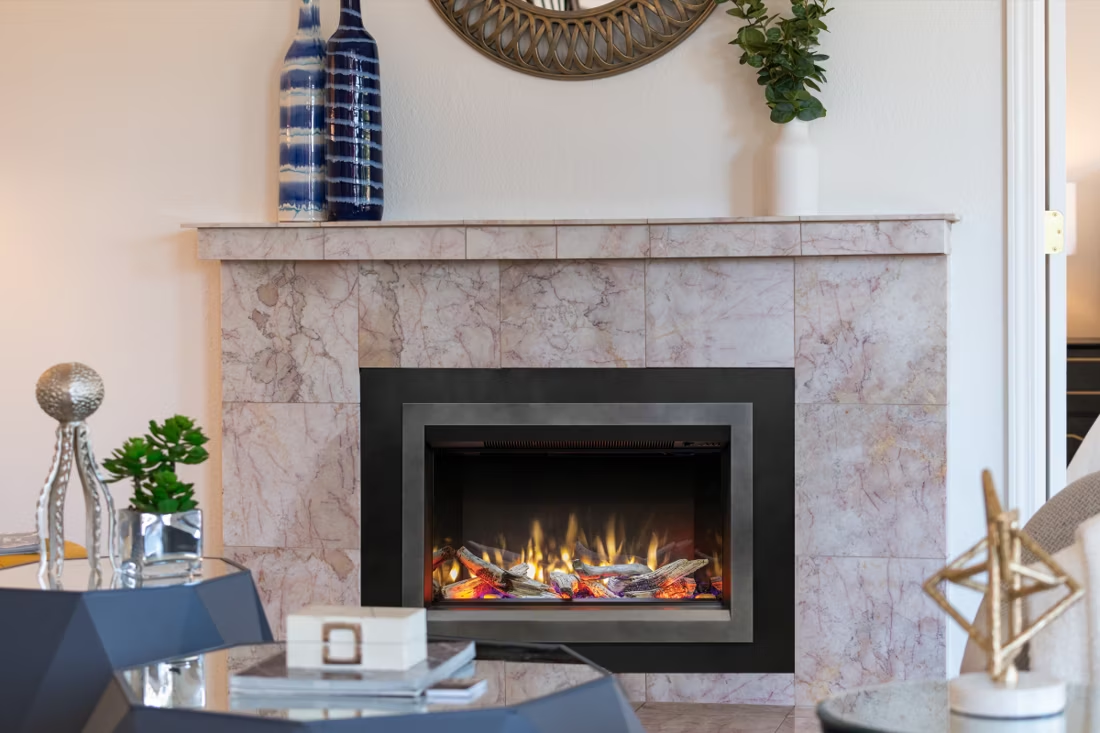
There are three common formats: plug-in inserts that slide into an existing mantel or fireplace opening, wall-mounted linear units that hang like a large flat-screen and create a sleek modern look, and full built-in units framed into a wall or media center during a remodel. On Wilmington Island, wall-mounted linear units are popular in newer coastal-style homes with open living areas facing the marsh, while inserts are the common choice for anyone converting an old, rarely-used wood-burning fireplace to something lower-maintenance. A local dealer can walk you through samples of each before you commit.
Are electric fireplaces a good fit for the salt air and humidity out here?
Yes—it's actually one of the strongest arguments for electric on a barrier island. There's no metal chimney cap or flue exposed to salt spray to corrode, no masonry chase absorbing humidity, and no combustion moisture being pushed into the wall cavity. The electrical components are sealed inside the unit housing, so as long as the installation itself is done properly (correct circuit, proper surround materials for a humid climate), electric fireplaces hold up well with minimal maintenance compared to a wood-burning chimney or gas venting system exposed to the coastal environment.
Do any homes on Wilmington Island still use wood-burning fireplaces?
Some older homes have existing wood-burning fireplaces built decades ago, and a few owners still use them occasionally for the ambiance of a real fire on a cold December night. But wood heat was never really practical here—with an average winter low of 40°F and only a very short, mild heating season each year, there's no real heating need for it, and firewood species like the oak and hickory common to the area are more often just yard debris than a fuel source. Most homeowners converting an old, little-used wood fireplace choose an electric insert specifically because it eliminates the chimney maintenance without adding gas line work.
What should I actually expect from an electric fireplace's flame and heat?
Modern electric fireplaces use LED-lit flame effects—often with adjustable color, brightness, and even a crackling ember bed—that look convincing from across a room, and most let you run the flame with the heater off, which matters a lot in a climate like this where you'll want the visual most of the year without the extra heat. Heat output tops out around 4,000–5,000 BTUs on the heat setting, comparable to a space heater, which lines up well with how island homeowners actually use them: ambiance nine months of the year, light supplemental warmth on the rare cold night. It's worth testing a floor model in person at a local dealer before deciding on a brand—flame realism varies more than people expect.
Can I put a TV above my fireplace?
Yes—with an asterisk. Fireplaces are hot and TVs don't like heat. Either put a mantel between them to deflect rising warmth, or choose a fireplace with heat-management technology that creates a cool zone on the wall above—the wall stays around 125 degrees, barely warm, while the room still gets full heat. If you like clean lines and don't want a mantel, heat management is the answer.
Do electric fireplaces actually produce heat?
Yes—most put out around 4,800–5,000 BTUs from a standard outlet, which comfortably warms a bedroom, office, or den as a comfort-zone heater. What they won't do is carry a whole house the way wood, gas, or pellet can. Think of electric as ambiance-first with honest supplemental heat: flames on with no heat in July, flames plus warmth in January.
Can a fireplace actually lower my heating bill?
Yes—by creating a comfort zone. A furnace heats every square foot of the house just to warm the one room you're in; a gas fireplace on low burns roughly a sixth of the gas a typical furnace does. Set the furnace around 55–60 degrees as a baseline, then heat the rooms your family actually uses. Families who heat this way commonly save $20–$60 a month.
What is an in-home preview and do I need one?
It's a visit where a hearth professional measures your space, confirms the model you picked actually works in your home, and walks the specs—framing, gas line, venting, finish work—before anything is ordered. Some details you just can't know until you see the house. Never make a down payment without one; it's the single most-skipped step that burns buyers.
Nearby Dealers
Hearth shops serving Wilmington Island and the surrounding area. Every listing shows whether it is a WhyFire partner, a dealer we have verified as authorized for the brands we recommend, or a local business carrying hearth products. No manufacturer pays for placement. How we verify dealers →
Strickland Oil Co
La Source
Casual Living Fireside And Grillin'
Electric Service in Wilmington Island
An electric fireplace's heater draws about 1,500 watts—pennies per hour at local rates.
Georgia Power Co
Find your electric fireplace on Wilmington Island.
Tell us a bit about your home and we'll put together a free Project Guide & Parts List—the right electric fireplace or insert, the exact parts, and a trusted local dealer to install it.
Find Your Fireplace →