
Find the right fireplace for your Chatham County home.
Fireplace resources for Savannah, Tybee Island, Pooler, Garden City, Port Wentworth, and every community across Chatham County. Connect with a trusted local hearth retailer who knows what actually works in a coastal Georgia home.
Every Project Starts From One of These Five Situations
Mild coastal heating for Chatham County, Georgia.
Chatham County sits in IECC climate zone 2A, with an average winter low near 40°F and just 1,675 heating degree days a year—a fraction of what a place like Duluth, MN sees in a single season (closer to 9,000 HDD). Savannah's oak-lined squares and historic homes are full of original wood-burning fireplaces, and oak, pine, and hickory all grow abundantly in the region, but the humid subtropical climate rarely demands sustained heat. Most of those old fireboxes are decorative or occasionally used rather than a real heat source, and new wood stove installs are uncommon across the county. Pellet stoves are essentially absent here too—the hopper-fed, thermostat-driven heat they're built for doesn't have much of a job to do when winter barely arrives.
What actually gets installed in Chatham County: gas fireplaces, gas log sets, and gas inserts for ambiance and the occasional cool front, plus electric fireplaces for condos, Tybee Island vacation homes, and historic-district properties where venting a chimney isn't practical. This hub covers every community in the county—Savannah, Tybee Island, Pooler, Garden City, Port Wentworth, Bloomingdale, Thunderbolt, Isle of Hope, Wilmington Island, Whitemarsh Island, and Vernonburg. Pick your fuel below for local dealers, real cost ranges, and the resources that match your project.
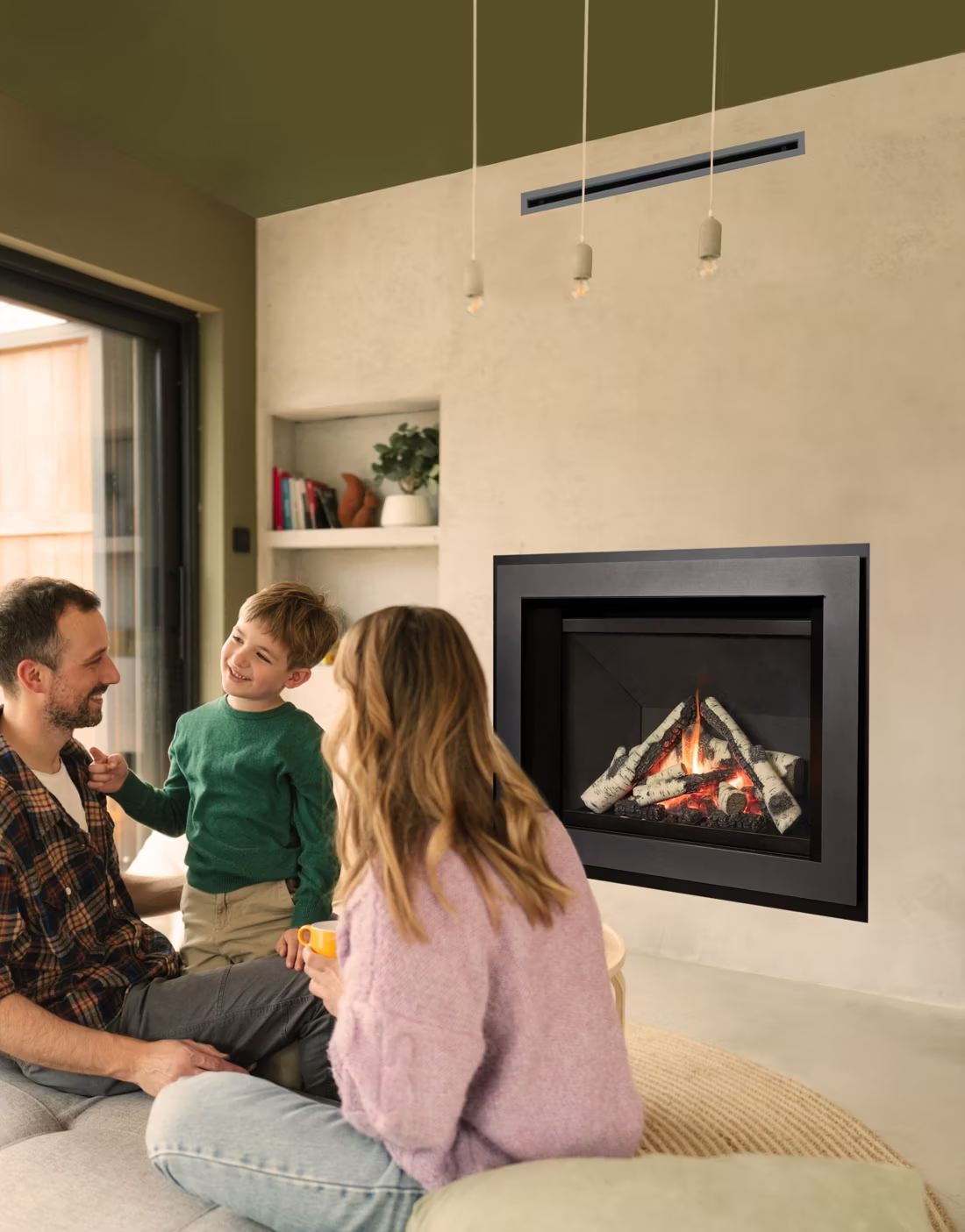
Four fuels. One honest answer for Chatham County.
Three steps. No salesperson until you're ready.
Tell us about your project
Your zip code, your situation, and the fuel you're leaning toward—or let the answers point you to one.
See what's actually available
The brands dealers within 100 miles genuinely carry—real options, never a catalog mirage.
Get your dealer & Project Guide
A trusted local dealer, plus the free Project Guide & Parts List that names every component of the job.
Frequently Asked Questions
Which fuel works best in Chatham County?
Gas and electric are the practical choices here. Gas fireplaces and gas log sets are the most common install in Savannah and the surrounding towns—instant ambiance, no woodpile, and a good fit for a climate where sustained heat output rarely matters. Electric fireplaces are the go-to for condos, Tybee Island vacation rentals, and historic-district homes where adding or modifying a chimney isn't an option—plug it in, mount it, done. Wood-burning fireplaces do exist, mostly as original features in older Savannah homes, but with a 40°F average winter low and only about 1,675 heating degree days a year, they're used for atmosphere on the occasional cold front rather than daily heat. Pellet stoves are essentially not a factor in this county—the appliance is built for sustained cold-weather heating loads that this climate doesn't produce.
Do I need a permit to install a fireplace in Chatham County?
Gas fireplace, insert, and log-set installations typically require a building permit plus a gas permit, and the gas connection itself needs to be done by a licensed gas fitter—this is standard whether you're in Savannah proper or unincorporated Chatham County. Electric fireplaces generally don't need a permit for plug-in units, but built-in or hardwired installations that involve new electrical circuits do. If your home is inside Savannah's Historic District, any exterior venting work—including a new gas fireplace's direct-vent termination—may also need sign-off from the Savannah Historic District Board of Review before the building permit is issued. Most local retailers handle the permitting and gas-fitter coordination as part of the installation.
Are there air quality restrictions on burning in Chatham County?
No—Chatham County doesn't have the winter inversion or non-attainment issues that show up in mountain or basin regions. The humid, coastal air here disperses smoke without the trapped-cold-air effect you'd get somewhere like Bozeman, MT. There's no formal burn-curtailment program tied to wood smoke in the county. The more common consideration is neighbor proximity in dense Savannah neighborhoods, where local nuisance ordinances can apply to smoke drifting onto adjacent properties—worth a thought if you're one of the few installing or actively using a wood-burning fireplace here.
Can one local hearth retailer handle both gas and electric?
Yes—most Chatham County hearth retailers are set up primarily for gas and electric, since that's what the local market actually calls for. You'll find working gas log and gas insert displays alongside electric wall-mount and built-in units at the same Savannah-area showrooms. If you specifically want a wood-burning insert restored or a rare pellet stove sourced, expect a smaller list of dealers willing to special-order it—ask directly, since not every retailer stocks display models for fuels that see so little local demand.
How does service work on Tybee Island and the outlying areas?
Most service techs are based in Savannah and travel out to Tybee Island, the Isle of Hope, Wilmington Island, and Pooler for routine gas fireplace inspections and vent checks. Salt air on the islands corrodes exterior vent caps and gas line fittings faster than it would inland, so annual inspection is worth doing even on a unit that's barely been used—corrosion, not soot, is usually the failure point out there. Expect a small travel fee for island calls, and book ahead of the fall cool-down when most Savannah-area retailers see their service queue fill up.
What's the typical cost range for a fireplace installation in Chatham County?
Gas fireplace, insert, or log set: roughly $3,500–$8,500 depending on whether new gas line work is needed, with straightforward log-set conversions in an existing masonry fireplace on the lower end. Electric fireplace: $200–$3,000 for the unit itself, plus $400–$1,200 in labor for anything beyond a simple plug-in—built-ins and mantel-integrated units run toward the higher end. Wood-burning restorations or new wood inserts, when requested, tend to run higher than in wood-heavy climates simply because fewer local dealers handle them regularly. Pellet stove installs are rare enough in this county that pricing is essentially special-order and case-by-case.
How much should I budget for a fireplace?
For an average home—covering the fireplace, the vent pipe, and basic installation—a budget between $3,900 and $5,500 gives you a lot of options across wood, gas, and pellet. By the time you add finish work, gas line, and electrical, the average complete installation lands between $5,000 and $12,000 all-in. In a remodel or new build, a good rule is to put about 2.5% of the total project cost toward the fireplace.
What is an in-home preview and do I need one?
It's a visit where a hearth professional measures your space, confirms the model you picked actually works in your home, and walks the specs—framing, gas line, venting, finish work—before anything is ordered. Some details you just can't know until you see the house. Never make a down payment without one; it's the single most-skipped step that burns buyers.
Can I install a fireplace myself?
If you're putting a fire in your house on purpose, it's best to work with an expert. Unless you're genuinely experienced in framing, gas line, vent pipe, and the national code on clearances to combustibles, have a professional do it—and ideally the same company that sells you the fireplace, so warranty, service, and liability all live under one roof.
What are the biggest mistakes people make buying a fireplace?
Five come up constantly: budgeting for the unit but not the full job (vent, gas line, electrical, finish work); drowning in options instead of starting from style and fuel; buying without an in-home preview; handing installation to a handyman instead of a pro; and giving up out of sheer indecision. Every one is avoidable with a clear plan—step one, step two, step three.
Stove and Fireplace Dealers in Chatham County
Listings include WhyFire partner dealers, dealers we have verified as authorized for the brands we recommend, and established local businesses that carry hearth products. Every listing shows which one it is. The ones marked Preferred run on WhyFire's software, so they can show you real pricing and book your appointment right here. No manufacturer pays for placement. How we verify dealers →
Strickland Oil Co
La Source
Casual Living Fireside And Grillin'
Get matched with a Chatham County hearth dealer.
Tell us about your gas or electric fireplace project and we'll match you with a trusted local dealer, then send you a free Project Guide & Parts List—the exact parts, including the vent kit, for your home in Chatham County.
Find Your Fireplace →