
Warmth and Ambiance, No Chimney Required.
Coastal Georgia winters rarely call for a furnace-grade fire. Find the electric fireplace that fits your Garden City home, and get matched with a local dealer who can install it right.
Every Project Starts From One of These Five Situations
Mild winters make electric the practical choice.
Garden City sits along the Savannah River at roughly 10 feet of elevation, with winter lows averaging around 40°F and a short, mild heating season. That's a fraction of what a place like Duluth, MN racks up in a single cold snap—Chatham County homes simply don't need a wood stove or a furnace-sized gas insert to stay comfortable most winters. What they do want is the look and feel of a fire: something to click on during a rare 30-degree night or just for atmosphere on a Tuesday in January.
That's exactly the gap electric fireplaces fill. No chimney, no gas line, no venting through a roof or wall—which matters in a low-lying, flood-conscious area where punching new penetrations through exterior walls isn't always simple. A plug-in unit or a built-in wall model wired by a licensed electrician gets you real flame effect and supplemental heat on Georgia Power's grid, at a residential rate of about 15.5 cents per kWh, without touching your home's structure. For condos, townhomes, and the older bungalows scattered through Garden City and neighboring Savannah, that's often the only realistic fireplace option—and for many homeowners here, it's the preferred one.
Three steps. No salesperson until you're ready.
Tell us about your project
Your zip code, your situation, and the fuel you're leaning toward—or let the answers point you to one.
See what's actually available
The brands dealers within 100 miles genuinely carry—real options, never a catalog mirage.
Get your dealer & Project Guide
A trusted local dealer, plus the free Project Guide & Parts List that names every component of the job.
Frequently Asked Questions
How much does an electric fireplace installation cost in Garden City?
It depends heavily on the unit type. A freestanding or plug-in electric fireplace that just needs a standard 120V outlet can run $300 to $800 including delivery and setup—no electrician required. A recessed wall-mount or built-in unit that needs a dedicated 120V or 240V circuit, in-wall wiring, and possibly a mantel surround typically runs $1,200 to $2,500 once electrical labor is factored in. Because there's no venting or gas line to run, even the higher end of electric installation stays well below what a wood or gas project costs in this area.
Will an electric fireplace actually heat my home in Garden City?
Most electric fireplaces are built around a 1,500-watt heating element, which is enough to comfortably warm a single room—a living room, bedroom, or den—but not a whole house. Given Garden City's mild winters (average lows around 40°F and a short, mild heating season), that's rarely a problem: most homeowners here run central HVAC as their main heat source and use the electric fireplace as zone heat for the room they're actually sitting in, or purely for the flame effect with the heater switched off.
Do I need a permit or an electrician to install an electric fireplace?
A plug-in unit that runs off an existing outlet doesn't require a permit—it's no different than plugging in a space heater. A built-in or recessed wall unit that requires a new dedicated circuit does require an electrical permit through the City of Garden City, and the wiring should be done by a licensed electrician rather than a handyman, particularly if the unit is going into an exterior wall near grade given the area's flood zone considerations. Most local hearth and electrical retailers coordinate this permitting as part of the installation.
What's the difference between an electric insert, a wall-mount, and a freestanding electric fireplace?
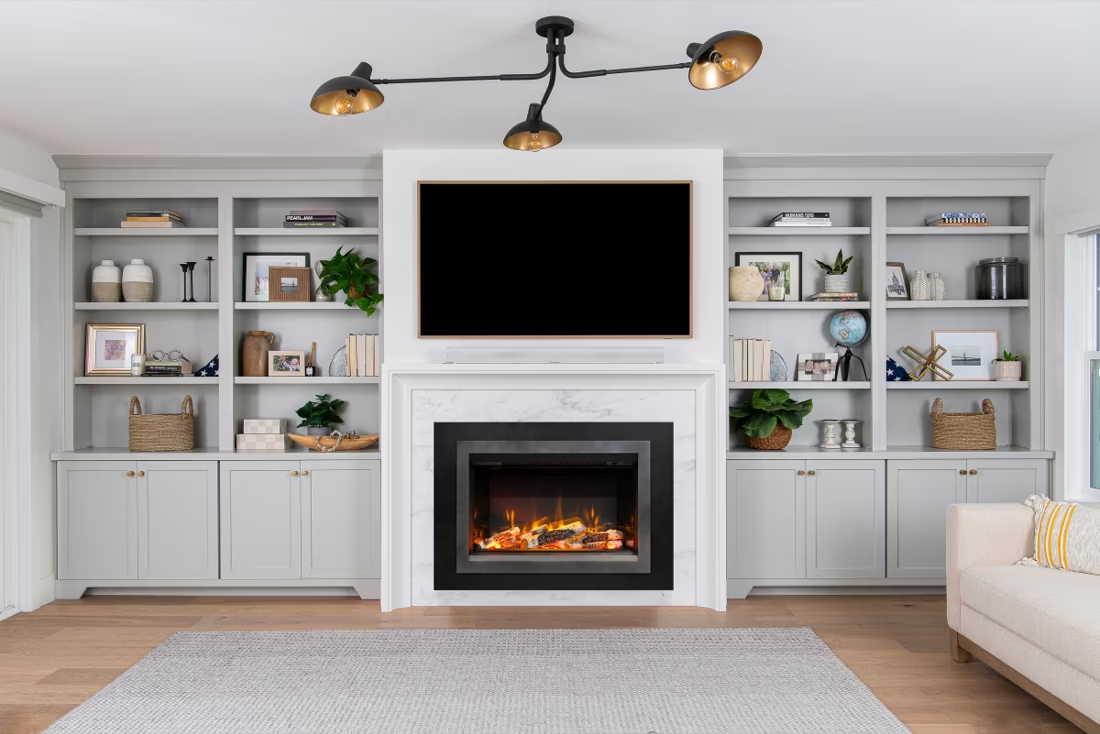
An electric insert is designed to slide into an existing masonry fireplace opening—a good option for older Garden City and Savannah-area homes with a fireplace that no longer gets used for wood burning. A wall-mount or built-in unit is recessed into or hung on a wall, often flanked by a custom surround, and typically needs dedicated wiring. A freestanding unit looks like a stove or console and simply plugs into a standard outlet, making it the easiest option for renters or homeowners who want zero construction work.
What's the best electric fireplace for a coastal Georgia climate?
In a humid coastal environment like Chatham County, look for units with sealed electronic components and a stainless or powder-coated interior rather than bare steel, since salt air and humidity can accelerate corrosion over time on lower-quality models. Brands like Dimplex and Touchstone make recessed and wall-mount units with realistic flame technology that hold up well in this climate and don't rely on a heavy heating element you'll rarely need to run at full output.
How much does it cost to run an electric fireplace in Garden City?
At Georgia Power's residential rate of about 15.5 cents per kWh, a typical 1,500-watt heater running at full output costs roughly 23 cents per hour. Running the flame effect alone, without the heater engaged—which is common in Garden City given how little supplemental heat most homes actually need—draws only 30 to 50 watts, closer to a penny or two per hour. That makes electric fireplaces one of the cheapest fireplace options to operate day-to-day in a mild climate like this one.
Electric vs. gas or wood—which makes more sense for my Garden City home?
With such a short, mild heating season and winter lows rarely dropping below the 30s, Garden City doesn't have the sustained cold that makes wood or gas heating a practical necessity the way it is in the upper Midwest or mountain West. Wood stoves are uncommon here—a handful of rural Chatham County homeowners burn oak or pine for ambiance, but there's little of the wood-heating culture you'd find in a colder climate. Gas is workable if you already have a line run to the house, but it adds cost and venting requirements for heat you'll use only occasionally. Electric skips both problems: no chimney, no gas line, low running cost, and a flame effect you can enjoy without generating heat you don't need most of the year.
Can I install an electric fireplace myself?
A plug-in freestanding or portable unit is genuinely a DIY project—set it in place, plug it into a standard outlet, and it's ready to use. A wall-mount or built-in insert is a different story: cutting into drywall, running new wiring, and tying into a dedicated circuit is electrical work that should go through a licensed electrician, both for safety and because unpermitted electrical work can complicate a home sale or insurance claim later. Most local dealers either employ electricians directly or coordinate with one as part of the installation.
Do electric fireplaces work during a power outage?
No—electric fireplaces require power to operate, including the flame effect, so they go dark during an outage just like any other appliance. This is worth knowing given Garden City's exposure to tropical storm season and occasional grid disruptions along the Georgia coast. If backup heat during outages is a priority for your household, that's a reason to pair an electric fireplace (for everyday ambiance and low-cost zone heat) with a separate emergency heat plan, rather than relying on it as your only heat source.
Can I put a TV above my fireplace?
Yes—with an asterisk. Fireplaces are hot and TVs don't like heat. Either put a mantel between them to deflect rising warmth, or choose a fireplace with heat-management technology that creates a cool zone on the wall above—the wall stays around 125 degrees, barely warm, while the room still gets full heat. If you like clean lines and don't want a mantel, heat management is the answer.
Do electric fireplaces actually produce heat?
Yes—most put out around 4,800–5,000 BTUs from a standard outlet, which comfortably warms a bedroom, office, or den as a comfort-zone heater. What they won't do is carry a whole house the way wood, gas, or pellet can. Think of electric as ambiance-first with honest supplemental heat: flames on with no heat in July, flames plus warmth in January.
Should the dealer who sells my fireplace also install it?
Ideally, yes. A fireplace project involves vent pipe, gas line, electrical, and often tile or stone. Hire three or four separate trades and you own the liability and the game of telephone between them. One company selling and installing means one accountable party, start to finish—ask about factory training, on-time completion records, and what happens if an inspection fails.
Does a fireplace add value to my home?
On average, a fireplace adds back to the home about the same amount you spent installing it. Add the monthly savings from heating the rooms you actually use instead of the whole house—often hundreds of dollars a year—and the value case is strong before you even count what a fire does for how your family uses the room.
Nearby Dealers
Hearth shops serving Garden City and the surrounding area. Every listing shows whether it is a WhyFire partner, a dealer we have verified as authorized for the brands we recommend, or a local business carrying hearth products. No manufacturer pays for placement. How we verify dealers →
Strickland Oil Co
Thompson Gas - Springfield
La Source
Casual Living Fireside And Grillin'
Electric Service in Garden City
An electric fireplace's heater draws about 1,500 watts—pennies per hour at local rates.
Georgia Power Co
Find your electric fireplace in Garden City.
Tell us a bit about your home and we'll put together a free Project Guide & Parts List for your electric fireplace project—matched with a trusted local dealer who can install it right.
Find Your Fireplace →