
Fireplace Ambiance for Island Living, Minus the Chimney.
With winter lows averaging 40°F on this barrier island, Skidaway homeowners want the glow of a fireplace without venting, gas lines, or smoke drifting over the marsh. Find the right electric unit and connect with a trusted local dealer.
Every Project Starts From One of These Five Situations
Mild winters, maximum design flexibility.
Skidaway Island sits at just 10 feet of elevation on the Georgia coast south of Savannah, in climate zone 2A with a mild, short heating season of maybe a few cool months a year. Compare that to Duluth, MN, which faces a long, brutal winter season lasting most of the year—and it's clear why almost nobody here is sizing a heating system around January. Winter lows average around 40°F, and most homes on the island, including the gated communities within The Landings, need heat for maybe a handful of genuinely cold mornings each year.
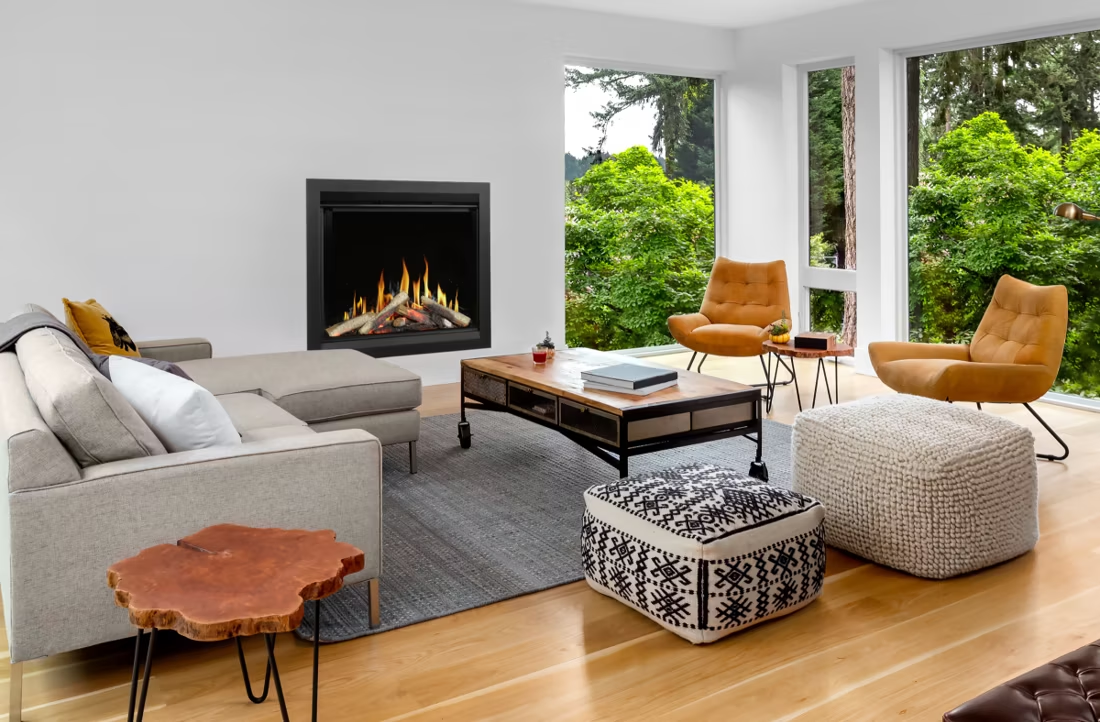
That's exactly the situation electric fireplaces are built for. There's no chimney to maintain, no gas line to run, no combustion byproducts to vent, and no wood smoke to worry about near the marsh and wildlife corridors that define the island. A plug-in unit or a hardwired wall insert delivers real flame-effect ambiance year-round and genuine zone heat on the rare cold snap, all through Georgia Power's grid at a residential rate of about 15.5 cents per kWh. For a community where architectural review boards care about exterior appearance and low-maintenance living, electric is often the simplest approval and the simplest install.
Three steps. No salesperson until you're ready.
Tell us about your project
Your zip code, your situation, and the fuel you're leaning toward—or let the answers point you to one.
See what's actually available
The brands dealers within 100 miles genuinely carry—real options, never a catalog mirage.
Get your dealer & Project Guide
A trusted local dealer, plus the free Project Guide & Parts List that names every component of the job.
Frequently Asked Questions
How much does an electric fireplace installation cost in Skidaway Island?
Plug-in electric fireplace inserts and freestanding units typically run $500 to $1,800 installed, since many just need an existing standard outlet—no electrician required beyond dropping the unit into a mantel or existing masonry opening. Built-in wall units or larger linear electric fireplaces that need a dedicated 20-amp circuit run higher, typically $1,800 to $3,500, once a licensed electrician runs new wiring. Because there's no venting or chimney work involved, even the higher end of that range is well below what a comparable gas installation would cost on the island.
Will an electric fireplace actually provide enough heat here?
For most of the year, yes—and for the coldest mornings, it's supplemental rather than primary heat, which is the honest answer for Skidaway Island. With winter lows averaging 40°F and only a mild, short heating season of maybe a few cool months a year, most homes rely on central HVAC for the handful of nights that dip near freezing, and use the electric fireplace to take the chill off a den or sunroom without running the whole system. A 1,500-watt unit puts out roughly 5,100 BTUs, which is plenty for zone heating a single room on this coast.
Will an electric fireplace pass architectural review in a gated community like The Landings?
Electric fireplaces are generally the easiest hearth product to get approved on Skidaway Island because there's no exterior venting, no roof penetration, and no change to the home's chimney or facade. Many island homeowners install a built-in wall unit or a mantel-style insert entirely on the interior, which sidesteps most architectural review board concerns that come up with gas line runs or venting changes. It's still worth checking your specific community's guidelines before ordering cabinetry or a custom surround, but the appliance itself rarely raises a flag.
What's the difference between a plug-in electric fireplace and a built-in electric insert?
A plug-in unit is a self-contained fireplace or stove that runs off a standard 120-volt outlet—you can set it in an existing mantel opening, mount it on a wall, or use it as a freestanding piece, and it's the fastest, least invasive option for island homes. A built-in electric insert is designed to be recessed into a wall or existing masonry firebox for a more seamless, flush look, often paired with custom millwork or stone; these units sometimes require a dedicated circuit for larger heater elements. For homes already possessing an old wood-burning fireplace shell that's rarely used, converting it to a built-in electric insert is a common Skidaway Island project.
Do I need a licensed electrician for the installation?
For a basic plug-in unit, no—it plugs into an existing outlet like any other appliance. For a built-in wall unit or a larger linear fireplace with a heater rated above 1,500 watts, a dedicated circuit is recommended and Georgia requires that wiring work be done by a licensed electrician. Local hearth dealers coordinate this as part of the install so you're not managing a separate electrical contractor, and it keeps the work inspectable if you ever sell the home.
How much does it cost to run an electric fireplace with Georgia Power rates?
At Georgia Power's residential rate of about 15.5 cents per kWh, a typical 1,500-watt electric fireplace costs roughly 23 cents an hour to run on the heater setting, or under $2 for a full evening. Most units also let you run the flame effect alone, with the heater switched off, for pennies an hour—useful on Skidaway Island where the visual ambiance gets used far more often than the heat function given how mild the winters run.
Do electric fireplaces hold up in a humid coastal climate like Skidaway Island's?
Yes—electric units have an advantage here over gas or wood appliances because there's no combustion, no flue, and no metal chimney components exposed to salt air. Indoor electric fireplaces are sealed appliances with no exterior venting to corrode, which matters on a barrier island where salt-laden air is hard on exposed metal. The main humidity consideration is standard for any electronics: keep the unit away from direct exposure in screened porches or unconditioned sunrooms unless it's rated for that use, which your local dealer can confirm on the specific model.
Are wood or pellet stoves common on Skidaway Island?
Not really, and that's worth saying plainly. With only a mild, short heating season of maybe a few cool months a year and winter lows rarely dropping below the 30s, there's little practical need for a wood or pellet appliance as a heat source here, and very few island homes have one. Gas fireplaces remain a standard option for homeowners who want a real flame with more heat output than electric provides, but electric is the dominant choice for the ambiance-focused, low-maintenance living that defines much of Skidaway Island, especially in retirement-oriented communities where avoiding wood handling and open flame matters.
Electric vs. gas—which is right for my Skidaway Island home?
Gas fireplaces produce more real heat output and a more traditional flame, which some homeowners want even in a mild climate, but they require a gas line (natural gas is limited on the island, so most gas installs here run on propane) and venting work. Electric fireplaces cost less to install, need no venting or gas line, sail through most architectural reviews, and cost only a few cents an hour to run at Georgia Power rates—with the tradeoff of a less intense flame and lower maximum heat output. For most Skidaway Island homes, where the appliance is used far more for ambiance than for surviving winter, electric is the simpler and more common choice. Homeowners who want a stronger flame presence in a primary living space sometimes still choose gas.
Can I put a TV above my fireplace?
Yes—with an asterisk. Fireplaces are hot and TVs don't like heat. Either put a mantel between them to deflect rising warmth, or choose a fireplace with heat-management technology that creates a cool zone on the wall above—the wall stays around 125 degrees, barely warm, while the room still gets full heat. If you like clean lines and don't want a mantel, heat management is the answer.
Do electric fireplaces actually produce heat?
Yes—most put out around 4,800–5,000 BTUs from a standard outlet, which comfortably warms a bedroom, office, or den as a comfort-zone heater. What they won't do is carry a whole house the way wood, gas, or pellet can. Think of electric as ambiance-first with honest supplemental heat: flames on with no heat in July, flames plus warmth in January.
Can a fireplace actually lower my heating bill?
Yes—by creating a comfort zone. A furnace heats every square foot of the house just to warm the one room you're in; a gas fireplace on low burns roughly a sixth of the gas a typical furnace does. Set the furnace around 55–60 degrees as a baseline, then heat the rooms your family actually uses. Families who heat this way commonly save $20–$60 a month.
What is an in-home preview and do I need one?
It's a visit where a hearth professional measures your space, confirms the model you picked actually works in your home, and walks the specs—framing, gas line, venting, finish work—before anything is ordered. Some details you just can't know until you see the house. Never make a down payment without one; it's the single most-skipped step that burns buyers.
Nearby Dealers
Hearth shops serving Skidaway Island and the surrounding area. Every listing shows whether it is a WhyFire partner, a dealer we have verified as authorized for the brands we recommend, or a local business carrying hearth products. No manufacturer pays for placement. How we verify dealers →
Strickland Oil Co
La Source
Casual Living Fireside And Grillin'
Electric Service in Skidaway Island
An electric fireplace's heater draws about 1,500 watts—pennies per hour at local rates.
Georgia Power Co
Find your electric fireplace in Skidaway Island.
Tell us a bit about your home and we'll match you with the right electric fireplace or insert, plus a free Project Guide & Parts List with the exact parts and your recommended local dealer.
Find Your Fireplace →