
Keep Your Family Warm and Safe—No Matter What
With a 436 heating-degree-day climate and winter lows that rarely dip below 50°F, wood isn't a heating necessity here—but a real fire is still possible for the right home. We'll help you find out what's realistic and connect you with a local dealer.
Every Project Starts From One of These Five Situations
Bloomingdale's mild winters mean most homeowners never need wood heat—but a few still want the fire.
Bloomingdale sits in climate zone 2A with an average winter low around 50°F and just 436 heating degree days a year—a fraction of what a place like Duluth, MN racks up in a single January. That's the honest starting point: this is not a climate where a wood stove earns its keep as primary heat. Most homes here run on heat pumps served by Tampa Electric or Duke Energy Florida, and even on the coldest nights of the year, supplemental heat rarely needs to be more than a space heater or a few hours of central air running in reverse.
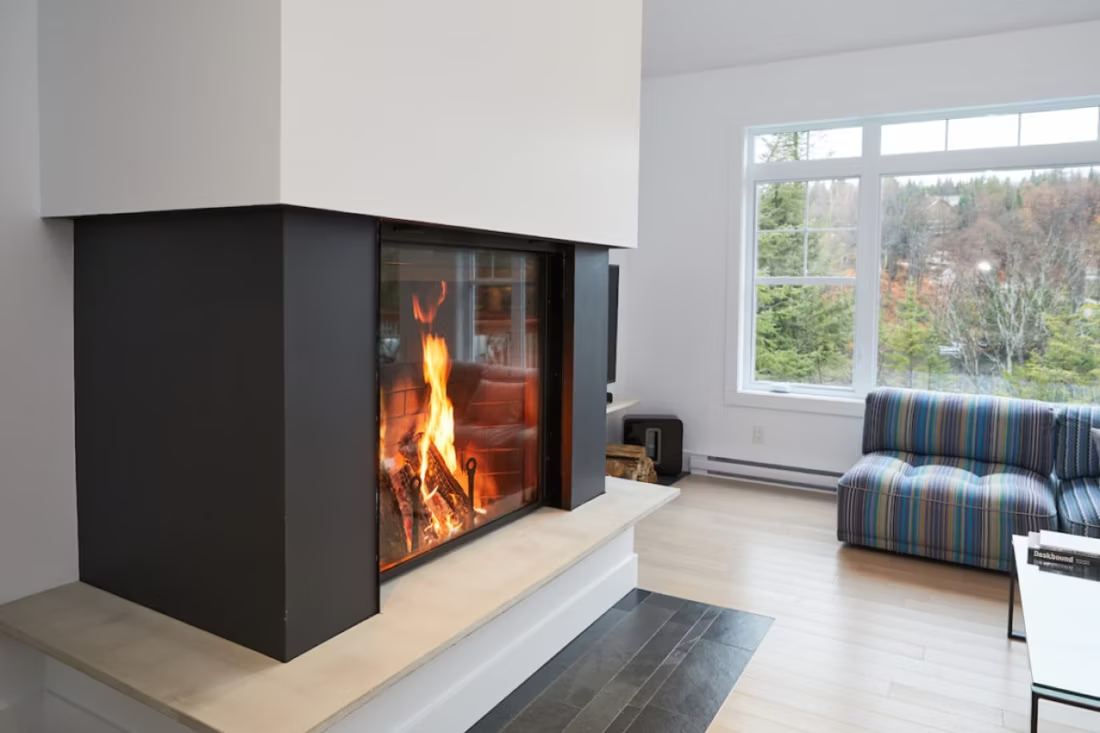
That said, wood-burning fireplaces and inserts do show up in Hillsborough County—usually in older homes built with a decorative masonry fireplace, in homes with owners who grew up with wood heat somewhere colder, or as an intentional ambiance feature for the handful of genuinely cold nights each winter. Local firewood tends to be oak and pine from storm cleanup or land clearing, occasionally mahogany from ornamental trees, and Florida's humidity means seasoning matters more here than in drier climates—green or under-seasoned wood simply won't burn clean. If you're one of the homeowners who wants a real wood fire in Bloomingdale, it's absolutely doable—it just needs to be approached with realistic expectations about how often it'll actually get used.
Three steps. No salesperson until you're ready.
Tell us about your project
Your zip code, your situation, and the fuel you're leaning toward—or let the answers point you to one.
See what's actually available
The brands dealers within 100 miles genuinely carry—real options, never a catalog mirage.
Get your dealer & Project Guide
A trusted local dealer, plus the free Project Guide & Parts List that names every component of the job.
Frequently Asked Questions
Does it even make sense to install a wood stove in Bloomingdale?
For most homes, no—not as a heat source. With only 436 heating degree days a year and winter lows averaging 50°F, a wood stove or insert in Bloomingdale is realistically an ambiance and occasional-use appliance, not a way to cut heating costs the way it would in a colder market. Where it does make sense: homes with an existing masonry fireplace that's currently just decorative, homeowners who want the experience of a real fire on the handful of genuinely cold nights each winter, or a second property being prepped for eventual use somewhere colder. A local dealer can tell you honestly whether your specific home and fireplace opening are good candidates.
How much does a wood-burning installation cost in the Bloomingdale area?
Because so few Hillsborough County homes install wood-burning appliances compared to colder states, pricing here tends to run on the higher end of national ranges—installers aren't doing this work daily, so there's less competitive routine to price against. A wood-burning insert into an existing masonry fireplace typically runs $3,500 to $7,000; a freestanding stove with new Class A chimney and roof penetration can run higher once you factor in that most Tampa-area roofs and attic configurations weren't built with a wood chimney in mind. Get a firm quote from a dealer who's actually installed wood appliances locally, not just gas.
What firewood is actually available near Bloomingdale?
Oak and pine are the most common woods available locally, usually from storm debris, tree removal services, or land-clearing operations rather than dedicated firewood lots—Florida doesn't have the commercial cordwood industry that colder states do. Mahogany shows up occasionally from ornamental tree removal but isn't a reliable year-round source. The bigger issue is seasoning: Tampa Bay humidity means wood that looks dry on the outside can still be wet inside. Plan on 9-12 months of covered, well-ventilated seasoning time, and consider a moisture meter—burning under-seasoned wood is the top cause of poor draft and creosote buildup in a climate like this.
Do I need a permit to install a wood stove in Bloomingdale?
Yes, in unincorporated Hillsborough County (which includes Bloomingdale) a building permit is generally required for any new wood-burning appliance or chimney work, handled through Hillsborough County's Development Services division. Most reputable local installers fold this into the project and pull the permit for you rather than leaving it to the homeowner. Because wood installs are uncommon here, it's worth confirming your installer has actually pulled a wood-appliance permit before, not just gas or electric ones.
Are there burn restrictions or air quality rules I should know about?
Bloomingdale and Hillsborough County currently have no air quality non-attainment designation and no winter inversion issues the way some Western cities do, so there aren't the seasonal burn curtailment periods you'd see in a place like Klamath Falls, OR. That said, local ordinances on outdoor burning of yard debris still apply and are separate from indoor wood-stove use. Indoor wood-burning appliances that meet current EPA emissions standards face no local operating restrictions here.
Is a wood stove or an electric heater more practical for occasional cold snaps?
For most Bloomingdale homes, electric wins on pure practicality. Tampa Electric and Duke Energy Florida both serve the area with residential rates around 14.7¢ to 16.6¢ per kWh, and running a space heater or heat pump on the rare 30-degree night costs a fraction of what a wood stove install costs to justify. Wood makes sense when the draw is the experience of a real fire—not the economics of heating. If you want warmth without the fire, electric is simpler and doesn't require a chimney, a wood supply, or seasoning storage in a humid climate.
I have an old decorative fireplace—can it be converted to actually burn wood?
Often, yes, if the masonry and flue are structurally sound—this is one of the more common wood projects we see in the Tampa Bay area, since many Bloomingdale homes from the 1980s and '90s were built with a fireplace that's rarely if ever been used. A local mason or hearth dealer will need to inspect the flue liner and firebox before anything is installed; older masonry fireplaces in Florida sometimes have liner damage from years of humidity and disuse. If the structure checks out, a wood-burning insert can turn that decorative fireplace into a real, functional one for the handful of cold nights each winter.
What should I know about storing firewood in a humid climate like Bloomingdale's?
Keep firewood off the ground, covered on top but open on the sides for airflow, and away from the house foundation—Hillsborough County's humidity and termite pressure make woodpiles against a home a real liability, not just a fire-code concern. Stack it somewhere with sun and wind exposure rather than a shaded corner of the yard, and expect seasoning to take longer than it would in a drier climate. Buying wood that's already kiln-dried, when available through regional suppliers, removes a lot of this guesswork if you only plan to burn a few times a season.
Should I get a gas fireplace instead of wood?
For most Bloomingdale homeowners, yes—gas is the more common and more practical choice locally, since natural gas and propane service both handle the region's mild, occasional heating needs without any firewood sourcing or chimney maintenance. Gas fireplaces light instantly, need no seasoning or storage, and work well as a supplemental feature in a climate that mostly doesn't need supplemental heat. Wood remains the right call specifically when the homeowner wants the smell, sound, and ritual of a real wood fire and has a fireplace or chimney that can support it—that's a smaller, more specific group, but it's a real one.
Why is my open fireplace making my house colder?
Open fireplaces suck—literally. As the fire burns, it consumes air your furnace already paid to heat and pulls it out through the chimney, so the house is actually colder after the fire goes out than before you lit it. An insert fixes this: it seals the chimney, puts fixed glass across the front, and turns that hole in your house into a real heat source.
Why won't my new wood stove get going like my old one?
New wood stoves are 70%+ efficient, so far less heat goes up the flue—which also means less draft to get a fire established. The rule: build a genuinely hot fire for about 45 minutes before you choke it down. Skip that and you get smoke in the room, creosote in the chimney, and a fire that never takes off. Most performance complaints trace straight back to this.
Can a fireplace actually lower my heating bill?
Yes—by creating a comfort zone. A furnace heats every square foot of the house just to warm the one room you're in; a gas fireplace on low burns roughly a sixth of the gas a typical furnace does. Set the furnace around 55–60 degrees as a baseline, then heat the rooms your family actually uses. Families who heat this way commonly save $20–$60 a month.
Does a fireplace add value to my home?
On average, a fireplace adds back to the home about the same amount you spent installing it. Add the monthly savings from heating the rooms you actually use instead of the whole house—often hundreds of dollars a year—and the value case is strong before you even count what a fire does for how your family uses the room.
Nearby Dealers
Hearth shops serving Bloomingdale and the surrounding area.
Find your wood fireplace in Bloomingdale.
Tell us about your home and your existing fireplace or chimney, and we'll give you an honest read on whether wood makes sense—plus a free Project Guide & Parts List and a match with a trusted local dealer who actually installs wood-burning appliances in the Tampa Bay area.
Find Your Fireplace →