
Warmth and ambiance for Bloomingdale, without the wood pile.
With winter lows averaging around 50°F, Bloomingdale doesn't need a furnace-grade fire—it needs a clean, plug-in-simple electric unit that adds glow and a little extra warmth on the rare cool night. Get matched with a local dealer who installs it right.
Every Project Starts From One of These Five Situations
Built for Bloomingdale's mild, humid winters.
Bloomingdale sits in climate zone 2A at just 61 feet of elevation, and the numbers tell the story: about 436 heating degree days a year and an average winter low near 50°F. Compare that to a place like Duluth, Minnesota, which racks up close to 9,700 heating degree days in a single season, and it's clear why almost nobody here is splitting oak or feeding a pellet hopper to survive January. Wood and pellet stoves are essentially absent from Hillsborough County homes for good reason—there's no real heating load to justify the chimney, the firewood storage, or the smoke.
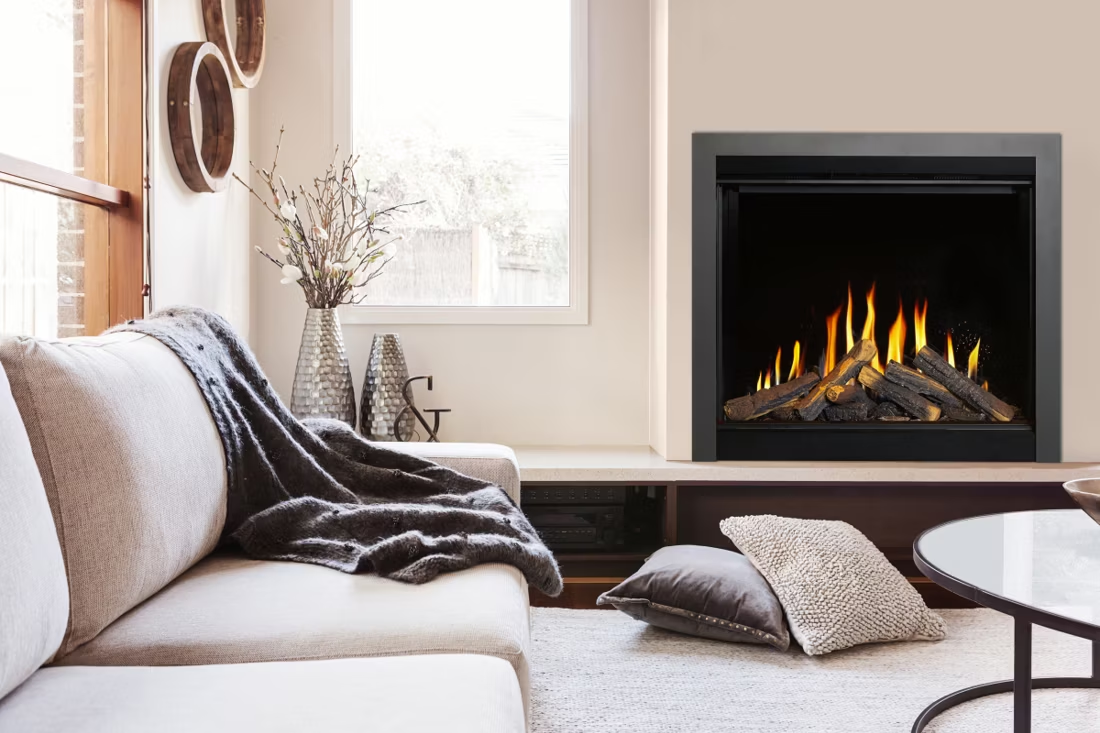
That's exactly the gap electric fireplaces fill. A linear electric unit over the mantel, a freestanding stove-style heater, or a built-in insert gives Bloomingdale homeowners the visual warmth of a fire and enough supplemental heat for the occasional 40-degree morning, all without venting, gas lines, or a permit for a chimney that would never earn its keep. Tampa Electric and Duke Energy Florida both serve the area, with residential rates running roughly 14.7 to 16.6 cents per kWh—low enough that even running a 1,500-watt unit for ambiance most evenings barely moves the bill.
Three steps. No salesperson until you're ready.
Tell us about your project
Your zip code, your situation, and the fuel you're leaning toward—or let the answers point you to one.
See what's actually available
The brands dealers within 100 miles genuinely carry—real options, never a catalog mirage.
Get your dealer & Project Guide
A trusted local dealer, plus the free Project Guide & Parts List that names every component of the job.
Frequently Asked Questions
How much does an electric fireplace installation cost in Bloomingdale?
It depends heavily on the style. A freestanding or wall-mount plug-in unit is the cheapest path—often $200 to $800 including a dedicated outlet if your electrician needs to add one. A built-in linear electric fireplace set into a wall recess or new mantel surround, which usually requires a licensed electrician to run a 120V or 240V circuit and a carpenter to build the surround, typically runs $1,500 to $4,500 depending on unit size and finish work. An electric insert dropped into an existing masonry fireplace opening—a common upgrade for older Bloomingdale homes with a fireplace that's rarely used—usually lands between $800 and $2,500. A local dealer can give you a firm number once they've seen your wall or existing firebox.
Will an electric fireplace actually heat my house in Bloomingdale?
Not the whole house, and it's not designed to. Most residential electric fireplaces top out around 5,000-1,500 watts of heat output—enough to warm a single room by several degrees, which is plenty given Bloomingdale's average winter low of 50°F and its roughly 436 heating degree days per season. Homeowners here typically buy electric fireplaces for the visual effect first and the light supplemental warmth second, running central HVAC or a space heater for the handful of genuinely cold nights each winter.
Do I need a permit to install an electric fireplace in Bloomingdale?
A simple plug-in unit that uses an existing standard outlet doesn't require a permit. But if you're adding a built-in unit that needs a new dedicated circuit or a 240V line, that electrical work falls under Hillsborough County's permitting process since Bloomingdale is unincorporated county territory, and it needs to be pulled by a licensed electrician. Most local dealers either employ licensed electricians or coordinate directly with one, so the permit gets handled as part of the install rather than becoming your problem.
What's the difference between a plug-in electric fireplace and a built-in insert?
A plug-in unit—whether it's a freestanding stove-style heater or a wall-mount model—runs on a standard 120V outlet and can be moved or removed easily, which makes it a popular choice for renters or anyone who isn't ready to commit to construction. A built-in insert or linear unit is recessed into a wall or existing fireplace opening and wired into a dedicated circuit, giving a more finished, custom look but requiring an electrician and sometimes light carpentry. For Bloomingdale homes with an old, rarely-used wood-burning fireplace, converting that opening to an electric insert is one of the more popular upgrades—you keep the mantel and surround you already have and lose the ash, the smoke, and the need for a chimney sweep.
Which electric utility serves Bloomingdale, and does it affect my choice of unit?
Most Bloomingdale addresses fall under Tampa Electric Company (TECO), though some parts of the broader service area are served by Duke Energy Florida, with residential rates running about 14.7 to 16.6 cents per kWh between the two. That rate matters mainly for larger built-in units run for hours at a time—a 1,500-watt fireplace running on high for four hours costs roughly 90 cents to a dollar depending on your provider. It's a minor cost either way, but if you're planning to use the fireplace as genuine supplemental heat rather than occasional ambiance, ask your dealer about units with adjustable wattage settings so you're not running full heat output just for the flame effect.
Why don't more Bloomingdale homes use wood or pellet stoves instead?
The climate simply doesn't call for it. With winter lows averaging around 50°F and only about 436 heating degree days a year, Bloomingdale never develops the sustained cold that makes wood or pellet heat worth the investment—there's no local firewood-cutting culture, no regional pellet delivery infrastructure to speak of, and homeowners' oak, mahogany, and pine trees are far more likely to end up as yard debris than firewood. Electric fireplaces solve for what Bloomingdale actually wants: the look and feel of a fire, installed cleanly, with none of the venting or fuel-storage commitments that make sense in a place with a real winter.
How much maintenance does an electric fireplace need?
Very little compared to any combustion appliance. There's no chimney to sweep, no creosote, and no annual gas line inspection. Maintenance is mostly dusting the unit, occasionally cleaning the glass front, and replacing the LED light strip or heating element every several years if it wears out—most manufacturers rate LED components for 20,000+ hours of use. This low-maintenance profile is a big part of why electric is such a common choice in a climate like Bloomingdale's, where the fireplace is used for atmosphere far more often than for serious heat.
Are electric fireplaces safe for kids, pets, and Florida humidity?
Electric fireplaces run cooler to the touch than gas or wood units—most have glass fronts that stay near room temperature or only mildly warm, and there's no open flame, no combustion byproducts, and no carbon monoxide risk, which makes them a popular pick for households with young kids or pets. As for humidity, Bloomingdale's subtropical climate isn't a concern for the electrical components themselves as long as the unit is installed indoors and wired to code; your local dealer will make sure any outdoor-adjacent installation (like a lanai) uses a unit actually rated for that environment rather than a standard indoor model.
What size or wattage electric fireplace do I need for my room?
For a home in Bloomingdale, sizing is driven far more by the room's visual proportions than by heating demand, since you're not trying to offset a real winter heat load. A 36-to-50-inch linear unit suits most standard living rooms, while a smaller 26-to-30-inch insert works well for a bedroom or den. Most standard units offer 4,600 to 5,200 BTUs of heat output on the high setting, which is more than enough supplemental warmth for a single room on Bloomingdale's occasional cool morning. A local dealer can walk your space and recommend a size that fits the wall or existing fireplace opening rather than one sized for heat output alone.
Does an electric fireplace need a vent or chimney?
No—that's its superpower. An electric fireplace needs a wall and an outlet, period. No vent pipe, no gas line, no clearances to design around, which is why it works in bedrooms, offices, apartments, and walls where venting a gas or wood unit would be impractical or impossible. Installation is typically the simplest and least expensive of any fireplace type.
Can I put a TV above my fireplace?
Yes—with an asterisk. Fireplaces are hot and TVs don't like heat. Either put a mantel between them to deflect rising warmth, or choose a fireplace with heat-management technology that creates a cool zone on the wall above—the wall stays around 125 degrees, barely warm, while the room still gets full heat. If you like clean lines and don't want a mantel, heat management is the answer.
Does a fireplace add value to my home?
On average, a fireplace adds back to the home about the same amount you spent installing it. Add the monthly savings from heating the rooms you actually use instead of the whole house—often hundreds of dollars a year—and the value case is strong before you even count what a fire does for how your family uses the room.
How much should I budget for a fireplace?
For an average home—covering the fireplace, the vent pipe, and basic installation—a budget between $3,900 and $5,500 gives you a lot of options across wood, gas, and pellet. By the time you add finish work, gas line, and electrical, the average complete installation lands between $5,000 and $12,000 all-in. In a remodel or new build, a good rule is to put about 2.5% of the total project cost toward the fireplace.
Nearby Dealers
Hearth shops serving Bloomingdale and the surrounding area.
Electric Service in Bloomingdale
An electric fireplace's heater draws about 1,500 watts—pennies per hour at local rates.
Tampa Electric Co
Duke Energy Florida, LLC
Find your electric fireplace in Bloomingdale.
Tell us about your space and we'll put together a free Project Guide & Parts List for your Bloomingdale home, then match you with a trusted local dealer who can install it correctly.
Find Your Fireplace →