
Ambiance for cool nights, backup power for hurricane season.
Bloomingdale doesn't need a furnace—it needs a fireplace that looks good on a 50-degree January evening and still works when Tampa Bay loses power after a storm. Find the right gas fireplace and connect with a trusted local dealer.
Every Project Starts From One of These Five Situations
Comfort on the coolest nights, reliability when the grid goes down.
Bloomingdale sits in climate zone 2A with an average winter low around 50°F and roughly 436 heating degree days a year—compare that to a place like Duluth, MN, which racks up over 9,000. Wood stoves and pellet stoves genuinely don't make sense here; there's rarely enough sustained cold to justify them, and most local homeowners who install a hearth product are after something different: a real flame for ambiance on the handful of nights it actually dips into the 40s, and a heat source that keeps working when Hillsborough County loses power after a hurricane.
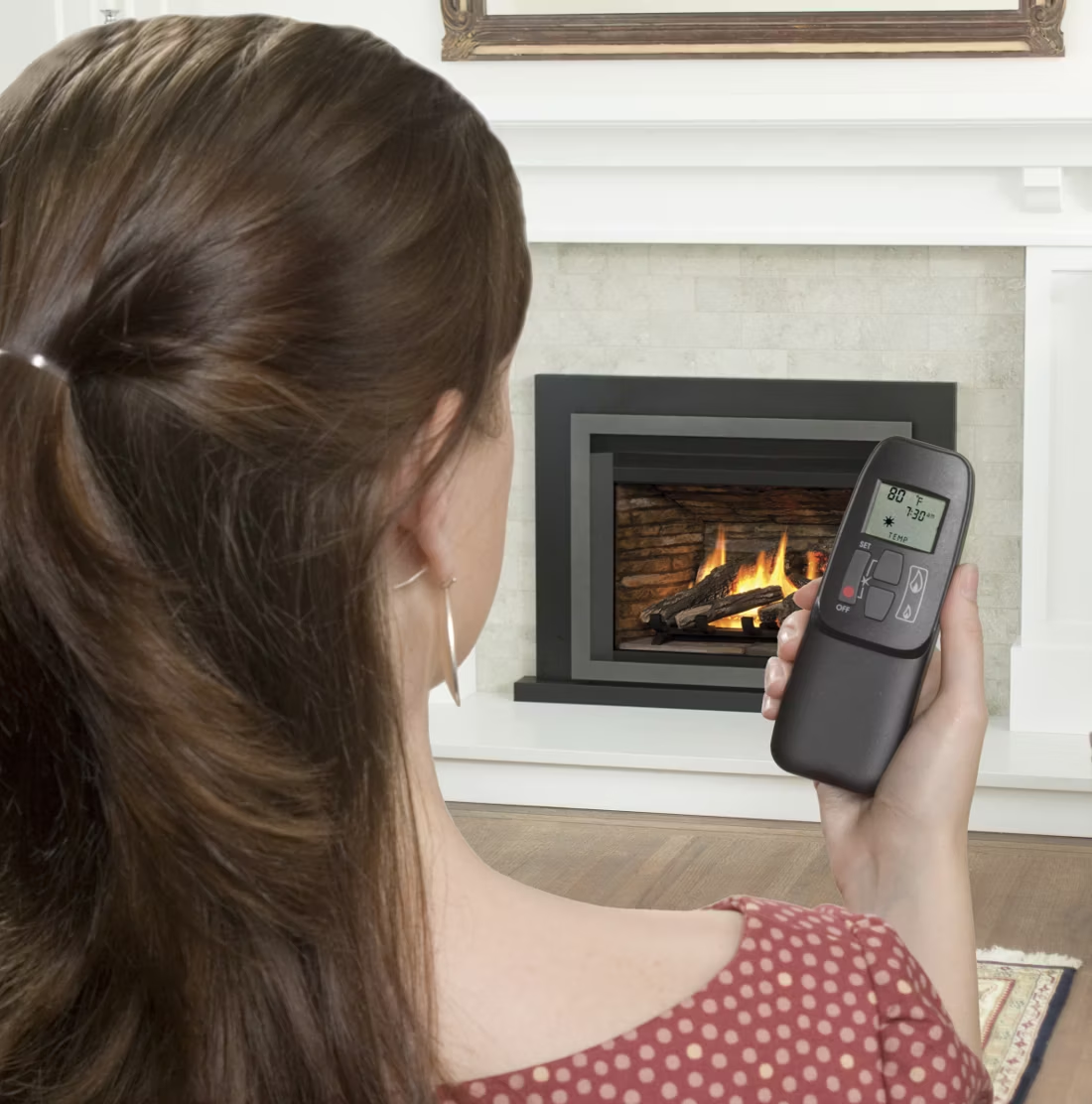
Because Bloomingdale is unincorporated, plenty of homes here run on propane rather than piped natural gas, and a local hearth dealer will know which fuel path makes sense for your street. Either way, a direct-vent gas fireplace or insert gives you instant flame at the flip of a switch, doesn't rely on the electric grid to produce heat, and—with the right ignition system—can still light during the outages that follow storm season, when Tampa Electric or Duke Energy Florida crews are working through downed lines.
Three steps. No salesperson until you're ready.
Tell us about your project
Your zip code, your situation, and the fuel you're leaning toward—or let the answers point you to one.
See what's actually available
The brands dealers within 100 miles genuinely carry—real options, never a catalog mirage.
Get your dealer & Project Guide
A trusted local dealer, plus the free Project Guide & Parts List that names every component of the job.
Frequently Asked Questions
How much does a gas fireplace installation cost in Bloomingdale?
Most gas fireplace installations in the Bloomingdale area run somewhere between $3,500 and $9,000, depending on the unit, whether you're on propane or natural gas, and how much gas line or venting work is involved. A freestanding direct-vent unit or a simple gas log set conversion sits toward the lower end. A new built-in gas fireplace in a remodel—with fresh gas line runs, venting through an exterior wall, and finish work—lands in the middle to upper range. Because so many homes here run on propane, tank installation or upgrade can add to the total; a local dealer will walk your specific home before quoting a firm number.
Do I need natural gas, or is propane the standard here?
In Bloomingdale, propane is common—it's an unincorporated community, and not every street has piped natural gas service. Homes that already run propane for a water heater or range can usually add a fireplace to the same tank, or a local propane supplier can install a dedicated tank for the fireplace alone. If your neighborhood does have natural gas access, that's typically the simpler and cheaper path since it skips tank installation and refills entirely. A local hearth dealer can tell you which option is actually available at your address before you pick a unit.
Will my gas fireplace still work if the power goes out?
This matters more in Bloomingdale than in most places, given how often Hillsborough County sees multi-day outages after tropical storms and hurricanes. Standard gas fireplaces with intermittent pilot ignition run on battery backup—as long as the batteries are fresh, the unit lights on demand even with no grid power. Valor fireplaces go a step further: their pilot assembly generates its own electricity through the thermocouple, so there are no batteries to remember at all. If storm-season reliability is a priority, ask your local dealer specifically about ignition type when comparing units.
Do I need a permit to install a gas fireplace in Bloomingdale?
Yes. New gas fireplace installations require a building permit through Hillsborough County Building Services, plus a mechanical/gas permit for the fuel line itself, which has to be run by a licensed gas contractor. Most established hearth dealers pull these permits as part of the installation and schedule the required inspections, so you're not coordinating separate trades yourself. If a propane tank is being added or upsized, expect a separate sign-off from the propane supplier or fire marshal depending on tank size.
Is a wood-burning fireplace ever a better fit than gas in Bloomingdale?
It's uncommon, and it's worth being honest about why: with only about 436 heating degree days a year here, a wood stove or wood insert simply isn't doing meaningful heating work. A small number of homeowners still install a wood-burning fireplace purely for the look and the occasional cool-weather fire, sometimes burning local oak or pine picked up from a landscaping supplier rather than a Forest Service permit—there's no public cutting-permit system relevant to this area. For anyone weighing the two, gas gets you the same visual with none of the ash, smoke, or storage, which is why it's the far more common choice locally.
Should I choose a vented or vent-free gas fireplace?
For Bloomingdale, vented (direct-vent) units are the better recommendation. Vent-free fireplaces burn fuel directly into the room and release water vapor as a byproduct—in a climate zone 2A house that's already fighting Florida humidity nine months a year, adding more moisture indoors is a real downside, even though vent-free units are technically legal in Florida. Direct-vent fireplaces exhaust everything outside through a sealed pipe, keep your indoor air and humidity levels unaffected, and still deliver strong, visible flame. Most dealers in the Tampa Bay area lead with direct-vent for exactly this reason.
Fireplace, insert, or stove—which type fits a Bloomingdale home?
Most homes in Bloomingdale are block or frame construction on a slab, built without a masonry chimney—which rules out a true gas insert for a lot of houses, since inserts are designed to slide into an existing fireplace opening. That makes a built-in direct-vent gas fireplace the most common choice for new installations, since it can be framed into an interior or exterior wall without any existing masonry. If your home is one of the older ones with a wood-burning masonry fireplace already in place, a gas insert is a fast, clean upgrade that uses the chimney you already have. A freestanding gas stove is a third option worth asking about if you want something that reads more like a traditional stove aesthetic.
How often does a gas fireplace need servicing?
Plan on an annual inspection, ideally scheduled before hurricane season ramps up in June so you know the unit—and its battery backup or self-powered pilot—is ready if you lose power later in the summer. A technician checks the burner, pilot assembly, gas connections, and venting, and cleans the glass and interior. This runs roughly $150 to $250 in the Tampa Bay area and is a much lighter lift than wood-stove chimney sweeping, but skipping it is still the most common cause of gas fireplaces failing right when you need them.
Gas vs. electric fireplace—which makes more sense in Bloomingdale?
Electric fireplaces are cheaper to install (typically $400–$1,200), need no gas line or venting, and run fine on either Tampa Electric or Duke Energy Florida service at roughly 14.7 to 16.6 cents per kWh. The tradeoff is that they're only as reliable as the grid—during a post-hurricane outage, an electric unit is dark along with everything else. A gas fireplace costs more upfront but keeps producing real heat and flame independent of the power lines, which is a meaningful advantage in a county that loses power regularly during storm season. If backup capability matters to you, gas is the stronger pick; if it's purely about ambiance in a low-risk area, electric is a lower-cost option worth considering.
Can I put a TV above my fireplace?
Yes—with an asterisk. Fireplaces are hot and TVs don't like heat. Either put a mantel between them to deflect rising warmth, or choose a fireplace with heat-management technology that creates a cool zone on the wall above—the wall stays around 125 degrees, barely warm, while the room still gets full heat. If you like clean lines and don't want a mantel, heat management is the answer.
What does it take to replace an existing fireplace?
Fireplaces are like icebergs—bigger behind the wall than in front of it. Replacement means removing the surrounding tile or stone (the finish material laps onto the fireplace face), pulling the old unit, setting the new one in the same enclosure, and re-finishing the wall. A hearth professional can determine what's behind your wall without demolition during an in-home preview.
Does a fireplace add value to my home?
On average, a fireplace adds back to the home about the same amount you spent installing it. Add the monthly savings from heating the rooms you actually use instead of the whole house—often hundreds of dollars a year—and the value case is strong before you even count what a fire does for how your family uses the room.
How much should I budget for a fireplace?
For an average home—covering the fireplace, the vent pipe, and basic installation—a budget between $3,900 and $5,500 gives you a lot of options across wood, gas, and pellet. By the time you add finish work, gas line, and electrical, the average complete installation lands between $5,000 and $12,000 all-in. In a remodel or new build, a good rule is to put about 2.5% of the total project cost toward the fireplace.
Nearby Dealers
Hearth shops serving Bloomingdale and the surrounding area.
Find your gas fireplace in Bloomingdale.
Tell us about your home and whether you're on propane or natural gas, and we'll match you with a trusted local dealer and send over a free Project Guide & Parts List—the exact parts, venting, and recommended installer for your Bloomingdale project.
Find Your Fireplace →