
Electric fireplace heat for every corner of Jefferson County.
From Lakewood condos to Conifer cabins above 8,000 feet, electric fireplaces deliver instant ambiance and zone heat with no chimney, no gas line, and no burn-ban restrictions. Find the right unit and connect with a trusted local dealer.
Every Project Starts From One of These Five Situations
Heat and ambiance without a chimney, from Lakewood to Conifer.
Jefferson County stretches from the Denver suburbs of Lakewood, Arvada, Wheat Ridge, and Golden at around 5,300 feet up into the foothills communities of Evergreen and Conifer above 8,000 feet—a single county that spans two very different heating realities. Climate zone 5B and a solidly long, cold winter heating season mean a real winter (average lows near 21°F), but the more immediate issue for many homeowners here is air, not just temperature. Front Range winter inversions regularly trap particulate matter over the metro area, and the Regional Air Quality Council issues High Pollution Advisory days that restrict wood burning across Jefferson County. Electric fireplaces produce zero emissions, so they run on those advisory days without any compliance concern.
The county's wildland-urban interface communities—Evergreen, Conifer, Pine—also carry defensible-space codes that limit firewood storage near structures, and wildfire smoke is a recurring summer concern that makes homeowners think twice about adding combustion appliances. Electric fireplaces sidestep both issues: no fuel load stacked against the house, no flue to maintain, no smoke contribution. Suburban HOA communities in Arvada, Golden, and Lakewood frequently restrict exterior venting or solid-fuel appliances in their covenants, and electric units typically clear that review without issue since there's nothing to vent. Xcel Energy serves most of the suburban Denver-metro portion of the county, while Intermountain Rural Electric Association (IREA) covers many of the mountain communities—either way, electric fireplaces just plug in or tie into a household circuit, no utility coordination required beyond your own panel capacity.
Three steps. No salesperson until you're ready.
Tell us about your project
Your zip code, your situation, and the fuel you're leaning toward—or let the answers point you to one.
See what's actually available
The brands dealers within 100 miles genuinely carry—real options, never a catalog mirage.
Get your dealer & Project Guide
A trusted local dealer, plus the free Project Guide & Parts List that names every component of the job.
Frequently Asked Questions
How much does an electric fireplace installation cost in Jefferson County?
Plug-in electric fireplace inserts—the kind that slide into an existing fireplace opening or sit against a wall—typically run $300 to $800 for the unit itself, with no installation labor required beyond plugging into a standard outlet. Built-in electric fireplaces set into a wall or custom surround, which usually require a licensed electrician to run a dedicated 20-amp circuit, typically run $1,500 to $4,000 installed in Jefferson County including the unit, surround finishing, and electrical work. Because there's no chimney, no gas line, and no venting to size, electric installs are consistently the least expensive and fastest of the four fuel types—often done in a single day.
Will an electric fireplace actually heat my Jefferson County home?
Most electric fireplaces are rated for zone heating, not whole-home heating—typically 1,500 watts, producing enough warmth for a single room in the 300 to 400 square foot range. With a solidly long, cold winter heating season and average winter lows around 21°F across Jefferson County, an electric fireplace is best treated as supplemental heat for a great room or bonus room, or as a shoulder-season solution in September and May when running the furnace feels like overkill. For homes that need real primary heat output during a Front Range cold snap, wood or gas is the better fit—electric shines for ambiance, zone comfort, and rooms where a flue was never in the plan.
What's the difference between an electric fireplace insert and a built-in unit?
An insert is designed to slide into an existing fireplace opening—masonry or zero-clearance—using the space you already have, and most models simply plug into a standard household outlet. A built-in electric fireplace is designed to be framed into a wall, often flush-mounted with a custom surround, and usually requires a dedicated circuit run by an electrician for full-size units. For Jefferson County homes with an existing but unused masonry fireplace—common in older Lakewood and Wheat Ridge ranch homes—an insert is the simpler retrofit. For new construction or remodels in Arvada or Golden, a built-in unit gives more design flexibility.
Do I need a permit to install an electric fireplace in Jefferson County?
A plug-in insert that uses an existing outlet typically doesn't require a permit. A built-in electric fireplace that needs a new dedicated circuit does require an electrical permit, and the work should be done by a licensed electrician who will coordinate inspection with the county. This is a much lighter permitting lift than wood or gas installations, which require building permits, venting inspection, and in the case of wood, EPA emissions compliance—electric is the fastest path to a finished project from a code standpoint.
Electric vs. gas fireplace—which is right for my Jefferson County home?
Gas delivers more heat output and a closer approximation of a real flame, and it's a strong fit for homes with natural gas already run to the house—common throughout Lakewood, Arvada, and Golden subdivisions. Electric wins in condos, townhomes, and HOA-governed communities where venting or gas line work isn't permitted or practical, and in secondary rooms—basements, bedrooms, home offices—where running new gas line doesn't make financial sense for occasional ambiance. Many Jefferson County homeowners end up with both: gas as the primary heat source in the main living area, electric in a bonus room or basement where a flue was never an option.
Will my electric fireplace work during a power outage?
No—electric fireplaces require grid power to run, which is worth knowing if you're in one of the foothills communities like Evergreen or Conifer where Xcel Energy has implemented proactive wildfire-mitigation power shutoffs during extreme fire-weather conditions. If backup heat during an outage matters to you, especially at higher elevation where a shutoff can coincide with a cold snap, pair your electric fireplace with a wood stove or a generator-backed system rather than relying on electric alone. For suburban Jefferson County homes with reliable Xcel service and rare outages, this is less of a concern and electric functions as expected almost all the time.
What's the best electric fireplace for a Jefferson County home?
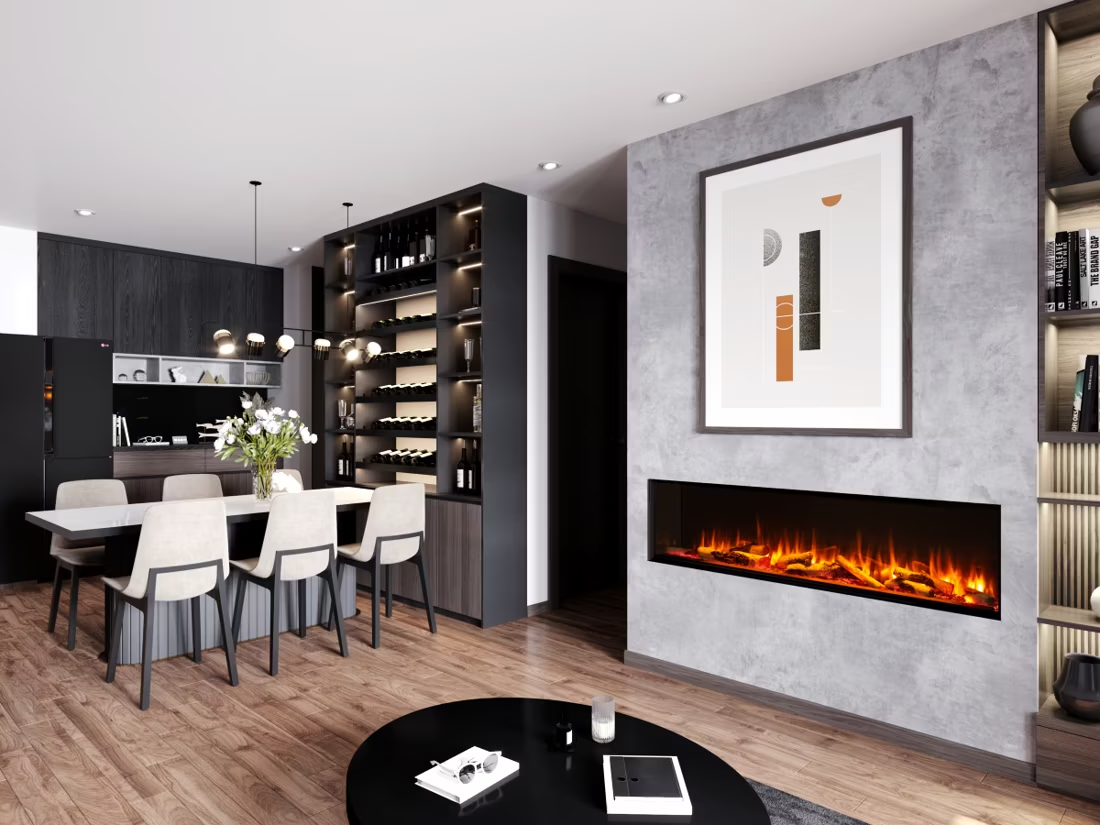
For great rooms and open-concept living spaces common in newer Arvada and Golden builds, a wide linear built-in from brands like Dimplex, Napoleon, or Amantii gives strong flame realism and heat zoning for a large area. For a retrofit into an existing masonry opening in an older Lakewood or Wheat Ridge home, an insert-style unit from SimpliFire or Dimplex fits the existing footprint without demo work. For mountain homes in Conifer or Evergreen where ambiance matters as much as heat, a smaller wall-mount unit can add warmth to a den or loft without adding load to the home's electric heating system. A local dealer will match wattage and dimensions to your specific space during a walkthrough.
Will my HOA allow an electric fireplace?
Almost always, yes. Many subdivisions across Jefferson County—particularly newer developments in Arvada, Golden, and parts of Lakewood—have HOA covenants that restrict exterior venting, chimneys, or solid-fuel appliances, since those changes affect the building's exterior and require architectural review. Electric fireplaces don't vent, don't alter the exterior, and typically don't require HOA sign-off at all, which is one reason they've become a default choice for condo and townhome owners in the county who want fireplace ambiance without a covenant fight.
Is electric a better choice than wood or pellet in Jefferson County's wildfire-prone foothill communities?
For homes in Evergreen, Conifer, and Pine, defensible-space guidelines limit how much firewood can be stacked near a structure, and red flag warning days can bring voluntary or mandatory burn restrictions across the Front Range. Electric fireplaces avoid both issues entirely—there's no fuel load to manage against defensible-space rules, no embers, and no restriction tied to fire-weather conditions. Wood and pellet stoves still make sense for primary or backup heat in these same communities, especially given the real risk of extended power shutoffs at elevation, but for supplemental ambiance in a fire-conscious foothills home, electric removes a variable that wood and pellet don't.
Can I put a TV above my fireplace?
Yes—with an asterisk. Fireplaces are hot and TVs don't like heat. Either put a mantel between them to deflect rising warmth, or choose a fireplace with heat-management technology that creates a cool zone on the wall above—the wall stays around 125 degrees, barely warm, while the room still gets full heat. If you like clean lines and don't want a mantel, heat management is the answer.
Does an electric fireplace need a vent or chimney?
No—that's its superpower. An electric fireplace needs a wall and an outlet, period. No vent pipe, no gas line, no clearances to design around, which is why it works in bedrooms, offices, apartments, and walls where venting a gas or wood unit would be impractical or impossible. Installation is typically the simplest and least expensive of any fireplace type.
How much should I budget for a fireplace?
For an average home—covering the fireplace, the vent pipe, and basic installation—a budget between $3,900 and $5,500 gives you a lot of options across wood, gas, and pellet. By the time you add finish work, gas line, and electrical, the average complete installation lands between $5,000 and $12,000 all-in. In a remodel or new build, a good rule is to put about 2.5% of the total project cost toward the fireplace.
Can I install a fireplace myself?
If you're putting a fire in your house on purpose, it's best to work with an expert. Unless you're genuinely experienced in framing, gas line, vent pipe, and the national code on clearances to combustibles, have a professional do it—and ideally the same company that sells you the fireplace, so warranty, service, and liability all live under one roof.
Stove and Fireplace Dealers in Jefferson County
Listings include WhyFire partner dealers, dealers we have verified as authorized for the brands we recommend, and established local businesses that carry hearth products. Every listing shows which one it is. The ones marked Preferred run on WhyFire's software, so they can show you real pricing and book your appointment right here. No manufacturer pays for placement. How we verify dealers →
Spa Brokers
Aria Custom Design
Distinctive Mantel Designs
Outdoor Kitchen Dist. Inc
Spa Brokers
Proud Souls Barbecue & Provisions
Rio Grande Co.
Spa Brokers
Spa Brokers V
Fireplace And Grill Experts - Service Only
Spa Brokers Iii
Find your electric fireplace in Jefferson County.
Tell us a bit about your home—condo in Lakewood, new build in Arvada, or a cabin above Conifer—and we'll match you with a trusted local dealer and send over a free Project Guide & Parts List for your electric fireplace project.
Find Your Fireplace →