
Instant Warmth, Zero Smoke, Any Night in Columbine.
No venting, no woodpile, no smoke on the inversion days that already limit outdoor burning near Ken Caryl and the foothills. Find the right electric unit and get matched with a trusted local dealer.
Every Project Starts From One of These Five Situations
Clean heat for a smoke-conscious foothills community.
Columbine sits at 5,544 feet against the Front Range foothills, where winter lows average 19°F and the area logs a cumulative winter chill not far off what Madison, Wisconsin sees over a winter, even though sunny Colorado days make it feel milder. Many of the neighborhood's homes date to the 1970s and '80s and were built with an open wood-burning fireplace as a focal point, but between winter inversion events along the Front Range and wildfire smoke that regularly settles into the foothills each summer and fall, wood and pellet appliances see little demand here. Electric has become the practical answer.
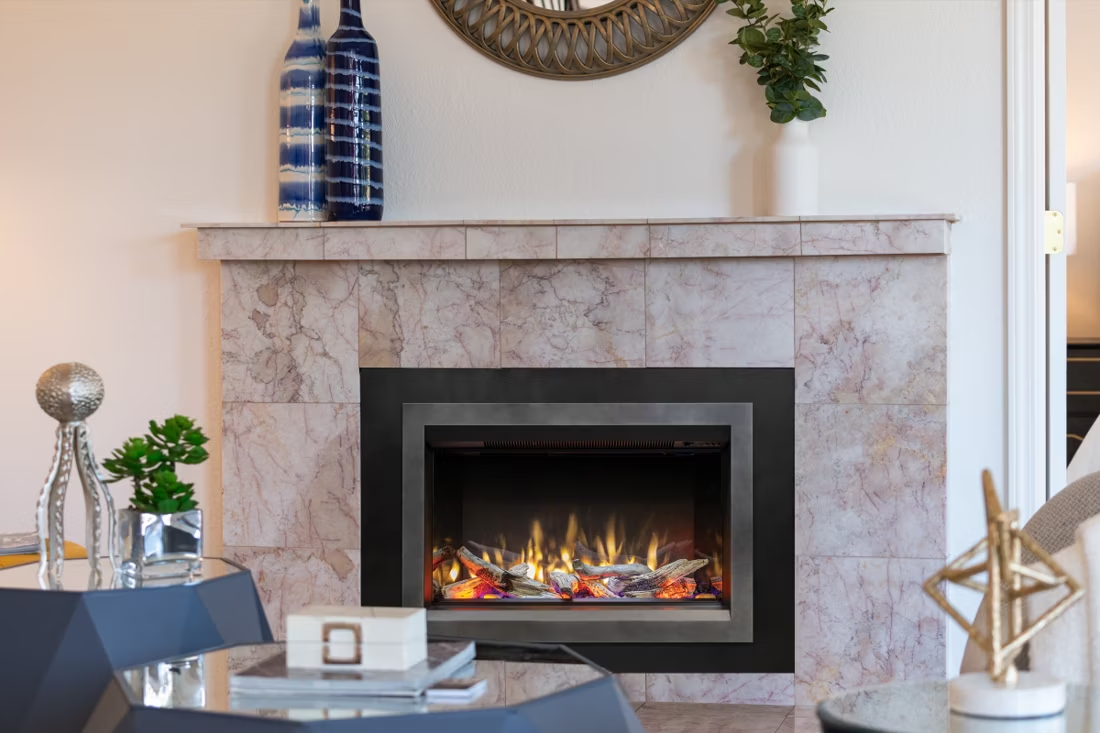
Public Service Company of Colorado (Xcel Energy) serves Columbine at a residential rate around 15 cents per kWh, and most electric fireplace installs are simple: plug into an existing outlet or, for built-in units, run a dedicated circuit. No chimney, no combustion byproducts, no burn-ban concerns on the days when the county or the Regional Air Quality Council flags poor air. For zone heat in a family room, a converted old masonry fireplace, or ambiance in a finished basement, an electric insert or built-in unit gets the job done without adding anything to the air Columbine is already managing.
Three steps. No salesperson until you're ready.
Tell us about your project
Your zip code, your situation, and the fuel you're leaning toward—or let the answers point you to one.
See what's actually available
The brands dealers within 100 miles genuinely carry—real options, never a catalog mirage.
Get your dealer & Project Guide
A trusted local dealer, plus the free Project Guide & Parts List that names every component of the job.
Frequently Asked Questions
How much does an electric fireplace installation cost in Columbine?
Plug-in electric inserts and freestanding stoves that use an existing 120V outlet typically run $300 to $1,500 installed, since there's no venting or gas line to add. Built-in wall units or full mantle-and-surround installations that require a dedicated 120V or 240V circuit run higher—usually $1,500 to $4,000—once you factor in a licensed electrician, wall framing if it's a new install, and finish carpentry around the unit. Retrofitting an old wood-burning masonry fireplace with an electric insert sits in the middle of that range and is one of the more common projects in older Columbine homes near Ken Caryl.
Do I need a permit to install an electric fireplace in Columbine?
A plug-in unit that uses an existing outlet doesn't require a permit. If your installer needs to run a new dedicated circuit or do any wall wiring for a built-in unit, that electrical work falls under Jefferson County's Building Safety Division and does require a permit pulled by a licensed electrician. Most hearth retailers who install built-in electric units in this area coordinate that permit as part of the job, so it's not something you have to manage yourself.
How much does it cost to run an electric fireplace with Xcel Energy rates?
At the Public Service Company of Colorado residential rate of roughly 15 cents per kWh, a typical 1,500-watt electric fireplace costs about 23 cents an hour to run on heat mode. Run eight hours a day through a cold stretch, that's under $2 a day, or around $50–$55 a month of steady use—far less than most homeowners expect, and a fraction of what it costs to heat an entire home. Most units also run on flame-only mode with the heater off, which draws only a few watts.
What size electric fireplace do I need for my Columbine home?
Most electric fireplaces are built around a 1,500-watt heating element, which is rated to comfortably heat 400 to 1,000 square feet depending on ceiling height and insulation—enough for a family room, primary bedroom, or finished basement space. Electric units aren't sized the way wood or gas appliances are for whole-home heating; they're built for zone heating one room at a time. If you're trying to warm more than one space, it usually makes more sense to add a second unit than to look for an oversized single fireplace.
Can an electric fireplace be my primary heat source in a Columbine winter?
Not really. With winter lows averaging 19°F and a winter chill that adds up fast, a single electric fireplace can't keep pace with whole-home heat loss the way a furnace or heat pump does. Where electric fireplaces shine here is zone heating—supplementing your furnace in the room you're actually using, letting you turn the thermostat down elsewhere, and covering the shoulder-season days in fall and spring when you don't want to fire up the whole HVAC system.
Are electric fireplaces a good fit given Columbine's air quality concerns?
Yes—this is one of the strongest reasons homeowners here choose electric. Columbine sits in an area affected by winter temperature inversions and seasonal wildfire smoke drifting down from the foothills and mountains to the west. An electric fireplace produces no combustion byproducts, no particulate emissions, and no smoke, so it operates the same on a red flag warning or an air quality advisory day as it does on any other day. That's a real advantage over wood, which sees very limited use in this area for exactly this reason.
What's the difference between an electric fireplace, insert, and stove?
An electric insert is built to slide into an existing fireplace opening—a common upgrade for the older masonry wood-burning fireplaces found in many Columbine and Ken Caryl homes, since it reuses the opening without any chimney work. A built-in electric fireplace is designed for new construction or a remodel, framed into a wall like a television niche. A freestanding electric stove sits on the floor and mimics the look of a wood stove without any venting requirement. For most homeowners here converting away from an underused wood fireplace, the insert is the simplest path.
Electric vs. gas—which is right for my Columbine home?
Gas delivers more heat output, a more realistic flame, and can serve as genuine supplemental heat during a hard freeze, but it requires a gas line and venting, plus a building permit through Jefferson County. Electric skips all of that—no venting, no gas work, often no permit at all for a plug-in unit—but it's strictly zone heat and won't outperform gas on the coldest nights. In HOA-governed subdivisions around Columbine where exterior venting changes can require covenant approval, electric is often the lower-friction choice. Homeowners prioritizing flame realism and heat output for a main living space tend to lean gas instead.
Will my electric fireplace work during a power outage?
No—unlike gas fireplaces with intermittent pilot ignition, which often run on battery backup during an outage, an electric fireplace needs grid power to operate at all. If you lose power during a Front Range winter storm and Xcel Energy service is interrupted, your electric fireplace goes dark along with everything else. Homeowners who want heat that survives an outage typically pair an electric unit for everyday zone heating with a battery-backed gas appliance or a portable generator plan for emergencies.
Can I put a TV above my fireplace?
Yes—with an asterisk. Fireplaces are hot and TVs don't like heat. Either put a mantel between them to deflect rising warmth, or choose a fireplace with heat-management technology that creates a cool zone on the wall above—the wall stays around 125 degrees, barely warm, while the room still gets full heat. If you like clean lines and don't want a mantel, heat management is the answer.
Do electric fireplaces actually produce heat?
Yes—most put out around 4,800–5,000 BTUs from a standard outlet, which comfortably warms a bedroom, office, or den as a comfort-zone heater. What they won't do is carry a whole house the way wood, gas, or pellet can. Think of electric as ambiance-first with honest supplemental heat: flames on with no heat in July, flames plus warmth in January.
What is an in-home preview and do I need one?
It's a visit where a hearth professional measures your space, confirms the model you picked actually works in your home, and walks the specs—framing, gas line, venting, finish work—before anything is ordered. Some details you just can't know until you see the house. Never make a down payment without one; it's the single most-skipped step that burns buyers.
Can I install a fireplace myself?
If you're putting a fire in your house on purpose, it's best to work with an expert. Unless you're genuinely experienced in framing, gas line, vent pipe, and the national code on clearances to combustibles, have a professional do it—and ideally the same company that sells you the fireplace, so warranty, service, and liability all live under one roof.
Nearby Dealers
Hearth shops serving Columbine and the surrounding area. Every listing shows whether it is a WhyFire partner, a dealer we have verified as authorized for the brands we recommend, or a local business carrying hearth products. No manufacturer pays for placement. How we verify dealers →
Proud Souls Barbecue & Provisions
Outdoor Kitchen Dist. Inc
Spa Brokers
Aria Custom Design
Spa Brokers Iii
Spa Brokers
Distinctive Mantel Designs
Thoshini LLC
Spa Brokers V
Western Fireplace Supply
Rio Grande Co.
Fireplace And Grill Experts - Service Only
Spa Brokers
Spa Brokers
Spa Brokers (Corporate)
Electric Service in Columbine
An electric fireplace's heater draws about 1,500 watts—pennies per hour at local rates.
Public Service Co Of Colorado
Find your electric fireplace in Columbine.
Tell us about your home and we'll put together your free Project Guide & Parts List—the right electric fireplace or insert, the exact parts, and a trusted local dealer to install it.
Find Your Fireplace →