
Electric heat that fits Coal Creek's mountain homes.
No gas line, no wood pile, no propane delivery—just a switch. Find the right electric fireplace or insert for your foothills home and connect with a trusted local dealer.
Every Project Starts From One of These Five Situations
Convenient warmth without a wood pile or propane tank.
Coal Creek sits at 8,755 feet in the foothills west of Golden, tucked against the Arapaho-Roosevelt National Forest. With a heating season that runs nearly as demanding as Fargo, North Dakota, this community sees average winter lows hover around 16°F, and cold snaps well below zero aren't unusual. Unlike a lot of Front Range suburbs, many homes out here don't have piped natural gas service, which means propane delivery, wood, and electric are the three realistic options for heat.
That's where electric fireplaces and inserts earn their keep. Both Public Service Co of Colorado (Xcel Energy) and United Power serve Coal Creek addresses, with residential rates around 15.05 to 15.75 cents per kWh—reasonable enough that a zone-heating electric unit in a living room or bedroom can meaningfully cut propane use without the hassle of a delivery schedule. Electric units also throw no spark and produce no smoke, which matters in a wildfire-prone forest setting where summer smoke and winter inversions already stress local air quality. They won't replace your home's primary heat source at this elevation, but as supplemental warmth in the room you actually live in, they're hard to beat for convenience.
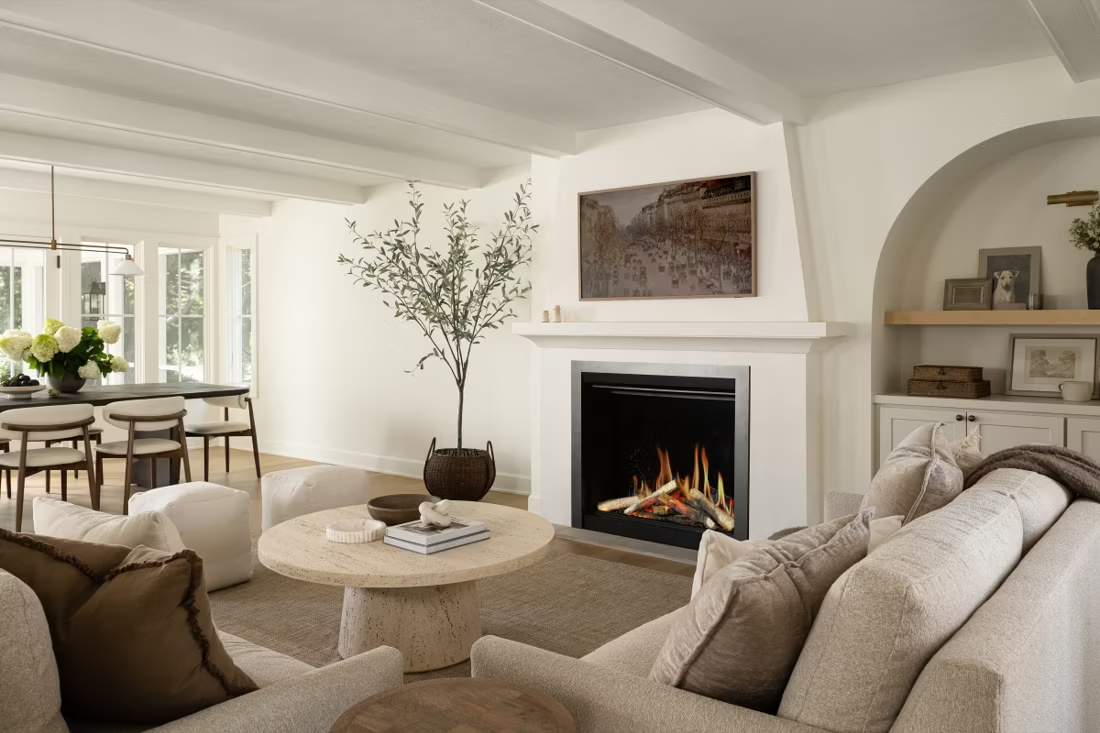
Three steps. No salesperson until you're ready.
Tell us about your project
Your zip code, your situation, and the fuel you're leaning toward—or let the answers point you to one.
See what's actually available
The brands dealers within 100 miles genuinely carry—real options, never a catalog mirage.
Get your dealer & Project Guide
A trusted local dealer, plus the free Project Guide & Parts List that names every component of the job.
Frequently Asked Questions
How much does an electric fireplace or insert cost to install in Coal Creek?
Plug-in electric fireplaces and inserts are the simplest hearth product to install—many just need a standard 120V outlet, which puts the unit cost plus basic setup in the $400 to $1,500 range. Larger built-in electric fireplaces or inserts that require a dedicated 20-amp circuit, especially in older Coal Creek cabins with dated wiring, run higher once an electrician is involved—typically $1,500 to $2,500 including the circuit work. Because there's no venting, chimney, or gas line to deal with, electric installs are consistently the fastest and least invasive hearth project a local dealer will quote.
Can an electric fireplace heat my whole house at this elevation?
No, and any dealer being straight with you will say the same. Most electric fireplaces put out around 5,000 BTU (roughly 1,500 watts)—enough to noticeably warm a single room, but not enough to carry a home through a Coal Creek winter nearly as demanding as Fargo, North Dakota, with overnight lows that regularly sit in the teens or lower. Think of electric as zone heat: it warms the room you're in and lets you turn down your propane furnace or supplement a wood stove elsewhere in the house, rather than replacing your primary system.
Do I need a permit to install an electric fireplace in Jefferson County?
A plug-in electric fireplace that uses an existing outlet typically doesn't require a permit. If you're adding a built-in unit that needs a new dedicated circuit or a panel upgrade, that electrical work generally requires a permit through the Jefferson County Building Safety Division, and it needs to be done by a licensed electrician regardless of paperwork. Most local dealers who install built-in electric units either handle this coordination directly or can refer you to an electrician who works permits regularly in unincorporated Jefferson County.
Why do so many Coal Creek homes use electric instead of gas?
Piped natural gas service doesn't reach most of unincorporated Coal Creek, so the realistic choices come down to propane, wood, or electric. Propane means tank rental and delivery scheduling; wood means a cutting permit through Arapaho-Roosevelt National Forest (running $5 to $20 per cord in the May-to-October season) and regular stacking and hauling. Electric skips both—you're paying Public Service Co of Colorado or United Power by the kWh with no delivery truck and no permit renewal, which is a big part of why electric fireplaces and inserts show up so often as the supplemental heat choice in this area.
What's the best type of electric fireplace for a Coal Creek home?
For most homes here, a built-in electric insert or a wall-mounted unit with a real heating element (not just a decorative flame effect) makes the most sense, since you'll actually want the heat output on cold nights, not just ambiance. Higher-end infrared electric inserts from brands like Dimplex and Napoleon distribute heat more evenly across a room than basic fan-forced units. If you're retrofitting an old, rarely-used wood-burning fireplace, an electric insert sized to that firebox opening is often the simplest upgrade—no chimney work, no liner, just a unit that slides in and plugs into a nearby outlet or dedicated circuit.
Is electric heat a good fit given wildfire and smoke concerns in the area?
It's one of the better arguments for electric out here. Coal Creek deals with both winter temperature inversions and wildfire smoke seasons, and an electric fireplace adds zero additional smoke or particulate to that mix—no ash, no open flame, no chimney to maintain defensible clearance around. That said, electric fireplaces do nothing for you during a power outage, and mountain outages tied to wind events or wildfire-related shutoffs do happen with both Xcel and United Power service territories. Many Coal Creek homeowners pair an electric unit for daily convenience with a wood stove or propane appliance as backup heat for when the grid goes down.
Will my electric fireplace work if the power goes out?
No—electric fireplaces and inserts require grid power (or a generator) to run, with no battery backup or standalone operation like some gas units offer. For a mountain community where outages can accompany winter storms or high-wind wildfire-prevention shutoffs, that's worth planning around. If backup heat during an outage matters to you, pair an electric fireplace for everyday zone heat with a wood stove or vented propane appliance that can run without electricity, rather than relying on electric as your only heat source.
What will an electric fireplace add to my utility bill?
A typical 1,500-watt electric fireplace running on high for 4 hours a day uses about 6 kWh daily. At Public Service Co of Colorado's residential rate of roughly 15.05 cents per kWh, that's about 90 cents a day, or around $27 a month of regular evening use. United Power customers, at about 15.75 cents per kWh, will see a nearly identical figure—closer to $28 a month. Most units let you dial back the heater and run just the flame effect, which draws only a few watts, so the actual cost depends heavily on how much you lean on it for real heat versus ambiance.
Electric insert vs. freestanding electric stove—which should I get?
An electric insert is built to slide into an existing fireplace opening, which makes it the natural choice if you have an old, underused wood-burning fireplace you'd rather not maintain a chimney for. A freestanding electric stove sits anywhere in a room like a piece of furniture and just needs a nearby outlet, which suits homes without an existing firebox—common in some of Coal Creek's newer builds and additions. Both deliver the same style of supplemental zone heat; the choice mostly comes down to whether you're retrofitting an existing hearth or starting from a blank wall.
Can I put a TV above my fireplace?
Yes—with an asterisk. Fireplaces are hot and TVs don't like heat. Either put a mantel between them to deflect rising warmth, or choose a fireplace with heat-management technology that creates a cool zone on the wall above—the wall stays around 125 degrees, barely warm, while the room still gets full heat. If you like clean lines and don't want a mantel, heat management is the answer.
Does an electric fireplace need a vent or chimney?
No—that's its superpower. An electric fireplace needs a wall and an outlet, period. No vent pipe, no gas line, no clearances to design around, which is why it works in bedrooms, offices, apartments, and walls where venting a gas or wood unit would be impractical or impossible. Installation is typically the simplest and least expensive of any fireplace type.
Can I install a fireplace myself?
If you're putting a fire in your house on purpose, it's best to work with an expert. Unless you're genuinely experienced in framing, gas line, vent pipe, and the national code on clearances to combustibles, have a professional do it—and ideally the same company that sells you the fireplace, so warranty, service, and liability all live under one roof.
Can a fireplace actually lower my heating bill?
Yes—by creating a comfort zone. A furnace heats every square foot of the house just to warm the one room you're in; a gas fireplace on low burns roughly a sixth of the gas a typical furnace does. Set the furnace around 55–60 degrees as a baseline, then heat the rooms your family actually uses. Families who heat this way commonly save $20–$60 a month.
Nearby Dealers
Hearth shops serving Coal Creek and the surrounding area. Every listing shows whether it is a WhyFire partner, a dealer we have verified as authorized for the brands we recommend, or a local business carrying hearth products. No manufacturer pays for placement. How we verify dealers →
Spa Brokers
Spa Brokers
Distinctive Mantel Designs
Aria Custom Design
The Warm Store
Chimney Doctors
Electric Service in Coal Creek
An electric fireplace's heater draws about 1,500 watts—pennies per hour at local rates.
Public Service Co Of Colorado
United Power, Inc
Find your electric fireplace in Coal Creek.
Tell us about your home and we'll put together a free Project Guide & Parts List—the right electric fireplace or insert for your space, the wiring it needs, and a trusted local dealer who can install it correctly.
Find Your Fireplace →