
Foothills heat, front-range convenience: fireplace resources for Jefferson County.
Wood, gas, pellet, and electric fireplace resources for every city and mountain community in Jefferson County—from Lakewood's suburban grid to Conifer's timbered acreage. Find the right unit and connect with a trusted local hearth retailer.
Every Project Starts From One of These Five Situations
Two climates in one county: plains heat and foothills cold.
Jefferson County stretches from the flat, dense suburbs of Lakewood and Arvada at roughly 5,600 feet up into the foothills and mountain communities of Evergreen, Conifer, and Kittredge above 7,000 feet. With about 5,900 heating degree days and average winter lows near 21°F, the heating season is real but not extreme—comparable to Madison, WI in overall demand, though Jefferson County's cold snaps are sharper and shorter. The mountain half of the county sees heavier snow loads and colder overnight temperatures than the valley floor, and ponderosa pine, aspen, pinyon, and juniper are the wood species most homeowners here are already burning or splitting from their own land.
What you'll find on this hub: hearth retailers, service technicians, and fuel suppliers serving every community in the county—from the dense suburbs along Highway 285 and I-70 to the mountain enclaves of Evergreen, Conifer, and Pine. Pick your fuel below to drill into specifics—local dealers, installation costs, recommended units, and the resources that match your project. Whether you're heating a Lakewood ranch home or a cabin off Brook Forest Road, this is the starting point.
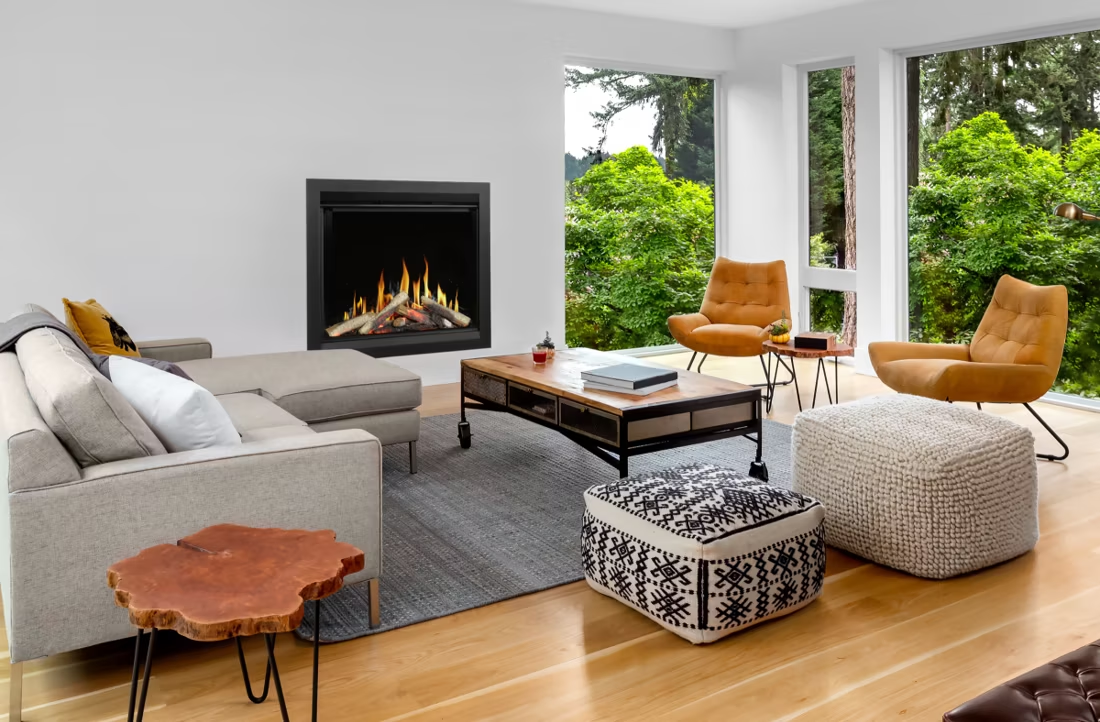
Four fuels. One honest answer for Jefferson County.
Three steps. No salesperson until you're ready.
Tell us about your project
Your zip code, your situation, and the fuel you're leaning toward—or let the answers point you to one.
See what's actually available
The brands dealers within 100 miles genuinely carry—real options, never a catalog mirage.
Get your dealer & Project Guide
A trusted local dealer, plus the free Project Guide & Parts List that names every component of the job.
Frequently Asked Questions
Which fuel works best in Jefferson County?
It depends heavily on where in the county you live. In the mountain communities—Evergreen, Conifer, Pine—wood remains a strong choice: many homeowners have standing ponderosa pine and aspen on their own property, and a catalytic stove can carry a fire through a cold foothills night even during a power outage, which happens more often up there than in the valley. In Lakewood, Arvada, and Wheat Ridge, natural gas service is widely available and gas fireplaces or inserts are the convenience pick—instant heat, no wood handling, easy zoning of a single room. Pellet stoves are a solid middle ground countywide, with Bear Mountain and Lignetics pellets both sold locally, though mountain homeowners without easy road access in heavy snow sometimes prefer wood for its self-sufficiency. Electric is mostly supplemental here—useful in a Lakewood condo or a finished basement, but not a primary heat source given the winter lows.
Do I need a permit to install a fireplace in Jefferson County?
Yes, in nearly all cases. New wood stoves, wood inserts, gas fireplaces, gas inserts, gas stoves, and pellet stoves require a building permit, and gas work needs a separate gas permit pulled by a licensed installer. Permit jurisdiction depends on where you are: inside Golden, Lakewood, Arvada, or Wheat Ridge, the city handles it; in unincorporated areas including Evergreen and Conifer, it runs through Jefferson County's building division. Wood-burning appliances installed new must meet current EPA emissions standards. Electric fireplaces are usually exempt unless the install involves new wiring or a dedicated circuit. Most local retailers pull permits as part of the installation, which is worth confirming before you sign a contract, especially for mountain properties where inspection scheduling can take longer.
Are there air quality restrictions on wood burning in Jefferson County?
There can be, tied mostly to Denver-metro winter inversions. Cold air settles in the Front Range valley on still winter days, trapping wood smoke and other particulates close to the ground, and the Colorado Department of Public Health and Environment occasionally issues voluntary no-burn advisories for the metro area, which includes the valley portions of Jefferson County. These advisories are typically voluntary rather than mandatory. Wildfire smoke in late summer and fall is a separate, often bigger air quality concern here given how much of the county borders Arapaho-Roosevelt National Forest land—it doesn't affect fireplace permitting, but it's part of why many mountain homeowners lean on cleaner-burning EPA-certified stoves rather than older uncertified units. New wood stove installations must meet current EPA emissions standards regardless of which part of the county you're in.
Can one local hearth retailer handle all four fuel types?
Most of the larger Jefferson County retailers, concentrated in Golden and Lakewood, carry three or four fuel types under one roof, which makes them a good stop if you want to compare wood, gas, pellet, and electric side by side before deciding. Smaller shops closer to the mountain communities sometimes specialize more narrowly in wood and pellet, reflecting what actually sells well in Evergreen and Conifer, with less floor space devoted to electric units. If a supplier only sells firewood or pellets rather than installing appliances, that's a fuel supplier, not a hearth retailer—worth knowing the difference before you call around. Cross-shopping fuels is easiest at the multi-fuel dealers, where you can usually see working display units of each type running side by side.
How does service work in the mountain communities of Jefferson County?
Technicians serving Evergreen, Conifer, Kittredge, and Pine are generally based down in the valley—Golden, Lakewood, or Arvada—and travel up Highway 285 or Highway 74 for service calls. Expect a modest travel surcharge for the mountain trip, and expect scheduling to tighten up considerably once the first heavy snow hits, since winding mountain roads slow response times. Booking chimney sweeps and gas inspections in late summer or early fall, before wildfire season winds down and before the first cold snap, is the reliable way to avoid a multi-week wait in November or December. Homeowners on wood or pellet up in the foothills often keep a backup electric heater or extra split wood on hand for stretches when a mountain road closure delays a scheduled service visit.
What's the typical cost range for fireplace installation across all fuel types in Jefferson County?
Costs vary by fuel and by whether you're in the valley suburbs or the mountain communities, where site access can add labor. Wood stove or insert installation: roughly $4,500–$9,500 for a typical install, higher for new-construction chimney work on a mountain property with difficult access. Gas fireplace, insert, or stove: about $4,500–$11,500, with valley homes on existing natural gas service usually landing on the lower end and propane conversions in the foothills running higher. Pellet stove or insert: generally $4,500–$8,000. Electric fireplace: $200–$3,000 for the unit itself, plus $400–$1,200 in labor for anything beyond a simple plug-in setup. For a firmer number tied to your specific city and fuel, see the county + fuel pages above.
How much should I budget for a fireplace?
For an average home—covering the fireplace, the vent pipe, and basic installation—a budget between $3,900 and $5,500 gives you a lot of options across wood, gas, and pellet. By the time you add finish work, gas line, and electrical, the average complete installation lands between $5,000 and $12,000 all-in. In a remodel or new build, a good rule is to put about 2.5% of the total project cost toward the fireplace.
Can a fireplace actually lower my heating bill?
Yes—by creating a comfort zone. A furnace heats every square foot of the house just to warm the one room you're in; a gas fireplace on low burns roughly a sixth of the gas a typical furnace does. Set the furnace around 55–60 degrees as a baseline, then heat the rooms your family actually uses. Families who heat this way commonly save $20–$60 a month.
Does a fireplace add value to my home?
On average, a fireplace adds back to the home about the same amount you spent installing it. Add the monthly savings from heating the rooms you actually use instead of the whole house—often hundreds of dollars a year—and the value case is strong before you even count what a fire does for how your family uses the room.
Wood, gas, pellet, or electric—how do I choose?
Match the fuel to your life, not the other way around. Wood: lowest fuel cost and total power-outage independence, but you're hauling and stacking. Gas: press a button, set a thermostat, no maintenance to speak of. Pellet: wood economics with automatic feeding, in exchange for weekly cleaning and a need for electricity. Electric: plugs in anywhere with honest supplemental heat. Nobody regrets the fuel that fits how they actually live.
Stove and Fireplace Dealers in Jefferson County
Listings include WhyFire partner dealers, dealers we have verified as authorized for the brands we recommend, and established local businesses that carry hearth products. Every listing shows which one it is. The ones marked Preferred run on WhyFire's software, so they can show you real pricing and book your appointment right here. No manufacturer pays for placement. How we verify dealers →
Spa Brokers
Aria Custom Design
Distinctive Mantel Designs
Outdoor Kitchen Dist. Inc
Spa Brokers
Proud Souls Barbecue & Provisions
Rio Grande Co.
Spa Brokers
Spa Brokers V
Fireplace And Grill Experts - Service Only
Spa Brokers Iii
Find your fireplace in Jefferson County.
Pick your fuel below and we'll match you with a trusted local dealer and send you a free Project Guide & Parts List—the exact parts, vent kit included, and the dealer we recommend for your project.
Find Your Fireplace →