
Keep Your Family Warm and Safe—No Matter What
In a town of about 1,900 people wrapped almost entirely in natural gas service, wood stoves are the exception, not the rule. If you're still after one—for ambiance, backup heat, or a mountain second home—we'll connect you with a dealer who knows the Denver-metro rules.
Every Project Starts From One of These Five Situations
A Small, Gas-First Town Inside Denver's Air Quality Zone.
Columbine Valley is a tiny, mostly built-out enclave along the South Platte River in Arapahoe County—about 1,900 residents, 5,359 feet of elevation, and winters that average a 19°F low with a solid Front Range heating season. That's a real Front Range winter, colder than Denver proper but nowhere near the sustained cold of a place like Bismarck, ND or Duluth, MN. Nearly every home here already has natural gas service, and most residential lots and streetscapes were built out decades ago with gas furnaces and gas fireplaces as the default—there's simply no long tradition of cordwood heating the way there is in mountain or high-desert Colorado towns.
The bigger factor is air quality. Columbine Valley sits inside the Denver Metro/North Front Range ozone and particulate non-attainment area, and the Regional Air Quality Council issues High Pollution Advisories on winter inversion days that can restrict or prohibit wood burning—including in older, uncertified stoves and fireplaces—across the whole metro area. That's a real deterrent for new installations in a town this compact. A small number of homeowners still install EPA-certified wood stoves for backup heat during outages or for the ambiance of a real fire, and quite a few Columbine Valley residents keep a second wood stove at a mountain cabin outside the metro boundary, where the burning rules and the culture around cordwood heat are both different.
Firewood Cutting Permits Near Columbine Valley
Three steps. No salesperson until you're ready.
Tell us about your project
Your zip code, your situation, and the fuel you're leaning toward—or let the answers point you to one.
See what's actually available
The brands dealers within 100 miles genuinely carry—real options, never a catalog mirage.
Get your dealer & Project Guide
A trusted local dealer, plus the free Project Guide & Parts List that names every component of the job.
Frequently Asked Questions
Is it even legal to install a wood stove in Columbine Valley?
Yes, a new EPA 2020 NSPS-certified wood stove can legally be installed and permitted—it's not banned outright. What changes the calculus is Colorado's Regional Air Quality Council, which issues High Pollution Advisories for the Denver Metro/North Front Range non-attainment area on winter inversion days. On advisory days, wood burning is restricted or prohibited, and older uncertified stoves and open fireplaces are the first to be told not to burn. Certified stoves generally get more leeway during advisories, which is one more reason to buy new and certified rather than install a used or hand-me-down unit.
How much does a wood stove installation cost in Columbine Valley?
Because wood stoves are uncommon in this specific town, there isn't a deep local sample to draw from, but installations across the Denver-metro Front Range typically run $4,000 to $9,000, depending on the stove, whether a masonry chimney already exists, and whether new Class A chimney pipe needs to be run through the roof. Given how few Columbine Valley homes have existing wood infrastructure, expect to land toward the higher end unless you're converting an existing masonry fireplace. A local hearth dealer can give you a firm number after seeing your chimney situation in person.
Why don't more homes in Columbine Valley have wood heat?
Two main reasons. First, natural gas service (through Public Service Company of Colorado / Xcel Energy's gas division) reaches essentially every lot in town, so gas furnaces and gas fireplaces became the default decades ago and there was never a strong wood-heating tradition to begin with. Second, Columbine Valley sits inside the Denver Metro non-attainment zone, where winter inversions trap smoke and trigger burning restrictions—a real disincentive in a town this small and this close to the urban core, compared to mountain or high-desert Colorado towns where wood heat is still common and even culturally expected.
Can I still cut my own firewood nearby if I want to burn wood?
Yes. The Arapaho-Roosevelt National Forest, roughly an hour west into the foothills, issues personal-use cutting permits for $5 to $20 per cord during the May-through-October season. Common species up there include ponderosa pine, aspen, pinyon, and juniper—the same mix found across much of the Front Range foothills. It's a common setup for Columbine Valley residents who keep a stove at a mountain property: cut and season wood at the cabin, rather than trying to store and season cordwood on a small in-town lot.
What about installing a wood stove at a mountain cabin instead of my Columbine Valley home?
This is genuinely the more common path for people in this area. A number of Columbine Valley households have a second property in the mountains, where wood heat is far more standard, burning restrictions are different, and firewood from Arapaho-Roosevelt National Forest permits is close at hand. If your primary interest is wood heat for a cabin rather than your in-town home, a local dealer can spec that install separately—cabins often call for a different stove size and venting approach than a suburban Denver-metro home would.
What air quality rules do I need to know before burning wood here?
Columbine Valley falls under the Denver Metro/North Front Range ozone and PM2.5 non-attainment designation, which means the Regional Air Quality Council can call High Pollution Advisories on winter inversion days—typically still, cold days when smoke and particulates get trapped near the ground. On advisory days, wood burning (especially in older, uncertified appliances) is restricted or prohibited outright. Checking the RAQC's daily advisory status before lighting a fire is worth building into the habit if you do install a wood stove here, the same way you'd check before a burn ban in wildfire season.
Should I get a wood stove or just stick with gas in Columbine Valley?
For nearly all Columbine Valley homes, gas is the more practical everyday choice—it's already plumbed to the house, it isn't subject to burning restrictions on inversion days, and it doesn't require sourcing or storing cordwood on a small in-town lot. Wood makes sense in narrower cases: as an off-grid backup heat source for power outages, or for the ambiance of a real fire in a home where someone is committed to tending it. If backup heat during outages is the real goal, some homeowners find a smaller electric option, tied to Public Service Company of Colorado's grid, is a simpler answer—worth weighing against a wood stove before you commit.
I already have a wood-burning fireplace—can I keep using it as-is?
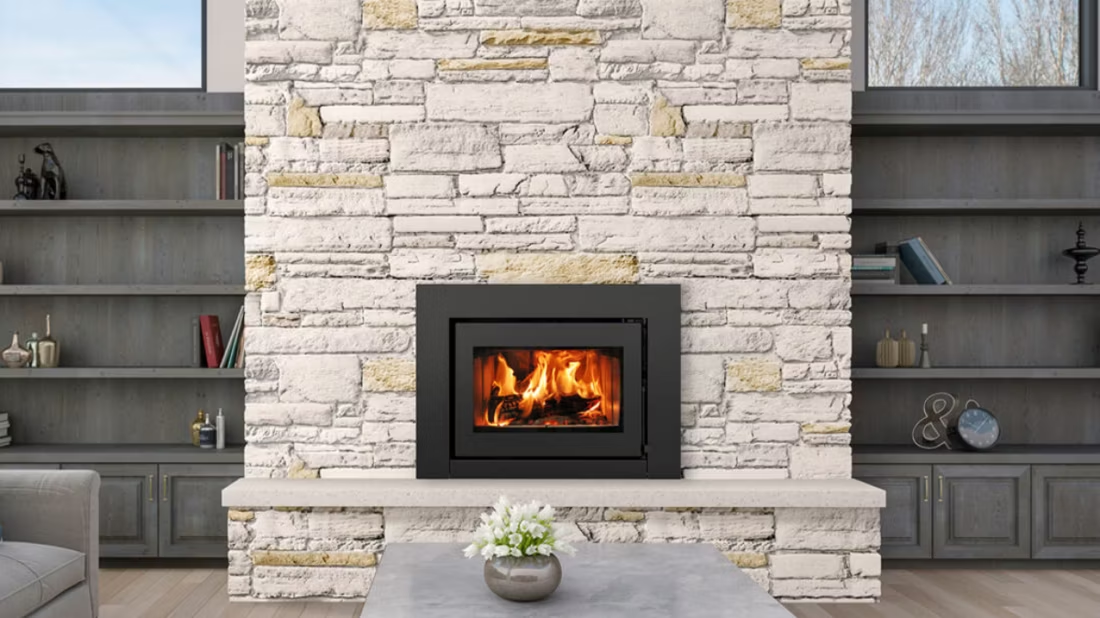
Existing wood-burning fireplaces and stoves are generally grandfathered for normal use, but they're the first appliances restricted during a High Pollution Advisory, since older open fireplaces and pre-2020 stoves produce far more particulate matter than certified units. If you use your fireplace regularly, an EPA-certified insert is worth considering—it fits into your existing masonry opening, burns dramatically cleaner, and gives you more flexibility to burn on advisory days than an open hearth does.
Where can I find a local installer who works with wood stoves near Columbine Valley?
Because demand is thin inside Columbine Valley itself, most of the installers who handle wood stove work here also cover the wider south Denver-metro area—Littleton, Englewood, and southwest Denver. Look for NFI-certified installers with experience on both masonry fireplace conversions and new chimney runs, since so few in-town homes have existing wood infrastructure to build from. A trusted local dealer can also tell you honestly whether a wood stove makes sense for your specific lot and use case, or whether gas or electric is the better fit.
Why is my open fireplace making my house colder?
Open fireplaces suck—literally. As the fire burns, it consumes air your furnace already paid to heat and pulls it out through the chimney, so the house is actually colder after the fire goes out than before you lit it. An insert fixes this: it seals the chimney, puts fixed glass across the front, and turns that hole in your house into a real heat source.
Why won't my new wood stove get going like my old one?
New wood stoves are 70%+ efficient, so far less heat goes up the flue—which also means less draft to get a fire established. The rule: build a genuinely hot fire for about 45 minutes before you choke it down. Skip that and you get smoke in the room, creosote in the chimney, and a fire that never takes off. Most performance complaints trace straight back to this.
Does a fireplace add value to my home?
On average, a fireplace adds back to the home about the same amount you spent installing it. Add the monthly savings from heating the rooms you actually use instead of the whole house—often hundreds of dollars a year—and the value case is strong before you even count what a fire does for how your family uses the room.
Can I install a fireplace myself?
If you're putting a fire in your house on purpose, it's best to work with an expert. Unless you're genuinely experienced in framing, gas line, vent pipe, and the national code on clearances to combustibles, have a professional do it—and ideally the same company that sells you the fireplace, so warranty, service, and liability all live under one roof.
Nearby Dealers
Hearth shops serving Columbine Valley and the surrounding area. Every listing shows whether it is a WhyFire partner, a dealer we have verified as authorized for the brands we recommend, or a local business carrying hearth products. No manufacturer pays for placement. How we verify dealers →
Proud Souls Barbecue & Provisions
Outdoor Kitchen Dist. Inc
Spa Brokers
Spa Brokers Iii
Aria Custom Design
Distinctive Mantel Designs
Spa Brokers
Spa Brokers V
Thoshini LLC
Fireplace And Grill Experts - Service Only
Rio Grande Co.
Western Fireplace Supply
Spa Brokers
Spa Brokers (Corporate)
Spa Brokers
Find Your Wood Heat Option in Columbine Valley.
Wood heat is uncommon here, but if it's still right for your home or your mountain property, we'll match you with a trusted local dealer and send over a free Project Guide & Parts List—the stove, the venting, and what it actually takes to install it near Columbine Valley.
Find Your Fireplace →