
Pellet Heat in a Town Built on Natural Gas.
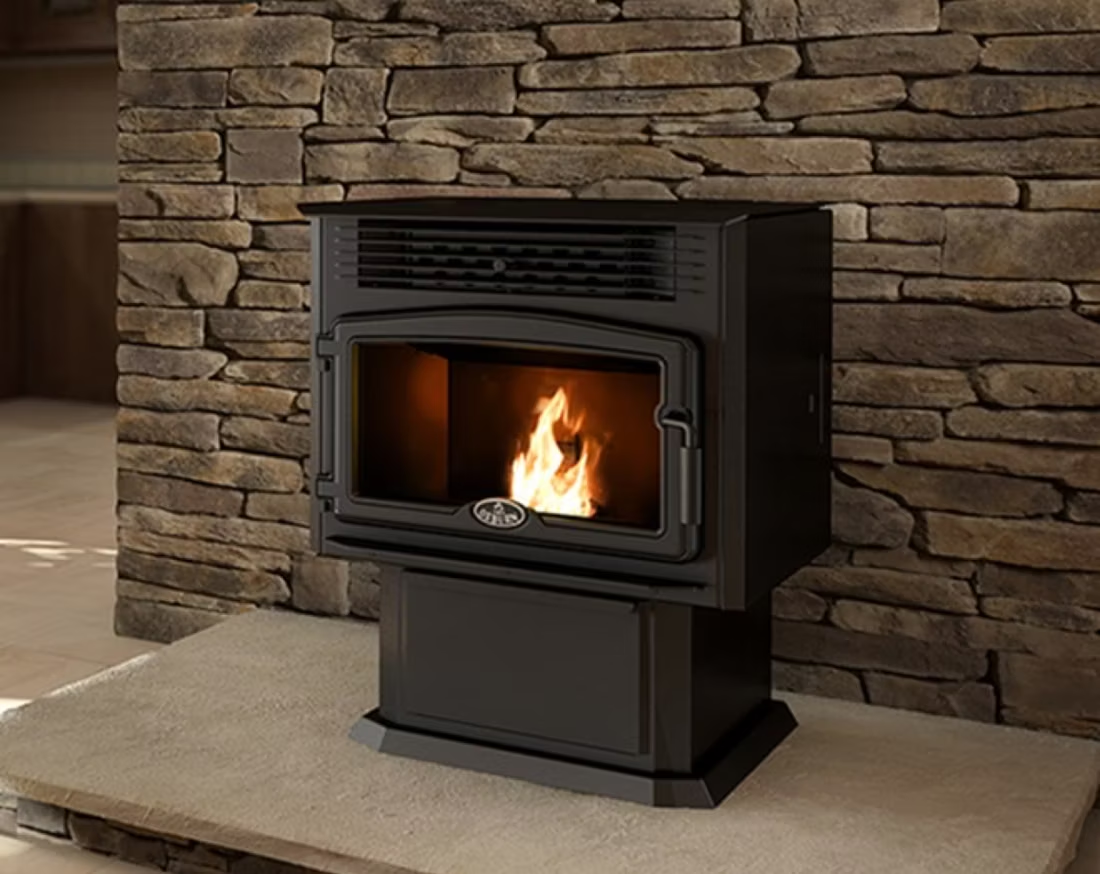
Pellet stoves are uncommon in Columbine Valley, but a small number of homeowners still choose one for a basement, a sunroom, or a cleaner-burning solid-fuel backup. We'll connect you with a local dealer who can tell you honestly whether it fits your home.
Every Project Starts From One of These Five Situations
A different kind of heating landscape.
Columbine Valley is a small residential community of under 2,000 people tucked along the South Platte River in Arapahoe County, part of the greater Denver metro area. At 5,359 feet in climate zone 5B, winters here average 19°F on cold nights with a long, demanding heating season that stretches from fall through spring—cold enough that heat matters, but the town's housing stock and utility infrastructure point most homeowners toward natural gas, not solid fuel. Public Service Company of Colorado (Xcel Energy) serves nearly every property in town with both gas and electric, and gas fireplaces and inserts are the default upgrade for most Columbine Valley homes.
That's the backdrop for pellet heat here: it's not the local norm, and we won't pretend otherwise. Denver metro's Regulation No. 1 restricts new wood-burning fireplace installations in nonattainment areas affected by winter inversion, which occasionally pushes a homeowner toward a certified pellet appliance as a cleaner-burning alternative to cordwood. Others want a solid-fuel option for a finished basement or a detached space where running a gas line isn't practical. If that's you, a handful of Front Range dealers carry pellet stoves stocked with regional fuel from Bear Mountain, Lignetics, and Forest Energy, and we can match you with one who will size the unit correctly and handle the permit paperwork.
Three steps. No salesperson until you're ready.
Tell us about your project
Your zip code, your situation, and the fuel you're leaning toward—or let the answers point you to one.
See what's actually available
The brands dealers within 100 miles genuinely carry—real options, never a catalog mirage.
Get your dealer & Project Guide
A trusted local dealer, plus the free Project Guide & Parts List that names every component of the job.
Frequently Asked Questions
Are pellet stoves actually common in Columbine Valley?
No, and we'd rather tell you that upfront than oversell it. Columbine Valley is a small, established community where nearly every home already has natural gas service through Public Service Company of Colorado, and gas fireplaces or inserts are the go-to upgrade for local homeowners. Pellet stoves show up occasionally—usually in a basement rec room, a detached studio, or a home where the owner specifically wants a solid-fuel appliance without the smoke output of cordwood. If that describes your project, local hearth dealers still carry and install pellet units; there just aren't as many of them in town as gas specialists.
How much does a pellet stove installation cost in Columbine Valley?
Expect somewhere in the range of $3,500 to $6,500 for a typical freestanding pellet stove installation along the Front Range, including the unit, a wall-thimble vent kit, and a dedicated electrical outlet for the auger motor and combustion blower. A pellet insert into an existing masonry fireplace tends to run similar or slightly higher once a liner and venting adapter are added. Because pellet installs are less common here than gas, it's worth asking your matched dealer directly what they've priced recently in Arapahoe County rather than assuming a national average applies.
Will a pellet stove keep my house warm during a power outage?
Not on its own. Pellet stoves rely on an electric auger to feed fuel and a blower to distribute heat, so if Public Service Company of Colorado's grid goes down, the stove stops working unless it's paired with a battery backup or a small generator. This matters along the Front Range, where late-season snowstorms occasionally knock out power for hours. If uninterrupted backup heat during outages is your main goal, a gas fireplace or insert with battery-backed ignition is generally the more dependable choice for a Columbine Valley home—pellet is better suited to routine, plugged-in heating rather than storm resilience.
Does Colorado's air quality regulation affect whether I can install a pellet stove?
Yes, indirectly. Denver metro's Regulation No. 1 restricts new wood-burning fireplace installations in areas affected by winter inversion and wildfire smoke, which includes Arapahoe County. Pellet stoves are typically treated differently from wood stoves under these rules because they burn more completely and produce far less particulate, so an EPA-certified pellet unit is usually installable where a new wood-burning fireplace would not be. Confirm specifics with the Arapahoe County Building Division before you commit, since local interpretation of the regulation can vary by jurisdiction.
What size pellet stove do I need for my home?
Most Columbine Valley homes are established single-family properties on generous lots near the South Platte River, often with finished basements or additions that are harder to heat from a central furnace. For a single room or basement space up to around 1,000 square feet, a small pellet stove in the 40,000–50,000 BTU range is usually enough given the area's 19°F average winter lows. Larger open floor plans or homes wanting the stove as a supplemental whole-house source should look at 60,000+ BTU units. A local dealer will want to see your floor plan and insulation before finalizing a recommendation.
Where do I buy pellet fuel near Columbine Valley?
Regional brands including Bear Mountain, Lignetics, and Forest Energy are sold through hearth retailers and hardware stores across the Denver metro area, typically in 40-pound bags sold by the ton. One advantage worth noting given the area's winter inversion and wildfire smoke concerns: bagged pellet fuel doesn't carry the same burn-restriction flags that cordwood sometimes does during air quality advisories, since pellet appliances burn cleaner and more consistently. Your matched dealer can point you to the closest supplier that regularly restocks in-season.
Pellet vs. gas—which makes more sense for a Columbine Valley home?
For most homes in town, gas wins on convenience and cost: natural gas service from Public Service Company of Colorado reaches nearly every property, and a gas fireplace or insert offers instant on-off heat with no fuel storage or ash cleanup. Pellet makes more sense in a narrower set of cases—a detached structure without a gas line, a homeowner who specifically wants a solid-fuel appliance, or a space where Regulation No. 1 rules out a new wood-burning unit but a certified pellet stove still qualifies. If you're unsure which category you fall into, that's exactly the kind of question a local dealer can answer after seeing your home.
Do I need a permit to install a pellet stove in Columbine Valley?
Yes. Columbine Valley is a small municipality that relies on Arapahoe County for building code enforcement, so a new pellet stove installation typically requires a permit through the Arapahoe County Building Division, along with an EPA-certified appliance and correct wall or roof venting clearances. Most hearth dealers who install pellet stoves in the area handle this paperwork as part of the job, which is one more reason to work with a dealer who's done it before rather than a general contractor.
How much maintenance does a pellet stove actually need?
More hands-on than a gas fireplace, less than a wood stove. Plan to empty the ash pan every few days to weekly depending on use, and clean the burn pot and glass regularly during the heating season. Once a year, have the exhaust venting, auger, and blower professionally cleaned and inspected—soot and fine ash can build up in ways that aren't obvious from the outside. Because pellet service techs are less common in Columbine Valley than gas technicians, ask your matched dealer whether they offer ongoing service or can refer you to someone who does.
What's the difference between an insert and a zero-clearance fireplace?
An insert is a fireplace that slides into a pre-existing wood-burning fireplace—if you don't have one, there's nothing to insert it into. A zero-clearance fireplace is built into a framed wall, which makes it the answer for remodels and new construction. Simple test: existing masonry fireplace means insert; blank or framed wall means zero-clearance.
Why is my open fireplace making my house colder?
Open fireplaces suck—literally. As the fire burns, it consumes air your furnace already paid to heat and pulls it out through the chimney, so the house is actually colder after the fire goes out than before you lit it. An insert fixes this: it seals the chimney, puts fixed glass across the front, and turns that hole in your house into a real heat source.
Does a fireplace add value to my home?
On average, a fireplace adds back to the home about the same amount you spent installing it. Add the monthly savings from heating the rooms you actually use instead of the whole house—often hundreds of dollars a year—and the value case is strong before you even count what a fire does for how your family uses the room.
Can a fireplace actually lower my heating bill?
Yes—by creating a comfort zone. A furnace heats every square foot of the house just to warm the one room you're in; a gas fireplace on low burns roughly a sixth of the gas a typical furnace does. Set the furnace around 55–60 degrees as a baseline, then heat the rooms your family actually uses. Families who heat this way commonly save $20–$60 a month.
Nearby Dealers
Hearth shops serving Columbine Valley and the surrounding area. Every listing shows whether it is a WhyFire partner, a dealer we have verified as authorized for the brands we recommend, or a local business carrying hearth products. No manufacturer pays for placement. How we verify dealers →
Proud Souls Barbecue & Provisions
Outdoor Kitchen Dist. Inc
Spa Brokers
Spa Brokers Iii
Aria Custom Design
Distinctive Mantel Designs
Spa Brokers
Spa Brokers V
Thoshini LLC
Fireplace And Grill Experts - Service Only
Rio Grande Co.
Western Fireplace Supply
Spa Brokers
Spa Brokers (Corporate)
Spa Brokers
Pellet Brands Stocked Around Columbine Valley
Manufacturers will point you to the nearest stocking dealer.
Find your pellet stove in Columbine Valley.
Pellet heat is a niche fit here, so getting matched with the right dealer matters more than usual. Tell us about your home and we'll send a free Project Guide & Parts List—a plan for your Columbine Valley pellet project with the exact parts, including the vent kit, and our recommended local dealer.
Find Your Fireplace →