
Instant Heat That's Legal Every Day of the Year.
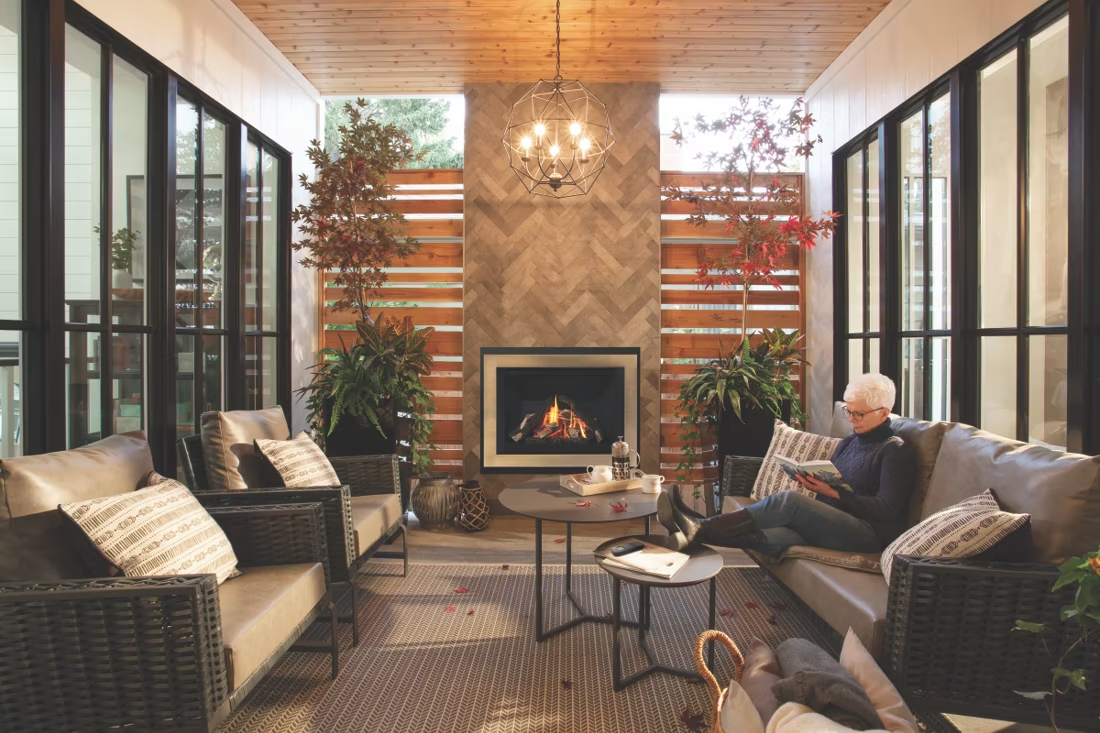
Walnut Creek's mild winters don't call for a woodpile—they call for a gas fireplace that lights with a switch and never triggers a Spare the Air burn ban. Find the right unit and connect with a trusted local dealer.
Every Project Starts From One of These Five Situations
Built for mild winters and strict air rules.
Walnut Creek sits in climate zone 3B at the foot of Mount Diablo, about 200 feet above sea level, where winter lows average a mild 42°F and the city has a light winter heating load overall—a fraction of what a place like Minneapolis or Duluth racks up each winter. A fireplace here is rarely the primary heat source; it's zone heat for a family room on a foggy January evening, and increasingly, that heat comes from gas.
Wood-burning fireplaces face real headwinds in Contra Costa County: the Bay Area Air Quality Management District has designated the region a non-attainment area, and Spare the Air alerts—common during winter inversions and wildfire smoke events—prohibit burning wood in any fireplace or stove on affected days, regardless of certification. Gas fireplaces aren't subject to those bans, which is a big reason gas has become the default choice for both new construction and fireplace remodels across neighborhoods like Rossmoor, Northgate, and downtown. Natural gas service runs throughout the city via Pacific Gas & Electric, and most homes already have a line for the furnace, water heater, or range, which keeps installation straightforward.
Three steps. No salesperson until you're ready.
Tell us about your project
Your zip code, your situation, and the fuel you're leaning toward—or let the answers point you to one.
See what's actually available
The brands dealers within 100 miles genuinely carry—real options, never a catalog mirage.
Get your dealer & Project Guide
A trusted local dealer, plus the free Project Guide & Parts List that names every component of the job.
Frequently Asked Questions
How much does a gas fireplace installation cost in Walnut Creek?
In the Bay Area, a typical gas fireplace or insert installation in Walnut Creek runs $5,500 to $13,000—higher than the national average because of Contra Costa County labor rates and the cost of routing new gas line where none exists. A direct-vent gas insert dropped into an existing masonry fireplace with a gas line already stubbed in sits toward the low end. A full built-in gas fireplace for a remodel or new great room, with framing, exterior venting, and a new gas line run from the meter, lands at the higher end. Ask your local retailer for a firm quote after they've inspected your chimney or wall cavity.
Can I convert my existing wood-burning fireplace to gas?
Yes, and it's one of the most common upgrades Walnut Creek homeowners request, largely because of Bay Area Air Quality Management District Spare the Air rules. On a Spare the Air day—common during winter tule fog inversions and wildfire smoke season—burning wood in any fireplace or stove is prohibited, but gas units are exempt entirely. A gas insert installed into your existing masonry firebox, vented through a stainless liner in your existing chimney, typically runs $5,000 to $9,000 depending on the model and whether new gas line work is needed. You keep the look of your original fireplace and gain a unit you can actually use on every restricted-burn day of the year.
Do I need natural gas service, or can I run a fireplace on propane?
Most of Walnut Creek—including Rossmoor, Northgate, downtown, and the neighborhoods along Ygnacio Valley Road—is served by natural gas through Pacific Gas & Electric, and if your home already has gas for the furnace, water heater, or range, adding a fireplace is a straightforward tie-in. Propane is uncommon inside city limits but shows up occasionally on unincorporated foothill parcels toward Mount Diablo that PG&E's gas mains don't reach. Nearly every gas fireplace on the market can be configured for either fuel; your installer sets the orifice and regulator to match.
Will my gas fireplace still work if PG&E shuts off power during fire season?
In most cases, yes, and this matters more in Contra Costa County than in much of the country, since PG&E has used Public Safety Power Shutoffs during high fire-danger periods that can last a day or more. Gas fireplaces with intermittent pilot ignition run on a small battery backup—usually AA batteries inside the unit—that keeps the pilot lighting on demand even with the power out. Valor fireplaces go a step further: their pilot assembly generates its own electricity through a thermocouple, so there are no batteries to remember at all. For a Walnut Creek home in a PSPS-prone area, that distinction is worth asking your local dealer about directly.
What's the difference between a gas fireplace, gas insert, and gas stove?
A gas fireplace is a fully built-in, framed unit—the right call for new construction or a room without an existing hearth. A gas insert slides into an existing masonry firebox and uses your chimney as the vent path, which is the common route for older Walnut Creek homes built in the 1960s and '70s around a traditional wood fireplace. A gas stove is a freestanding cast-iron or steel unit that sits on the floor, often chosen for a den or bonus room that never had a chimney at all. A local retailer can walk your specific space and tell you which category fits.
Do I need a permit to install a gas fireplace in Walnut Creek?
Yes. The City of Walnut Creek Building Division requires a building permit for the fireplace installation and a separate gas permit for any new gas line work, and the gas line itself has to be run by a licensed gas-fitter. Most established hearth retailers in the area include permitting in their installation contract and coordinate the inspection, so you're not managing multiple trades and city sign-offs on your own. Homes in unincorporated Contra Costa County go through the county building department instead of the city.
Can I install a vent-free (ventless) gas fireplace in Walnut Creek?
Generally, no. California is one of the states that restricts unvented gas appliances used for room heating, and vent-free gas log sets and fireplaces are not approved for installation in most California jurisdictions, including Walnut Creek. That's not much of a limitation locally—direct-vent gas fireplaces, which draw combustion air from outside and exhaust sealed through a wall or roof, are the standard here anyway, and they perform better in tight, energy-efficient Bay Area homes than an unvented unit would.
How often does a gas fireplace need to be serviced?
Plan on an annual inspection, ideally before the first cool nights hit in late fall. A technician checks the burner, pilot assembly, gas connections, and venting, and cleans the glass and interior—a much smaller job than sweeping a wood chimney, but still important, since a degraded seal on a direct-vent unit can let combustion byproducts leak into the room. Local hearth service companies serving Walnut Creek and Concord typically charge $150 to $250 for the visit.
Gas vs. electric fireplace—which makes more sense in Walnut Creek?
Given how mild the winters are here—average lows around 42°F and an overall light winter heating load—either fuel can realistically handle the job, but the operating math favors gas. PG&E's residential electric rate in this territory is among the highest in the country, averaging around $0.317 per kWh, which makes running an electric fireplace as a heat source noticeably more expensive per BTU than gas. Electric units still make sense for a condo, a unit without gas service, or a room where running a gas line isn't practical—they install in an afternoon with no venting at all. But for a primary family room fireplace in a single-family Walnut Creek home already on the gas meter, gas is usually the better value.
Is my gas fireplace wasting gas?
If it was installed more than 15 years ago, probably. Older gas fireplaces keep a standing pilot light burning all the time, and that little flame can cost a couple hundred dollars a year. Newer models use pilot-on-demand ignition—the pilot lights only when you use the fireplace and goes out when you turn it off.
Why is a fireplace insert so efficient?
An insert does two things: it seals the chimney completely, so you stop losing air you already paid to heat, and it radiates warmth into the room through the firebox and glass. Most add a heat-exchange fan that pulls cool room air underneath, wraps it around the hot firebox, and pushes it back out warm. Your home is more efficient before you've even lit the first fire.
Can a fireplace actually lower my heating bill?
Yes—by creating a comfort zone. A furnace heats every square foot of the house just to warm the one room you're in; a gas fireplace on low burns roughly a sixth of the gas a typical furnace does. Set the furnace around 55–60 degrees as a baseline, then heat the rooms your family actually uses. Families who heat this way commonly save $20–$60 a month.
How much should I budget for a fireplace?
For an average home—covering the fireplace, the vent pipe, and basic installation—a budget between $3,900 and $5,500 gives you a lot of options across wood, gas, and pellet. By the time you add finish work, gas line, and electrical, the average complete installation lands between $5,000 and $12,000 all-in. In a remodel or new build, a good rule is to put about 2.5% of the total project cost toward the fireplace.
Nearby Dealers
Hearth shops serving Walnut Creek and the surrounding area.
Find your gas fireplace in Walnut Creek.
Tell us a bit about your home and we'll put together a free Project Guide & Parts List for your Walnut Creek gas fireplace project—the right unit, the vent kit it needs, and a trusted local dealer to install it.
Find Your Fireplace →