
Efficient, low-smoke heat for Shasta County homes.
With a mild winter heating season and winter lows averaging 38°F in the Redding valley, Shasta County doesn't need brute-force heat—it needs efficient, clean-burning warmth that holds up during wildfire-season air quality advisories. Find the right pellet stove or insert and connect with a trusted local dealer.
Every Project Starts From One of These Five Situations
Steady heat without adding to the smoke.
Shasta County spans a lot of ground—from the Redding valley floor at roughly 500 feet elevation, through Anderson and Palo Cedro, up into foothill and mountain communities like Shingletown, Burney, and Old Station near Lassen Volcanic National Park, where winters run colder and snowier than the valley numbers suggest. Countywide, winter heating needs are mild—comparable to a short, gentle heating season—and average winter lows hover near 38°F—a mild climate zone 3B profile overall, but one where zone heating in the evenings and shoulder seasons is common. The county is also no stranger to wildfire smoke; residents have lived through the Carr Fire, Zogg Fire, and repeated summer and fall smoke events that put local air quality on everyone's radar, not just during burn season but year-round.
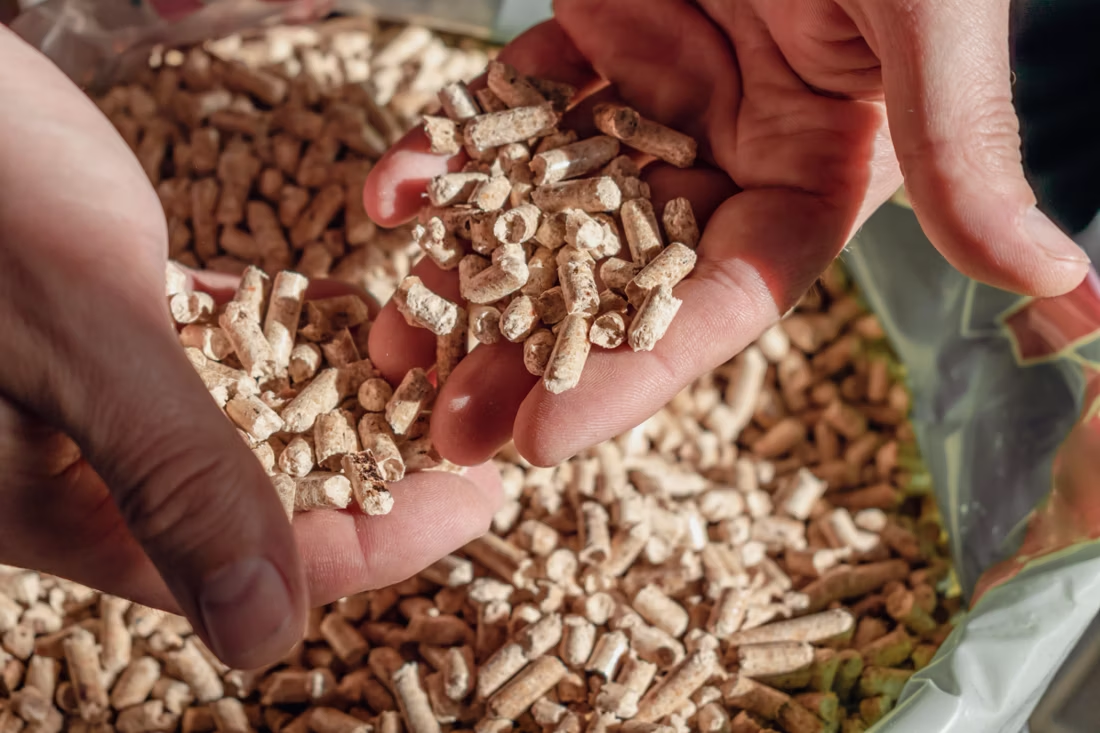
That's part of why pellet stoves have real staying power here. Shasta County sits within the Sacramento Valley Air Basin, which runs a mandatory wood-burning curtailment program during high-pollution winter days—EPA-certified pellet stoves are typically exempt, meaning they keep running when older, uncertified wood stoves have to sit cold. Fuel is easy to source locally, too: Pacific Pellet manufactures its pellets right in Anderson, inside the county, alongside regional supply from Bear Mountain and Lignetics. For homeowners weighing heat output against air quality concerns and a home already surrounded by oak, madrone, and Douglas fir forest, a pellet appliance offers a cleaner middle ground—automated, thermostat-controlled heat without the smoke signature of open wood burning.
Three steps. No salesperson until you're ready.
Tell us about your project
Your zip code, your situation, and the fuel you're leaning toward—or let the answers point you to one.
See what's actually available
The brands dealers within 100 miles genuinely carry—real options, never a catalog mirage.
Get your dealer & Project Guide
A trusted local dealer, plus the free Project Guide & Parts List that names every component of the job.
Frequently Asked Questions
How much does a pellet stove installation cost in Shasta County?
Most pellet stove and insert installations in Shasta County land somewhere between $3,000 and $6,500, depending on the unit, whether it's a freestanding stove or an insert going into an existing masonry fireplace, and how much venting work is involved. Pellet appliances vent through a smaller-diameter pipe than wood stoves and can often exit through an exterior wall rather than requiring a full chimney, which keeps costs down compared to a wood or gas installation. Homes in the Shingletown or Burney foothills may see a modest travel charge added by installers based out of Redding or Anderson. A local dealer can give you a firm number after seeing your hearth or wall setup in person.
Where do I buy pellets locally, and how much should I store?
Pacific Pellet, headquartered in Anderson, supplies pellets throughout Shasta County, and Bear Mountain and Lignetics bags are also widely stocked at local hearth shops and farm supply stores. A 40-lb bag typically burns 24 to 30 hours depending on your stove's setting and your home's heat loss, so a household using a pellet stove as primary heat through a Redding-area winter often goes through 2 to 3 tons of pellets. Because the county's climate is mild compared to higher-elevation parts of Northern California, most homeowners here use pellet stoves as zone or supplemental heat rather than a whole-home primary source, which cuts seasonal pellet consumption significantly. Store bags off the ground in a dry garage or shed—pellets that absorb moisture swell and jam the auger.
What size pellet stove do I need for my home?
Sizing depends heavily on where in the county you live. In the Redding valley, where winter lows average around 38°F, a mid-size pellet stove (40,000–50,000 BTU) comfortably heats a 1,500–2,000 sq ft living area as supplemental or zone heat. Up in the foothills—Shingletown, Burney, or toward Old Station near Lassen—where snow and sustained cold are far more common, homeowners typically size up and lean on the stove as closer to primary heat for at least part of the winter. An oversized stove in a mild Redding home will short-cycle and waste fuel; an undersized one in a foothill cabin won't keep pace during a cold snap. Local dealers size units based on square footage, insulation, and elevation rather than a one-size chart.
Do I need a permit to install a pellet stove in Shasta County?
Yes—a building permit is required for new pellet stove and insert installations through the Shasta County Building Division within the Resource Management Department, or through the applicable city building department if you're inside Redding, Anderson, or Shasta Lake city limits. The permit covers the appliance clearance, wall or floor protection, and venting termination. Most established local dealers handle the permit application and inspection scheduling as part of the installation, so it's rarely something homeowners have to navigate alone.
Can I run a pellet stove during a wildfire smoke advisory or winter burn curtailment?
In most cases, yes. Shasta County falls within the Sacramento Valley Air Basin's mandatory wood-burning curtailment program, which restricts uncertified wood stoves and open fireplaces on high-pollution winter days. EPA-certified pellet stoves are generally exempt from these curtailment rules because their particulate emissions are dramatically lower than an open wood fire or older uncertified stove. That's separate from summer and fall wildfire smoke events, which affect outdoor air quality regardless of what's burning indoors—but for winter heating decisions specifically, a certified pellet stove gives you a heat source that keeps working on days when wood-burning restrictions kick in.
Will my pellet stove work during a power outage?
Not without a backup power source. Pellet stoves rely on an electric auger to feed fuel and a blower to distribute heat and exhaust combustion air, so they shut down when the power goes out—unlike a wood stove, which burns independent of electricity. Shasta County does see power shutoffs during high fire-danger periods in late summer and fall, so if outage resilience matters to you, ask your local dealer about battery backup options or a small generator sized for the stove's draw. Some homeowners in outage-prone areas choose a wood stove or insert as a second heat source specifically for this reason.
How often does a pellet stove need maintenance?
Plan on daily ash removal from the burn pot, a weekly cleaning of the ash pan and glass, and a full professional service once a year—typically before the heating season starts in fall, which also lines up conveniently with wildfire smoke season winding down. Annual service includes cleaning the exhaust venting, checking the auger and blower motor, and inspecting gaskets and seals. Skipping the annual service is the most common reason pellet stoves start jamming or losing efficiency after a few seasons. Local hearth dealers who sell pellet stoves typically offer this service directly.
Pellet stove vs. wood stove—which makes more sense in Shasta County?
Wood stoves burn oak, madrone, and Douglas fir that are abundant and inexpensive locally, including self-cut firewood available through Forest Service permits from the Shasta-Trinity or Mendocino National Forest at $5 to $20 per cord, and they keep working during power outages. Pellet stoves trade that fuel self-sufficiency for cleaner combustion, EPA-certified low emissions that typically stay exempt from Sacramento Valley Air Basin winter curtailment days, and far less mess—no splitting, stacking, or chimney creosote buildup. Given Shasta County's mild winter heating needs and its recurring wildfire smoke concerns, many homeowners here choose pellet for the convenience and cleaner-burning profile, especially in town, and reserve wood heat for rural properties where power outages are more common and firewood is essentially free.
Which pellet stove brands are available through local Shasta County dealers?
Local hearth dealers throughout the county typically carry a mix of national pellet stove manufacturers alongside regional fuel brands like Bear Mountain, Lignetics, and Anderson-based Pacific Pellet. Availability varies by dealer and by model year, since pellet appliance lineups change more frequently than wood stove lines. Rather than shopping by brand name alone, it's worth asking a local dealer which models they currently stock, service, and carry parts for—a stove with strong local parts and service support will hold up better over ten-plus years than one with a great spec sheet but no nearby technician who knows it.
Why is my open fireplace making my house colder?
Open fireplaces suck—literally. As the fire burns, it consumes air your furnace already paid to heat and pulls it out through the chimney, so the house is actually colder after the fire goes out than before you lit it. An insert fixes this: it seals the chimney, puts fixed glass across the front, and turns that hole in your house into a real heat source.
How often does a pellet stove need cleaning?
A clean pellet stove is a happy pellet stove. Plan on cleaning the burn pot about once a week when you're burning regularly—ash and clinkers gum up the air holes just like a pellet barbecue. Most pellet stove problems trace back to skipped cleaning that nobody explained up front. Some designs make it easy with a trapdoor burn pot: pull a lever and the gunk drops into the ash pan.
How much should I budget for a fireplace?
For an average home—covering the fireplace, the vent pipe, and basic installation—a budget between $3,900 and $5,500 gives you a lot of options across wood, gas, and pellet. By the time you add finish work, gas line, and electrical, the average complete installation lands between $5,000 and $12,000 all-in. In a remodel or new build, a good rule is to put about 2.5% of the total project cost toward the fireplace.
Can a fireplace actually lower my heating bill?
Yes—by creating a comfort zone. A furnace heats every square foot of the house just to warm the one room you're in; a gas fireplace on low burns roughly a sixth of the gas a typical furnace does. Set the furnace around 55–60 degrees as a baseline, then heat the rooms your family actually uses. Families who heat this way commonly save $20–$60 a month.
Stove and Fireplace Dealers in Shasta County
Pellet Brands Stocked Around Shasta County
Manufacturers will point you to the nearest stocking dealer.
Find your pellet stove in Shasta County.
Tell us about your home and heating goals, and we'll match you with a trusted local Shasta County dealer and put together a free Project Guide & Parts List—the exact equipment, venting, and recommended installer for your pellet stove or insert.
Find Your Fireplace →