
Find the right hearth for Shasta County's mild winters and heavy smoke seasons.
Wood, gas, pellet, and electric fireplace resources for every city and rural community in Shasta County—from Redding to Burney. Find the right unit and connect with a trusted local hearth retailer.
Every Project Starts From One of These Five Situations
Mild winters, oak-fed woodpiles, and wildfire smoke shape how Shasta County heats its homes.
Shasta County sits in California's climate zone 3B with an average winter low near 38°F and just a light winter heating load overall—a fraction of what a place like Bozeman, Montana sees each winter. That means most homes here don't need a fireplace to survive January; they need one for shoulder-season comfort, power-outage backup, and the ambiance that draws people to a home in the first place. Oak, madrone, and Douglas fir are the local firewood staples, split and stacked by residents who also pull cutting permits from the Shasta-Trinity or Mendocino National Forest. Summer wildfire smoke, not winter cold, is the defining air-quality issue in this county, and it shapes both stove choice and burn-day habits more than any cold front does.
What you'll find on this hub: hearth retailers, service technicians, and fuel suppliers serving every community in the county—from Redding and Anderson in the valley to Burney, Fall River Mills, and Shasta Lake up toward the mountains. Pick your fuel below to drill into specifics—local dealers, installation costs, recommended units, and the resources that match your project. Whether you're outfitting a Redding ranch house or a cabin near Lassen, this is the starting point.
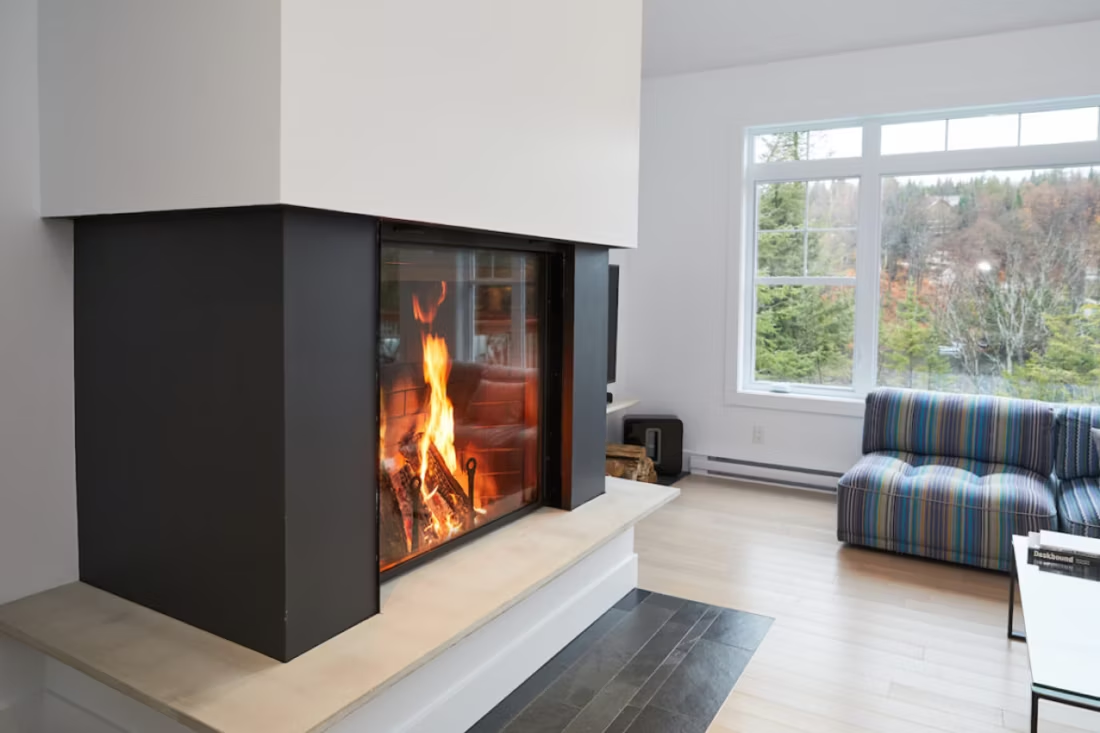
Four fuels. One honest answer for Shasta County.
Three steps. No salesperson until you're ready.
Tell us about your project
Your zip code, your situation, and the fuel you're leaning toward—or let the answers point you to one.
See what's actually available
The brands dealers within 100 miles genuinely carry—real options, never a catalog mirage.
Get your dealer & Project Guide
A trusted local dealer, plus the free Project Guide & Parts List that names every component of the job.
Frequently Asked Questions
Which fuel works best in Shasta County?
It depends on how you plan to use it, since Shasta County's mild climate with just a light winter heating load means most homes don't rely on a fireplace as their sole heat source the way a colder region like Duluth or International Falls would. Wood is popular for its heritage value and outage backup—oak and madrone from Shasta-Trinity National Forest cutting permits burn hot and long, and a wood stove keeps a home warm when PG&E power shuts off during summer fire-season events. Gas is the low-maintenance choice for Redding and Anderson homes on natural gas service—instant on/off, no ash, and no wood storage. Pellet splits the difference, with steady local supply from Bear Mountain and Pacific Pellet, but pellet stoves need electricity to run their auger and blower, which matters if outage backup is your priority. Electric is a strong supplemental option here given the mild climate—it covers ambiance and shoulder-season warmth without any venting or fuel storage at all.
Do I need a permit to install a fireplace in Shasta County?
In most cases, yes. New wood stoves, wood inserts, gas fireplaces, gas inserts, gas stoves, and pellet stoves typically require a building permit through the local jurisdiction—the City of Redding for in-city installs, or Shasta County for unincorporated areas like Palo Cedro, Millville, or Burney. Gas installations also require gas-line work signed off separately, usually by a licensed gas fitter. Electric fireplaces are generally permit-free for plug-in units, though built-in electric fireplaces with new wiring or a dedicated circuit may need an electrical permit. Most local hearth retailers in Redding and Anderson handle permit filing as part of the installation quote, so homeowners rarely have to navigate it solo.
Does wildfire smoke affect fireplace or stove use in Shasta County?
Not directly in terms of burn bans on your stove, but indirectly, yes. Shasta County's air quality concerns center on summer and fall wildfire smoke rather than winter wood-smoke inversions, so there's no equivalent to the wintertime curtailment programs you'd see in a basin climate. That said, heavy smoke seasons push some Redding-area residents toward gas or electric units for supplemental heat, since running a wood stove during an already smoky August or September evening isn't appealing. It also means homeowners here often prioritize EPA-certified, high-efficiency wood stoves for cleaner burns during the cooler months when air quality is otherwise good, and keep an eye on the Shasta County Air Quality Management District's daily advisories during fire season.
Can one local hearth retailer handle all four fuel types?
Many Redding-area hearth retailers carry three or four fuel types under one roof, since Shasta County's mild-winter, multi-fuel market rewards dealers who can show a homeowner wood, gas, pellet, and electric options side by side. A shop with working display units of each lets you compare a wood insert burning oak against a direct-vent gas unit or a plug-in electric fireplace without driving to three different stores. If a retailer specializes narrowly—say, wood and pellet only—that's usually a sign they're leaning into the outage-backup and rural-heating customer base rather than the ambiance-focused Redding suburban buyer. Either way, ask what's actually in stock and installable before assuming a catalog covers what they can deliver.
How does service work in rural areas of Shasta County?
Most chimney sweeps and gas techs are based in Redding and travel out to Burney, Fall River Mills, Shingletown, and the Highway 299 corridor toward Trinity County. Expect a modest travel fee for calls beyond a 30-mile radius, and expect longer scheduling windows in late summer and early fall—that's when wildfire-season power outages spike demand for wood stove inspections and gas backup-heat checkups ahead of the cooler months. Booking your annual sweep or gas inspection in spring, before the fire-season rush, is the easiest way to avoid a wait.
What's the typical cost range for fireplace installation across all fuel types in Shasta County?
Ranges vary by fuel and by how much venting or gas-line work is needed. Wood stove or insert installation: roughly $4,000–$8,500 for typical installs using existing masonry, more if a full chimney liner or new hearth pad is needed. Gas fireplace, insert, or stove: roughly $4,000–$10,000, with cost driven mainly by how far the unit sits from existing gas service. Pellet stove or insert: roughly $4,000–$7,000 for typical installs. Electric fireplace: $200–$3,000 for the unit itself, plus $300–$1,000 in labor for anything beyond a plug-and-play wall unit. For local pricing specific to your fuel choice, see the county + fuel pages above.
How much should I budget for a fireplace?
For an average home—covering the fireplace, the vent pipe, and basic installation—a budget between $3,900 and $5,500 gives you a lot of options across wood, gas, and pellet. By the time you add finish work, gas line, and electrical, the average complete installation lands between $5,000 and $12,000 all-in. In a remodel or new build, a good rule is to put about 2.5% of the total project cost toward the fireplace.
What is an in-home preview and do I need one?
It's a visit where a hearth professional measures your space, confirms the model you picked actually works in your home, and walks the specs—framing, gas line, venting, finish work—before anything is ordered. Some details you just can't know until you see the house. Never make a down payment without one; it's the single most-skipped step that burns buyers.
Can a fireplace actually lower my heating bill?
Yes—by creating a comfort zone. A furnace heats every square foot of the house just to warm the one room you're in; a gas fireplace on low burns roughly a sixth of the gas a typical furnace does. Set the furnace around 55–60 degrees as a baseline, then heat the rooms your family actually uses. Families who heat this way commonly save $20–$60 a month.
Does a fireplace add value to my home?
On average, a fireplace adds back to the home about the same amount you spent installing it. Add the monthly savings from heating the rooms you actually use instead of the whole house—often hundreds of dollars a year—and the value case is strong before you even count what a fire does for how your family uses the room.
Stove and Fireplace Dealers in Shasta County
Listings include WhyFire partner dealers, dealers we have verified as authorized for the brands we recommend, and established local businesses that carry hearth products. Every listing shows which one it is. The ones marked Preferred run on WhyFire's software, so they can show you real pricing and book your appointment right here. No manufacturer pays for placement. How we verify dealers →
Guiton's Pool & Stove Center
Meek’s Lumber & Hardware
Find your fireplace in Shasta County.
Pick your fuel below and I'll match you with a trusted local dealer, plus a free Project Guide & Parts List showing exactly what your Shasta County home needs—including the vent kit—before you make a single call.
Find Your Fireplace →