
Efficient Heat Without the Wildfire Smoke Trade-Off.
Clean-burning zone heat for Redding's mild winters and smoke-heavy summers. Find the right pellet stove or insert, and connect with a trusted local dealer.
Every Project Starts From One of These Five Situations
Clean convenience for Shasta County's short, mild winter season.
Redding sits at just 537 feet in the northern Sacramento Valley, in climate zone 3B, where winter lows average a mild 38°F and the region has a fairly light overall winter heating load each year. That's a fraction of what a wood- or pellet-heated home in Bozeman, MT or Duluth, MN sees over a six-month winter. In Redding, the heating season runs short—typically November through February—which means most homeowners here are looking for supplemental zone heat rather than a stove that has to carry the whole house nonstop.
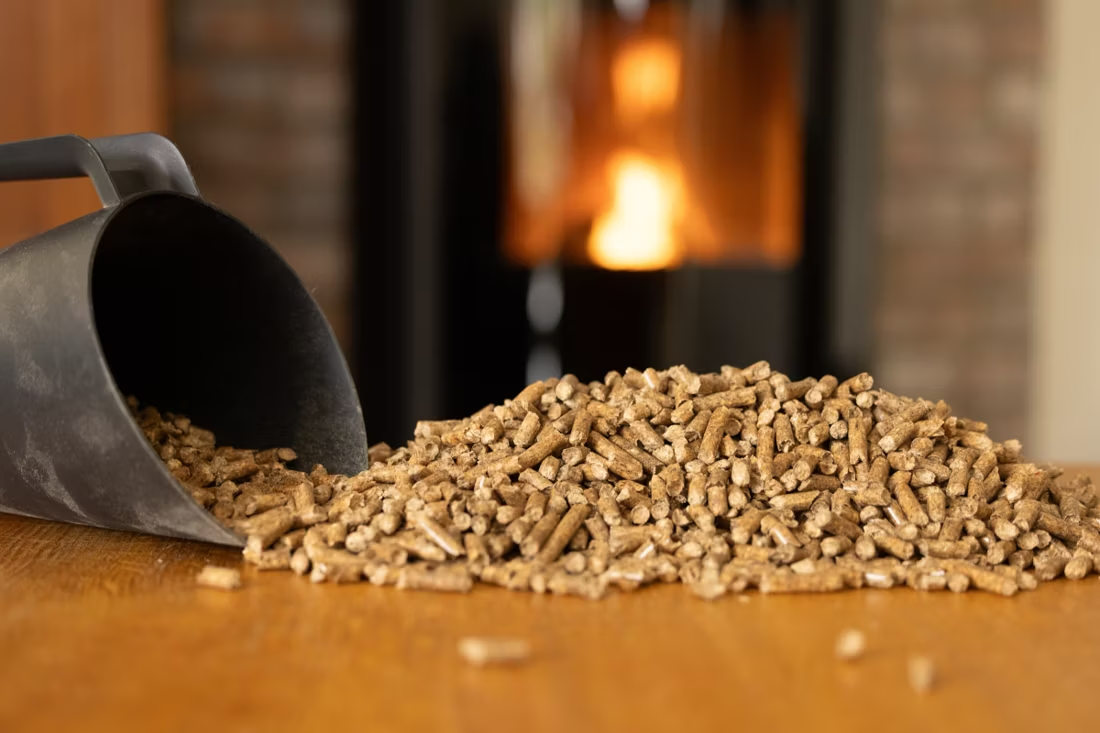
What Redding lacks in bitter cold, it makes up for in wildfire smoke. Shasta County sits at the edge of the Shasta-Trinity and Mendocino National Forests, and summer and fall wildfire smoke is a recurring air quality concern here. Pellet stoves burn manufactured fuel—kiln-dried sawdust compressed into uniform pellets—far more completely and cleanly than cordwood, producing a fraction of the particulate matter. For households already dealing with smoke-heavy air several weeks a year, that's a real reason pellet appliances outsell wood stoves in a lot of Redding neighborhoods. The trade-off: pellet stoves need electricity to run the auger and combustion blower, which matters here given how often PG&E territory sees Public Safety Power Shutoffs during high fire-risk conditions.
Three steps. No salesperson until you're ready.
Tell us about your project
Your zip code, your situation, and the fuel you're leaning toward—or let the answers point you to one.
See what's actually available
The brands dealers within 100 miles genuinely carry—real options, never a catalog mirage.
Get your dealer & Project Guide
A trusted local dealer, plus the free Project Guide & Parts List that names every component of the job.
Frequently Asked Questions
How much does a pellet stove installation cost in Redding?
Most pellet stove installations in Redding run in the $3,500 to $6,500 range, depending on the unit, whether you're installing a freestanding stove or a pellet insert into an existing fireplace, and how much wall-vent work is involved. Pellet stoves vent horizontally through an exterior wall rather than up a full chimney, which typically keeps venting costs lower than a wood stove install. Inserts into an existing masonry fireplace usually land on the lower end since the firebox opening and hearth are already in place; new construction with fresh framing and venting runs higher. A local dealer will give you a firm number after seeing your space.
Will my pellet stove still work during a PG&E power outage?
Not without a backup power source—and this matters more in Redding than in most places. Pellet stoves rely on an electric auger to feed fuel and a blower to circulate heat, so when the power drops, the stove stops. Because Shasta County borders fire-prone national forest land, PG&E territory here sees Public Safety Power Shutoffs during red flag wildfire conditions, sometimes lasting a day or more. If backup heat during an outage matters to you, ask your local dealer about pellet stove models compatible with a battery backup unit or a small inverter generator—many current Harman and Quadra-Fire models are rated for exactly this use case.
Pellet vs. wood—which is right for a Redding home?
Wood stoves burn oak, madrone, and Douglas fir sourced locally or cut under a Shasta-Trinity or Mendocino National Forest permit (typically $5–$20 per cord, May through October), and they'll keep running with zero electricity—a real advantage during a PSPS outage. Pellet stoves burn manufactured pellets, need no chimney sweeping, and burn dramatically cleaner, which counts for something in a region where wildfire smoke already strains local air quality several weeks each summer and fall. For a lot of Redding households, the deciding factor is simple: if you want backup heat with zero electricity dependence, wood wins; if you want the cleanest-burning, lowest-maintenance option for a mild winter and don't mind an outage plan, pellet usually wins.
What size pellet stove do I need for Redding's climate?
Because Redding's heating season is short and winter lows rarely drop below freezing overnight, most homes here do fine with a small to mid-size pellet stove rated for 1,000 to 1,800 square feet, even in houses larger than that, since the appliance is usually supplementing central heat rather than replacing it. Homes using a pellet insert as the sole heat source for an open-concept living area may want a slightly larger unit. A local dealer can size it properly in a few minutes by walking your floor plan—oversizing a pellet stove in a mild climate like Redding's just means you'll run it on low most of the season.
Do I need a permit to install a pellet stove in Redding?
Yes. A building permit is required for a new pellet stove or insert installation, whether you're inside city limits (through the City of Redding Building Division) or in unincorporated Shasta County (through the Shasta County Resource Management Department). The permit process confirms proper wall clearances, hearth protection, and venting termination distance from windows and doors—pellet stoves vent horizontally through the wall, so termination location matters for code compliance. Most local dealers pull the permit as part of the installation, so you're not coordinating with the building department directly.
Where do I buy pellets in Redding, and do I need a Forest Service permit like firewood cutters do?
No permit needed—that's actually one of the appeals of pellet heat versus wood in this area. Firewood cutters here need a permit from the Shasta-Trinity or Mendocino National Forest (roughly $5 to $20 per cord, valid May through October), but pellets are a manufactured, bagged product sold at hardware stores, farm supply retailers, and hearth dealers throughout Redding. Regional brands like Bear Mountain, Lignetics, and Pacific Pellet are commonly stocked locally, since Pacific Northwest and Northern California pellet mills keep the supply chain relatively short. It's worth buying a season's supply early in fall—smoke-season trucking delays and pre-winter demand spikes can tighten local stock.
How much does it cost to run a pellet stove in Redding given local electric rates?
This depends heavily on which utility serves your address. Redding has two electric providers with very different rates: Pacific Gas & Electric customers pay around $0.317 per kWh, while City of Redding Electric Utility customers pay closer to $0.1785 per kWh—nearly half as much. A typical pellet stove's auger and blower draw well under 100 watts continuous, so the electricity cost to actually run the appliance is modest either way, usually just a few dollars a month. The bigger cost driver is pellet fuel itself, not electricity—but if you're on PG&E rather than the municipal utility, it's worth factoring into your overall heating math.
What's the difference between a pellet stove and a pellet insert?
A pellet stove is a freestanding appliance that sits on a hearth pad and vents through an exterior wall—it can go almost anywhere in the house with the right clearances. A pellet insert is built to slide into an existing masonry fireplace opening, using a stainless liner run up through your existing chimney instead of a new wall vent. For Redding homes with an existing wood-burning fireplace that rarely gets used, an insert is often the simpler retrofit since it reuses the chimney you already have. Homes without an existing fireplace, or rooms where you want heat somewhere new, are better suited to a freestanding stove.
What are the best pellet stove brands available to Redding homeowners?
Local dealers in the Redding area typically carry Harman, Quadra-Fire, Lopi, and Napoleon pellet stoves, all of which perform well for the mild, short-winter heating load typical here. Because most Redding homes are using a pellet stove for supplemental heat rather than round-the-clock primary heat, features like auto-ignition, thermostat control, and app-based operation tend to matter more locally than raw maximum BTU output. If PSPS-related outages are a concern for your household, ask specifically about models with an available battery backup accessory—not every pellet stove offers one.
What's the difference between an insert and a zero-clearance fireplace?
An insert is a fireplace that slides into a pre-existing wood-burning fireplace—if you don't have one, there's nothing to insert it into. A zero-clearance fireplace is built into a framed wall, which makes it the answer for remodels and new construction. Simple test: existing masonry fireplace means insert; blank or framed wall means zero-clearance.
Are pellet stoves loud?
They make some noise—there are two fans running plus an auger motor that turns as it feeds pellets. But there's a real range: premium models are engineered quiet, and the best offer a whisper-quiet mode you can comfortably watch TV next to. If noise matters in your room, ask to hear a stove running before you buy—it's a five-minute test that saves years of annoyance.
How much should I budget for a fireplace?
For an average home—covering the fireplace, the vent pipe, and basic installation—a budget between $3,900 and $5,500 gives you a lot of options across wood, gas, and pellet. By the time you add finish work, gas line, and electrical, the average complete installation lands between $5,000 and $12,000 all-in. In a remodel or new build, a good rule is to put about 2.5% of the total project cost toward the fireplace.
Can a fireplace actually lower my heating bill?
Yes—by creating a comfort zone. A furnace heats every square foot of the house just to warm the one room you're in; a gas fireplace on low burns roughly a sixth of the gas a typical furnace does. Set the furnace around 55–60 degrees as a baseline, then heat the rooms your family actually uses. Families who heat this way commonly save $20–$60 a month.
Nearby Dealers
Hearth shops serving Redding and the surrounding area.
Pellet Brands Stocked Around Redding
Manufacturers will point you to the nearest stocking dealer.
Find your pellet stove in Redding.
Tell us a bit about your home and we'll match you with a trusted local Redding dealer and send over a free Project Guide & Parts List—a plan for your pellet project with the exact parts, including the vent kit, and their recommendation for your space.
Find Your Fireplace →