
Warmth and ambiance in Shasta County, no smoke required.
Clean, flexible heat for Shasta County's mild winters—from Redding to Burney to the Highway 299 corridor. Find the right electric fireplace or insert, and connect with a trusted local pro.
Every Project Starts From One of These Five Situations
Shasta County's mild winters and wildfire smoke make electric heat the practical choice.
Shasta County stretches from the Sacramento Valley floor around Redding and Anderson (roughly 500 feet elevation) up into the foothills toward Burney, Shingletown, and the southern Cascades. Winters here are mild by California standards and mild by almost any standard: an average winter low around 38°F and a short, light heating season—roughly a third of the winter heating load a place like Madison, WI logs in a single winter. That's a climate where a fireplace is often about ambiance and zone comfort more than survival heat, which opens the door to fuel choices that wouldn't make sense in a harsher climate.
It also opens the door to a fuel that sidesteps one of the county's real seasonal problems: wildfire smoke. Shasta County has logged repeated late-summer and fall smoke advisories in recent years, with the Carr Fire and other regional wildfires making smoky air a near-annual reality around Redding and the Highway 299 corridor. An electric fireplace adds zero combustion byproducts to already compromised outdoor air. The tradeoff worth understanding upfront: electric units go dark during a power outage, and PG&E—which serves most of the county outside Redding city limits, including Anderson, Shasta Lake, and Burney—has used Public Safety Power Shutoffs during high fire-danger periods. Homes on Redding Electric Utility service inside the city see fewer of those events. Either way, plenty of local homeowners pair electric for daily-use ambiance with a wood or propane appliance elsewhere in the house as backup.
Three steps. No salesperson until you're ready.
Tell us about your project
Your zip code, your situation, and the fuel you're leaning toward—or let the answers point you to one.
See what's actually available
The brands dealers within 100 miles genuinely carry—real options, never a catalog mirage.
Get your dealer & Project Guide
A trusted local dealer, plus the free Project Guide & Parts List that names every component of the job.
Frequently Asked Questions
How much does an electric fireplace installation cost in Shasta County?
Cost depends heavily on the type of unit. A plug-in freestanding electric stove or a slide-in insert sized for an existing fireplace opening typically runs $300 to $1,500 installed, since it just needs a standard 120V outlet and usually no permit. A built-in linear electric fireplace set into a wall or custom surround, which often calls for a dedicated circuit and some framing or finish carpentry, runs $1,500 to $5,000 or more once electrical work is included. Homes inside Redding city limits pull any required electrical permit through the City of Redding Building Division; unincorporated areas like Anderson, Shasta Lake, Palo Cedro, Cottonwood, and Burney go through the Shasta County Building Division.
Will an electric fireplace actually heat my home in Shasta County?
Most electric fireplaces are built for supplemental heat, rated to comfortably warm 400 to 1,500 square feet with a typical 1,500-watt heater. Given Shasta County's mild climate zone 3B and its short, light heating season, a well-placed unit is often enough to take the chill off a living room or bedroom in the valley floor communities around Redding and Anderson without running central heat. Higher-elevation towns like Burney and Shingletown see colder, longer winters and are better served treating electric as a zone-heat supplement alongside a primary heat source rather than a whole-home solution.
Who installs electric fireplaces in Shasta County?
Plug-in units need no professional installation at all—just an outlet. But any unit requiring new wiring, a dedicated circuit, or a built-in wall or mantel installation should be wired by a licensed electrician holding a C-10 license, ideally coordinated through the hearth retailer selling the fireplace. Local retailers typically handle the surround construction and line up an electrician rather than leaving you to find one on your own. Because inspection processes differ between the City of Redding and unincorporated Shasta County, working with an installer who regularly handles permits in the applicable jurisdiction helps avoid delays.
Are electric fireplaces a good fit for wildfire-smoke season in Shasta County?
Yes—this is one of the strongest local arguments for electric. Shasta County has logged repeated late-summer and fall wildfire smoke advisories in recent years, with the Carr Fire and other regional fires making smoky air a near-annual occurrence around Redding and the Highway 299 corridor. Unlike a wood stove, an electric fireplace produces zero combustion byproducts and adds nothing to outdoor air that's already compromised during fire season. For households that want fireplace ambiance without another source of smoke—or who'd simply rather not maintain a chimney in fire country—electric is a straightforward answer.
Do I need a permit to install an electric fireplace in Shasta County?
Plug-in freestanding stoves and slide-in inserts that run off a standard outlet generally don't require a permit. Built-in linear fireplaces or any unit needing a new dedicated circuit do require an electrical permit, pulled through the City of Redding Building Division for homes inside city limits, or the Shasta County Building Division for Anderson, Shasta Lake, Cottonwood, Palo Cedro, Burney, and other unincorporated communities. Most retailers coordinate this as part of a built-in installation, so homeowners rarely have to manage it themselves.
What happens to my electric fireplace during a PG&E power shutoff?
It stops working entirely—worth planning around in Shasta County, where PG&E serves most areas outside Redding city limits and has used Public Safety Power Shutoffs during high fire-danger periods in recent years. Homes on Redding Electric Utility service inside city limits see less PSPS exposure than PG&E customers in Anderson, Shasta Lake, Burney, and the rural county, but any electric-only heat source is vulnerable to an outage, planned or not. Many local homeowners pair an electric fireplace for daily convenience and ambiance with a wood or propane appliance elsewhere in the house as power-independent backup.
What's the difference between an electric insert, a built-in linear fireplace, and a freestanding electric stove?
An electric insert is sized to slide into an existing masonry or factory-built wood fireplace opening, instantly converting a rarely-used fireplace to flip-switch operation—a popular retrofit in older Redding and Anderson homes. A built-in linear fireplace is a wall-mounted or recessed unit favored in new construction and remodels for a modern, low-profile flame feature. A freestanding electric stove looks like a traditional wood stove but plugs into a standard outlet, making it the simplest way to add supplemental heat and ambiance to any room with zero construction. Local retailers carry all three configurations.
What's the best electric fireplace for Shasta County homes?
For most living rooms around Redding and Anderson, a mid-size linear electric fireplace in the 40 to 60 inch range from a brand like Dimplex, Napoleon, or Amantii delivers a realistic flame effect plus enough supplemental heat for the mild valley climate. Older homes with an existing masonry fireplace are usually best served with an insert from the same manufacturers. Households at higher elevation—Burney, Shingletown, and the eastern county—that want more actual heat output should ask about the full 1,500-watt heater rating rather than an ambiance-only model. A local retailer can match wattage and mantel clearance to your specific room.
Electric vs. wood—which is right for my Shasta County home?
Wood delivers real heat output, works without power—a genuine advantage during PG&E outages and PSPS events—and taps into the oak, madrone, and Douglas fir available through Shasta-Trinity and Mendocino National Forest cutting permits. It also means chimney upkeep, ash cleanup, and burning during stretches when wildfire smoke has already compromised local air quality. Electric offers instant on-off operation, zero emissions, and no permit hassle for plug-in units—well suited to Redding and Anderson's mild winters, where heavy heat output isn't the priority—but it goes dark in an outage. Many Shasta County homeowners run both: wood or propane for backup heat, electric for daily-use ambiance and clean-air convenience.
Does an electric fireplace need a vent or chimney?
No—that's its superpower. An electric fireplace needs a wall and an outlet, period. No vent pipe, no gas line, no clearances to design around, which is why it works in bedrooms, offices, apartments, and walls where venting a gas or wood unit would be impractical or impossible. Installation is typically the simplest and least expensive of any fireplace type.
Can I put a TV above my fireplace?
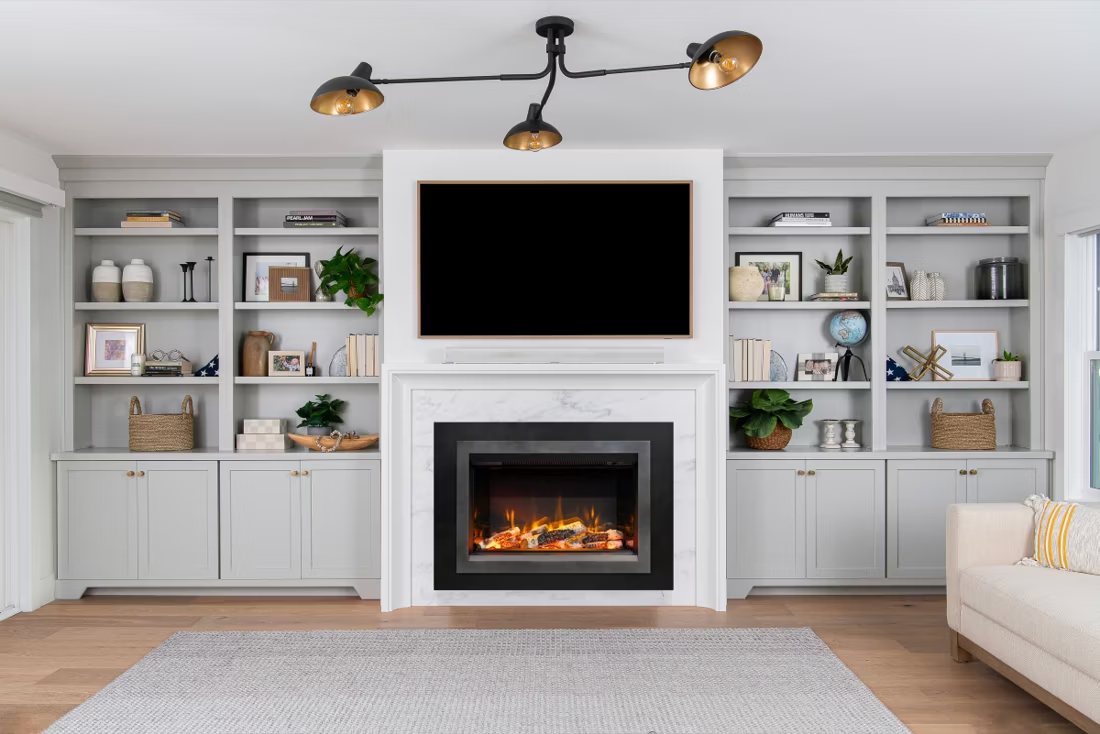
Yes—with an asterisk. Fireplaces are hot and TVs don't like heat. Either put a mantel between them to deflect rising warmth, or choose a fireplace with heat-management technology that creates a cool zone on the wall above—the wall stays around 125 degrees, barely warm, while the room still gets full heat. If you like clean lines and don't want a mantel, heat management is the answer.
Can a fireplace actually lower my heating bill?
Yes—by creating a comfort zone. A furnace heats every square foot of the house just to warm the one room you're in; a gas fireplace on low burns roughly a sixth of the gas a typical furnace does. Set the furnace around 55–60 degrees as a baseline, then heat the rooms your family actually uses. Families who heat this way commonly save $20–$60 a month.
What is an in-home preview and do I need one?
It's a visit where a hearth professional measures your space, confirms the model you picked actually works in your home, and walks the specs—framing, gas line, venting, finish work—before anything is ordered. Some details you just can't know until you see the house. Never make a down payment without one; it's the single most-skipped step that burns buyers.
Stove and Fireplace Dealers in Shasta County
Find your electric fireplace in Shasta County.
Tell us about your home and we'll match you with a trusted local dealer, plus a free Project Guide & Parts List with the exact parts—and recommended installer—for your Shasta County electric fireplace project.
Find Your Fireplace →