
Clean heat for a county that curtails wood smoke.
With mild coastal winters—average lows near 41°F and a light overall heating need each year—Santa Cruz County doesn't need a furnace-grade fireplace. It needs one that meets Monterey Bay Air Resources District smoke rules and looks good doing it. I'll match you with a vetted local dealer who knows the wiring, the retrofit options, and the county's wood-burning curtailment calendar.
Every Project Starts From One of These Five Situations
Mild enough for ambiance, smart enough for smoke rules.
Santa Cruz County runs along the Monterey Bay coast from the city of Santa Cruz and Capitola through Aptos and Watsonville in the Pajaro Valley, up into the redwood-shaded San Lorenzo Valley towns of Felton, Ben Lomond, and Boulder Creek. It's California climate zone 3C—a mild marine climate where winter lows average 41°F and the county has a light overall heating need each year, a fraction of what a place like Madison, WI sees in a single season. Fireplaces here are rarely doing the heavy lifting of home heating; they're supplementing a heat pump or gas furnace, or simply providing the look and glow of a fire in a living room or bedroom.
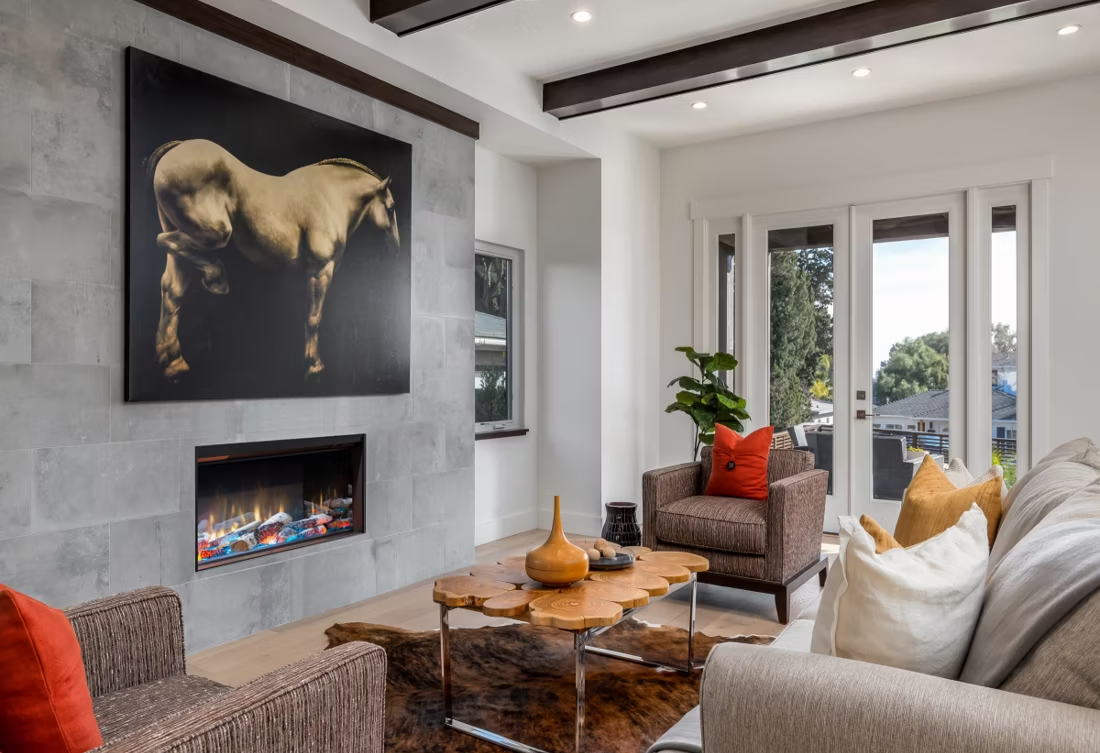
That mild-climate math is exactly why electric fireplaces have found a real foothold in the county. Plenty of older homes in Santa Cruz, Soquel, and the San Lorenzo Valley still have original wood-burning fireboxes, and the Monterey Bay Air Resources District calls mandatory wood-burning curtailment days during winter inversions and wildfire smoke events—days when uncertified wood stoves and open fireplaces have to stay cold. An electric insert dropped into that same firebox has no combustion, no smoke, and no curtailment restriction at all. The honest tradeoff: electric fireplaces run on the grid, and PG&E, the utility serving most of the county, calls Public Safety Power Shutoffs during high fire-risk wind events, especially in the Santa Cruz Mountains around Boulder Creek, Bonny Doon, and Corralitos. Homeowners who want heat during those outages typically pair an electric unit with a battery backup or keep a wood or gas appliance as a fallback.
Three steps. No salesperson until you're ready.
Tell us about your project
Your zip code, your situation, and the fuel you're leaning toward—or let the answers point you to one.
See what's actually available
The brands dealers within 100 miles genuinely carry—real options, never a catalog mirage.
Get your dealer & Project Guide
A trusted local dealer, plus the free Project Guide & Parts List that names every component of the job.
Frequently Asked Questions
How much does an electric fireplace installation cost in Santa Cruz County?
A plug-in freestanding or mantel-style electric fireplace can go in for the cost of the unit alone, since it plugs into a standard outlet. Building a true built-in—recessed into a wall with a custom surround, or wired to a dedicated 120V or 240V circuit for a larger insert—usually runs from the low thousands up through $4,000-$5,000 once an electrician is on the job for a new circuit and a finish carpenter builds the surround. Converting an existing wood-burning firebox in an older Santa Cruz or Soquel home into an electric insert tends to land in the middle of that range, since the masonry opening is already there and the work is mostly electrical.
Do I need a permit to install an electric fireplace in Santa Cruz County?
If the installation involves a new dedicated circuit or any wiring beyond plugging into an existing outlet, yes—an electrical permit through your city's building division (Santa Cruz, Watsonville, Capitola, or Scotts Valley) or the Santa Cruz County Planning Department if you're in unincorporated areas like Soquel, Aptos, or the San Lorenzo Valley. A licensed electrician typically pulls this permit as part of the job. Because there's no venting, no gas line, and no chimney work involved, electric installations move through inspection faster than a wood or gas project.
Can I install or use an electric fireplace on a wood-burning curtailment day?
Yes, without restriction. The Monterey Bay Air Resources District calls mandatory curtailment days during winter inversions and wildfire smoke events that ground uncertified wood stoves and open masonry fireplaces across the county. Electric fireplaces don't burn anything, so they're never subject to those curtailment rules—which is one of the main reasons homeowners in Santa Cruz, Watsonville, and the San Lorenzo Valley retrofit an old wood-burning firebox with an electric insert instead of replacing it with another combustion appliance.
Will my electric fireplace still work during a PG&E power outage?
No—and this is worth being upfront about. Electric fireplaces need grid power or a battery backup to run, so during a PG&E Public Safety Power Shutoff—called during high wind and fire-risk conditions, most often in the Santa Cruz Mountains around Boulder Creek, Bonny Doon, and Corralitos—an electric unit goes dark along with everything else on the circuit. If backup heat during an outage matters to your household, pair the electric fireplace with a home battery system, a generator, or keep a wood or propane appliance as a secondary heat source.
What size electric fireplace do I need for my Santa Cruz County home?
Because winters here are mild—average lows around 41°F and a heating load well under most of the country's—most homeowners are sizing for the room and the visual impact, not for whole-home heat output. A 40- to 50-inch linear unit suits a typical great room in a newer Aptos or Scotts Valley build, while a smaller insert or mantel unit is plenty for a bedroom or a secondary living space in an older Santa Cruz bungalow. A local dealer will also check your electrical panel capacity before recommending a larger unit that needs a dedicated 240V circuit.
What's the difference between an electric insert, a built-in wall unit, and a mantel package?
An electric insert drops into an existing masonry firebox—the common retrofit for older wood-burning fireplaces throughout Santa Cruz, Soquel, and the San Lorenzo Valley—and typically requires no chimney work beyond capping the flue. A built-in wall unit is recessed into new framing, common in remodels and new construction from Watsonville to Scotts Valley, and offers the cleanest, most modern look. A mantel package is a freestanding cabinet-style unit that plugs in and needs no construction at all, which makes it the fastest option for a renter or a home where permanent changes aren't practical.
Which electric fireplace brands do local dealers in Santa Cruz County carry?
Dimplex, Napoleon, and Amantii are the brands most commonly stocked and installed by hearth dealers serving the Monterey Bay area, covering everything from compact inserts to large linear wall units. Availability varies by dealer and by configuration, so a local pro will tell you what's actually in stock and installable for your specific firebox opening or wall cavity rather than what's just listed online.
Can I convert my old wood-burning fireplace to electric?
Yes, and it's one of the more common projects hearth dealers handle in the county's older housing stock—think 1960s and '70s homes in Santa Cruz, Live Oak, and Soquel with original brick fireboxes. An electric insert fits into that same opening, the chimney can be capped rather than maintained, and you're done with annual sweeps, creosote, and curtailment-day restrictions. Because there's no combustion, there's also no concern about wildfire smoke intake on the days when outdoor air quality in the county is already compromised.
Electric vs. wood vs. gas—what makes sense in a mild climate like Santa Cruz County?
With such a light overall heating need each year, Santa Cruz County's climate doesn't demand a high-output combustion appliance the way a place like Duluth, MN does. Wood—oak, madrone, and Douglas fir are the common local species—still has a following for its ambiance and as backup heat during PG&E outages, but it's subject to Monterey Bay Air Resources District curtailment days. Gas offers instant heat without smoke but still needs a gas line and venting. Electric skips both the smoke and the gas line entirely, installs faster, and is exempt from every curtailment rule—the tradeoff being that it goes dark in a Public Safety Power Shutoff unless it's backed up with a battery. For a mostly-ambiance fireplace in a mild coastal home, electric is often the simplest fit.
Do electric fireplaces actually produce heat?
Yes—most put out around 4,800–5,000 BTUs from a standard outlet, which comfortably warms a bedroom, office, or den as a comfort-zone heater. What they won't do is carry a whole house the way wood, gas, or pellet can. Think of electric as ambiance-first with honest supplemental heat: flames on with no heat in July, flames plus warmth in January.
Can I put a TV above my fireplace?
Yes—with an asterisk. Fireplaces are hot and TVs don't like heat. Either put a mantel between them to deflect rising warmth, or choose a fireplace with heat-management technology that creates a cool zone on the wall above—the wall stays around 125 degrees, barely warm, while the room still gets full heat. If you like clean lines and don't want a mantel, heat management is the answer.
How much should I budget for a fireplace?
For an average home—covering the fireplace, the vent pipe, and basic installation—a budget between $3,900 and $5,500 gives you a lot of options across wood, gas, and pellet. By the time you add finish work, gas line, and electrical, the average complete installation lands between $5,000 and $12,000 all-in. In a remodel or new build, a good rule is to put about 2.5% of the total project cost toward the fireplace.
Does a fireplace add value to my home?
On average, a fireplace adds back to the home about the same amount you spent installing it. Add the monthly savings from heating the rooms you actually use instead of the whole house—often hundreds of dollars a year—and the value case is strong before you even count what a fire does for how your family uses the room.
Stove and Fireplace Dealers in Santa Cruz County
Get your free Project Guide & Parts List for an electric fireplace in Santa Cruz County.
Tell me about your home, your firebox or wall space, and your electrical panel, and I'll match you with a trusted local Santa Cruz County dealer and send a free Project Guide & Parts List—the exact unit, circuit requirements, and recommended installer for your project.
Find Your Fireplace →