
Cozy, clean heat for Pleasure Point's mild coastal evenings.
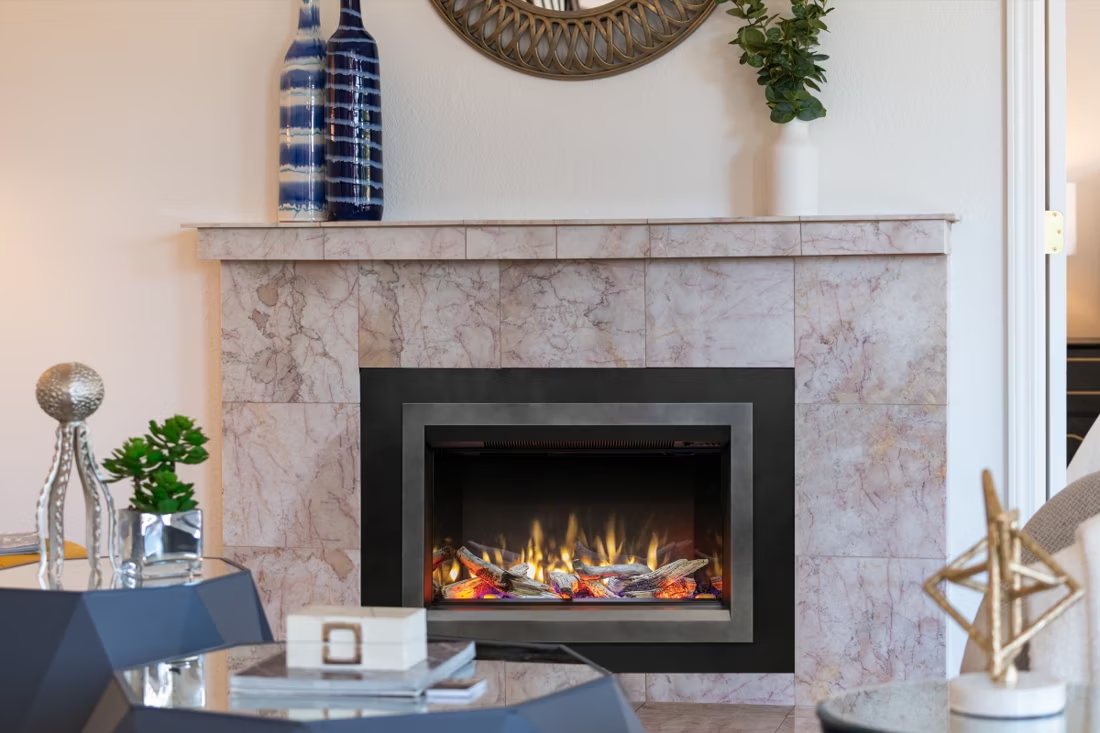
With winter lows averaging 41°F along this stretch of the Santa Cruz coast, electric fireplaces deliver ambiance and supplemental warmth without smoke, venting, or a chimney. Find the right unit and find a trusted local dealer.
Every Project Starts From One of These Five Situations
Heat that matches a mild Santa Cruz County winter.
Pleasure Point sits right at the bluffs, just 33 feet above sea level, where the Pacific keeps winter temperatures gentle year-round. With such a mild winter heating load, this neighborhood's heating needs are a fraction of what a cold-climate home deals with—compare that to a place like Burlington, VT, which faces nearly three times the winter heating load in an average winter. Most Pleasure Point homes don't need a furnace running hard all season; they need a warm focal point in the living room on a foggy 45-degree evening, and that's exactly where electric fireplaces excel.
Because electric units have no combustion, they produce zero on-site emissions—a real advantage in a region where wildfire smoke periodically pushes outdoor air quality into unhealthy territory and wood burning gets discouraged or restricted. Power here comes through Pacific Gas & Electric Company, with Central Coast Community Energy providing generation service to most local accounts as the default Community Choice Aggregation program. That distinction matters for operating costs: PG&E's bundled residential rate runs around $0.317 per kWh, while CCCE's generation rate is roughly $0.1301 per kWh—a difference worth understanding before you budget your monthly running cost.
Three steps. No salesperson until you're ready.
Tell us about your project
Your zip code, your situation, and the fuel you're leaning toward—or let the answers point you to one.
See what's actually available
The brands dealers within 100 miles genuinely carry—real options, never a catalog mirage.
Get your dealer & Project Guide
A trusted local dealer, plus the free Project Guide & Parts List that names every component of the job.
Frequently Asked Questions
How much does it cost to install an electric fireplace in Pleasure Point?
Electric fireplaces are the least expensive hearth appliance to add to a home because there's no chimney, no gas line, and no venting to run. A plug-in freestanding unit or a simple wall-mounted electric fireplace can often be set up for a few hundred dollars. A built-in electric insert or a linear wall unit that requires framing, a dedicated 120V or 240V circuit, and finish trim work typically runs higher—usually somewhere in the $800 to $2,500 range depending on the model and whether an electrician needs to add a circuit. A local dealer can give you a firm number once they know the unit and your electrical panel capacity.
Do I need a permit to install an electric fireplace in Pleasure Point?
Pleasure Point is unincorporated, so building and electrical permits fall under Santa Cruz County Planning and Building Services rather than a city office. A simple plug-in unit that uses an existing outlet generally doesn't trigger a permit. A built-in electric fireplace insert that requires new wiring, a dedicated circuit, or wall modifications typically does require an electrical permit, and sometimes a building permit if framing changes are involved. Local installers who regularly pull permits in Santa Cruz County can tell you exactly what your specific project needs before work starts.
Will an electric fireplace actually heat my room, or is it just for looks?
Most electric fireplace inserts use a 1,500-watt heater capable of producing around 5,000 BTUs, which is enough to comfortably warm a single room in the 300 to 500 square foot range—plenty for a living room or bedroom given Pleasure Point's mild winter lows. It's not designed to replace central heat for a whole house, but for supplemental warmth on a cool, foggy evening, or as the primary heat source in a smaller cottage or accessory unit near the coast, it does real work. The flame effect and the heat function typically run independently, so you can enjoy the visual with or without the heater running.
How much does it cost to run an electric fireplace here?
Running cost depends heavily on which electric program bills your account. A 1,500-watt fireplace run on the heat setting for a few hours draws roughly 1.5 kWh per hour. At PG&E's bundled rate of about $0.317 per kWh, that's around $0.48 an hour. If your generation service is through Central Coast Community Energy, at roughly $0.1301 per kWh, the same hour costs closer to $0.20. Because CCCE serves as the default generation provider for most Pleasure Point accounts, many households are already paying the lower rate—worth confirming on your bill if you're budgeting for regular use.
Are electric fireplaces a good choice during wildfire smoke events?
Yes—this is one of the strongest arguments for electric heat along this part of the Central Coast. Wood-burning appliances add particulate matter to already compromised air during regional wildfire smoke events, and some jurisdictions issue no-burn advisories during those periods. An electric fireplace produces no combustion byproducts at all, so it remains usable for ambiance and supplemental heat regardless of outdoor air quality. For households that want a real hearth experience without adding to indoor or outdoor smoke concerns, electric is the cleanest option available.
What's the difference between a plug-in electric fireplace and a built-in insert?
A plug-in electric fireplace is a freestanding or wall-mounted unit that runs off a standard household outlet—no electrician, no permit in most cases, and it can be relocated if you move. A built-in electric insert is designed to be recessed into a wall, existing masonry fireplace opening, or custom cabinetry, often wired to a dedicated circuit for a cleaner, more finished look. For Pleasure Point's older beach cottages with an existing wood-burning fireplace opening, an electric insert is a popular way to convert that opening into usable, low-maintenance heat without touching the chimney structure.
Electric vs. wood or gas—which makes sense for a Pleasure Point home?
Given the mild climate here, the choice often comes down to lifestyle rather than heating necessity. Wood offers ambiance and works during power outages, but requires chimney maintenance and can conflict with wildfire smoke advisories. Gas offers instant, more substantial heat output but requires a gas line and venting. Electric requires neither—no fuel storage, no venting, no annual chimney sweep—and it's the simplest option to add to a rental unit, ADU, or any room where running gas line or a chimney isn't practical. For a supplemental-heat, ambiance-focused climate like Pleasure Point's, electric is frequently the lowest-friction choice, though many homeowners here still keep a wood-burning fireplace for occasional use and add electric elsewhere in the house.
How much maintenance does an electric fireplace need?
Very little compared to wood or gas. There's no chimney to sweep, no gas line to inspect, and no combustion byproducts to manage. Maintenance is mostly dusting the unit, occasionally cleaning the glass front, and replacing the LED flame bulbs after several years of regular use—most manufacturers rate them for 20,000+ hours. If the heater fan gets noisy or stops working, that's usually a simple component swap a local dealer or electrician can handle without a full replacement.
What electric fireplace brands are available through local dealers?
Brands like Dimplex, Napoleon, and Amantii are widely available through Central Coast hearth retailers and cover the range from budget plug-in units to high-end linear wall inserts with realistic flame technology. Because there's no combustion involved, selection often comes down to size, flame realism, and finish rather than fuel-specific engineering. A local dealer can show you working display units so you can compare flame effect and heat output side by side before deciding, which is harder to judge from photos alone.
Can I put a TV above my fireplace?
Yes—with an asterisk. Fireplaces are hot and TVs don't like heat. Either put a mantel between them to deflect rising warmth, or choose a fireplace with heat-management technology that creates a cool zone on the wall above—the wall stays around 125 degrees, barely warm, while the room still gets full heat. If you like clean lines and don't want a mantel, heat management is the answer.
Do electric fireplaces actually produce heat?
Yes—most put out around 4,800–5,000 BTUs from a standard outlet, which comfortably warms a bedroom, office, or den as a comfort-zone heater. What they won't do is carry a whole house the way wood, gas, or pellet can. Think of electric as ambiance-first with honest supplemental heat: flames on with no heat in July, flames plus warmth in January.
Can I install a fireplace myself?
If you're putting a fire in your house on purpose, it's best to work with an expert. Unless you're genuinely experienced in framing, gas line, vent pipe, and the national code on clearances to combustibles, have a professional do it—and ideally the same company that sells you the fireplace, so warranty, service, and liability all live under one roof.
Can a fireplace actually lower my heating bill?
Yes—by creating a comfort zone. A furnace heats every square foot of the house just to warm the one room you're in; a gas fireplace on low burns roughly a sixth of the gas a typical furnace does. Set the furnace around 55–60 degrees as a baseline, then heat the rooms your family actually uses. Families who heat this way commonly save $20–$60 a month.
Nearby Dealers
Hearth shops serving Pleasure Point and the surrounding area. Every listing shows whether it is a WhyFire partner, a dealer we have verified as authorized for the brands we recommend, or a local business carrying hearth products. No manufacturer pays for placement. How we verify dealers →
We’ve paused dealer listings for this connection today. Enter your zip or postal code above to find dealers near you, or come back tomorrow.
Popular Electric Brands
Where each brand came from, what's inside it today, and every current model. No brand pays to be here. Not every dealer carries every brand, so enter your zip code to see what's sold near Pleasure Point.
Fireplace Xtrordinair
Fireplace Xtrordinair, now often called FireplaceX, is the fireplace brand of Travis Industries, Inc., of Mukilteo, Washington.
5 electric models →DaVinci
DaVinci Custom Fireplaces is a brand of Travis Industries, Inc., of Mukilteo, Washington, the company behind Lopi and Fireplace Xtrordinair.
5 electric models →Kozy Heat
Kozy Heat was founded in 1976 by Dudley Hussong in Lakefield, Minnesota, and incorporated as Hussong Manufacturing Co., Inc. in 1978.
3 electric models →Forge & Flame
Forge & Flame is the stove brand Hearth & Home Technologies introduced in August 2023 to bring Vermont Castings, Harman, and Quadra-Fire under one name.
1 electric model →Electric Service in Pleasure Point
An electric fireplace's heater draws about 1,500 watts—pennies per hour at local rates.
Pacific Gas & Electric Co.
Central Coast Community Energy
Find your electric fireplace in Pleasure Point.
Tell us a bit about your home and we'll help you find the right electric fireplace or insert, plus a free Project Guide & Parts List with the exact parts and your recommended local dealer.
Find Your Fireplace →