
Instant heat and ambiance for Santa Cruz's mild coastal nights.
With winter lows rarely dropping below the low 40s, Santa Cruz doesn't need a cast-iron wood stove to stay comfortable. Find the right electric fireplace or insert, and connect with a trusted local dealer.
Every Project Starts From One of These Five Situations
A climate built for supplemental heat, not survival heat.
Santa Cruz sits at just 200 feet above sea level on Monterey Bay, where the Pacific keeps winters mild—average lows hover around 41°F and the city has a light overall winter heating load, a fraction of what a place like Burlington, Vermont sees in a single hard winter. That climate reality shapes what kind of hearth product actually makes sense here: most Santa Cruz homes don't need a high-BTU wood stove or a roaring gas insert to stay warm. They need supplemental, on-demand heat for the cooler months, plus the visual warmth of a fire without the chimney, venting, or wildfire-smoke tradeoffs of a solid-fuel appliance.
Electricity here comes through Pacific Gas & Electric, with many Santa Cruz County households enrolled in Central Coast Community Energy for generation service—a combination that can bring the effective rate closer to $0.13/kWh on the CCCE side versus PG&E's standalone residential rate near $0.317/kWh, depending on your plan and time-of-use schedule. That's worth knowing because an electric fireplace's operating cost is really just a space heater's operating cost—it varies with local electricity pricing rather than fuel deliveries or cutting permits. The one honest caveat: like any electric appliance, an electric fireplace goes dark during a Public Safety Power Shutoff, which does happen in Santa Cruz County during red-flag wildfire conditions. Homeowners who want heat that works through an outage often pair an electric unit for daily ambiance with a wood or gas appliance elsewhere in the home.
Three steps. No salesperson until you're ready.
Tell us about your project
Your zip code, your situation, and the fuel you're leaning toward—or let the answers point you to one.
See what's actually available
The brands dealers within 100 miles genuinely carry—real options, never a catalog mirage.
Get your dealer & Project Guide
A trusted local dealer, plus the free Project Guide & Parts List that names every component of the job.
Frequently Asked Questions
How much does an electric fireplace installation cost in Santa Cruz?
Electric fireplaces are the least expensive hearth appliance to install, and that holds true in Santa Cruz. A freestanding or wall-mounted plug-in unit runs $200 to $800 for the unit itself and typically needs no professional installation—just a standard 120-volt outlet. A built-in electric fireplace or insert set into an existing masonry opening or new wall framing runs closer to $1,500 to $4,000 once you factor in a licensed electrician for a dedicated circuit, trim kit, and any surround or mantel work. Because there's no chimney, gas line, or venting to run, labor costs stay far lower than a wood or gas project—the electrician's time is usually the only trade involved.
Do I need a permit to install an electric fireplace in Santa Cruz?
In most cases, no—a plug-in electric fireplace that uses an existing 120-volt outlet doesn't trigger a building permit. If you're having an electrician install a dedicated circuit or a 240-volt line for a larger built-in unit, that electrical work typically does require a permit through the City of Santa Cruz Building Division, or Santa Cruz County Planning if you're outside city limits in areas like Live Oak or Soquel. Most licensed electricians pull this permit as a routine part of the job. Since there's no combustion, chimney, or venting involved, electric fireplaces skip the fire-code review that wood and gas installations go through.
What size or type of electric fireplace makes sense for a Santa Cruz home?
Because Santa Cruz's winters are mild—average lows around 41°F and an overall winter heating load that's a fraction of an inland or mountain climate—most homes here don't need whole-house electric heat capacity. A single 1,500-watt insert or wall unit is plenty to take the chill off a living room on a foggy January evening, and it's the most common choice for Westside bungalows and Eastside craftsman homes with older, drafty single-pane windows. Larger built-in units with higher wattage output make more sense for open-concept great rooms or homes near the coast that get persistent onshore wind and marine-layer damp. A local dealer can size the unit to your square footage during a walkthrough.
Electric vs. gas fireplace—which is better for my Santa Cruz home?
Both work well here, and the decision usually comes down to what's already run to your home. If you have natural gas service, common through much of the city core, a gas insert delivers more real heat output and can run during a power outage—a genuine advantage during a Public Safety Power Shutoff. If you're in one of Santa Cruz County's off-gas-grid pockets—parts of Bonny Doon, Corralitos, or the San Lorenzo Valley—installing a gas line or propane tank adds real cost, and an electric fireplace sidesteps that entirely. Electric also wins on simplicity: no combustion, no venting, no annual gas appliance service, and a lower upfront cost.
Electric vs. wood fireplace—which is right for Santa Cruz?
Wood has real roots here—oak, madrone, and Douglas fir are all commonly burned in Santa Cruz County, and a wood stove keeps working when the power's out. But wood smoke is under increasing scrutiny locally given the county's wildfire-smoke air quality concerns, and a growing number of Santa Cruz homeowners are choosing electric specifically to avoid adding to particulate load during fire season or foggy inversion days. Electric also means no cutting permits, no cordwood storage, and no chimney sweep. The tradeoff is real: electric fireplaces provide ambiance and zone heat, not off-grid survival heat. Many households keep a wood stove or insert as backup and use electric for daily use.
Do electric fireplaces actually put out real heat, or are they just for looks?
Modern electric fireplaces do both. Most units include a built-in fan-forced heater rated between 1,200 and 1,500 watts, roughly 4,100 to 5,100 BTUs, enough to comfortably heat a 400- to 1,000-square-foot room depending on insulation and ceiling height—plenty for the kind of zone heating most Santa Cruz homes actually need given the mild coastal climate. The flame effect, LED-lit, some with real water-vapor mist, can also run independently of the heater, so you get ambiance on a 68°F evening without overheating the room. They won't replace central heat in a large, poorly insulated older home, but for supplemental warmth in a living room or bedroom, they're genuinely effective.
What does it cost to run an electric fireplace in Santa Cruz?
Running cost depends entirely on your electricity rate, since an electric fireplace is just an efficient space heater. Most Santa Cruz households get generation service through Central Coast Community Energy, where rates run closer to $0.13/kWh, while PG&E's standalone residential rate can run near $0.317/kWh depending on tier and time-of-use plan. A 1,500-watt unit run on the heater setting for 4 hours costs roughly $0.78 to $1.90 a day depending on which rate applies to your account—noticeably cheaper than running a whole-house furnace to heat one room. Running the flame effect alone, without the heater, costs pennies a day since it typically draws under 100 watts.
Will my electric fireplace still work during a power outage or PSPS event?
No—this is the one honest limitation to plan around. Santa Cruz County does see Public Safety Power Shutoffs during red-flag wildfire conditions, and any electric fireplace, like any other plugged-in appliance, goes dark when the grid does. If backup heat during an outage matters to you, plan around it: a portable battery power station can run a small electric fireplace for a few hours, or a whole-home generator will keep it running indefinitely. Some Santa Cruz homeowners pair an electric fireplace for daily convenience with a wood stove or vented gas unit elsewhere in the house specifically for outage resilience.
Where can I get an electric fireplace installed by a trusted professional in Santa Cruz?
Because installation is largely electrical work rather than combustion or venting work, look for a licensed electrician with hearth-product experience, or a local fireplace retailer who partners with one for the electrical portion. Find My Fireplace doesn't sell or ship fireplaces—we match Santa Cruz homeowners with a trusted local dealer who knows what's actually installable in your specific home, whether that's a simple insert into an existing masonry opening or a full built-in wall unit, and we send you a free Project Guide & Parts List so you walk into that conversation knowing what to ask for.
Can I put a TV above my fireplace?
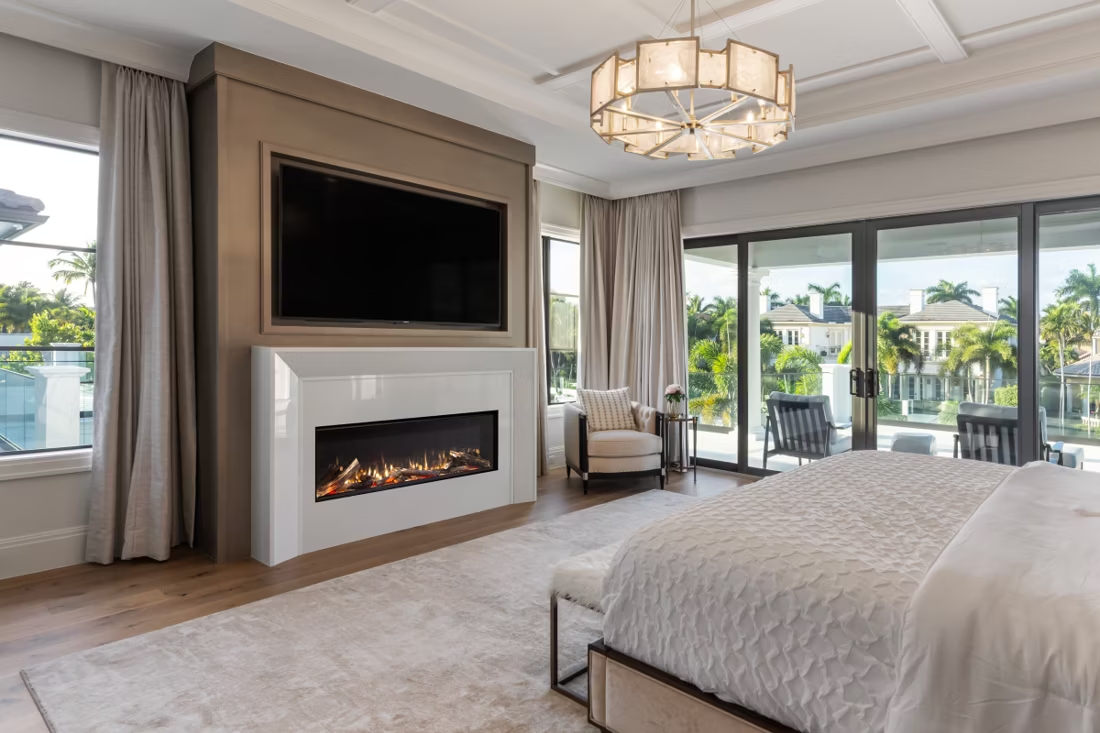
Yes—with an asterisk. Fireplaces are hot and TVs don't like heat. Either put a mantel between them to deflect rising warmth, or choose a fireplace with heat-management technology that creates a cool zone on the wall above—the wall stays around 125 degrees, barely warm, while the room still gets full heat. If you like clean lines and don't want a mantel, heat management is the answer.
Do electric fireplaces actually produce heat?
Yes—most put out around 4,800–5,000 BTUs from a standard outlet, which comfortably warms a bedroom, office, or den as a comfort-zone heater. What they won't do is carry a whole house the way wood, gas, or pellet can. Think of electric as ambiance-first with honest supplemental heat: flames on with no heat in July, flames plus warmth in January.
Can I install a fireplace myself?
If you're putting a fire in your house on purpose, it's best to work with an expert. Unless you're genuinely experienced in framing, gas line, vent pipe, and the national code on clearances to combustibles, have a professional do it—and ideally the same company that sells you the fireplace, so warranty, service, and liability all live under one roof.
How much should I budget for a fireplace?
For an average home—covering the fireplace, the vent pipe, and basic installation—a budget between $3,900 and $5,500 gives you a lot of options across wood, gas, and pellet. By the time you add finish work, gas line, and electrical, the average complete installation lands between $5,000 and $12,000 all-in. In a remodel or new build, a good rule is to put about 2.5% of the total project cost toward the fireplace.
Nearby Dealers
Hearth shops serving Santa Cruz and the surrounding area.
Electric Service in Santa Cruz
An electric fireplace's heater draws about 1,500 watts—pennies per hour at local rates.
Pacific Gas & Electric Co.
Central Coast Community Energy
Find your electric fireplace in Santa Cruz.
Tell us about your home and heating goals, and we'll match you with a trusted local dealer plus a free Project Guide & Parts List—the exact components and recommended installer for your Santa Cruz electric fireplace project.
Find Your Fireplace →