
Mild winters, real fires: hearth resources for Santa Cruz County.
Wood, gas, pellet, and electric fireplace resources for every city and coastal community in Santa Cruz County—from downtown Santa Cruz to the Santa Cruz Mountains above Boulder Creek. Find the right unit and connect with a trusted local hearth retailer.
Every Project Starts From One of These Five Situations
Coastal warmth and mountain fog: heating in Santa Cruz County.
Santa Cruz County sits in climate zone 3C, where winter lows average around 41°F and the heating season is short and mild by national standards—about 2,488 heating degree days a year, a fraction of what a place like Duluth, MN sees. But that doesn't mean fireplaces sit idle. Coastal fog, damp redwood-forest chill in the mountains above Boulder Creek and Bonny Doon, and the marine layer that settles into Watsonville and Aptos evenings all make a fire genuinely useful, not just decorative. Local wood supply leans on oak, madrone, and Douglas fir—species that split clean and burn well in the shorter, milder burn cycles this climate calls for, rather than the all-night loads needed in colder regions.
What you'll find on this hub: hearth retailers, service technicians, and fuel suppliers serving every community in the county—from the city of Santa Cruz and Capitola on the coast, inland to Watsonville and the Pajaro Valley, up into the mountain towns of Felton, Ben Lomond, and Boulder Creek. Pick your fuel below to drill into specifics—local dealers, installation costs, recommended units, and the resources that match your project. Wildfire smoke season shapes some of the wood-burning decisions here, so we've built that into the guidance too.
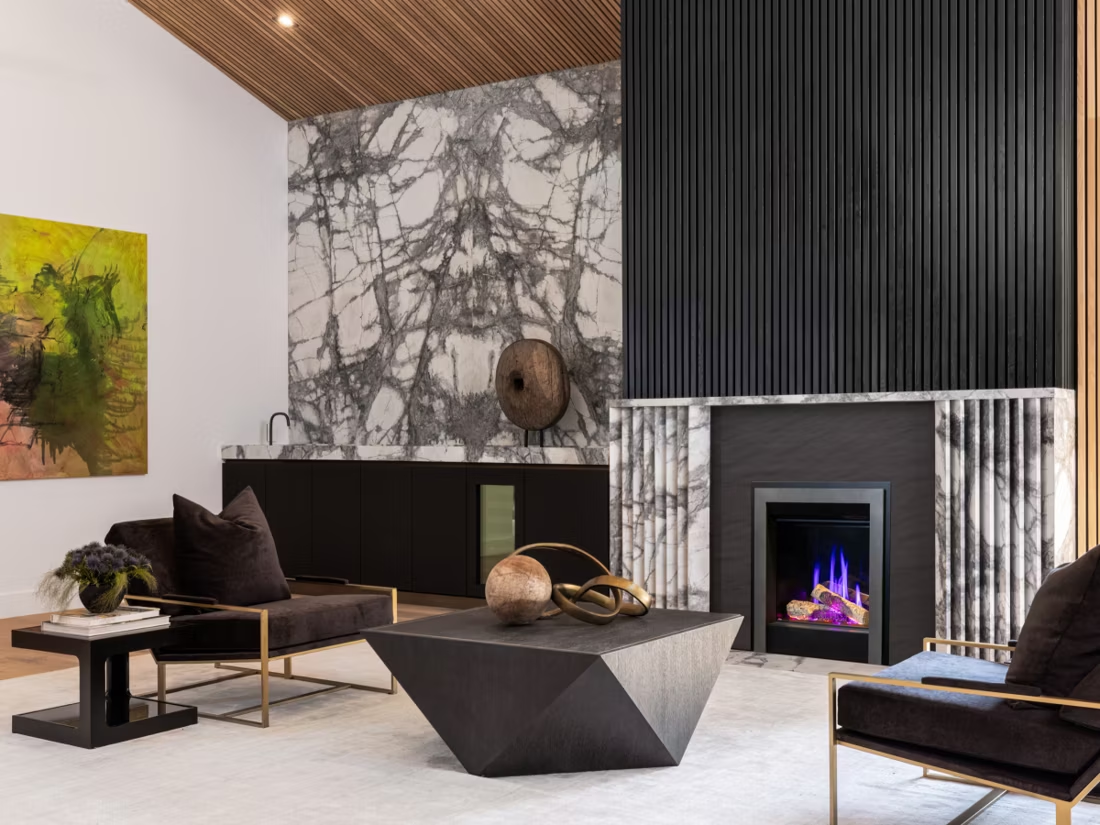
Four fuels. One honest answer for Santa Cruz County.
Three steps. No salesperson until you're ready.
Tell us about your project
Your zip code, your situation, and the fuel you're leaning toward—or let the answers point you to one.
See what's actually available
The brands dealers within 100 miles genuinely carry—real options, never a catalog mirage.
Get your dealer & Project Guide
A trusted local dealer, plus the free Project Guide & Parts List that names every component of the job.
Frequently Asked Questions
Which fuel works best in Santa Cruz County?
It depends on the home and the neighborhood. Gas is the practical everyday choice for most coastal homes in Santa Cruz, Capitola, and Aptos—instant heat for damp evenings without the smoke concerns that come up during wildfire season. Wood remains popular in the Santa Cruz Mountains—Ben Lomond, Boulder Creek, Felton—where oak and madrone are locally available and a wood stove doubles as backup heat during PG&E outages, which aren't uncommon in the hills during storm season. Pellet stoves split the difference: cleaner-burning than open wood, still functional without grid power if paired with a battery backup, and regionally supplied through Bear Mountain and Pacific Pellet. Electric fireplaces do well as supplemental ambiance in coastal condos and newer builds where a chimney isn't practical, but given the mild 2,488 HDD climate here, few households need electric as a primary heat source. Most homes end up pairing one primary unit with a secondary fuel for outages or aesthetics.
Do I need a permit to install a fireplace in Santa Cruz County?
Generally yes. New wood stoves, wood inserts, gas fireplaces, gas inserts, gas stoves, and pellet stoves typically require a building permit, and gas work also needs a separate permit tied to the gas line and licensed gas-fitter labor. Within the city limits of Santa Cruz, Watsonville, Capitola, or Scotts Valley, permits go through that city's building department; in unincorporated areas—including the mountain communities of Felton, Ben Lomond, and Boulder Creek—permits route through Santa Cruz County Planning. Wood-burning appliances need to meet current EPA emissions standards to qualify for a new install. Most hearth retailers in the county handle this paperwork as part of the installation, so it's rarely something homeowners manage solo.
Are there wood-burning restrictions in Santa Cruz County because of wildfire smoke?
Wildfire smoke is the county's primary air quality concern, and it shapes local wood-burning guidance more than winter cold does. During active fire season—typically late summer into fall—the Monterey Bay Air Resources District may issue smoke advisories that ask residents to limit unnecessary outdoor burning and voluntarily reduce wood stove use when regional smoke levels are already elevated from nearby fires. This isn't a curtailment program tied to winter inversions like you'd see in a Sierra basin town; it's about not adding indoor wood smoke to an already smoke-heavy outdoor air day. EPA-certified stoves burn cleaner and are less likely to draw scrutiny during these periods. If you're in the mountain communities near recent burn scars, it's worth checking Monterey Bay Air Resources District advisories before lighting a fire on a smoke-heavy day.
Can one local hearth retailer handle all four fuel types?
Several Santa Cruz County retailers carry three or four fuel types, which is useful if you're deciding between, say, a gas insert for a coastal condo and a wood stove for a mountain cabin. Dealers based in Santa Cruz and Watsonville tend to stock working wood, gas, and pellet displays, with electric units available as add-ons or special order. Because the county spans coastal, valley, and mountain microclimates within a 30-mile radius, a multi-fuel retailer that's shown you a working display of each option can help you weigh a wood stove's outage resilience in Boulder Creek against a gas insert's convenience in Aptos—the right call really does vary by zip code here.
How does hearth service work in the mountain communities versus the coast?
Technicians based in Santa Cruz and Watsonville cover most of the county, but travel time to Boulder Creek, Bonny Doon, or Corralitos means scheduling a bit further ahead, especially before the rainy season when demand for wood stove sweeps and inspections spikes. Coastal salt air corrodes venting hardware faster than it does inland, so gas and pellet units in Capitola or the Santa Cruz Westside may need cap and connector checks more frequently than a comparable unit in Watsonville. Mountain homeowners on wood heat should plan an annual sweep before the first cold, damp storms roll in off the Pacific—creosote buildup in a humid redwood-forest climate can accumulate faster than expected.
What's the typical cost range for fireplace installation across all fuel types in Santa Cruz County?
Costs vary by fuel and by how much existing infrastructure a home already has. Wood stove or insert installation: roughly $4,500–$9,500 for a typical retrofit into an existing masonry chimney, more if new chimney or hearth work is needed. Gas fireplace, insert, or stove: about $4,500–$11,500, with cost driven largely by gas line routing and venting—lower for straightforward inserts into existing gas fireplaces. Pellet stove or insert: typically $4,500–$8,000 installed. Electric fireplace: $200–$3,000 for the unit itself, plus $400–$1,200 in labor for anything beyond a plug-and-play wall unit. Coastal fog and moisture can add modest costs for corrosion-resistant venting materials compared to drier inland climates. See the county + fuel pages above for retailer-specific pricing detail.
Can I install a fireplace myself?
If you're putting a fire in your house on purpose, it's best to work with an expert. Unless you're genuinely experienced in framing, gas line, vent pipe, and the national code on clearances to combustibles, have a professional do it—and ideally the same company that sells you the fireplace, so warranty, service, and liability all live under one roof.
What is an in-home preview and do I need one?
It's a visit where a hearth professional measures your space, confirms the model you picked actually works in your home, and walks the specs—framing, gas line, venting, finish work—before anything is ordered. Some details you just can't know until you see the house. Never make a down payment without one; it's the single most-skipped step that burns buyers.
Can a fireplace actually lower my heating bill?
Yes—by creating a comfort zone. A furnace heats every square foot of the house just to warm the one room you're in; a gas fireplace on low burns roughly a sixth of the gas a typical furnace does. Set the furnace around 55–60 degrees as a baseline, then heat the rooms your family actually uses. Families who heat this way commonly save $20–$60 a month.
What are the biggest mistakes people make buying a fireplace?
Five come up constantly: budgeting for the unit but not the full job (vent, gas line, electrical, finish work); drowning in options instead of starting from style and fuel; buying without an in-home preview; handing installation to a handyman instead of a pro; and giving up out of sheer indecision. Every one is avoidable with a clear plan—step one, step two, step three.
Stove and Fireplace Dealers in Santa Cruz County
Listings include WhyFire partner dealers, dealers we have verified as authorized for the brands we recommend, and established local businesses that carry hearth products. Every listing shows which one it is. The ones marked Preferred run on WhyFire's software, so they can show you real pricing and book your appointment right here. No manufacturer pays for placement. How we verify dealers →
Santa Cruz Fireplace & Hot Tub
Terra Outdoor Living
Luxury Kitchens
California Home Resort
Emberwest Distributing
EmberWest Fireplace LLC
California Window & Fireplace
Warm Elements
Wright Lighting & Fireside
Unique Outdoor Living
Rubenstein Supply Copmany
Find your fireplace in Santa Cruz County.
Pick your fuel below and we'll match you with a trusted local dealer and send you a free Project Guide & Parts List—the exact parts, including the vent kit, and the recommended dealer for your project.
Find Your Fireplace →