
Clean, low-smoke heat for Santa Cruz County's coast and canyons.
From the Boardwalk to Boulder Creek, pellet stoves give Santa Cruz County homes steady, low-particulate warmth without adding to wildfire-season smoke. Find the right unit and connect with a trusted local dealer.
Every Project Starts From One of These Five Situations
Steady, clean heat without wildfire-season smoke worries.
Santa Cruz County stretches from sea-level beach towns along Monterey Bay up into the fog-shrouded redwoods of the Santa Cruz Mountains, where elevation climbs toward Loma Prieta near 3,800 feet. The coastal climate zone (3C) keeps winters mild—an average low around 41°F and only about 2,488 heating degree days for the year, a fraction of what a place like Duluth MN or Bozeman MT racks up. Most homes here don't need a stove to survive winter; they need one that takes the damp chill off a foggy evening in Aptos, or supplements a wood-heated cabin in Ben Lomond or Felton where the redwood canopy blocks the sun for months at a stretch.
That's exactly where pellet appliances earn their place. Santa Cruz County has lived through the smoke of the 2020 CZU Lightning Complex and regular late-summer wildfire haze, so households are understandably cautious about adding more particulate matter to the air with open wood burning. Pellet stoves and inserts burn dramatically cleaner than cordwood, run on compressed fuel from regional producers like Bear Mountain, Lignetics, and Pacific Pellet, and deliver consistent, thermostat-controlled heat—a good match for a county where the goal is often comfort and efficiency rather than fighting off deep cold.
Three steps. No salesperson until you're ready.
Tell us about your project
Your zip code, your situation, and the fuel you're leaning toward—or let the answers point you to one.
See what's actually available
The brands dealers within 100 miles genuinely carry—real options, never a catalog mirage.
Get your dealer & Project Guide
A trusted local dealer, plus the free Project Guide & Parts List that names every component of the job.
Frequently Asked Questions
How much does a pellet stove installation cost in Santa Cruz County?
A typical pellet stove or insert installation in Santa Cruz County runs roughly $3,000 to $6,500, depending on the unit, whether it's a freestanding stove or an insert going into an existing masonry fireplace, and how much venting work is needed. Because pellet units vent through a smaller-diameter pipe than wood stoves and don't require the same masonry clearances, install costs tend to land on the lower end of hearth-appliance pricing overall. Homes in the mountain communities—Boulder Creek, Ben Lomond, Bonny Doon—may see a modest travel charge added by dealers based out of Santa Cruz or Scotts Valley.
What size pellet stove do I need for my Santa Cruz County home?
Because the county's climate is mild—average winter lows around 41°F and under 2,500 heating degree days—most coastal and valley homes do fine with a small to mid-size pellet stove rated for supplemental or zone heating rather than whole-house output. Homes tucked into the redwood canyons of the Santa Cruz Mountains, where fog holds and sun exposure is limited for much of the day, often benefit from sizing up slightly compared to an equivalent square footage in Watsonville or Capitola. A local dealer can walk through your floor plan, ceiling height, and insulation to land on the right BTU output rather than guessing from a chart.
Where can I find certified pellet stove installers near me?
Look for installers with NFI (National Fireplace Institute) pellet-specialist certification, which covers the specific venting, electrical, and combustion-air requirements pellet appliances need. Dealers serving Santa Cruz County typically cover the coastal corridor from Watsonville to Santa Cruz as well as the mountain communities along Highway 9 and Highway 17. Because pellet stoves require both a vent run and a dedicated electrical outlet, it's worth having the same company that sells the unit handle the install—that keeps warranty coverage intact and avoids the coordination gaps that come with hiring a separate handyman for the electrical work.
What's the difference between a pellet stove and a pellet insert?
A pellet stove is a freestanding appliance that sits on its own hearth pad and vents through an exterior wall or existing chimney chase—it can go almost anywhere with a clear path to the outside. A pellet insert is built to slide into an existing masonry fireplace opening, turning an old open hearth into a sealed, thermostat-controlled heat source while reusing the chimney as the vent chase. For Santa Cruz County homes with an existing wood fireplace that rarely gets used because of smoke concerns, an insert is often the more practical upgrade; homes without an existing fireplace are better suited to a freestanding stove.
Do I need a permit to install a pellet stove in Santa Cruz County?
Yes—a building permit is required for new pellet stove and insert installations, issued through the Santa Cruz County Planning Department's building services division for unincorporated areas, or through the relevant city building department if you're within Santa Cruz, Watsonville, Capitola, or Scotts Valley city limits. Most local hearth dealers handle the permit application and inspection scheduling as part of the installation, so it's rarely something homeowners have to manage on their own. Given the county's wildfire history, some jurisdictions also ask about defensible-space clearance around exterior vent terminations—your installer will know the local requirement.
What's the best pellet stove for Santa Cruz County's climate?
Because most Santa Cruz County homes need supplemental rather than primary heat, mid-output pellet stoves from brands like Harman, Quadra-Fire, or Lopi tend to be a good fit—enough capacity to warm a living area or open floor plan without the appliance cycling excessively in a climate that rarely drops below the 30s. For the cooler, shadier mountain communities like Boulder Creek and Ben Lomond, dealers often step up to a larger hopper and higher-BTU model to account for the persistent damp and fog. Ask about hopper capacity, too—a larger hopper means fewer refills during the county's rainy winter storm systems when you may not want to head out to the garage.
Will my pellet stove work during a power outage?
Not without a backup power source. Pellet stoves rely on an electric auger to feed fuel and a blower to distribute heat and exhaust combustion air, so they shut down when the power does. This matters in Santa Cruz County, where PG&E Public Safety Power Shutoffs during high fire-risk periods and winter storm outages in the Santa Cruz Mountains are a real possibility. Many homeowners pair a pellet stove with a small battery backup unit or a portable generator sized to run the auger and blower, which keeps the stove operational through a multi-hour or multi-day outage. If backup heat during outages without any generator is the priority, a wood stove is worth discussing alongside pellet options.
Where can I buy pellet fuel in Santa Cruz County?
Regional brands including Bear Mountain, Lignetics, and Pacific Pellet are widely stocked at hearth retailers and hardware stores throughout the county, with pellets typically running in the $300 to $400 per ton range depending on brand and softwood-versus-hardwood blend. Buying in bulk (a full ton or more, delivered by pallet) before the fall burn season tends to get better pricing than picking up individual 40-pound bags through the winter. Because pellets need to stay dry, garage or covered storage matters more here than in drier inland climates given the county's rainy season.
Pellet vs. wood—which is right for my Santa Cruz County home?
Wood stoves burn local oak, madrone, and Douglas fir, work without electricity, and give you heat during a power outage—a real advantage given the county's PSPS events and mountain-road storm outages. But open wood burning also adds particulate matter to air that's already stressed by wildfire smoke in late summer and fall, which is a genuine concern in a county still recovering from the 2020 CZU fire. Pellet stoves burn far cleaner, run on a thermostat instead of tending a fire, and suit the county's generally mild winters well—but they go dark without power unless you've added a battery backup. Many Santa Cruz County households land on wood for the cabin or the off-grid backup, and pellet for the primary living space where daily convenience and cleaner air matter more.
Why is a fireplace insert so efficient?
An insert does two things: it seals the chimney completely, so you stop losing air you already paid to heat, and it radiates warmth into the room through the firebox and glass. Most add a heat-exchange fan that pulls cool room air underneath, wraps it around the hot firebox, and pushes it back out warm. Your home is more efficient before you've even lit the first fire.
How often does a pellet stove need cleaning?
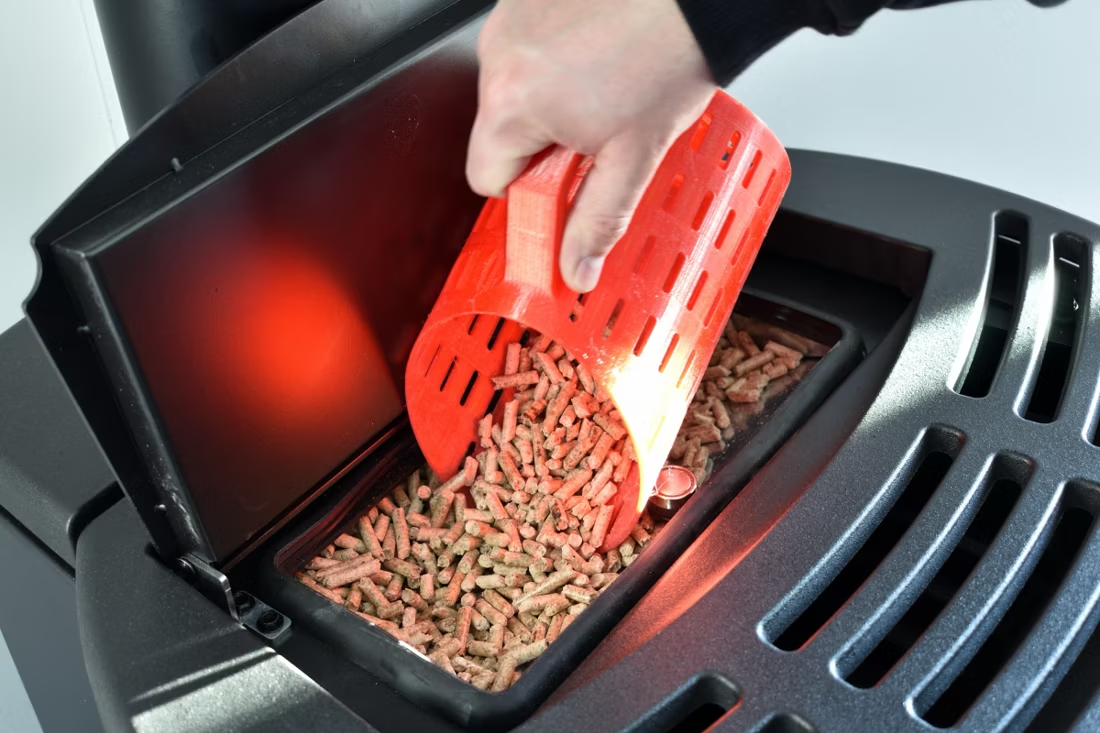
A clean pellet stove is a happy pellet stove. Plan on cleaning the burn pot about once a week when you're burning regularly—ash and clinkers gum up the air holes just like a pellet barbecue. Most pellet stove problems trace back to skipped cleaning that nobody explained up front. Some designs make it easy with a trapdoor burn pot: pull a lever and the gunk drops into the ash pan.
Can I install a fireplace myself?
If you're putting a fire in your house on purpose, it's best to work with an expert. Unless you're genuinely experienced in framing, gas line, vent pipe, and the national code on clearances to combustibles, have a professional do it—and ideally the same company that sells you the fireplace, so warranty, service, and liability all live under one roof.
Does a fireplace add value to my home?
On average, a fireplace adds back to the home about the same amount you spent installing it. Add the monthly savings from heating the rooms you actually use instead of the whole house—often hundreds of dollars a year—and the value case is strong before you even count what a fire does for how your family uses the room.
Stove and Fireplace Dealers in Santa Cruz County
Pellet Brands Stocked Around Santa Cruz County
Manufacturers will point you to the nearest stocking dealer.
Find your pellet stove in Santa Cruz County.
Tell us a bit about your home and we'll match you with a trusted local dealer and send over a free Project Guide & Parts List—sized for your space, with the vent kit and parts you'll actually need.
Find Your Fireplace →