
Keep Your Family Warm and Safe—No Matter What
With mild Delta winters and strict Bay Area air quality rules, few Pittsburg homes need wood as a primary heat source. For the ones that still want it—backup heat, ambiance, or a rural property—we'll connect you with a local dealer who knows the rules.
Every Project Starts From One of These Five Situations
A Delta climate that almost never calls for wood heat.
Pittsburg sits at just 60 feet of elevation along the Sacramento-San Joaquin Delta, where winter lows average around 40°F and the city has a mild, short winter heating season. Compare that to a genuinely wood-heat-dependent city like Duluth, Minnesota, which faces a long, brutal winter heating season—Pittsburg's heating season is short, mild, and easily handled by a central gas furnace or heat pump. Very few local homes were built with a wood-burning fireplace or stove as anything more than a decorative feature.
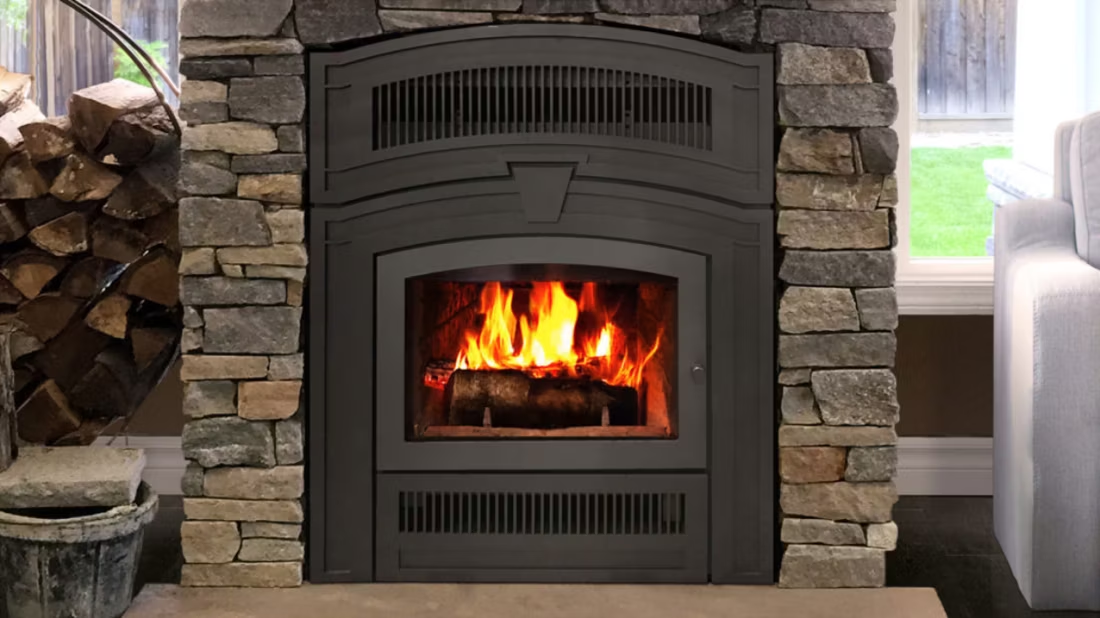
Contra Costa County also falls under the Bay Area Air Quality Management District's non-attainment designation, and BAAQMD's Wood Burning Rule (Regulation 6, Rule 3) can prohibit burning in any device—even EPA-certified stoves—on declared Spare the Air days during winter months. Add in periodic wildfire smoke from the surrounding hills, and the air-quality case against routine wood burning here is strong. That said, a small number of Pittsburg homeowners still install EPA-certified wood stoves for emergency heat during PG&E outages, for the ambiance of a real fire, or for a second property in the Sierra foothills where oak, madrone, and Douglas fir are genuinely local fuel.
Firewood Cutting Permits Near Pittsburg
Three steps. No salesperson until you're ready.
Tell us about your project
Your zip code, your situation, and the fuel you're leaning toward—or let the answers point you to one.
See what's actually available
The brands dealers within 100 miles genuinely carry—real options, never a catalog mirage.
Get your dealer & Project Guide
A trusted local dealer, plus the free Project Guide & Parts List that names every component of the job.
Frequently Asked Questions
Do many homes in Pittsburg actually use wood heat?
No—wood is a minor fuel source here. With winter lows averaging around 40°F and only a short, mild winter heating season, Pittsburg's heating load is a fraction of what a cold-climate city like Fargo, North Dakota sees. Most homes rely on gas furnaces or PG&E electric heat pumps for daily comfort. Wood stoves that do exist locally are almost always supplemental—installed for backup heat, ambiance, or occasional use rather than as the primary heat source.
Can I legally burn wood in Pittsburg?
Yes, but with real restrictions. The Bay Area Air Quality Management District enforces a Wood Burning Rule that bans burning in any fireplace or stove—including EPA-certified units—on days it declares a winter Spare the Air Alert, typically triggered by poor air quality between November and February. Uncertified, older stoves and open-hearth fireplaces face the strictest limits. If you install a new EPA 2020 NSPS-certified stove or insert, you'll have more flexibility, but you should still check BAAQMD's daily air quality status before lighting a fire in winter.
What does a wood stove installation cost in Pittsburg?
Because wood installs are uncommon here, pricing tends to track general Northern California rates rather than a deep local market: expect roughly $3,500 to $8,000 for a freestanding EPA-certified stove with Class A chimney venting, or somewhat less for an insert into an existing masonry fireplace. Given how few installers in Contra Costa County specialize in wood-burning work, get a firm in-home quote—travel time and chimney access can move the number more than it would in a market with more competition.
Why would I install a wood stove if gas and electric heat work fine?
The most common reason we hear from Pittsburg homeowners is backup heat during a PG&E Public Safety Power Shutoff. When the grid goes down during high fire-risk wind events, gas furnaces with electronic ignition and electric heat pumps both stop working—a wood stove doesn't. Beyond that, some buyers simply want the ambiance of a real fire on the handful of genuinely cold nights each winter. It's rarely about heating cost savings here, since PG&E's residential rate near $0.317/kWh is high, but wood competes more on independence from the grid than on economics.
Where does firewood for a Pittsburg wood stove come from?
Locally sold firewood in Contra Costa County is typically oak, madrone, or Douglas fir, sourced from Sierra foothill and Northern California suppliers rather than cut within city limits—Pittsburg itself isn't near forested public land. If you want to cut your own, the BLM California State Office issues personal-use cutting permits for $10 per cord during an April-to-October season, but the nearest eligible BLM land is a drive from the Delta, so most local stove owners buy delivered cordwood instead.
What size wood stove makes sense for a Pittsburg home?
Since almost no Pittsburg home relies on wood for whole-house heat, sizing conversations here usually center on a single zone—a family room or great room—rather than total square footage. A small to medium EPA-certified stove (rated for 1,000 to 1,500 sq ft) is typically more than enough, since it's supplementing an existing gas or electric system rather than replacing it. Oversizing is the main risk: a stove sized for a cold-climate whole-home load will run too hot and smolder in Pittsburg's mild winters, building excess creosote.
Do I need a building permit for a wood stove in Pittsburg?
Yes. New wood-burning appliance installations require a building permit through the City of Pittsburg, and the unit must meet current EPA 2020 NSPS emissions standards to be legally installed in Contra Costa County. A licensed installer will typically pull the permit as part of the job and make sure the chimney, hearth clearances, and venting pass inspection—important given how closely BAAQMD tracks wood-burning devices in non-attainment counties.
How often does a rarely used wood stove need chimney service?
Even a stove that only burns a handful of times each winter should be inspected annually—creosote can build up from just a few fires, and rodents or debris can block flues that sit unused most of the year. Given how few burn days Pittsburg typically sees, an annual pre-season inspection (late fall, before the first Spare the Air-clear cold night) is usually enough; you won't need the mid-season cleanings that heavy-use cold-climate households require.
Where can I find a wood stove dealer near Pittsburg?
Because wood heat is a niche product here, dealers who stock and install EPA-certified stoves are concentrated in nearby Concord, Walnut Creek, and Antioch rather than in Pittsburg itself. Look for a retailer with NFI-certified installers who can also walk you through BAAQMD's Wood Burning Rule paperwork—that local regulatory knowledge matters more here than in most markets. We match Pittsburg homeowners with a trusted dealer who actually does this work regularly rather than one just guessing at Bay Area air rules.
What's the difference between an insert and a zero-clearance fireplace?
An insert is a fireplace that slides into a pre-existing wood-burning fireplace—if you don't have one, there's nothing to insert it into. A zero-clearance fireplace is built into a framed wall, which makes it the answer for remodels and new construction. Simple test: existing masonry fireplace means insert; blank or framed wall means zero-clearance.
Why is my open fireplace making my house colder?
Open fireplaces suck—literally. As the fire burns, it consumes air your furnace already paid to heat and pulls it out through the chimney, so the house is actually colder after the fire goes out than before you lit it. An insert fixes this: it seals the chimney, puts fixed glass across the front, and turns that hole in your house into a real heat source.
Does a fireplace add value to my home?
On average, a fireplace adds back to the home about the same amount you spent installing it. Add the monthly savings from heating the rooms you actually use instead of the whole house—often hundreds of dollars a year—and the value case is strong before you even count what a fire does for how your family uses the room.
How much should I budget for a fireplace?
For an average home—covering the fireplace, the vent pipe, and basic installation—a budget between $3,900 and $5,500 gives you a lot of options across wood, gas, and pellet. By the time you add finish work, gas line, and electrical, the average complete installation lands between $5,000 and $12,000 all-in. In a remodel or new build, a good rule is to put about 2.5% of the total project cost toward the fireplace.
Nearby Dealers
Hearth shops serving Pittsburg and the surrounding area.
Find your wood stove option in Pittsburg.
Tell us about your home and why you're considering wood heat—backup power, ambiance, or a specific room—and we'll match you with a trusted local dealer and send a free Project Guide & Parts List built around what's actually legal and installable in Pittsburg.
Find Your Fireplace →