
Keep Your Family Warm and Safe—No Matter What
From the Nogales valley to the grasslands around Sonoita and Patagonia, wood heat is part of the ranch and vineyard culture here. Find the right stove or insert, and connect with a trusted local dealer.
Every Project Starts From One of These Five Situations
A high desert tradition, not a survival necessity.
Santa Cruz County sits at the southern edge of Arizona, with elevations ranging from roughly 3,800 feet in Nogales and Rio Rico up to nearly 5,000 feet in the Sonoita-Elgin grasslands and the foothills around Patagonia. With a fairly short, mild heating season and an average winter low near 28°F, this is a far milder climate than places like Bismarck ND or Duluth MN, where wood heat is a matter of survival. Here, it's more often about tradition, cost savings, and the character of a real fire—but the higher-elevation communities toward Sonoita and Patagonia do see regular nights in the 20s, and a properly sized stove earns its keep on those cold, clear desert evenings.
Mesquite, pinyon, and juniper are the wood species that define this region—mesquite in particular burns dense and hot, a legacy of ranch country cooking fires as much as home heating. Cutting permits through the Coronado National Forest run $5 to $20 per cord during the May-to-October season, and self-cut mesquite and juniper remain popular with rural households. Because Santa Cruz County includes a designated non-attainment area and deals with periodic wildfire smoke from the surrounding Sky Islands, a modern EPA-certified stove burning mesquite cleanly is a meaningfully better choice than an old open fireplace or an uncertified unit—for air quality as much as efficiency.
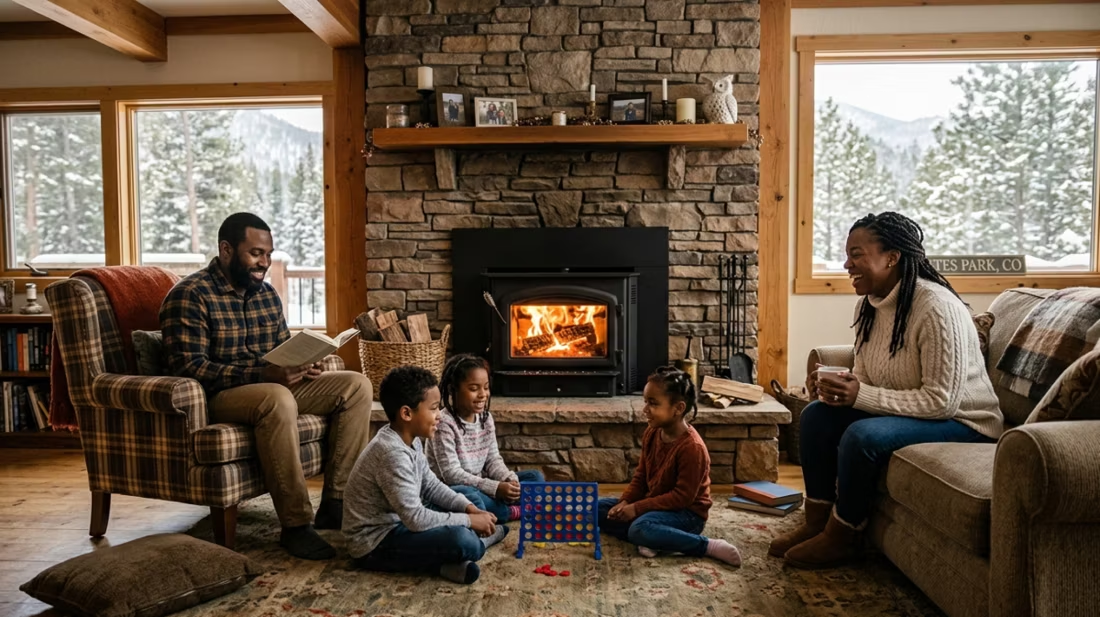
Firewood Cutting Permits Near Santa Cruz County
Three steps. No salesperson until you're ready.
Tell us about your project
Your zip code, your situation, and the fuel you're leaning toward—or let the answers point you to one.
See what's actually available
The brands dealers within 100 miles genuinely carry—real options, never a catalog mirage.
Get your dealer & Project Guide
A trusted local dealer, plus the free Project Guide & Parts List that names every component of the job.
Frequently Asked Questions
How much does a wood stove installation cost in Santa Cruz County?
A typical wood stove or insert installation in Santa Cruz County runs roughly $3,500 to $8,000, depending on the unit, whether you're retrofitting into an existing masonry fireplace (common in older Nogales and Tubac homes) or starting from scratch, and whether new Class A chimney pipe is needed. Installations in Patagonia, Sonoita, or other outlying communities can run slightly higher once travel time and material delivery are factored into the quote. A local dealer will give you a firm number after seeing your home and existing chimney or hearth setup.
What size wood stove do I need for my home here?
Because Santa Cruz County's climate is comparatively mild—with a heating season that's a fraction as demanding as a place like Fargo ND or Helena MT sees—most homes in Nogales and Rio Rico do fine with a small-to-medium stove rated for supplemental or occasional primary heat. Homes at higher elevation around Sonoita, Elgin, or Patagonia, where winter nights run noticeably colder than the valley floor, typically benefit from sizing up one step. Mesquite's high BTU output also means a stove needs to be matched carefully to the space—a firebox sized for softer woods can run too hot with a full mesquite load. A local retailer can size your specific home and elevation for free.
Where can I find certified wood stove installers near me?
Look for installers carrying NFI (National Fireplace Institute) or CSIA (Chimney Safety Institute of America) certification, which covers proper clearances, venting, and code compliance for wood-burning appliances. Certified dealers serve Nogales, Rio Rico, and the Highway 82 corridor toward Sonoita and Patagonia, though expect a modest travel charge for installs further out in the county's ranch country. Sticking with a certified installer rather than a general contractor matters most here because improper venting is the leading cause of chimney fires, and it also keeps your warranty intact.
What's the difference between a wood stove and a wood insert?
A wood stove is a freestanding unit on its own hearth pad, which works well for newer homes or additions that don't already have a chimney. A wood insert slides into an existing masonry fireplace—common in older adobe and territorial-style homes around Nogales and Tubac—and converts a drafty, inefficient open hearth into a sealed, high-output heat source using the chimney you already have. For most Santa Cruz County homes with an existing fireplace, an insert is the more cost-effective upgrade; homes without one are better suited to a freestanding stove.
Do I need a permit to install a wood stove in Santa Cruz County?
Yes—new wood stove installations require a building permit, and the unit itself needs to meet current EPA emissions standards. Most local installers handle the permit application as part of the job. Because Santa Cruz County includes areas designated as non-attainment for air quality, and the region is prone to wildfire smoke drifting in from the Coronado National Forest and surrounding Sky Islands, it's worth checking for any active burn advisories before lighting up, particularly during the dry, high-fire-danger stretch before the summer monsoon arrives.
What's the best wood stove for burning mesquite in this climate?
Mesquite burns hotter and denser than pine or fir, so it rewards a stove built with a heavier firebox and good air control rather than one optimized for maximum overnight burn times—Santa Cruz County's milder winters mean most households aren't chasing a 20-hour burn the way a homeowner in International Falls MN might be. Solid mid-size non-catalytic stoves handle mesquite and pinyon well without overheating, while catalytic models are better reserved for the higher-elevation homes around Sonoita and Patagonia where longer, colder nights are more common. A local dealer can match a model to both your elevation and your typical wood supply.
How often should my chimney be inspected and cleaned?
An annual inspection before burning season is the standard recommendation from the CSIA, and it holds true here even though Santa Cruz County's milder winters mean lighter overall usage than colder climates. Mesquite's dense, hot burn tends to produce different creosote patterns than softer woods, so it's still worth having a certified sweep check the flue every year rather than assuming light use means no buildup. Homes that burn mesquite as a near-daily supplemental heat source through the winter should treat the inspection as non-negotiable.
Where can I get firewood in Santa Cruz County?
Self-cut permits through the Coronado National Forest run $5 to $20 per cord and are valid May through October, and mesquite, pinyon, and juniper are all available on public land within the forest boundaries. Locally, mesquite is also sold by roadside vendors and ranch suppliers throughout the county—it's prized as much for cooking as for home heating, so demand and pricing can shift seasonally. Delivery to Patagonia, Sonoita, or other outlying areas may carry a small distance surcharge from local sellers.
Wood stove vs. pellet stove—which is right for my home?
Wood stoves run on cordwood, need no electricity, and pair naturally with self-cut mesquite or juniper from a Coronado National Forest permit—a real advantage during monsoon-season power outages, which do happen in this part of the county. Pellet stoves, using regional brands like Forest Energy or Lignetics, are easier to run day-to-day and burn cleaner, which matters given Santa Cruz County's non-attainment status, but they need electricity for the auger and blower. For rural properties around Patagonia or Sonoita where outages are more common, wood tends to be the more resilient choice; for in-town homes prioritizing convenience, pellet is worth a look.
What's the difference between an insert and a zero-clearance fireplace?
An insert is a fireplace that slides into a pre-existing wood-burning fireplace—if you don't have one, there's nothing to insert it into. A zero-clearance fireplace is built into a framed wall, which makes it the answer for remodels and new construction. Simple test: existing masonry fireplace means insert; blank or framed wall means zero-clearance.
Why is a fireplace insert so efficient?
An insert does two things: it seals the chimney completely, so you stop losing air you already paid to heat, and it radiates warmth into the room through the firebox and glass. Most add a heat-exchange fan that pulls cool room air underneath, wraps it around the hot firebox, and pushes it back out warm. Your home is more efficient before you've even lit the first fire.
Can I install a fireplace myself?
If you're putting a fire in your house on purpose, it's best to work with an expert. Unless you're genuinely experienced in framing, gas line, vent pipe, and the national code on clearances to combustibles, have a professional do it—and ideally the same company that sells you the fireplace, so warranty, service, and liability all live under one roof.
Does a fireplace add value to my home?
On average, a fireplace adds back to the home about the same amount you spent installing it. Add the monthly savings from heating the rooms you actually use instead of the whole house—often hundreds of dollars a year—and the value case is strong before you even count what a fire does for how your family uses the room.
Find your wood fireplace in Santa Cruz County.
Tell us a bit about your home and elevation, and we'll match you with the right wood stove or insert, plus a free Project Guide & Parts List and a trusted local dealer to install it.
Find Your Fireplace →