
Warmth built for high desert nights, not deep winters.
Wood, gas, pellet, and electric fireplace resources for every community in Santa Cruz County—from Nogales and Rio Rico up to the grasslands around Sonoita and Elgin. Find the right unit for your elevation and connect with a trusted local hearth retailer.
Every Project Starts From One of These Five Situations
Border-country heating in Santa Cruz County, Arizona.
Santa Cruz County spans a wide elevation range—from Nogales at roughly 3,800 feet along the border, up through Rio Rico and Tubac, to the oak-and-grassland country around Patagonia, Sonoita, and Elgin near 5,000 feet. Winter lows average around 28°F and the county logs about 2,596 heating degree days a year—a fraction of what a place like Bozeman, Montana sees, but enough that homes at elevation still run a fireplace or stove most nights from November through February. Mesquite, pinyon, and juniper are the wood species people actually burn here, cut on personal-use permits through the Coronado National Forest or bought split and seasoned from local suppliers. Because the season is short but real, a lot of homes lean on a stove or insert for shoulder-season warmth rather than a furnace running all winter.
What you'll find on this hub: hearth retailers, service technicians, and fuel suppliers covering every community in the county—Nogales, Rio Rico, Tubac, Tumacácori, Patagonia, Sonoita, and Elgin. Pick your fuel below to see local dealers, typical installation costs, and the units that actually make sense for this climate and elevation. Whether you're heating a home in the Nogales city limits or a place out past Sonoita where the nights run colder, this is the starting point.
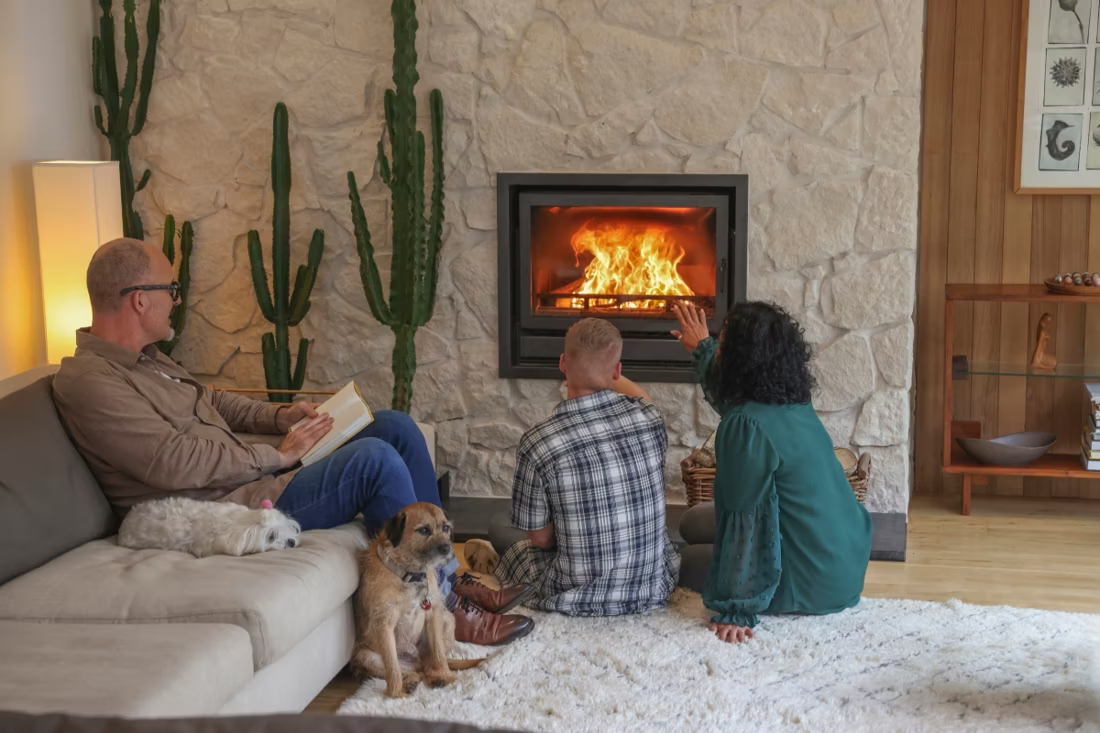
Four fuels. One honest answer for Santa Cruz County.
Wood
See what's available near Santa Cruz County.
Find your wood stove →Gas
104 models available near Santa Cruz County.
Find your gas fireplace →Pellet
See what's available near Santa Cruz County.
Find your pellet stove →Electric
See what's available near Santa Cruz County.
Find your electric fireplace →Three steps. No salesperson until you're ready.
Tell us about your project
Your zip code, your situation, and the fuel you're leaning toward—or let the answers point you to one.
See what's actually available
The brands dealers within 100 miles genuinely carry—real options, never a catalog mirage.
Get your dealer & Project Guide
A trusted local dealer, plus the free Project Guide & Parts List that names every component of the job.
Frequently Asked Questions
Which fuel works best in Santa Cruz County?
It depends mostly on elevation and how much of the winter you actually want to heat. Wood is the traditional choice, especially at higher elevation around Patagonia and Sonoita—mesquite burns hot and dense, pinyon and juniper are aromatic and widely available through Coronado National Forest cutting permits. Gas is the low-maintenance option in and around Nogales and Rio Rico where Southwest Gas has service; propane fills that role farther out in Tubac and Sonoita. Pellet stoves are a solid middle ground—Forest Energy and Lignetics both distribute regionally, so fuel supply isn't a concern, and pellet units skip the wood-splitting labor. Electric fireplaces do more real work here than in colder climates—with only about 2,596 heating degree days countywide, an electric insert can genuinely cover a mild Nogales winter in a smaller home, where it would only be supplemental in a place like Duluth, Minnesota. Most homes at elevation pair wood or pellet as the primary heater with gas or electric in secondary rooms.
Do I need a permit to install a fireplace in Santa Cruz County?
Generally yes. New wood stoves, wood inserts, gas fireplaces, gas inserts, gas stoves, and pellet stoves all require a building permit, and wood appliances need to meet current EPA emissions standards to be installed. Gas installations also need a separate gas-line permit pulled by a licensed gas fitter. Inside Nogales city limits, permits go through the city building department; for Rio Rico, Tubac, Patagonia, Sonoita, and Elgin—all unincorporated—permits are handled through Santa Cruz County Development Services. Electric fireplaces are usually permit-free unless you're hardwiring a built-in unit into a new circuit. Most local retailers handle the permitting as part of installation, so it's rarely something you have to navigate solo.
Are there air quality restrictions on wood burning in Santa Cruz County?
There can be. Parts of the county fall within a non-attainment area for particulate matter, and the Arizona Department of Environmental Quality issues periodic burn advisories, especially during stagnant winter air or when wildfire smoke drifts in from fires in the Coronado National Forest or across the border in Sonora. On advisory days, voluntary wood-burning restrictions may apply. New wood stove installations still need to meet EPA certification standards regardless of advisory status. If you're installing a new wood appliance, ask your dealer about current-generation catalytic or EPA-certified non-catalytic models—they burn cleaner and hold up better on days when older, uncertified stoves get flagged.
Can one local hearth retailer handle all four fuel types?
Coverage varies by dealer. A few Nogales-area retailers—think shops like Border Fireplace & Stove or High Desert Hearth Supply—carry wood, gas, pellet, and electric, which is useful if you're still deciding between fuels. Smaller shops out toward Rio Rico and Tubac tend to specialize, often focusing on wood and pellet given the elevation and the local mesquite and pinyon supply, with less emphasis on gas hardware. If a retailer you're considering is a fuel supplier rather than an installer—selling firewood or bagged pellets but not fireplaces themselves—that's worth confirming before you assume they'll handle installation.
How does service work in the rural parts of Santa Cruz County?
Most chimney sweeps and gas techs serving the county are based in Nogales or Rio Rico and travel out to Tubac, Tumacácori, Patagonia, Sonoita, and Elgin for appointments. Expect a modest travel fee on top of the service call for the farther communities, and expect appointments to book up faster in September and October, before the season's first cold snap hits the higher elevations around Sonoita. If you're out past Patagonia, it's worth scheduling annual chimney or gas inspections early rather than waiting for a mid-winter issue, since a same-week emergency visit that far out isn't always guaranteed.
What's the typical cost range for fireplace installation across all fuel types in Santa Cruz County?
Wood stove or insert installation: roughly $4,000–$8,500 for a typical retrofit, more if a full chimney or Class A chimney pipe run is needed in a home that never had one. Gas fireplace, insert, or stove: about $4,000–$10,000, with the low end for homes already on Southwest Gas service and the high end for propane conversions requiring new line runs. Pellet stove or insert: typically $4,200–$7,000. Electric fireplace: $200–$3,000 for the unit itself, plus $300–$1,000 in labor for anything beyond a simple plug-in install. Costs run a bit lower here than in colder-climate counties since venting and clearance work tends to be less extensive—check the county + fuel pages above for retailer-specific pricing.
What is an in-home preview and do I need one?
It's a visit where a hearth professional measures your space, confirms the model you picked actually works in your home, and walks the specs—framing, gas line, venting, finish work—before anything is ordered. Some details you just can't know until you see the house. Never make a down payment without one; it's the single most-skipped step that burns buyers.
Wood, gas, pellet, or electric—how do I choose?
Match the fuel to your life, not the other way around. Wood: lowest fuel cost and total power-outage independence, but you're hauling and stacking. Gas: press a button, set a thermostat, no maintenance to speak of. Pellet: wood economics with automatic feeding, in exchange for weekly cleaning and a need for electricity. Electric: plugs in anywhere with honest supplemental heat. Nobody regrets the fuel that fits how they actually live.
How much should I budget for a fireplace?
For an average home—covering the fireplace, the vent pipe, and basic installation—a budget between $3,900 and $5,500 gives you a lot of options across wood, gas, and pellet. By the time you add finish work, gas line, and electrical, the average complete installation lands between $5,000 and $12,000 all-in. In a remodel or new build, a good rule is to put about 2.5% of the total project cost toward the fireplace.
Does a fireplace add value to my home?
On average, a fireplace adds back to the home about the same amount you spent installing it. Add the monthly savings from heating the rooms you actually use instead of the whole house—often hundreds of dollars a year—and the value case is strong before you even count what a fire does for how your family uses the room.
Stove and Fireplace Dealers in Santa Cruz County
Listings include WhyFire partner dealers, dealers we have verified as authorized for the brands we recommend, and established local businesses that carry hearth products. Every listing shows which one it is. The ones marked Preferred run on WhyFire's software, so they can show you real pricing and book your appointment right here. No manufacturer pays for placement. How we verify dealers →
Southwest Home & Hearth
Earth Energy's Hearth & Patio
Find the right fireplace for your Santa Cruz County home.
Tell us your fuel, your community, and your project, and we'll match you with a trusted local dealer and send over a free Project Guide & Parts List—the exact parts, including the vent kit, and the dealer we recommend for your home.
Find Your Fireplace →