
Clean, instant heat for the high desert of Santa Cruz County.
From the border town warmth of Nogales up through the grasslands around Patagonia and Sonoita, winter nights here dip into the high 20s more often than people expect. Find the right gas fireplace and connect with a trusted local dealer.
Every Project Starts From One of These Five Situations
Mild days, real cold nights.
Santa Cruz County runs from Nogales at roughly 3,800 feet on the border up through Rio Rico and Tubac and into the oak grasslands around Patagonia and Sonoita near 5,000 feet. With about 2,596 heating degree days and average winter lows near 28°F, this is a mild-winter county overall—but elevation matters, and the higher grassland towns see frost and freezing nights far more often than Nogales itself. A gas fireplace is popular here precisely because it covers that range: enough heat for a genuine cold snap, without the commitment of a wood-burning setup for a climate that's mostly mild.
Southwest Gas serves natural gas to parts of Nogales, while propane is the standard fuel source across most of the rest of the county—Rio Rico, Tubac, Patagonia, and Sonoita all rely primarily on propane tanks for gas appliances. Santa Cruz County also sits in an EPA non-attainment area for particulate matter, and wildfire smoke drifting off the Santa Rita and Patagonia mountains is a recurring summer concern. For homeowners weighing wood against gas, a direct-vent gas fireplace sidesteps both the local smoke restrictions and the seasonal haze—clean combustion, no particulate contribution, and heat on demand.
Three steps. No salesperson until you're ready.
Tell us about your project
Your zip code, your situation, and the fuel you're leaning toward—or let the answers point you to one.
See what's actually available
The brands dealers within 100 miles genuinely carry—real options, never a catalog mirage.
Get your dealer & Project Guide
A trusted local dealer, plus the free Project Guide & Parts List that names every component of the job.
Frequently Asked Questions
How much does a gas fireplace installation cost in Santa Cruz County?
A typical gas fireplace installation in Santa Cruz County runs roughly $4,500 to $10,500, depending on the unit, the venting path, and whether new gas line or propane tank work is required. A direct-vent insert going into an existing masonry fireplace with gas already run to the house sits toward the lower end. A new built-in gas fireplace in a remodel or new construction—especially in Rio Rico or Tubac homes where a propane line has to be extended from the tank—runs higher. Local dealers will give you a firm number after seeing the space and confirming whether you're on natural gas or propane.
Can I convert my existing wood fireplace to gas?
Yes, and it's a common project for older Nogales and Tubac homes with an existing masonry fireplace. A gas insert slides into the firebox and vents through a stainless liner run up your existing chimney, typically running $4,000 to $8,000 depending on the insert and whether it's set up for natural gas or propane. Homes already on Southwest Gas service in Nogales tend to land on the lower end; propane conversions elsewhere in the county sometimes need a new regulator or tank sizing check, which adds a bit to the job.
Do I need natural gas, or can I run a fireplace on propane?
Either works, and which one you use is mostly decided by where you live. Southwest Gas provides natural gas service to portions of Nogales, so homes there with existing gas appliances can usually add a fireplace with minimal new line work. Outside city limits—Rio Rico, Tubac, Patagonia, and Sonoita—propane is the standard, either from an existing tank or a new one set by a local propane supplier. Most gas fireplace models can be configured for either fuel; your installer sets the orifice and regulator to match.
Will my gas fireplace still work if the power goes out?
Most direct-vent gas fireplaces are built to run without household power. Units with an IPI (intermittent pilot ignition) system have a small battery backup that kicks in automatically, so the fireplace lights and runs off batteries until power returns—worth checking the batteries once a year. Some manufacturers, including Valor, go a step further with a pilot that generates its own electricity through the thermocouple, so there are no batteries to maintain at all. For Santa Cruz County's monsoon season, when lightning-related outages aren't unusual, that's a real consideration to ask your dealer about.
What's the difference between a gas fireplace, gas insert, and gas stove?
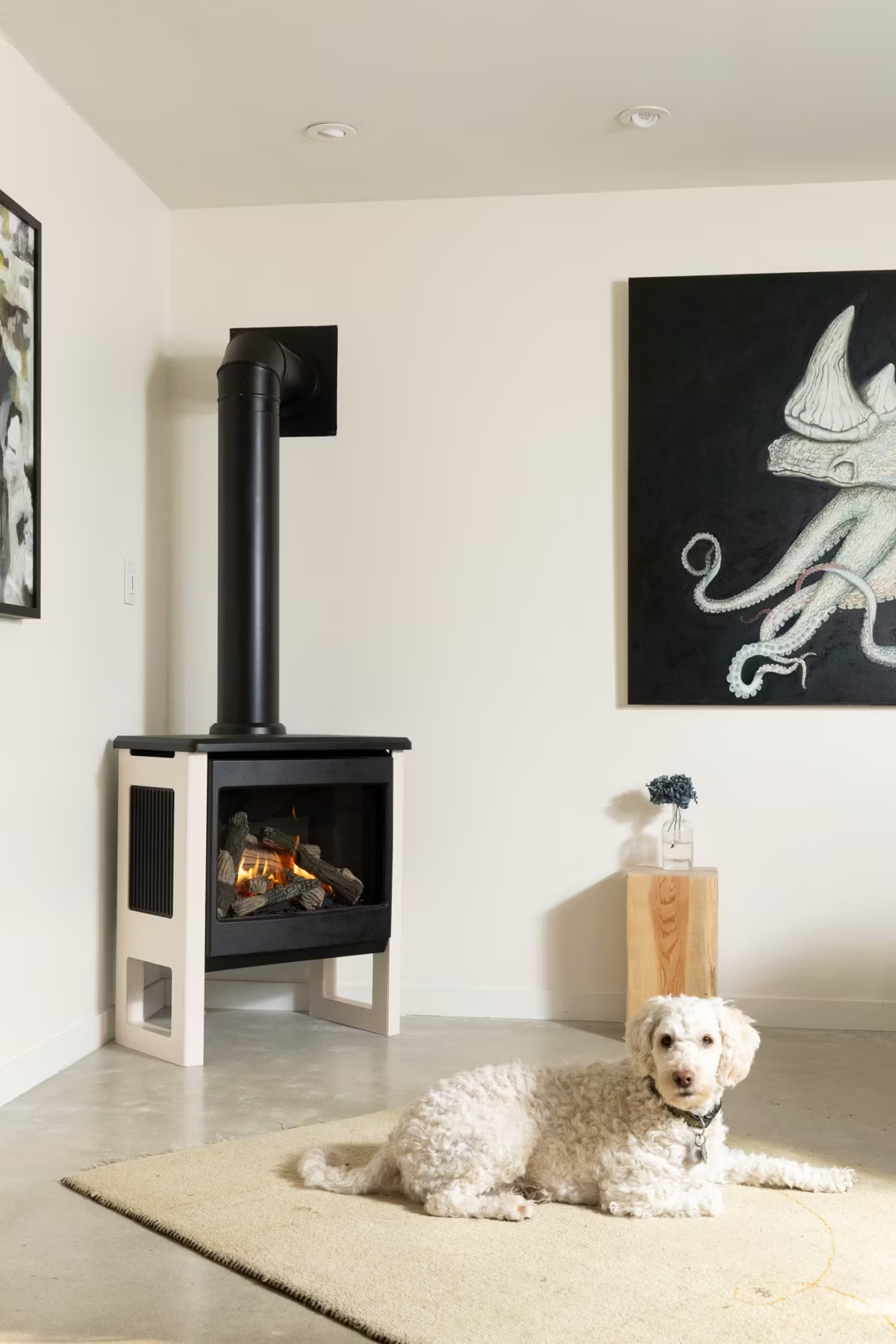
A gas fireplace is a fully built-in unit framed into a wall—the standard choice for new construction or a full remodel. A gas insert is sized to slide into an existing masonry firebox, turning an old wood fireplace into a sealed, efficient gas unit that still uses the existing chimney as its chase. A gas stove is freestanding, sitting on the floor on its own hearth pad, similar in footprint to a wood stove but running on gas. For most Santa Cruz County homes with an older adobe or block fireplace already in place, an insert is the simplest upgrade; new builds in Rio Rico or Tubac more often go with a built-in unit.
Do I need a permit to install a gas fireplace in Santa Cruz County?
Generally yes—new gas fireplace installations require both a building permit and a gas line permit, whether you're inside Nogales city limits or in unincorporated parts of the county. The gas line portion has to be done by a licensed gas-fitter, which is one of the main reasons to go through a certified hearth dealer rather than a general handyman: they coordinate the gas work, venting, and inspection sign-off as one job instead of leaving you to manage separate trades.
Are vent-free gas fireplaces allowed here, given the air quality concerns?
Vent-free (ventless) gas units are legal in Arizona and don't require outside venting, but they do release combustion byproducts—water vapor and small amounts of carbon monoxide and NO₂—directly into the room, and they carry strict room-sizing and ventilation rules. Given that Santa Cruz County sits in an EPA particulate non-attainment area and already deals with periodic wildfire smoke off the surrounding mountains, most local dealers steer homeowners toward direct-vent units instead—they exhaust fully outside, deliver more real heat, and don't add anything to indoor or outdoor air quality. It's worth asking your installer directly about both options for your specific situation.
How often should a gas fireplace be serviced?
Plan on an annual inspection for any gas fireplace or insert. A technician checks the burner, pilot assembly, venting, and gas connections, and cleans the glass and interior—a quick job compared to wood-stove chimney sweeping, but still important for safety and warranty compliance. Given the dust that blows through Nogales and Rio Rico during dry, windy spring stretches, it's also worth having the technician check the intake screen and venting termination for buildup while they're at it.
Gas vs. wood—which makes more sense in Santa Cruz County?
Wood heat still has a following here, with mesquite, pinyon, and juniper all cut locally and Coronado National Forest issuing cutting permits from May through October at $5 to $20 per cord. But with only about 2,596 heating degree days a year and winter lows generally in the high 20s, most Santa Cruz County homes don't need wood as a primary heat source the way a place like Bozeman or Duluth would. Gas fits the local climate well: instant heat for the genuinely cold nights in Sonoita or Patagonia, no ash or smoke to manage, and no contribution to the county's existing particulate and wildfire-smoke concerns. Homes that want backstop heat for a power outage sometimes keep a small wood or pellet option alongside a gas fireplace used for daily comfort.
Why is my open fireplace making my house colder?
Open fireplaces suck—literally. As the fire burns, it consumes air your furnace already paid to heat and pulls it out through the chimney, so the house is actually colder after the fire goes out than before you lit it. An insert fixes this: it seals the chimney, puts fixed glass across the front, and turns that hole in your house into a real heat source.
What's the difference between an insert and a zero-clearance fireplace?
An insert is a fireplace that slides into a pre-existing wood-burning fireplace—if you don't have one, there's nothing to insert it into. A zero-clearance fireplace is built into a framed wall, which makes it the answer for remodels and new construction. Simple test: existing masonry fireplace means insert; blank or framed wall means zero-clearance.
How much should I budget for a fireplace?
For an average home—covering the fireplace, the vent pipe, and basic installation—a budget between $3,900 and $5,500 gives you a lot of options across wood, gas, and pellet. By the time you add finish work, gas line, and electrical, the average complete installation lands between $5,000 and $12,000 all-in. In a remodel or new build, a good rule is to put about 2.5% of the total project cost toward the fireplace.
Can I install a fireplace myself?
If you're putting a fire in your house on purpose, it's best to work with an expert. Unless you're genuinely experienced in framing, gas line, vent pipe, and the national code on clearances to combustibles, have a professional do it—and ideally the same company that sells you the fireplace, so warranty, service, and liability all live under one roof.
Find your gas fireplace in Santa Cruz County.
Tell us about your home and we'll match you with a trusted local dealer and send over your free Project Guide & Parts List—the exact parts, vent kit, and installer recommendation for your Santa Cruz County gas fireplace project.
Find Your Fireplace →