
Pellet heat built for Santa Cruz County's high-desert nights.
Clean, EPA-certified pellet heat for Santa Cruz County's high-desert nights—from Nogales and Rio Rico up to the cooler elevations around Patagonia and Sonoita. Find the right stove or insert, and connect with a trusted local dealer.
Every Project Starts From One of These Five Situations
A cleaner burn for a county that's watching its air.
Santa Cruz County stretches along the Arizona-Mexico border, from Nogales at roughly 3,800 feet up through Rio Rico and Tubac, and into the cooler high country around Patagonia (4,044 feet) and Sonoita (nearly 5,000 feet) at the foot of the Santa Rita and Patagonia Mountains. Winters here are mild by national standards—average lows sit around 28°F and the county logs about 2,596 heating degree days, a fraction of what a place like Fargo, ND sees in an average winter—but nights at the higher elevations still get cold enough that a real heat source matters, especially when a mesquite or juniper fire isn't practical or allowed.
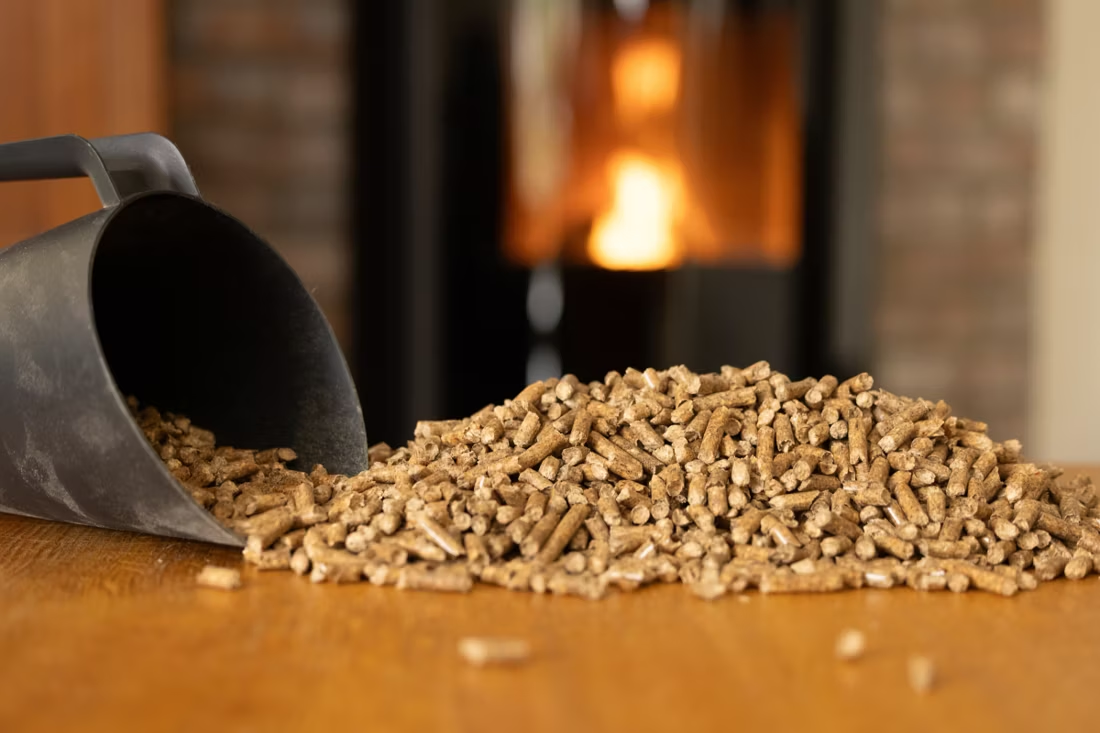
The county's non-attainment designation and periodic wildfire smoke mean open wood burning draws more scrutiny here than in many parts of Arizona. Pellet stoves burn compressed fuel from regional suppliers like Forest Energy and Lignetics at a fraction of the particulate output of cordwood, and EPA-certified units are commonly exempt from the kind of burn curtailments that can sideline an open wood stove during a smoke event. For homeowners in Nogales, Rio Rico, and the ranch country around Sonoita and Patagonia, that combination—real heat, low smoke, no cutting permit required—is a big part of the appeal.
Three steps. No salesperson until you're ready.
Tell us about your project
Your zip code, your situation, and the fuel you're leaning toward—or let the answers point you to one.
See what's actually available
The brands dealers within 100 miles genuinely carry—real options, never a catalog mirage.
Get your dealer & Project Guide
A trusted local dealer, plus the free Project Guide & Parts List that names every component of the job.
Frequently Asked Questions
How much does a pellet stove installation cost in Santa Cruz County?
Pellet stove and insert installations in Santa Cruz County typically run in the $3,000 to $6,500 range, depending on whether you're installing a freestanding stove, converting an existing masonry fireplace to a pellet insert, and whether new venting or a dedicated outlet needs to be added near the appliance. Homes in Nogales and Rio Rico with an existing fireplace opening are usually on the lower end since the pellet vent can often follow part of the existing flue path; installations in homes without a chimney, including many newer builds around Rio Rico, run a bit higher once venting and framing are factored in. A local dealer will give you a firm number after seeing the install location.
What size pellet stove do I need for my home?
Sizing depends less on elevation extremes here than in a true four-season climate, but it still matters. Nogales, Rio Rico, and Tubac sit lower and milder, so a mid-size pellet stove (40-50 lb hopper, rated for 1,200-1,800 sq ft) is usually plenty, even as the main heat source in a well-insulated home. Homes up around Patagonia and Sonoita, closer to 4,000-5,000 feet in the Santa Rita foothills, see colder overnight lows and benefit from sizing up or choosing a stove with a larger hopper so it can run longer between refills on the coldest nights. A local retailer will size your space based on square footage, insulation, and elevation.
Where do I buy pellets in Santa Cruz County?
Bagged pellets from regional producers like Forest Energy and Lignetics are the standard fuel here, sold through hearth retailers, feed stores, and some hardware stores in Nogales and Rio Rico. Buying a season's supply—typically 1 to 3 tons for a home using pellets as a primary heat source—ahead of the cooler months is common practice, since availability can tighten during a hard cold snap when demand spikes countywide. Unlike cordwood, there's no cutting permit or seasoning time involved; you're buying a manufactured, dried product by the bag or ton.
Wood vs. pellet—which makes more sense in Santa Cruz County?
Cordwood cut from mesquite, pinyon, and juniper is available through Coronado National Forest cutting permits ($5-$20 per cord, May through October), and plenty of longtime residents still burn it. But wood smoke draws more attention in a designated non-attainment county, and burning green or improperly seasoned mesquite can smoke heavily. Pellet stoves burn a manufactured, low-moisture fuel that produces a fraction of the particulate matter, don't require a Forest Service permit or a truck to haul cordwood, and are generally easier to keep running clean without constant tending. For homeowners weighing air quality, convenience, and fuel handling against the tradition of an open wood fire, pellet is often the practical middle ground.
Do I need a permit to install a pellet stove in Santa Cruz County?
Most jurisdictions here require a building permit for a new solid-fuel appliance installation, including pellet stoves and inserts—check with the Santa Cruz County Development Services Department for unincorporated areas, or the applicable city building department if you're inside Nogales or Patagonia town limits. Unlike a wood stove installation, there's no Forest Service cutting permit involved with pellet fuel since you're buying bagged pellets rather than harvesting cordwood. Most local hearth dealers handle the permitting and inspection scheduling as part of the installation.
Will my pellet stove still work if the power goes out?
Pellet stoves need electricity to run the auger that feeds fuel and the blower that circulates heat, so a standard unit will shut down in a power outage. For a border county where monsoon storms and occasional grid issues can knock out power for a few hours at a time, that's worth planning around—a small battery backup or inverter sized for the stove's low wattage draw (typically under 100-400 watts) can keep it running through a short outage. If uninterrupted backup heat during outages is the priority, a wood stove is a more dependable choice; pellet works best for homes with reliable grid power.
What's the best pellet stove for Santa Cruz County's climate?
Forest Energy and Lignetics pellets are the two most common fuel brands stocked locally, and most major stove manufacturers—Englander, Harman, Breckwell, Pacific Energy—burn either without issue. Given the county's mild HDD total of around 2,596 and average winter lows near 28°F, most homes do fine with a mid-size unit rather than the largest hopper capacity a manufacturer offers; the extra capacity matters more in a true cold-climate market. Homes at higher elevation around Sonoita and Patagonia are the exception, where sizing up a notch keeps the stove from running at max output all night during a hard freeze.
How often does a pellet stove need to be cleaned and serviced?
Pellet stoves vent through a smaller-diameter pipe than a wood stove and can often run horizontally out a side wall rather than needing a full vertical chimney, which makes them easier to retrofit into a Santa Cruz County home without an existing masonry fireplace. That said, the vent, burn pot, and exhaust fan still need annual cleaning to keep the stove burning efficiently and safely—most manufacturers recommend a full cleaning once a year, and heavy users burning multiple tons a season may want a mid-year check. Local hearth retailers who sell pellet stoves typically offer this service or can point you to a technician who does.
Is a pellet stove worth it in a mild climate like Santa Cruz County?
With average winter lows around 28°F and roughly 2,596 heating degree days a year, Santa Cruz County isn't a brutal cold-climate market the way Bozeman, MT or Duluth, MN are—most homes here don't need a stove running around the clock all winter. That said, a pellet stove still earns its place as supplemental heat for the cooler months, a source of warmth in the higher country around Patagonia and Sonoita, and an efficiency upgrade for an existing fireplace that otherwise sits unused most of the year. For Nogales and Rio Rico homes with mild winters, expect to use it as a zone heater rather than a primary system; for higher-elevation homes, it can realistically cover most of the heating season.
How often does a pellet stove need cleaning?
A clean pellet stove is a happy pellet stove. Plan on cleaning the burn pot about once a week when you're burning regularly—ash and clinkers gum up the air holes just like a pellet barbecue. Most pellet stove problems trace back to skipped cleaning that nobody explained up front. Some designs make it easy with a trapdoor burn pot: pull a lever and the gunk drops into the ash pan.
Why is a fireplace insert so efficient?
An insert does two things: it seals the chimney completely, so you stop losing air you already paid to heat, and it radiates warmth into the room through the firebox and glass. Most add a heat-exchange fan that pulls cool room air underneath, wraps it around the hot firebox, and pushes it back out warm. Your home is more efficient before you've even lit the first fire.
Can I install a fireplace myself?
If you're putting a fire in your house on purpose, it's best to work with an expert. Unless you're genuinely experienced in framing, gas line, vent pipe, and the national code on clearances to combustibles, have a professional do it—and ideally the same company that sells you the fireplace, so warranty, service, and liability all live under one roof.
Can a fireplace actually lower my heating bill?
Yes—by creating a comfort zone. A furnace heats every square foot of the house just to warm the one room you're in; a gas fireplace on low burns roughly a sixth of the gas a typical furnace does. Set the furnace around 55–60 degrees as a baseline, then heat the rooms your family actually uses. Families who heat this way commonly save $20–$60 a month.
Pellet Brands Stocked Around Santa Cruz County
Manufacturers will point you to the nearest stocking dealer.
Find your pellet stove in Santa Cruz County.
Tell us a bit about your home and elevation, and we'll match you with the right pellet stove or insert—plus a free Project Guide & Parts List with the exact parts, including the vent kit, and your recommended local dealer.
Find Your Fireplace →