
Warm Evenings, Desert Style.
Gas fireplace comfort for Green Valley's cool Sonoran Desert nights—find the right unit and connect with a trusted local dealer serving Pima County.
Every Project Starts From One of These Five Situations
Comfort heat for mild desert winters.
Green Valley sits at just under 3,000 feet in the Santa Cruz Valley south of Tucson, where winter lows average a mild 36°F and the whole heating season is short and light—just a small fraction of the heating a cold-climate town like Bozeman, MT or Duluth, MN needs in a single month. Wood-burning fireplaces are essentially not part of the picture here; nobody in this Sonoran Desert retirement community is heating a home with cordwood. What does make sense is gas: instant, clean, controllable warmth for the occasional cold snap and the cool desert evenings that are common even when daytime highs are pleasant.
Green Valley is unincorporated Pima County, and natural gas mains don't reach every development the way they do closer to central Tucson, so propane is the standard fuel for most gas fireplace installations here—delivered and stored in a tank rather than piped from a street main. Air quality also plays a role in the fuel decision: the Tucson basin, including Pima County, deals with non-attainment status and winter inversions that trap particulates close to the ground, and wildfire smoke drifts in some summers. Gas fireplaces don't add to that particulate load the way wood-burning units do, which is part of why gas has become the default choice for ambiance and supplemental heat in Green Valley's retirement and golf communities.
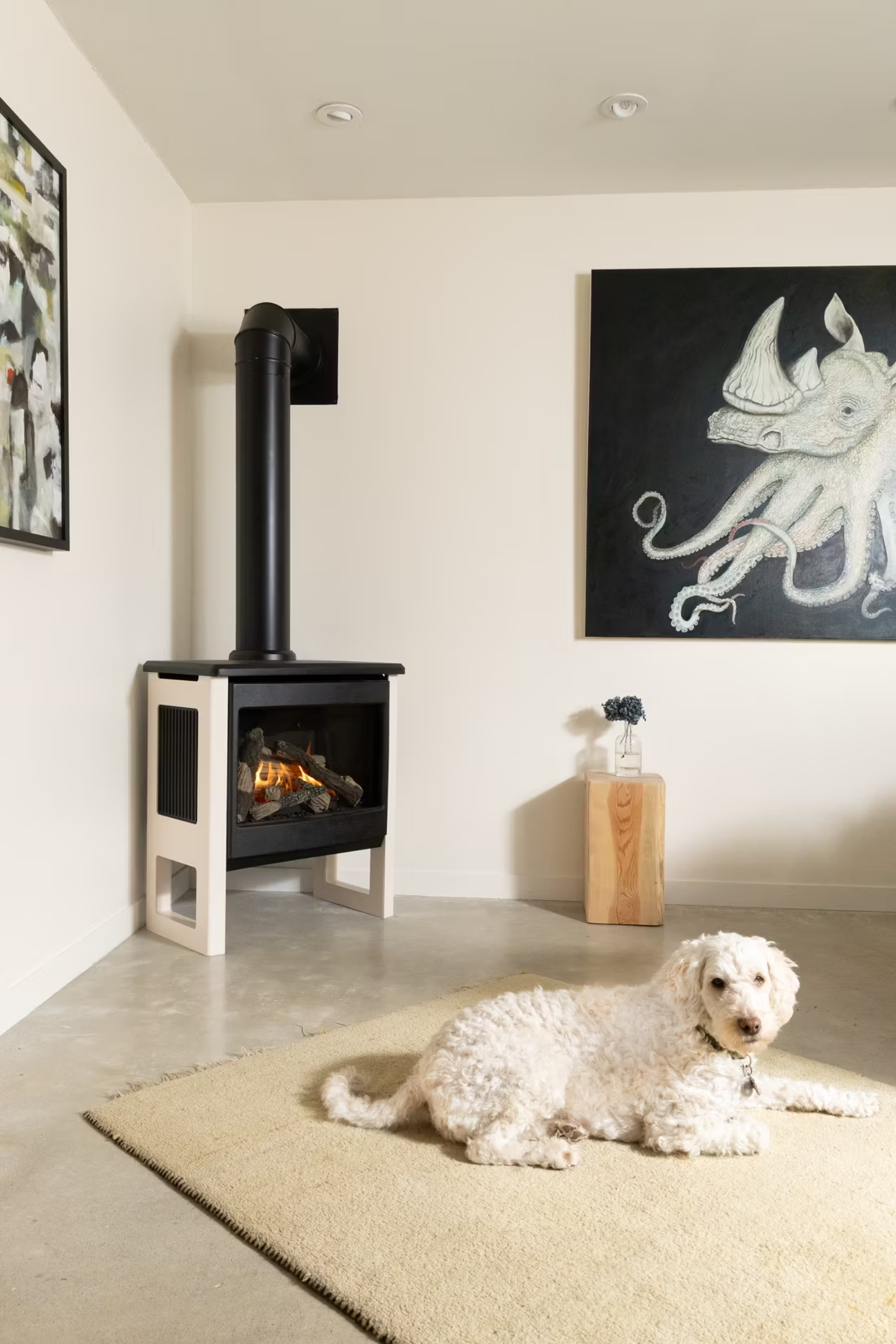
Three steps. No salesperson until you're ready.
Tell us about your project
Your zip code, your situation, and the fuel you're leaning toward—or let the answers point you to one.
See what's actually available
The brands dealers within 100 miles genuinely carry—real options, never a catalog mirage.
Get your dealer & Project Guide
A trusted local dealer, plus the free Project Guide & Parts List that names every component of the job.
Frequently Asked Questions
How much does a gas fireplace installation cost in Green Valley?
Most gas fireplace installations in Green Valley run between $3,500 and $8,500, with the low end covering a direct-vent insert going into an existing firebox where a propane line is already in place, and the high end covering new construction or a remodel that requires framing, venting, and a new gas line run. Because Green Valley is unincorporated, propane tank setup or resizing (if your home doesn't already have one servicing a range or water heater) can add to the cost. A local dealer will give you a firm number after an in-home look at your existing fireplace opening and fuel setup.
Is Green Valley served by natural gas, or is propane the standard fuel?
Propane is the standard fuel for most Green Valley homes. As an unincorporated Pima County community, Green Valley doesn't have the same natural gas main coverage you'd find closer to central Tucson, so the majority of gas fireplace installations here tie into an existing residential propane tank—often the same tank already feeding the water heater, range, or furnace. If your home is already set up for propane, adding a fireplace is a straightforward tie-in; if not, your installer coordinates with a local propane supplier for tank placement.
Does a gas fireplace even make sense in a climate this mild?
It does, but for a different reason than in colder states. With average winter lows around 36°F and a winter heating need that's light overall, a Green Valley home doesn't need a fireplace to survive winter the way a house in Bozeman, MT or Fargo, ND does. Most owners here install a gas fireplace for evening ambiance, comfort during the occasional January cold snap, and the resale appeal it adds in an active retirement community—not as a central heat source. That changes what "right-sized" means: a smaller, lower-BTU unit is usually plenty for a Green Valley great room.
Will my gas fireplace still work if the power goes out?
Yes, in most cases. Units with IPI (intermittent pilot ignition) run on a battery backup that kicks in automatically when power drops, which matters in Pima County during Arizona's monsoon season (July through September), when thunderstorms regularly knock out power in outlying areas served by cooperatives like Trico Electric. Valor fireplaces take a different approach—their on-demand pilot generates its own electricity through the thermocouple, so there's no battery to remember at all. Ask your local dealer which ignition system a given model uses.
What's the difference between a gas fireplace, insert, and stove?
A gas fireplace is a fully built-in unit framed into a wall, typically chosen for new construction or a remodel. A gas insert drops into an existing masonry or factory-built firebox and uses the same opening, which is common in Green Valley's older retirement-community homes that were built with a wood-style fireplace box the original owners never used much. A gas stove is freestanding and sits on the floor like a wood stove but runs on propane or natural gas. For most Green Valley homes with an existing fireplace opening, an insert is the simplest upgrade.
Do I need a permit to install a gas fireplace in Green Valley?
Yes. Because Green Valley is unincorporated, permitting runs through Pima County Development Services rather than a city building department. A gas line permit is required in addition to the building permit, and the gas work itself must be done by a licensed gas-fitter. Most local hearth dealers handle this paperwork as part of the installation, coordinating the permit, the propane tie-in, and the final inspection so you're not managing separate trades.
Vented vs. vent-free gas fireplaces—which is the better choice here?
Vent-free gas fireplaces are legal in Arizona, but given Pima County's non-attainment status for particulates and the winter inversions that settle over the Tucson basin, vented direct-vent units are the better fit for Green Valley. Direct-vent models draw combustion air from outside and exhaust it back outside through a sealed system, keeping combustion byproducts out of an already tightly sealed, energy-efficient retirement-community home. Most local dealers steer customers toward vented units for exactly this reason.
How often should a gas fireplace be serviced in a desert climate like this?
An annual inspection is recommended, and in Green Valley it's worth scheduling it in early fall—before the seasonal population swells with returning snowbirds in October and November. Fine desert dust can work its way into pilot assemblies and burner ports faster than in more humid climates, so units that sit unused during the hot summer months sometimes need a burner cleaning before their first fall lighting. A certified technician will also check gas connections and venting as part of the visit.
Gas vs. electric fireplace—which fits a Green Valley home better?
With wood and pellet appliances essentially absent from the Sonoran Desert market, the real local choice is between gas and electric. Electric fireplaces need no gas line, no venting, and no propane tank—just an outlet—which makes them a fit for smaller condos or manufactured homes in Green Valley's retirement communities, and they run on Trico Electric Cooperative or Tohono O'odham Utility Authority power at roughly $0.13–$0.14 per kWh locally. Gas delivers a more realistic flame and noticeably more radiant heat for a larger great room, which is why it tends to win out in single-family homes where ambiance and resale value matter. A local dealer can walk through both options against your actual room and budget.
Why is a fireplace insert so efficient?
An insert does two things: it seals the chimney completely, so you stop losing air you already paid to heat, and it radiates warmth into the room through the firebox and glass. Most add a heat-exchange fan that pulls cool room air underneath, wraps it around the hot firebox, and pushes it back out warm. Your home is more efficient before you've even lit the first fire.
Why is my open fireplace making my house colder?
Open fireplaces suck—literally. As the fire burns, it consumes air your furnace already paid to heat and pulls it out through the chimney, so the house is actually colder after the fire goes out than before you lit it. An insert fixes this: it seals the chimney, puts fixed glass across the front, and turns that hole in your house into a real heat source.
What is an in-home preview and do I need one?
It's a visit where a hearth professional measures your space, confirms the model you picked actually works in your home, and walks the specs—framing, gas line, venting, finish work—before anything is ordered. Some details you just can't know until you see the house. Never make a down payment without one; it's the single most-skipped step that burns buyers.
Does a fireplace add value to my home?
On average, a fireplace adds back to the home about the same amount you spent installing it. Add the monthly savings from heating the rooms you actually use instead of the whole house—often hundreds of dollars a year—and the value case is strong before you even count what a fire does for how your family uses the room.
Nearby Dealers
Hearth shops serving Green Valley and the surrounding area. Every listing shows whether it is a WhyFire partner, a dealer we have verified as authorized for the brands we recommend, or a local business carrying hearth products. No manufacturer pays for placement. How we verify dealers →
Earth Energy's Hearth & Patio
Find your gas fireplace in Green Valley.
Tell us about your home and we'll match you with a trusted local dealer and a free Project Guide & Parts List—the exact parts, vent kit, and recommended installer for your Green Valley gas fireplace project.
Find Your Fireplace →