
Keep Your Family Warm and Safe—No Matter What
Above Kachemak Bay, the heating season runs nine months long. Get matched with a local dealer who can size, permit, and install a stove that keeps up.
Every Project Starts From One of These Five Situations
Wood carries real weight when the season runs this long.
Diamond Ridge sits at just under 900 feet above Kachemak Bay outside Homer, in climate zone 7. Winter lows here average a relatively moderate 18°F thanks to maritime influence, but that mildness is deceptive—the heating season stretches from September into May, racking up 10,107 heating degree days a year, more than International Falls, Minnesota, the town that calls itself the Icebox of the Nation. It's not the coldest single night that matters here; it's the sheer number of months a stove needs to run.
There's no natural gas main out this way, and electricity from Homer Electric Association and Chugach Electric Association runs 21 to nearly 30 cents per kWh—among the highest residential rates in the state. That combination pushes wood from a supplemental comfort to a genuine primary heat source for a lot of Diamond Ridge homes. The Chugach National Forest issues cutting permits free of charge from May through September, and the Kenai Peninsula's mix of birch, spruce, and cottonwood—including plenty of beetle-killed spruce still standing from past infestations—keeps firewood accessible for anyone willing to cut and split their own. And with no air quality non-attainment designation out here, there's none of the burn-curtailment red tape that homeowners in places like Fairbanks or the Interior have to navigate.
Firewood Cutting Permits Near Diamond Ridge
Three steps. No salesperson until you're ready.
Tell us about your project
Your zip code, your situation, and the fuel you're leaning toward—or let the answers point you to one.
See what's actually available
The brands dealers within 100 miles genuinely carry—real options, never a catalog mirage.
Get your dealer & Project Guide
A trusted local dealer, plus the free Project Guide & Parts List that names every component of the job.
Frequently Asked Questions
How much does a wood stove installation cost near Diamond Ridge?
Expect to pay more here than the Lower 48 average—figure roughly $6,000 to $13,000 for a full installation, and the spread mostly comes down to freight. Class A chimney pipe, hearth pads, and the stove itself typically travel by barge or truck to Homer before reaching Diamond Ridge, and that shipping cost shows up in the final bill. New-construction installs without an existing chimney chase sit at the higher end once through-roof venting and a full stainless liner or pipe run are factored in. A local dealer serving the southern Kenai Peninsula can give you a firm number after seeing your home.
What size wood stove do I need for a home in Diamond Ridge?
With 10,107 heating degree days a year, most homes here need a stove sized for sustained, season-long output rather than occasional weekend use. Small cabins under 1,000 square feet can often get by on a compact stove, but many Diamond Ridge homes—especially older or under-insulated builds common on the Kenai Peninsula—do better with a medium to large stove rated for continuous heating, not just ambiance. Oversizing causes smoldering and creosote buildup; undersizing means you're still running electric baseboard at 25+ cents a kWh to make up the difference. A local dealer will size your space based on square footage, ceiling height, and insulation during an in-home visit.
Where can I find a certified wood stove installer near Diamond Ridge?
Look for NFI (National Fireplace Institute) or CSIA (Chimney Safety Institute of America) certification. Installers serving this stretch of the southern Kenai Peninsula are typically based out of Homer or Soldotna and travel out to Diamond Ridge and the surrounding ridge roads as part of their regular service area. Given how far freight and labor travel to reach this area, it's worth confirming your installer has handled rural, off-the-road-system installs before—venting and chimney work here often has to account for standing seam metal roofs and unconventional home construction that a big-box installer crew isn't set up for.
Should I get a freestanding wood stove or an insert?
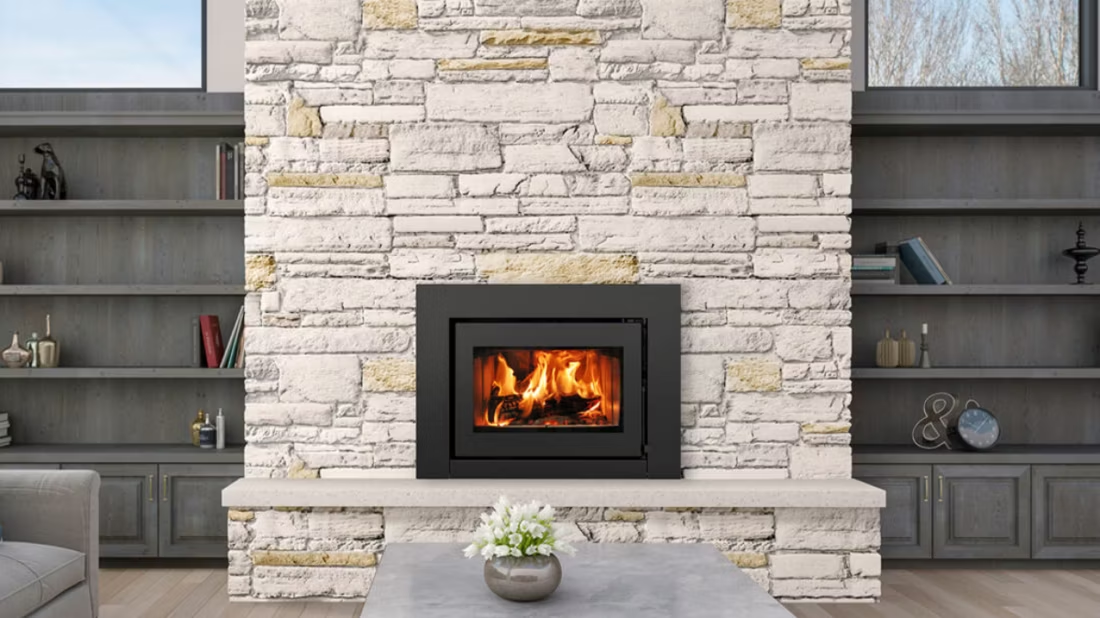
An insert only makes sense if you already have a masonry fireplace to slide it into, which is less common in this part of the Kenai Peninsula than in older Lower 48 housing stock—a lot of homes and cabins around Diamond Ridge were built without a masonry hearth at all. For those, a freestanding stove on a code-compliant hearth pad, vented through a Class A chimney, is the more typical and often more straightforward install. If your home does have an existing masonry fireplace, though, an insert reuses that chimney and can meaningfully boost the heat output over an open hearth.
Do I need a permit to install a wood stove near Diamond Ridge?
Diamond Ridge is unincorporated and outside Homer's city limits, and the Kenai Peninsula Borough does not enforce a borough-wide building code in most unincorporated areas—so formal permitting requirements can be lighter here than in the city of Homer itself. That doesn't mean clearances and venting don't matter: your homeowner's insurance and the stove manufacturer's listed clearances still apply, and an EPA-certified stove installed to spec is what keeps both your insurance and your warranty valid. If you're inside Homer city limits, check with the City of Homer building department directly, since requirements differ there. Either way, a reputable local dealer will install to code regardless of what's formally required.
What's the best wood stove for a climate like this?
For a heating season this long, a catalytic stove—Blaze King is the name that comes up most for cold-climate, long-burn performance—is worth serious consideration. Catalytic models can hold a low, steady burn for 20+ hours on a load of dense birch, which matters when you're heating through a nine-month season rather than a few cold snaps. Spruce and cottonwood burn hotter and faster and are fine for shoulder-season use or mixed loads, but birch is the wood locals reach for on the coldest, longest nights. A local dealer can match stove size and burn technology to your actual wood supply.
How often should my chimney be inspected out here?
Once a year, minimum, and ideally before the season starts in September. If your wood mix leans heavily on spruce—which is resinous and produces more creosote than birch—you may want a mid-season check partway through the winter, especially in a home burning wood as primary heat for nine months straight. The CSIA recommends annual inspections for any wood-burning appliance regardless of climate, but the length of the burn season here makes it less optional than in milder parts of the country.
Where can I get firewood near Diamond Ridge?
Many residents cut their own through the Chugach National Forest's cutting permit program, which runs free of charge from May through September—a real cost advantage given how expensive freight-in heating alternatives are out here. Birch is the most sought-after species for heat value, spruce (including plentiful beetle-killed standing timber) is abundant and easy to source, and cottonwood is common but burns fast and is better mixed in than relied on alone. For those who'd rather buy than cut, local sellers around Homer typically sell birch and mixed cordwood, though supply and pricing can vary season to season—worth asking your local hearth dealer who they'd recommend.
Wood vs. pellet stove—which makes more sense in Diamond Ridge?
Wood has two real advantages here: it works without electricity, which matters given how storms on the outer Kenai Peninsula can knock out power for days, and it can be sourced for free through Forest Service permits. Pellet stoves—using regional brands like Superior Pellet Fuels or Lignetics—are easier to load and run cleaner, but they need electricity to run the auger and blower, so they go dark in the same outage that a wood stove keeps burning through. Pellets also have to be trucked or barged in like everything else out here, adding cost on top of the per-ton price. For primary heat in a place where the power grid and the weather don't always cooperate, wood tends to be the more resilient choice; pellet stoves work best as a low-maintenance supplement in homes with reliable power.
Why is a fireplace insert so efficient?
An insert does two things: it seals the chimney completely, so you stop losing air you already paid to heat, and it radiates warmth into the room through the firebox and glass. Most add a heat-exchange fan that pulls cool room air underneath, wraps it around the hot firebox, and pushes it back out warm. Your home is more efficient before you've even lit the first fire.
Why won't my new wood stove get going like my old one?
New wood stoves are 70%+ efficient, so far less heat goes up the flue—which also means less draft to get a fire established. The rule: build a genuinely hot fire for about 45 minutes before you choke it down. Skip that and you get smoke in the room, creosote in the chimney, and a fire that never takes off. Most performance complaints trace straight back to this.
Does a fireplace add value to my home?
On average, a fireplace adds back to the home about the same amount you spent installing it. Add the monthly savings from heating the rooms you actually use instead of the whole house—often hundreds of dollars a year—and the value case is strong before you even count what a fire does for how your family uses the room.
What is an in-home preview and do I need one?
It's a visit where a hearth professional measures your space, confirms the model you picked actually works in your home, and walks the specs—framing, gas line, venting, finish work—before anything is ordered. Some details you just can't know until you see the house. Never make a down payment without one; it's the single most-skipped step that burns buyers.
Nearby Dealers
Hearth shops serving Diamond Ridge and the surrounding area. Every listing shows whether it is a WhyFire partner, a dealer we have verified as authorized for the brands we recommend, or a local business carrying hearth products. No manufacturer pays for placement. How we verify dealers →
Find your wood stove near Diamond Ridge.
Tell us about your home and heating season, and we'll match you with a trusted local dealer plus a free Project Guide & Parts List—the stove, venting, and hearth parts sized for your Diamond Ridge home.
Find Your Fireplace →