
Add Warmth and Ambiance to Your Diamond Ridge Home.
No venting, no chimney, no wood to split—just clean, targeted heat and a real flame look for the rooms that need it most. Find the right unit and connect with a trusted local dealer.
Every Project Starts From One of These Five Situations
A clean, no-hassle complement to wood heat.
Diamond Ridge sits above Kachemak Bay on the southern Kenai Peninsula at 877 feet, in climate zone 7—true subarctic conditions with a winter heating load in the same range as International Falls, Minnesota. Winter lows average 18°F, with much colder snaps common through the dark months. That kind of heating demand is why almost every home here runs a wood stove or oil furnace as primary heat, with electric appliances filling a supporting role rather than carrying the whole house.
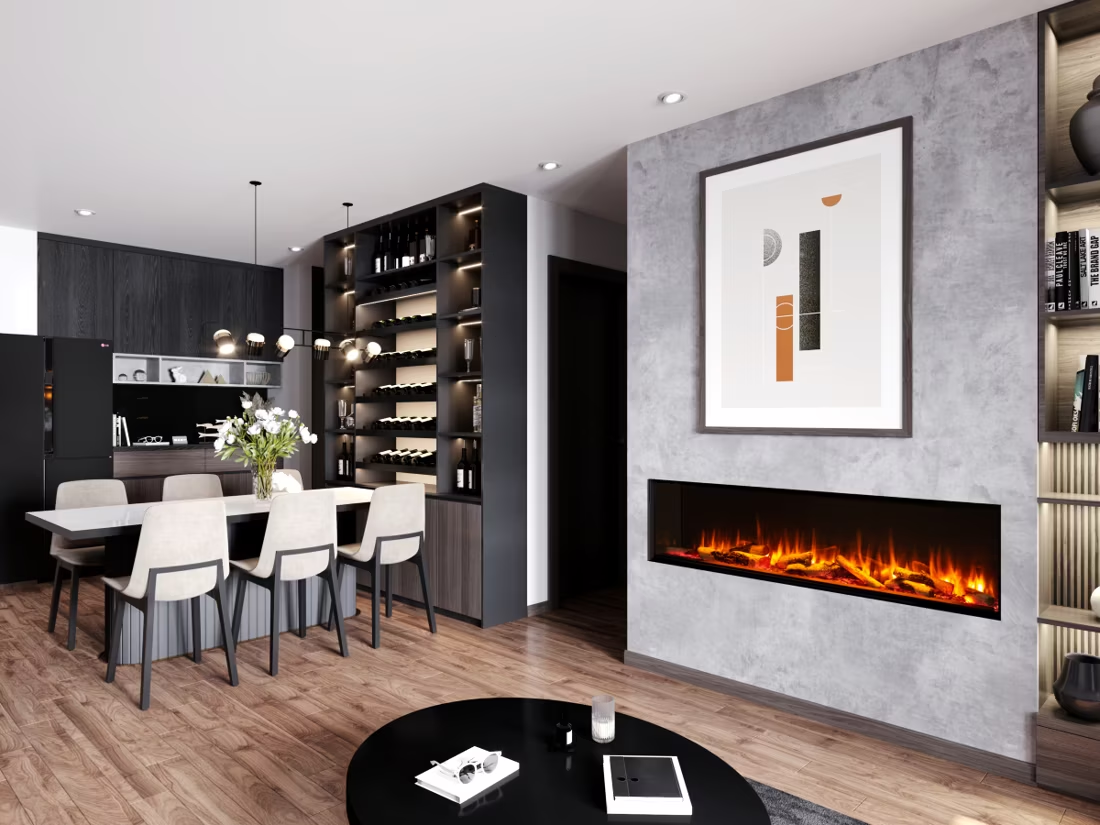
Power comes from Homer Electric Association or Chugach Electric Association depending on where you sit in Diamond Ridge, at roughly $0.2979 and $0.2124 per kWh respectively—both well above the national average, which makes whole-home electric heating impractical for most families here. What works instead is a well-placed electric fireplace or insert used for zone heat in a living room, bedroom, or addition, paired with birch, spruce, or cottonwood burned in the primary stove. No ash, no venting, and a flame that looks convincing even when the wood stove is doing the real work in the next room.
Three steps. No salesperson until you're ready.
Tell us about your project
Your zip code, your situation, and the fuel you're leaning toward—or let the answers point you to one.
See what's actually available
The brands dealers within 100 miles genuinely carry—real options, never a catalog mirage.
Get your dealer & Project Guide
A trusted local dealer, plus the free Project Guide & Parts List that names every component of the job.
Frequently Asked Questions
How much does an electric fireplace installation cost in Diamond Ridge?
Electric units are the least expensive hearth option by a wide margin because there's no venting or gas line to run. A plug-in insert or mantel package typically installs for $300 to $1,200, mostly labor for framing and a dedicated outlet if one isn't already in place. A built-in wall unit with a custom surround runs higher, often $2,000 to $4,000, depending on cabinetry work. Compare that to a wood stove install on the Kenai Peninsula, which commonly runs several thousand dollars once chimney work is included—it's part of why electric is popular as a second heat source rather than a first one.
Can an electric fireplace actually heat my whole home in Diamond Ridge's climate?
Not realistically, and any honest local dealer will tell you the same. With a winter heating load similar to International Falls, Minnesota—one of the coldest inhabited places in the Lower 48—Diamond Ridge asks a lot of any heater. Electric fireplaces are built for zone heat, typically 400 to 1,500 square feet at most, and at Homer Electric's roughly $0.30/kWh rate, running one as your only heat source through a Kenai Peninsula winter would be expensive. Most Diamond Ridge homes use wood or oil for the bulk of the season and add an electric unit for a specific room or for supplemental warmth on shoulder-season days.
What does it actually cost to run an electric fireplace here?
A typical electric fireplace draws about 1,500 watts on the heat setting. At Homer Electric Association's residential rate of roughly $0.2979/kWh, that's about 45 cents an hour; at Chugach Electric's roughly $0.2124/kWh, closer to 32 cents an hour. Running one for a few hours each evening in a bedroom or den adds a modest amount to a monthly bill—a fraction of what heating that same space with baseboard electric would cost over an entire Kenai Peninsula winter.
Will my electric fireplace work during a power outage?
No—electric fireplaces require grid power or a generator to run, full stop. This matters in Diamond Ridge, where winter storms off Kachemak Bay can knock out power for hours or longer. It's the main reason most homes here keep a wood stove or oil furnace as the backup heat source of record, with the electric unit reserved for convenience and ambiance when the power is on. If backup heat during outages is a priority, ask a local dealer about pairing your electric fireplace with a wood stove rather than relying on electric alone.
Do I need a permit to install an electric fireplace in Diamond Ridge?
Usually not for a plug-in insert or freestanding unit—those simply need a standard outlet and don't typically trigger a building permit. A built-in wall unit that requires new framing or a dedicated circuit may need an electrical permit through the Kenai Peninsula Borough, and any new circuit work should be done by a licensed electrician regardless of permit requirements. This is a much lighter permitting process than wood stove installs in the borough, which involve chimney and clearance inspections.
What type of electric fireplace works best for a Diamond Ridge home?
For supplemental heat in a living room or primary bedroom, a built-in wall unit or a insert sized for an existing fireplace opening gives the most heat output and the most convincing flame effect. For additions, garages, or rooms without an existing hearth, a freestanding electric stove-style unit is an easy retrofit with no construction required. Given how much of the season Diamond Ridge homes spend heating with wood, most homeowners choose electric units for rooms that are hard to reach with the wood stove's heat—a converted bedroom over the garage, a sunroom, or a finished basement.
Electric vs. wood—which should carry the heat load in my home?
Wood is what actually gets most Diamond Ridge homes through winter: birch, spruce, and cottonwood are the common local species, and cutting permits through Chugach National Forest are free from May through September, which keeps fuel costs down for anyone willing to cut and split their own. Wood also keeps working during power outages, which electric can't. Electric fireplaces earn their place for rooms where running a stovepipe isn't practical, for renters who can't modify a chimney, or simply for the clean, no-mess flame effect in a main living space. Most homes here end up with both—wood doing the heavy lifting, electric filling in the gaps.
Electric vs. pellet stove—which makes more sense here?
Both require electricity to operate—a pellet stove needs power to run its auger and blower, so like an electric fireplace, it goes dark in an outage unless it's on a generator. Pellet stoves from regional suppliers like Superior Pellet Fuels or Lignetics burn hotter and can serve as genuine supplemental or even primary heat in a well-insulated space, while electric fireplaces are lower-output and better suited to ambiance and light zone heat. If you want real heat output without splitting wood, pellet is the closer substitute; if you mainly want the look and feel of a fire with minimal upkeep, electric is simpler to own.
How much maintenance does an electric fireplace need?
Very little, which is part of the appeal for a Diamond Ridge household already managing a wood stove and firewood supply. Electric units need occasional dusting of the heater vents, periodic cleaning of the glass front, and eventually a bulb or LED module replacement as the flame-effect light source ages—usually every few years of regular use. There's no chimney to sweep, no creosote to manage, and no ash to haul out, which is exactly why many homeowners here add one for the rooms where they don't want to deal with wood at all.
Can I put a TV above my fireplace?
Yes—with an asterisk. Fireplaces are hot and TVs don't like heat. Either put a mantel between them to deflect rising warmth, or choose a fireplace with heat-management technology that creates a cool zone on the wall above—the wall stays around 125 degrees, barely warm, while the room still gets full heat. If you like clean lines and don't want a mantel, heat management is the answer.
Do electric fireplaces actually produce heat?
Yes—most put out around 4,800–5,000 BTUs from a standard outlet, which comfortably warms a bedroom, office, or den as a comfort-zone heater. What they won't do is carry a whole house the way wood, gas, or pellet can. Think of electric as ambiance-first with honest supplemental heat: flames on with no heat in July, flames plus warmth in January.
Can I install a fireplace myself?
If you're putting a fire in your house on purpose, it's best to work with an expert. Unless you're genuinely experienced in framing, gas line, vent pipe, and the national code on clearances to combustibles, have a professional do it—and ideally the same company that sells you the fireplace, so warranty, service, and liability all live under one roof.
What is an in-home preview and do I need one?
It's a visit where a hearth professional measures your space, confirms the model you picked actually works in your home, and walks the specs—framing, gas line, venting, finish work—before anything is ordered. Some details you just can't know until you see the house. Never make a down payment without one; it's the single most-skipped step that burns buyers.
Nearby Dealers
Hearth shops serving Diamond Ridge and the surrounding area. Every listing shows whether it is a WhyFire partner, a dealer we have verified as authorized for the brands we recommend, or a local business carrying hearth products. No manufacturer pays for placement. How we verify dealers →
Electric Service in Diamond Ridge
An electric fireplace's heater draws about 1,500 watts—pennies per hour at local rates.
Homer Electric Assn Inc
Chugach Electric Assn Inc
Find your electric fireplace in Diamond Ridge.
Tell us a bit about your home and we'll match you with the right electric fireplace or insert for your space—and connect you with a trusted local dealer who knows what actually holds up through a Kenai Peninsula winter.
Find Your Fireplace →