
Keep Your Family Warm and Safe—No Matter What
With 11,238 heating degree days and winters that run from September to May, wood heat is more than ambiance here—it's a backup plan when the grid goes down. Find the right stove or insert for your home, and connect with a trusted local dealer.
Every Project Starts From One of These Five Situations
Here, wood is survival heat—not just ambiance.
The Kenai Peninsula Borough stretches from Seward on the Gulf of Alaska to Homer on Kachemak Bay, with Kenai, Soldotna, Sterling, Cooper Landing, and Ninilchik in between—a subarctic Zone 7 climate with 11,238 heating degree days, colder over a full winter than International Falls, Minnesota. The average winter low sits around 5°F, but inland communities like Sterling and Cooper Landing regularly see colder snaps, and the heating season stretches from September clear through May. That's a long stretch to keep a house warm, and it's a long stretch for a stove to earn its keep.
Birch, spruce, and cottonwood are the wood species most Kenai Peninsula homeowners burn, much of it cut under free Forest Service permits on Chugach National Forest land between May and September. Unlike many wood-burning regions, the borough has no air quality non-attainment designation and no seasonal burn curtailment periods—so a certified stove here isn't fighting local burn bans the way one might in a valley with winter inversion problems. Add in a rural power grid that can go down for hours or days during a coastal storm, and it's easy to see why so many peninsula homes keep a wood stove running as backup heat, not just a fireplace for looks.
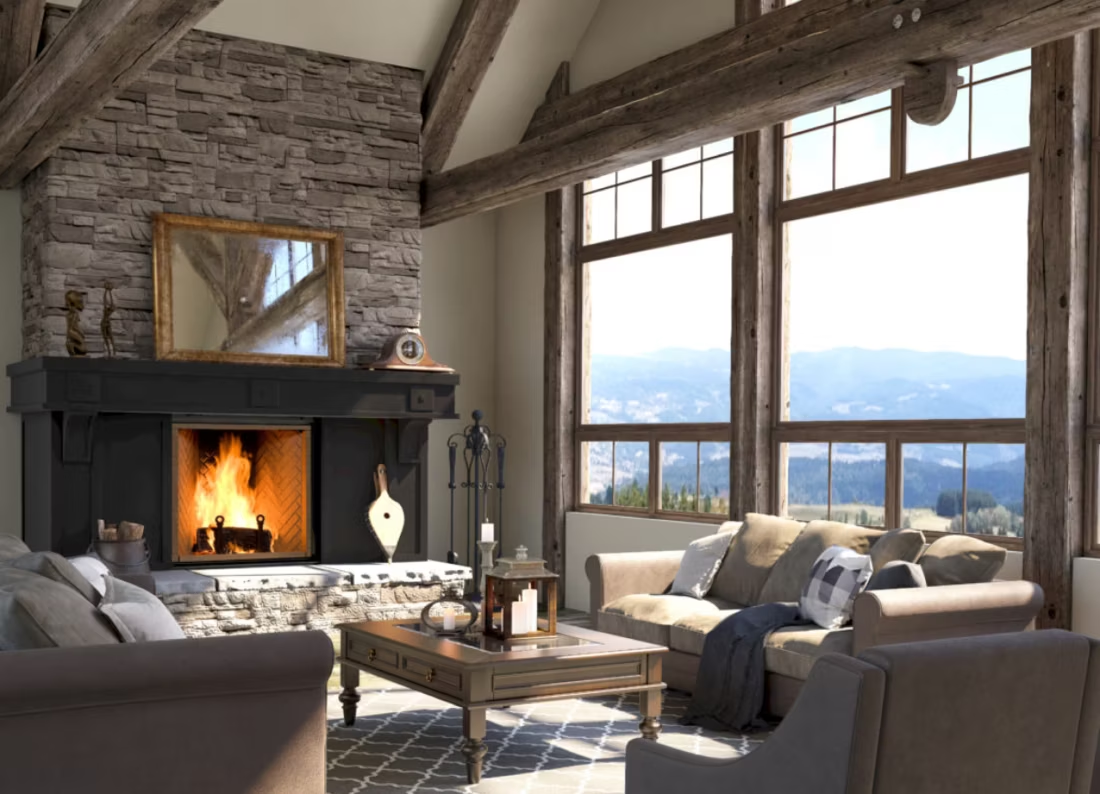
Firewood Cutting Permits Near Kenai Peninsula County
Three steps. No salesperson until you're ready.
Tell us about your project
Your zip code, your situation, and the fuel you're leaning toward—or let the answers point you to one.
See what's actually available
The brands dealers within 100 miles genuinely carry—real options, never a catalog mirage.
Get your dealer & Project Guide
A trusted local dealer, plus the free Project Guide & Parts List that names every component of the job.
Frequently Asked Questions
How much does a wood stove installation cost on the Kenai Peninsula?
Most wood stove installations on the Kenai Peninsula run in the $4,000 to $9,500 range, depending on the stove model, whether new Class A chimney pipe is needed, and hearth pad requirements for code compliance. Homes near the coast in Homer or Seward sometimes spec corrosion-resistant chimney components given the marine climate, while inland installs in Sterling or Cooper Landing may need additional site prep for permafrost or fill conditions. New construction or homes without an existing chimney chase run higher once full through-roof venting is factored in. Remote communities off the Sterling Highway can also see a delivery or travel surcharge added to the install quote.
What size wood stove do I need for a Kenai Peninsula home?
With 11,238 heating degree days, sizing tends to run larger here than in most of the Lower 48—a stove rated for a mild climate will struggle through a full peninsula winter. Small stoves (up to 1,000 sq ft) suit a cabin or single room; medium stoves (1,000–2,000 sq ft) cover most main living areas in Kenai or Soldotna homes; large stoves (2,000+ sq ft) are common for whole-home heating in less-insulated older construction. Homes at higher elevation or further from the coast, like those around Cooper Landing, typically need to size up compared to a similar-sized home in Kenai or Homer. A local dealer will size your space based on square footage, insulation, and whether the stove is primary or backup heat.
Where can I find certified wood stove installers near me?
Look for NFI (National Fireplace Institute) or CSIA (Chimney Safety Institute of America) certification—both indicate specific training in wood-burning appliance clearances and venting. Certified hearth retailers serving the borough are concentrated around Soldotna and Kenai, with some coverage extending to Homer and Seward; expect a travel charge for installs further out along the Sterling Highway or down toward Ninilchik. Because Kenai Peninsula winters are unforgiving on improperly installed chimney systems—creosote buildup happens faster with a long burn season—this is not a project for a general handyman. Stick with an installer who carries manufacturer-specific training on the unit you're buying.
What's the difference between a wood stove and a wood insert?
A wood stove is freestanding, sits on a hearth pad, and can be placed almost anywhere clearances allow—a common choice for cabins and additions across the peninsula. A wood insert fits into an existing masonry fireplace, turning a drafty open hearth into a sealed, high-efficiency heat source using the chimney you already have. For older Kenai or Homer homes built with a traditional fireplace, an insert is often the better upgrade since it reuses existing masonry. For new construction, additions, or homes with no chimney chase, a freestanding stove is usually simpler to install.
Do I need a permit to install a wood stove on the Kenai Peninsula?
New wood stove installations require a building permit through the Kenai Peninsula Borough (or the relevant city building department if you're inside Kenai, Soldotna, Homer, or Seward city limits), and the stove must meet current EPA emissions standards. Most local installers handle this paperwork as part of the install. Unlike many wood-burning regions in the Lower 48, the peninsula has no winter inversion non-attainment designation, so there are no seasonal burn curtailment periods to work around—you can run a certified stove through the full heating season without a Yellow or Red air-quality alert shutting it down.
What's the best wood stove for Kenai Peninsula winters?
With 11,238 heating degree days and a burn season that runs September through May, catalytic stoves from brands like Blaze King are worth a look—they can hold a fire 20+ hours on a load, which matters on the long, dark nights typical here. Birch is the dominant local firewood species and burns hot with good heat output; spruce lights easily but burns faster and leaves more resin-related creosote, so more frequent chimney checks are worth planning for if spruce makes up most of your woodpile. For homes used as backup heat during power outages, prioritize a model that doesn't rely on electric blowers to move heat.
How often should my chimney be inspected and cleaned?
The CSIA recommends an annual inspection for any wood-burning appliance, and on the Kenai Peninsula that's especially worth sticking to given how long the burn season runs—September into May for most households. Homes burning spruce heavily should watch creosote buildup more closely than birch-only burners, since spruce's resin content tends to accelerate deposits. Plan the sweep for late summer, before the first cold snap, and consider a mid-season check if you're burning as primary heat rather than backup.
Where can I get firewood on the Kenai Peninsula?
Cutting permits for personal-use firewood on Chugach National Forest land are free and valid May through September—a significant advantage over regions where cutting permits run $20 or more per cord. Birch, spruce, and cottonwood are the species most commonly cut locally. For homeowners who'd rather buy split and seasoned wood, local sellers around Soldotna, Kenai, and Homer typically price by the cord, with delivery surcharges for more remote spots like Ninilchik, Seward, or the Sterling Highway corridor. Given how long the heating season runs here, many households plan their wood supply well ahead of the first frost rather than buying as they go.
Wood stove vs. pellet stove—which is right for me?
Wood stoves run without electricity, which matters on the Kenai Peninsula where coastal storms can knock out power for hours or days—a wood stove keeps working as backup heat when a pellet stove's auger and blower can't. Wood also pairs naturally with the free Chugach National Forest cutting permits many peninsula households already use. Pellet stoves, stocked locally with brands like Superior Pellet Fuels and Lignetics, offer more convenient day-to-day operation—load the hopper, set the thermostat, less ash—but they need reliable grid power to run. For most peninsula homes, especially those outside city limits where outages are more common, wood remains the more resilient choice; pellet tends to suit in-town homes prioritizing convenience over storm resilience.
Why is my open fireplace making my house colder?
Open fireplaces suck—literally. As the fire burns, it consumes air your furnace already paid to heat and pulls it out through the chimney, so the house is actually colder after the fire goes out than before you lit it. An insert fixes this: it seals the chimney, puts fixed glass across the front, and turns that hole in your house into a real heat source.
Why won't my new wood stove get going like my old one?
New wood stoves are 70%+ efficient, so far less heat goes up the flue—which also means less draft to get a fire established. The rule: build a genuinely hot fire for about 45 minutes before you choke it down. Skip that and you get smoke in the room, creosote in the chimney, and a fire that never takes off. Most performance complaints trace straight back to this.
Can I install a fireplace myself?
If you're putting a fire in your house on purpose, it's best to work with an expert. Unless you're genuinely experienced in framing, gas line, vent pipe, and the national code on clearances to combustibles, have a professional do it—and ideally the same company that sells you the fireplace, so warranty, service, and liability all live under one roof.
Can a fireplace actually lower my heating bill?
Yes—by creating a comfort zone. A furnace heats every square foot of the house just to warm the one room you're in; a gas fireplace on low burns roughly a sixth of the gas a typical furnace does. Set the furnace around 55–60 degrees as a baseline, then heat the rooms your family actually uses. Families who heat this way commonly save $20–$60 a month.
Stove and Fireplace Dealers in Kenai Peninsula County
Listings include WhyFire partner dealers, dealers we have verified as authorized for the brands we recommend, and established local businesses that carry hearth products. Every listing shows which one it is. The ones marked Preferred run on WhyFire's software, so they can show you real pricing and book your appointment right here. No manufacturer pays for placement. How we verify dealers →
Find your wood stove on the Kenai Peninsula.
Tell us about your home and heating goals, and we'll match you with a trusted local Kenai Peninsula dealer and send over a free Project Guide & Parts List—sized for your space, with the vent kit and install specifics already worked out.
Find Your Fireplace →