
Built for the Kenai Peninsula's long, dark winters.
Wood, gas, pellet, and electric fireplace resources for every community on the peninsula—from Kenai and Soldotna to Homer, Seward, Sterling, and Nikiski. Get matched with a trusted local hearth dealer who knows what actually holds up here.
Every Project Starts From One of These Five Situations
Heating a borough colder than International Falls, MN.
The Kenai Peninsula Borough runs from the glaciers of the Chugach Mountains down through Soldotna, Kenai, and Homer to the fishing town of Seward—a Zone 7 climate with an average winter low of 5°F and 11,238 heating degree days a year, more than International Falls, MN, the self-proclaimed 'Icebox of the Nation.' Heating season stretches from September through May at sea level and longer at elevation. Birch, spruce, and cottonwood are the dominant firewood species, and Chugach National Forest issues personal-use firewood permits for residents who cut their own—a tradition that keeps wood stoves and inserts common from Sterling to Nikiski.
This hub rolls up every hearth resource across the borough—retailers, service techs, and fuel suppliers—covering Kenai, Soldotna, Homer, Seward, Sterling, Nikiski, Kasilof, and the smaller communities strung along the Sterling and Seward Highways. Pick your fuel below to see local dealers, typical installed costs, and the units built to hold a fire through an Alaska winter. Whether you're heating a homestead outside Ninilchik or a cabin near Moose Pass, this is where to start.
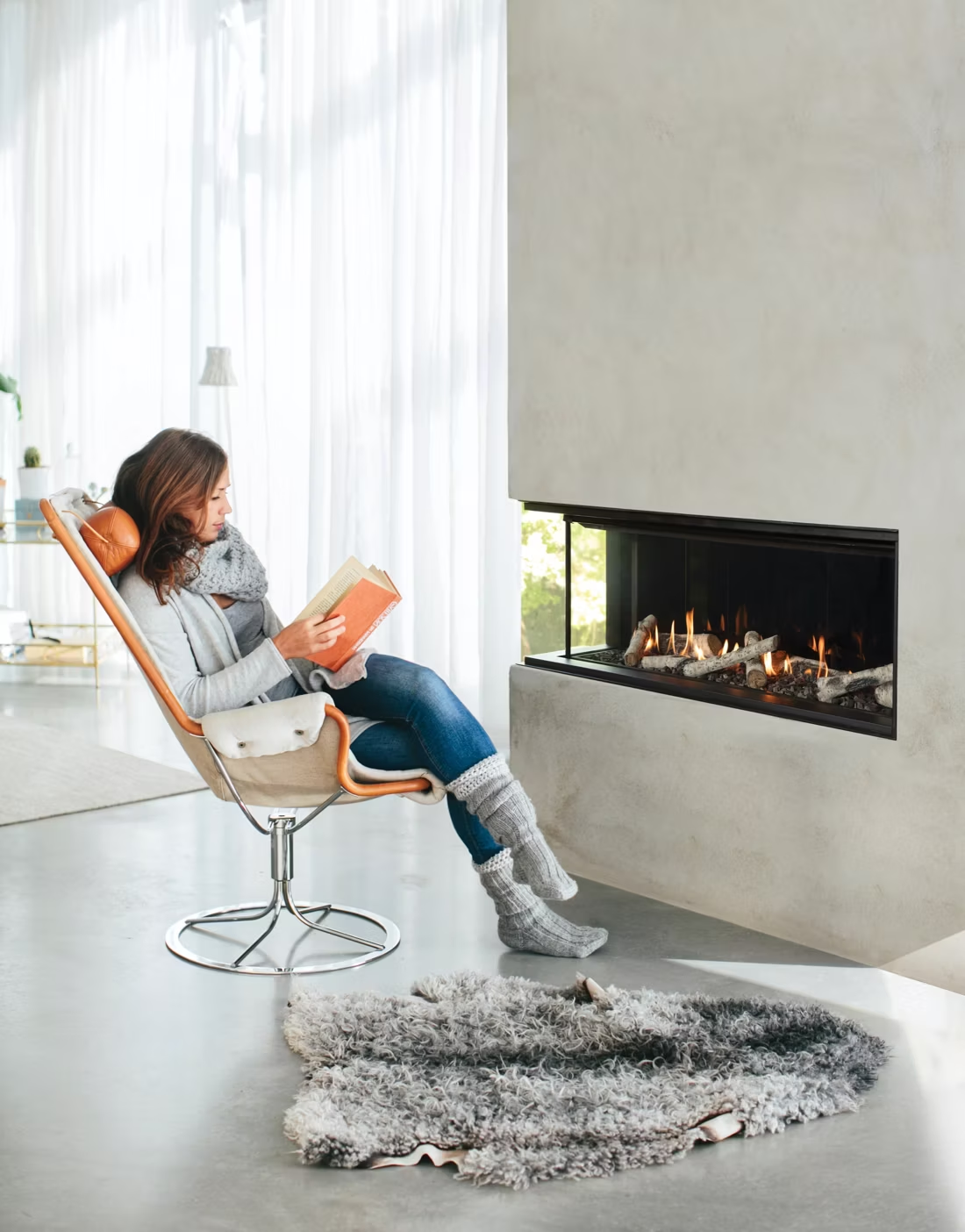
Four fuels. One honest answer for Kenai Peninsula County.
Wood
69 models available near Kenai Peninsula County.
Find your wood stove →Gas
104 models available near Kenai Peninsula County.
Find your gas fireplace →Pellet
See what's available near Kenai Peninsula County.
Find your pellet stove →Electric
See what's available near Kenai Peninsula County.
Find your electric fireplace →Three steps. No salesperson until you're ready.
Tell us about your project
Your zip code, your situation, and the fuel you're leaning toward—or let the answers point you to one.
See what's actually available
The brands dealers within 100 miles genuinely carry—real options, never a catalog mirage.
Get your dealer & Project Guide
A trusted local dealer, plus the free Project Guide & Parts List that names every component of the job.
Frequently Asked Questions
Which fireplace fuel makes the most sense on the Kenai Peninsula?
It depends on the home and how remote it is. Wood is still the backbone of peninsula heating—birch and spruce are abundant, Chugach National Forest issues personal-use cutting permits, and a well-run wood stove keeps a home warm through an outage on the Sterling Highway corridor, where storms can knock out power for days. Gas is the convenience option, especially where propane delivery is reliable or, in the Kenai-Soldotna area, where limited natural gas service is available—instant heat with none of the wood-splitting labor. Pellet stoves are a solid middle ground: Superior Pellet Fuels and Lignetics both distribute into the region, so fuel supply isn't the issue it can be in more remote parts of Alaska. Electric fireplaces, powered through Homer Electric Association's grid, work well as supplemental heat in bedrooms or add-on rooms but aren't a realistic primary heat source given how far winter lows can drop. Most peninsula homes end up running two fuels—wood or pellet as the workhorse, gas or electric for secondary spaces.
Do I need a permit to install a fireplace or stove on the Kenai Peninsula?
In most cases, yes, though the process depends on where on the peninsula you live. Inside the incorporated cities—Kenai, Soldotna, Homer, Seward—building permits are handled through the city's own building department; in unincorporated areas like Sterling, Nikiski, and Kasilof, permits run through the Kenai Peninsula Borough. Gas installations typically require a separate permit and a licensed gas fitter for the line work, whether you're on propane or in one of the limited natural-gas-served areas near Kenai and Soldotna. Electric fireplaces usually skip the permit process unless the installation involves new wiring or a dedicated circuit. Most local hearth retailers handle the permit paperwork as part of the installation, so it's rarely something homeowners have to navigate alone.
Are there any wood-burning restrictions on the Kenai Peninsula?
Not currently, and that sets the peninsula apart from interior Alaska. Fairbanks and other interior basins deal with serious winter wood-smoke non-attainment problems because cold air gets trapped with no ocean influence to move it. The Kenai Peninsula's exposure to Cook Inlet and the Gulf of Alaska keeps air moving in a way that prevents the kind of smoke buildup that triggers formal burn advisories elsewhere in the state. That doesn't mean burning technique doesn't matter—seasoned birch and spruce, split and dried for a full season, burn cleaner and hotter than green wood, and it's worth checking moisture content before you stack a winter's supply.
Do peninsula hearth retailers typically carry more than one fuel type?
Most do, since heating needs on the Kenai Peninsula are rarely single-fuel. A dealer that stocks wood stoves for the Sterling Highway crowd will usually also carry pellet stoves and at least one gas line, since customers routinely ask about backup heat for power outages. Electric fireplace selection tends to be thinner and more focused on smaller wall-mount and insert units for secondary rooms. The retailer directory above notes each dealer's specific fuel lineup, so you can see at a glance who carries what before driving out to Soldotna or Kenai for a showroom visit.
How does hearth service work in more remote parts of the peninsula?
Most service technicians are based in the Kenai-Soldotna corridor and travel the Sterling and Seward Highways to reach outlying communities—Cooper Landing, Moose Pass, Ninilchik, and points further out. Seldovia, which has no road connection to the rest of the peninsula, is a special case—service typically requires ferry or small-plane coordination, so appointments there need to be scheduled well in advance. Expect a travel fee for calls outside the Kenai-Soldotna-Homer triangle, and expect longer lead times in winter when road conditions on the Sterling Highway can slow travel. Scheduling annual service in late summer or early fall, before the first hard cold hits, is the most reliable way to avoid a midwinter wait.
What does fireplace installation typically cost on the Kenai Peninsula, across fuel types?
Costs run somewhat higher than the Lower 48 average, largely due to shipping and freight into Alaska. Wood stove or insert installation: roughly $5,000–$10,000 for a typical install, more for a full chimney run in new construction. Gas fireplace, insert, or stove: roughly $5,000–$12,000, with cost driven heavily by whether propane tank and line work is already in place. Pellet stove or insert: roughly $5,000–$8,500. Electric fireplace: $300–$3,500 for the unit, plus $400–$1,200 in labor for anything beyond a plug-and-play wall unit. The county + fuel pages above break these down further with detail tied to local retailer pricing.
Does a fireplace add value to my home?
On average, a fireplace adds back to the home about the same amount you spent installing it. Add the monthly savings from heating the rooms you actually use instead of the whole house—often hundreds of dollars a year—and the value case is strong before you even count what a fire does for how your family uses the room.
Can a fireplace actually lower my heating bill?
Yes—by creating a comfort zone. A furnace heats every square foot of the house just to warm the one room you're in; a gas fireplace on low burns roughly a sixth of the gas a typical furnace does. Set the furnace around 55–60 degrees as a baseline, then heat the rooms your family actually uses. Families who heat this way commonly save $20–$60 a month.
Can I install a fireplace myself?
If you're putting a fire in your house on purpose, it's best to work with an expert. Unless you're genuinely experienced in framing, gas line, vent pipe, and the national code on clearances to combustibles, have a professional do it—and ideally the same company that sells you the fireplace, so warranty, service, and liability all live under one roof.
Wood, gas, pellet, or electric—how do I choose?
Match the fuel to your life, not the other way around. Wood: lowest fuel cost and total power-outage independence, but you're hauling and stacking. Gas: press a button, set a thermostat, no maintenance to speak of. Pellet: wood economics with automatic feeding, in exchange for weekly cleaning and a need for electricity. Electric: plugs in anywhere with honest supplemental heat. Nobody regrets the fuel that fits how they actually live.
Stove and Fireplace Dealers in Kenai Peninsula County
Listings include WhyFire partner dealers, dealers we have verified as authorized for the brands we recommend, and established local businesses that carry hearth products. Every listing shows which one it is. The ones marked Preferred run on WhyFire's software, so they can show you real pricing and book your appointment right here. No manufacturer pays for placement. How we verify dealers →
Find your fireplace for the Kenai Peninsula.
Pick your fuel below, get matched with a trusted local dealer, and request your free Project Guide & Parts List—the exact parts, vent kit included, and the dealer we recommend for your project.
Find Your Fireplace →