
Keep Your Family Warm and Safe—No Matter What
At 6,157 feet on the high plains outside Cheyenne, Ranchettes sees average winter lows around 18°F and a long, demanding heating season that runs nearly the whole year. Find the right wood stove or insert, and connect with a trusted local dealer.
Every Project Starts From One of These Five Situations
High plains cold calls for real heat.
Ranchettes sits unincorporated in Laramie County, just outside Cheyenne, on open high-plains terrain at over 6,100 feet. That elevation, combined with near-constant Wyoming wind, means wind chill regularly outpaces the thermometer, and homes here—many on larger acreage with older or manufactured construction—lose heat fast when a front rolls through. With a long, demanding heating season that runs nearly the whole year, this isn't a climate where a decorative fireplace cuts it as a backup plan.
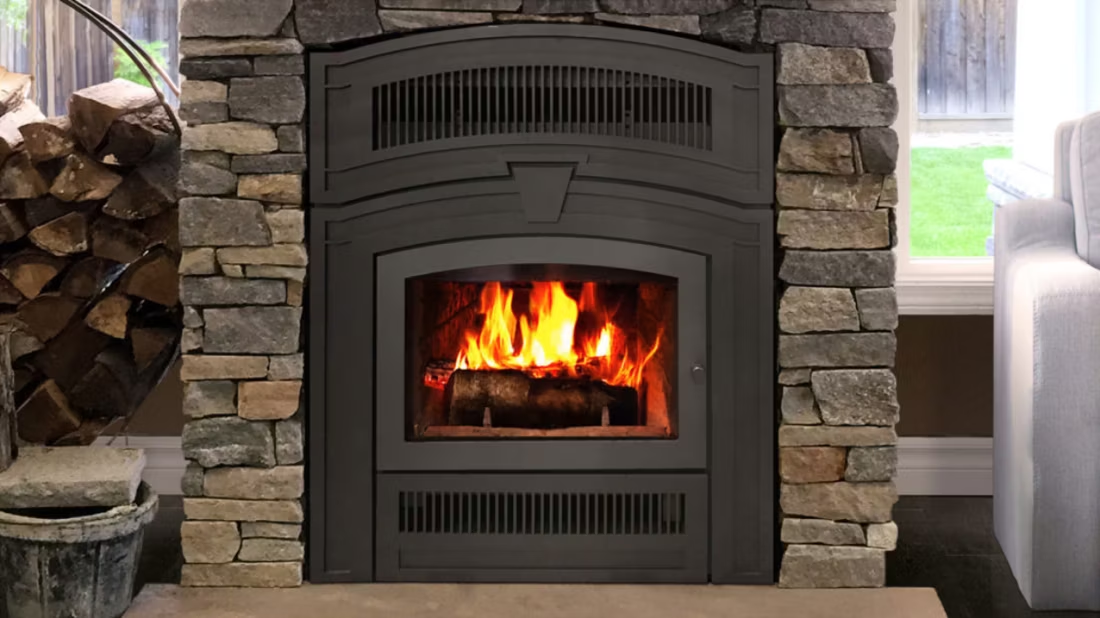
The Medicine Bow-Routt and Arapaho-Roosevelt National Forests are both within reach for cutting permits, and lodgepole pine, aspen, and ponderosa pine are the woods most Ranchettes households burn. Wildfire smoke is the main regional air quality concern here rather than urban inversion, which shapes when and how people burn. For rural Laramie County homes exposed to high wind and occasional power outages from Cheyenne Light Fuel & Power's grid, a wood stove that needs no electricity to run is often the most reliable heat source in the house, not just the coziest one.
Firewood Cutting Permits Near Ranchettes
Three steps. No salesperson until you're ready.
Tell us about your project
Your zip code, your situation, and the fuel you're leaning toward—or let the answers point you to one.
See what's actually available
The brands dealers within 100 miles genuinely carry—real options, never a catalog mirage.
Get your dealer & Project Guide
A trusted local dealer, plus the free Project Guide & Parts List that names every component of the job.
Frequently Asked Questions
How much does a wood stove installation cost in Ranchettes?
Most wood stove installations in the Ranchettes area run roughly $4,000 to $9,500, depending on the stove size, whether Class A chimney pipe needs to be run through a roof or exterior wall, and whether a new hearth pad is needed for code clearances. Because so many homes here are manufactured or modular construction on larger lots, venting paths can be less standard than in a typical stick-built house, which sometimes pushes costs toward the higher end. Laramie County requires a building permit for new wood-burning installations, and most local installers include that paperwork as part of the job.
What size wood stove do I need for a home in Ranchettes?
Sizing here has to account for both square footage and Wyoming wind exposure—a home that would be comfortably heated by a medium stove in a sheltered location may need more capacity here because wind-driven heat loss through walls and windows is real at this elevation. As a starting point, small stoves suit single rooms or cabins under 1,000 sq ft, medium stoves handle 1,000 to 2,000 sq ft, and large stoves can carry a well-insulated home above that. Older manufactured homes with thinner insulation often run better with a stove sized slightly larger than square footage alone would suggest. A local dealer can size your specific home during an in-home visit.
Where can I find certified wood stove installers near Ranchettes?
Since Ranchettes is unincorporated and sits just outside Cheyenne, most residents work with hearth retailers based in Cheyenne who serve the surrounding Laramie County area, including rural properties on well and septic. Look for NFI (National Fireplace Institute) certified installers or CSIA-credentialed technicians—both indicate real training in clearance-to-combustible rules and proper Class A chimney installation, which matters more, not less, on properties with longer flue runs and exposed exterior chimneys that take the full brunt of plains wind.
What's the difference between a wood stove and a wood insert?
A wood stove is a freestanding unit set on a hearth pad, useful in homes without any existing masonry fireplace—which describes a lot of the manufactured and ranch-style homes around Ranchettes. A wood insert is built to slide into an existing masonry fireplace opening, using the existing chimney (usually with a stainless liner) to dramatically improve the efficiency of an open hearth. If your Ranchettes home already has a wood-burning fireplace, an insert typically makes more sense; if you're heating a shop, addition, or a home with no existing chimney, a freestanding stove with new Class A venting is the more common route.
Do I need a permit to install a wood stove in Ranchettes?
Yes. Ranchettes falls under Laramie County's building jurisdiction rather than a city code, so new wood stove installations need a county building permit, and the unit itself needs to meet current EPA emissions standards. Most local hearth retailers pull this permit as part of the installation process. There's no ongoing burn-curtailment program here the way there is in some inversion-prone Western cities, but wildfire smoke advisories can affect outdoor burning restrictions during dry summer and fall months—worth checking before doing any yard debris burning near your woodpile.
What's the best wood stove for the Ranchettes climate?
With winter lows averaging around 18°F and wind chill often pushing conditions colder, a catalytic stove that can hold a long, steady burn overnight—think Blaze King or similar cold-climate-rated models—is worth the extra upfront cost for anyone relying on wood as a primary or near-primary heat source. Elevation over 6,000 feet also affects combustion air and draft, so it's worth confirming with your installer that the stove and flue sizing account for altitude rather than defaulting to sea-level specs. Non-catalytic stoves from Pacific Energy or Drolet are solid, lower-maintenance choices for supplemental heat in smaller spaces.
How often should my chimney be inspected in Ranchettes?
Plan on an annual inspection, ideally in late summer before burning season starts, per CSIA guidelines. Exposed exterior chimneys—common on manufactured and ranch homes in this area—take more weather exposure from plains wind and can develop cap and flashing issues faster than a chimney tucked into a sheltered wall. If you're burning several cords a winter as a primary heat source, check creosote buildup mid-season too, since a full cold-climate burning schedule accumulates it faster than occasional weekend fires.
Where can I get firewood in the Ranchettes area?
Cutting permits are available through the Medicine Bow-Routt and Arapaho-Roosevelt National Forests, both within reasonable driving distance, running roughly $5 to $20 per cord during the May-through-October season. Lodgepole pine, aspen, and ponderosa pine are the species most commonly cut and burned locally. For those who'd rather buy than cut, several firewood suppliers serve the greater Cheyenne and Laramie County area and typically deliver by the cord, with pricing varying by species and whether the wood is seasoned and split.
Wood stove vs. pellet stove—which makes more sense in Ranchettes?
Wood stoves keep working through a power outage, which matters on the high plains where wind events can knock out Cheyenne Light Fuel & Power service for hours at a stretch, and self-cut firewood from nearby National Forest permits keeps fuel costs low. Pellet stoves—using regional bags from brands like Bear Mountain, Lignetics, or Forest Energy—are more convenient to load and burn cleaner, but they need electricity for the auger and blower, so they go dark exactly when a wood stove would keep running. For a primary or backup heat source on rural Laramie County acreage, wood is usually the more resilient choice; pellet stoves work well as a secondary, lower-maintenance heat source in homes with dependable power.
What's the difference between an insert and a zero-clearance fireplace?
An insert is a fireplace that slides into a pre-existing wood-burning fireplace—if you don't have one, there's nothing to insert it into. A zero-clearance fireplace is built into a framed wall, which makes it the answer for remodels and new construction. Simple test: existing masonry fireplace means insert; blank or framed wall means zero-clearance.
Why is my open fireplace making my house colder?
Open fireplaces suck—literally. As the fire burns, it consumes air your furnace already paid to heat and pulls it out through the chimney, so the house is actually colder after the fire goes out than before you lit it. An insert fixes this: it seals the chimney, puts fixed glass across the front, and turns that hole in your house into a real heat source.
Can a fireplace actually lower my heating bill?
Yes—by creating a comfort zone. A furnace heats every square foot of the house just to warm the one room you're in; a gas fireplace on low burns roughly a sixth of the gas a typical furnace does. Set the furnace around 55–60 degrees as a baseline, then heat the rooms your family actually uses. Families who heat this way commonly save $20–$60 a month.
How much should I budget for a fireplace?
For an average home—covering the fireplace, the vent pipe, and basic installation—a budget between $3,900 and $5,500 gives you a lot of options across wood, gas, and pellet. By the time you add finish work, gas line, and electrical, the average complete installation lands between $5,000 and $12,000 all-in. In a remodel or new build, a good rule is to put about 2.5% of the total project cost toward the fireplace.
Nearby Dealers
Hearth shops serving Ranchettes and the surrounding area. Every listing shows whether it is a WhyFire partner, a dealer we have verified as authorized for the brands we recommend, or a local business carrying hearth products. No manufacturer pays for placement. How we verify dealers →
Premium Home Selection
Capital Lumber Co.
Harmony Hearth & Home
Find your wood fireplace in Ranchettes.
Tell us a bit about your home and we'll match you with the right wood stove or insert for Ranchettes's wind and cold, plus a free Project Guide & Parts List and a trusted local dealer to install it.
Find Your Fireplace →