
Heating Laramie County through 7,000 heating degree days.
Wood, gas, pellet, and electric fireplace resources for every city and rural community in Laramie County—from Cheyenne to Pine Bluffs. Find the right unit and connect with a trusted local hearth retailer.
Every Project Starts From One of These Five Situations
High-plains wind and cold across Laramie County, Wyoming.
Laramie County sits on the High Plains at the eastern edge of Wyoming, anchored by Cheyenne at roughly 6,100 feet. With 7,028 heating degree days and average winter lows around 18°F, the heating season here runs comparable to Bismarck, ND—long, cold, and made harder by near-constant wind that drives real-feel temperatures well below the thermometer reading. Lodgepole pine, aspen, and ponderosa pine cut under Forest Service permits from the Medicine Bow-Routt and Arapaho-Roosevelt National Forests are the backbone of wood heat in this county, and a well-sealed, high-efficiency stove matters more here than in calmer climates because of how hard the wind works against poorly sealed appliances and chimneys.
What you'll find on this hub: hearth retailers, service technicians, and fuel suppliers serving every community in the county—from Cheyenne's neighborhoods out to Pine Bluffs near the Nebraska line, Burns, Albin, and the ranch country in between. Pick your fuel below to drill into specifics—local dealers, installation costs, recommended units, and the resources that match your project. Whether you're heating a Cheyenne subdivision home or a windswept ranch house near Albin, this is the starting point.
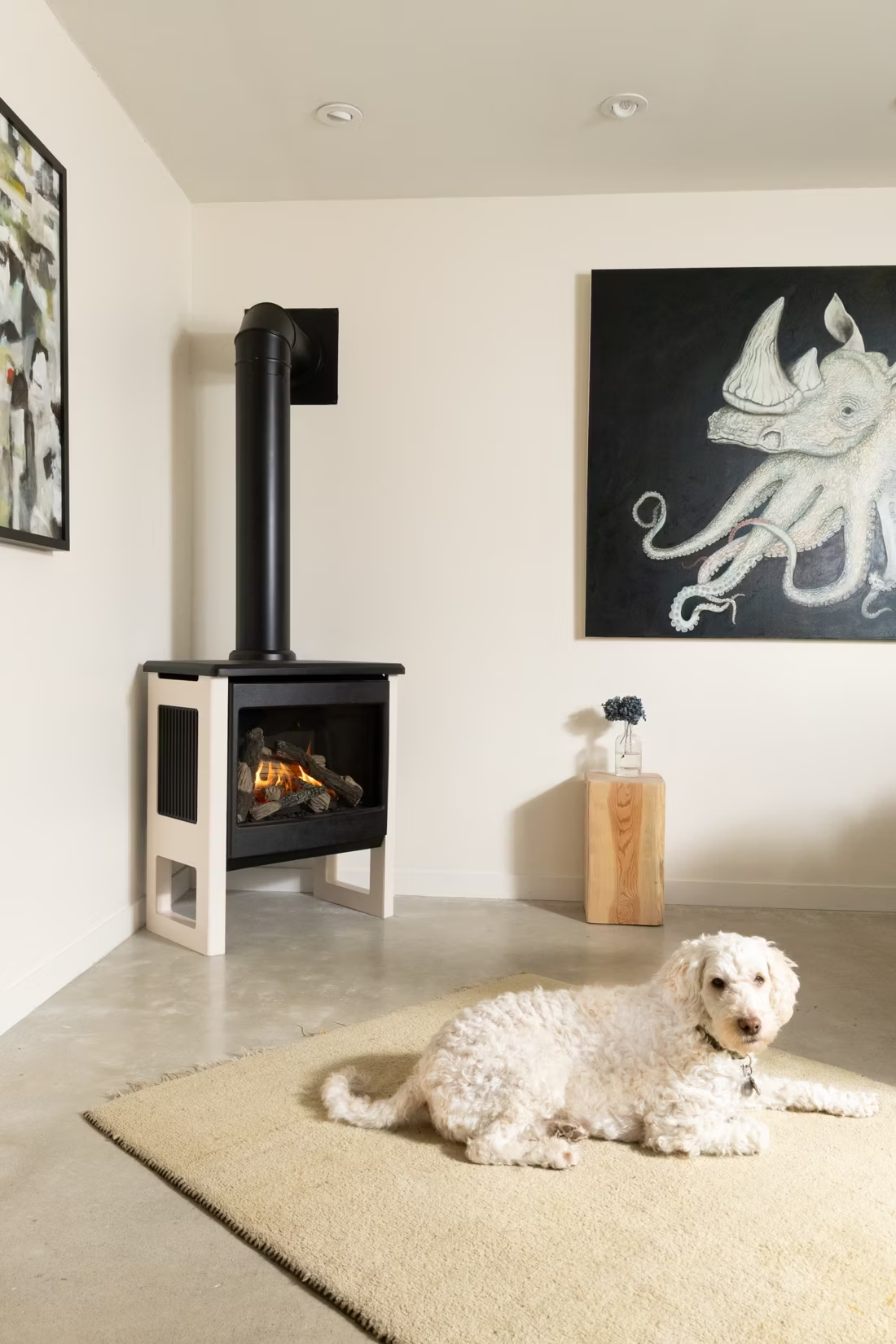
Four fuels. One honest answer for Laramie County.
Three steps. No salesperson until you're ready.
Tell us about your project
Your zip code, your situation, and the fuel you're leaning toward—or let the answers point you to one.
See what's actually available
The brands dealers within 100 miles genuinely carry—real options, never a catalog mirage.
Get your dealer & Project Guide
A trusted local dealer, plus the free Project Guide & Parts List that names every component of the job.
Frequently Asked Questions
Which fuel works best in Laramie County?
It depends on your home, budget, and how much you're willing to manage. Wood is a strong, traditional choice for rural Laramie County homes—lodgepole pine, aspen, and ponderosa pine cut under Forest Service permits keep fuel costs down, and wood heat works during the power outages that high winds sometimes cause on the plains. Gas is the convenience pick for Cheyenne homes with natural gas service—reliable ignition even in wind, no wood storage needed, and it holds up well against the drafts that wind-exposed homes often fight. Pellet stoves are a solid middle ground with regional supply from Bear Mountain, Lignetics, and Forest Energy, though pellet appliances generally need a reliable power source to run their auger and blower, which matters if outages are a concern on your property. Electric fireplaces work well as supplemental heat in bedrooms and additions but aren't sized for Laramie County's roughly 7,000 heating degree day winters as a primary source. Many county homes pair wood or gas as primary with electric in secondary rooms.
Do I need a permit to install a fireplace in Laramie County?
In most cases, yes. New wood stoves, wood inserts, gas fireplaces, gas inserts, gas stoves, and pellet stoves typically require a building permit, and gas installations also need a separate gas line permit completed by a licensed gas fitter. Within Cheyenne, permits run through the City of Cheyenne building division; outside city limits, unincorporated Laramie County properties go through the county building department. Wood-burning appliances installed new should meet current EPA emissions standards. Electric fireplaces usually skip the permit process unless you're doing a built-in installation with new wiring or a dedicated circuit. Most local hearth retailers in Cheyenne handle the permitting paperwork as part of a full installation, so you're rarely filing it yourself.
Are there air quality restrictions on wood burning in Laramie County?
Laramie County doesn't have the winter inversion problems that affect some Western basins, so there's no routine wood-burning curtailment program here. The main air quality concern is wildfire smoke, which can drift in from regional fires during summer and early fall and occasionally trigger advisories—but this affects outdoor air generally, not home heating appliances. Day-to-day, wood stove owners here don't face burn bans tied to winter conditions the way some mountain-basin communities do. New wood stove installations should still meet current EPA emissions standards, and a well-sealed, efficient unit will perform better against Laramie County's persistent wind than an older leaky stove regardless of air quality rules.
Can one local hearth retailer handle all four fuel types?
Several Cheyenne-based hearth retailers carry three or four fuel types, which is useful if you want to compare wood, gas, pellet, and electric side by side before deciding. Dealers with broader fuel lineups typically keep working display units of each type so you can see the actual flame pattern and heat output, not just a catalog photo. Smaller shops and rural suppliers out toward Pine Bluffs or Albin may focus more narrowly—often wood and pellet, since those fuels are easier to stock and service without a large retail footprint. If you're still deciding between fuels, a multi-fuel Cheyenne retailer is generally the better starting point for that comparison; if you already know your fuel, a specialist may offer more attentive service for that specific type.
How does service work in rural areas of Laramie County?
Most chimney sweeps and gas or pellet technicians serving Laramie County are based in Cheyenne and travel out to ranch properties and smaller towns like Pine Bluffs, Burns, and Albin. Expect a modest trip fee for calls outside the immediate Cheyenne area, often in the $40–$90 range depending on distance. Scheduling in late summer or early fall, before the cold and wind really set in, is easier than trying to book an emergency mid-winter appointment. For rural properties exposed to Laramie County's frequent high-wind events, it's worth asking your technician about chimney cap and draft-control options specifically—wind-driven backdrafting is a more common complaint here than in calmer regions, and it's often solvable with the right cap or damper adjustment.
What's the typical cost range for fireplace installation across all fuel types in Laramie County?
Ranges vary by fuel type. Wood stove or insert installation: roughly $4,500–$9,500 for a typical install, running higher for new chimney construction. Gas fireplace, insert, or stove: roughly $4,500–$11,000 depending on gas line work and venting, with conversions on the lower end where gas service already exists. Pellet stove or insert: roughly $4,500–$7,500 for most installs. Electric fireplace: $200–$3,000 for the unit itself, plus $400–$1,200 in labor for anything beyond a simple plug-in setup, which covers most wall-mount and built-in jobs. For fuel-specific pricing detail, see the county + fuel pages above.
Does a fireplace add value to my home?
On average, a fireplace adds back to the home about the same amount you spent installing it. Add the monthly savings from heating the rooms you actually use instead of the whole house—often hundreds of dollars a year—and the value case is strong before you even count what a fire does for how your family uses the room.
How much should I budget for a fireplace?
For an average home—covering the fireplace, the vent pipe, and basic installation—a budget between $3,900 and $5,500 gives you a lot of options across wood, gas, and pellet. By the time you add finish work, gas line, and electrical, the average complete installation lands between $5,000 and $12,000 all-in. In a remodel or new build, a good rule is to put about 2.5% of the total project cost toward the fireplace.
What is an in-home preview and do I need one?
It's a visit where a hearth professional measures your space, confirms the model you picked actually works in your home, and walks the specs—framing, gas line, venting, finish work—before anything is ordered. Some details you just can't know until you see the house. Never make a down payment without one; it's the single most-skipped step that burns buyers.
Wood, gas, pellet, or electric—how do I choose?
Match the fuel to your life, not the other way around. Wood: lowest fuel cost and total power-outage independence, but you're hauling and stacking. Gas: press a button, set a thermostat, no maintenance to speak of. Pellet: wood economics with automatic feeding, in exchange for weekly cleaning and a need for electricity. Electric: plugs in anywhere with honest supplemental heat. Nobody regrets the fuel that fits how they actually live.
Stove and Fireplace Dealers in Laramie County
Listings include WhyFire partner dealers, dealers we have verified as authorized for the brands we recommend, and established local businesses that carry hearth products. Every listing shows which one it is. The ones marked Preferred run on WhyFire's software, so they can show you real pricing and book your appointment right here. No manufacturer pays for placement. How we verify dealers →
Capital Lumber Co.
Premium Home Selection
Harmony Hearth & Home
Find your fireplace in Laramie County.
Pick your fuel below and I'll match you with a trusted local Laramie County dealer and send over a free Project Guide & Parts List—the exact parts, including the vent kit, for your project.
Find Your Fireplace →