
Gas Heat Built for Ranchettes' High-Plains Winters.
Instant, wind-proof heat for a Laramie County exurb where winter lows average 18°F. Find the right gas fireplace or insert and connect with a trusted local dealer.
Every Project Starts From One of These Five Situations
Instant heat for one of Wyoming's windiest, coldest exurbs.
Ranchettes sits on the high plains just northeast of Cheyenne, at 6,157 feet in Laramie County, where the winter heating load tops out high—comparable to Bismarck, ND. Wind is the defining factor out here: sustained gusts across open ranchette lots drive wind chill well below the 18°F average winter low, and they can knock out power for hours at a time. Homes on larger acreages, many built ranch-style with room to spare, need heat that lights instantly and keeps working when the grid doesn't.
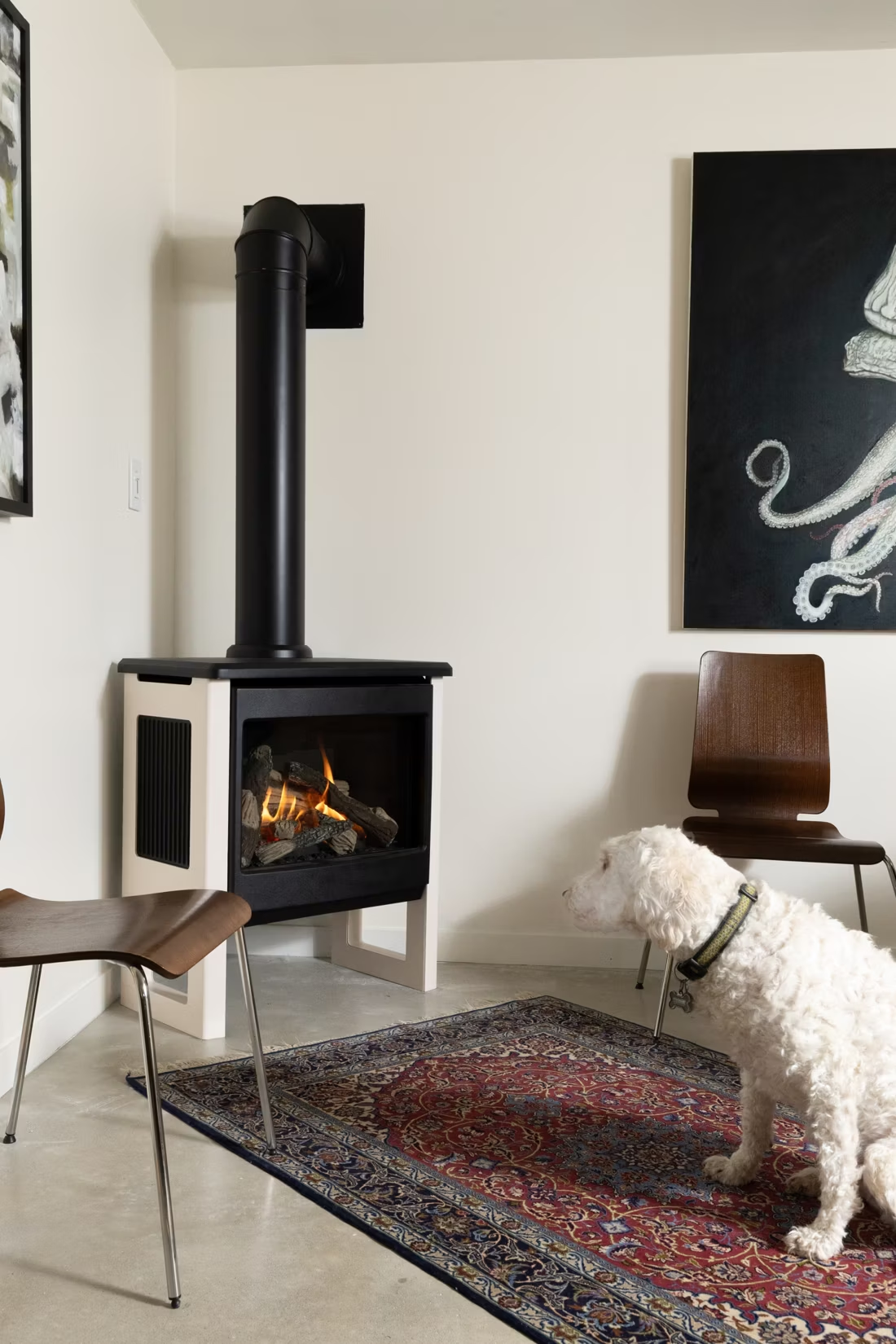
Cheyenne Light, Fuel and Power Company serves natural gas within city limits, but unincorporated Ranchettes sits outside much of that mains network, so a large share of homes here run on propane instead—tanks are a common sight on ranchette properties. Either fuel works in a modern direct-vent fireplace or insert, and the choice mostly comes down to whether gas line is already run to your lot. A properly sized gas fireplace gives you heat at the flip of a switch, a battery-backed pilot for outage nights, and a zone-heat option that takes pressure off the furnace during the coldest stretches of a Laramie County winter.
Three steps. No salesperson until you're ready.
Tell us about your project
Your zip code, your situation, and the fuel you're leaning toward—or let the answers point you to one.
See what's actually available
The brands dealers within 100 miles genuinely carry—real options, never a catalog mirage.
Get your dealer & Project Guide
A trusted local dealer, plus the free Project Guide & Parts List that names every component of the job.
Frequently Asked Questions
How much does a gas fireplace installation cost in Ranchettes?
Most gas fireplace and insert installations around Ranchettes and greater Cheyenne run $4,500 to $10,000, with the spread driven mostly by whether the home already has a fuel source in place. A direct-vent insert going into an existing gas line runs toward the low end. Homes relying on propane and needing a new tank set, regulator, and buried line to the house land in the middle to upper end of that range. New-construction gas fireplaces requiring framing and full venting runs tend to price similarly once labor and materials for a through-wall vent are included. A local installer will confirm the number after seeing your lot and existing utility hookups.
Should I install natural gas or propane in Ranchettes?
It depends on where your lot sits relative to Cheyenne Light, Fuel and Power's mains. Properties closer to the city edge sometimes have natural gas service; many ranchette lots further out don't, and propane is the standard fallback—either from a leased tank filled by a local supplier or a tank you own outright. Most gas fireplace models sold by hearth dealers in the area can be configured for either fuel with the correct orifice kit, so the appliance choice isn't limited by which one you have. Confirm your service type before you shop, since it affects your final install cost more than almost any other factor.
Does elevation affect how a gas fireplace performs in Ranchettes?
Yes. At 6,157 feet, Ranchettes sits well above the 5,000-foot threshold where most manufacturers require a high-altitude orifice kit to compensate for thinner air and lower oxygen content during combustion. Without the correct kit, a gas fireplace can under-fire, produce excess soot, or fail to reach its rated BTU output. This is one of the more important reasons to buy through a local dealer rather than order a unit online—they'll spec the right altitude kit for your elevation before installation rather than after a callback.
Will my gas fireplace still work if the power goes out?
Most modern gas fireplaces are built to keep running through an outage, which matters here given how often high plains wind takes down a line. Units with intermittent pilot ignition (IPI) include a battery backup that kicks in automatically and lights the fireplace on demand just like normal—just remember to keep fresh batteries in the unit. Valor fireplaces take a different approach: the pilot's thermocouple generates its own electricity, so there's no battery to maintain at all. For a Ranchettes property that can see outages during a big wind event, that's worth asking about when you compare units with a local dealer.
What's the difference between a gas fireplace, insert, and stove?
A gas fireplace is a fully built-in unit framed into a wall—the right call for new construction or a remodel where you're starting from scratch. A gas insert drops into an existing masonry or prefab wood-burning fireplace and uses the existing chase for venting, which suits a lot of the older ranch-style homes around Ranchettes that already have a fireplace opening. A gas stove is freestanding, sits on its own hearth pad, and can go almost anywhere with the right clearances—a common choice for a shop, garage apartment, or a room with no existing chimney.
Do I need a permit to install a gas fireplace in Ranchettes?
Since Ranchettes is unincorporated, building permits go through the Laramie County Planning & Development Department rather than the City of Cheyenne. A gas fireplace install typically needs both a building permit and a mechanical/gas permit, and if you're running a new propane line, the tank placement has to meet fire code setback distances from the house and property line. Most local installers handle this paperwork as part of the job, which is one of the real advantages of hiring a dealer over a DIY or big-box install.
Are vent-free gas fireplaces a good option in Ranchettes?
Vent-free units are legal in Wyoming, but I'd think carefully before choosing one for a Laramie County home. At 6,157 feet, thinner air already changes combustion characteristics, and vent-free units release their combustion byproducts—moisture, small amounts of CO—directly into the room rather than outside. Direct-vent, sealed-combustion units are the more common choice locally and the safer bet at this elevation: they draw outside air for combustion and exhaust everything back outside, so altitude and indoor air quality aren't competing concerns. A local dealer can walk you through both if you want to weigh the tradeoffs yourself.
How often should a gas fireplace be serviced in Ranchettes?
Plan on an annual inspection, ideally in late summer or early fall before the first hard freeze. A technician checks the burner, pilot assembly, gas connections, and venting, and cleans the glass and interior—usually $150 to $250 for a standard visit. High plains wind can occasionally push debris or affect draft on exterior direct-vent terminations, so it's worth having your installer confirm the vent cap and termination are clear and properly sealed each fall, especially after a windy spring.
Gas vs. wood—which makes more sense for a Ranchettes property?
Wood is still a strong option out here—lodgepole pine, aspen, and ponderosa pine are all common locally, and Forest Service cutting permits through the Arapaho-Roosevelt or Medicine Bow-Routt National Forests run just $5 to $20 per cord during the May-to-October season, so fuel cost can be very low if you're willing to cut and haul it yourself. Wood also keeps working with zero electricity, which matters when a plains wind event takes the power out for a day. Gas wins on convenience: no hauling, no ash, instant on-off, and—with a battery-backed or Valor pilot—outage resilience without any of the labor. Many Ranchettes homes end up with both: a wood stove for backup heat and ambiance, and a gas fireplace or insert for daily use in the main living space.
Why is my open fireplace making my house colder?
Open fireplaces suck—literally. As the fire burns, it consumes air your furnace already paid to heat and pulls it out through the chimney, so the house is actually colder after the fire goes out than before you lit it. An insert fixes this: it seals the chimney, puts fixed glass across the front, and turns that hole in your house into a real heat source.
Can I put a TV above my fireplace?
Yes—with an asterisk. Fireplaces are hot and TVs don't like heat. Either put a mantel between them to deflect rising warmth, or choose a fireplace with heat-management technology that creates a cool zone on the wall above—the wall stays around 125 degrees, barely warm, while the room still gets full heat. If you like clean lines and don't want a mantel, heat management is the answer.
Does a fireplace add value to my home?
On average, a fireplace adds back to the home about the same amount you spent installing it. Add the monthly savings from heating the rooms you actually use instead of the whole house—often hundreds of dollars a year—and the value case is strong before you even count what a fire does for how your family uses the room.
How much should I budget for a fireplace?
For an average home—covering the fireplace, the vent pipe, and basic installation—a budget between $3,900 and $5,500 gives you a lot of options across wood, gas, and pellet. By the time you add finish work, gas line, and electrical, the average complete installation lands between $5,000 and $12,000 all-in. In a remodel or new build, a good rule is to put about 2.5% of the total project cost toward the fireplace.
Nearby Dealers
Hearth shops serving Ranchettes and the surrounding area. Every listing shows whether it is a WhyFire partner, a dealer we have verified as authorized for the brands we recommend, or a local business carrying hearth products. No manufacturer pays for placement. How we verify dealers →
Premium Home Selection
Capital Lumber Co.
Harmony Hearth & Home
Find your gas fireplace in Ranchettes.
Tell us about your home and fuel setup—natural gas or propane—and we'll match you with a trusted local dealer and send a free Project Guide & Parts List built for your Ranchettes gas fireplace project.
Find Your Fireplace →