
Keep Your Family Warm and Safe—No Matter What
Fox Farm-College sits on open Laramie County prairie, not forest, so wood heat never became the default here. If you're one of the homeowners who still wants it, we'll connect you with a dealer who can do it right.
Every Project Starts From One of These Five Situations
A prairie town, not a forest town.
At 5,993 feet just south of Cheyenne, Fox Farm-College sees genuinely cold winters—an average low of 18°F and a long, demanding heating season, in the same range as Bismarck, ND. But the landscape here is open high-plains grassland, not timber, and that matters more than the thermometer does. The nearest public timber is up in the Medicine Bow-Routt or Arapaho-Roosevelt National Forests, a real drive west into the mountains, not a woodlot down the road. That geography is a big part of why wood is rated not-applicable for this specific community: the wood-heating culture that's second nature in mountain towns an hour away never took hold on this side of the range.
Instead, most Fox Farm-College homes heat with electricity from Cheyenne Light Fuel & Power or Black Hills Power, or with natural gas. That said, a small number of local homeowners still install a wood stove—usually for backup heat during Wyoming's notorious wind-driven outages, for a detached shop or cabin, or simply because they like the self-sufficiency of a fire that doesn't need the grid. If that's you, lodgepole pine, aspen, and ponderosa pine are the species available through Forest Service cutting permits, and a certified EPA stove paired with sensible defensible space is worth the extra thought given the region's wildfire smoke concerns.
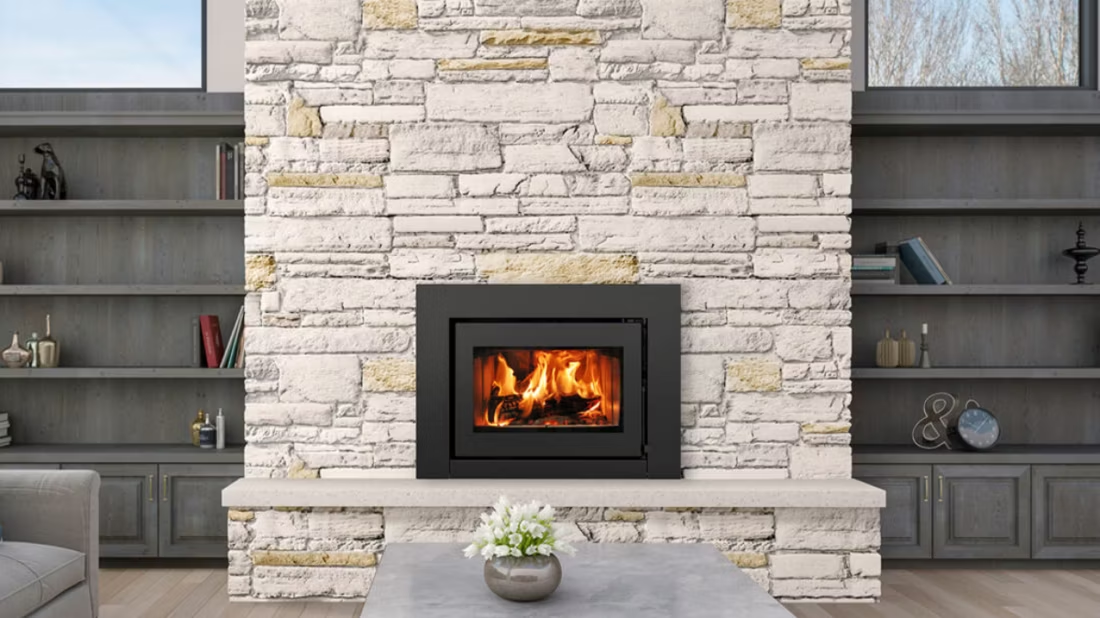
Firewood Cutting Permits Near Fox Farm-College
Three steps. No salesperson until you're ready.
Tell us about your project
Your zip code, your situation, and the fuel you're leaning toward—or let the answers point you to one.
See what's actually available
The brands dealers within 100 miles genuinely carry—real options, never a catalog mirage.
Get your dealer & Project Guide
A trusted local dealer, plus the free Project Guide & Parts List that names every component of the job.
Frequently Asked Questions
Is wood heat actually common in Fox Farm-College?
Not really, and it's worth saying plainly: wood fuel relevance for this community is rated not-applicable, not because winters are mild—they aren't, with a long, demanding heating season and average lows around 18°F—but because Fox Farm-College sits on open prairie rather than in timber country. The overwhelming majority of homes here heat with electricity through Cheyenne Light Fuel & Power or Black Hills Power, or with natural gas. Wood stoves show up occasionally, mostly as backup heat or for a detached shop, but they're the exception rather than the norm.
What does a wood stove installation cost if I still want one?
There isn't deep local pricing history here because so few installations happen in Fox Farm-College itself, but based on comparable high-plains Wyoming and Colorado Front Range communities, a full wood stove or insert installation—unit, hearth pad, Class A chimney, and labor—typically runs somewhere in the $4,000 to $9,000 range, with new-construction jobs requiring a fresh chimney chase running higher. Because installers who specialize in this work are usually based out of Cheyenne rather than Fox Farm-College proper, getting two or three in-home quotes matters more here than it would in a town with several local hearth shops.
Where do I get a permit to cut my own firewood?
The closest public timber is the Medicine Bow-Routt National Forest and the Arapaho-Roosevelt National Forests, both a genuine drive west and south into the mountains rather than a local option. Personal-use cutting permits from either forest run about $5 to $20 per cord, with the cutting season generally open May through October. Plan the trip accordingly—hauling a season's worth of firewood from the mountains is a bigger commitment here than it is in towns that are surrounded by the resource.
What wood species will I be burning, and how do they perform?
Permits from the nearby national forests typically yield lodgepole pine, aspen, and ponderosa pine. Lodgepole and ponderosa pine season relatively quickly and burn hot but fast, so you'll load more often than you would with a dense hardwood. Aspen is lighter and even faster to season, but it's a lower-BTU wood, better suited to shoulder-season fires than the coldest nights. None of these species are ideal for an unattended overnight burn the way oak or hickory would be, so if all-night heat matters, ask a dealer about stove models with longer firebox capacity.
Do I need a permit to install a wood stove in Fox Farm-College?
Yes. New solid-fuel appliance installations require a building permit, and since Fox Farm-College is unincorporated, that permit goes through the Laramie County building and planning office rather than a city department. The stove itself needs to meet current EPA emissions standards. A local installer who regularly pulls Laramie County permits will handle this paperwork as part of the job—worth confirming upfront given how few wood installers work this specific area regularly.
Does wildfire smoke affect wood-burning here?
Wildfire smoke is a recognized regional air quality concern for southeast Wyoming, particularly in late summer when smoke can drift in from fires in Colorado, the Medicine Bow, or further west. It doesn't trigger the kind of formal winter burn curtailments you'd see in a non-attainment basin, but it's a good reason to choose a certified low-emission EPA stove rather than an old uncertified unit, and to keep defensible space and dry, properly seasoned wood on hand rather than green or wet cordwood that smokes heavily.
Wood vs. gas vs. electric—what actually makes sense in Fox Farm-College?
For most homes here, gas or electric is the practical primary choice—both are standard, well-supported fuel options in this community, unlike wood. Natural gas and electric systems (through Cheyenne Light Fuel & Power at roughly 17 cents/kWh or Black Hills Power at roughly 14 cents/kWh) don't require hauling firewood from an hour-plus away. Wood earns its place as a secondary or backup system: something that keeps a room warm when the wind knocks out power, which happens with some regularity on this stretch of the plains, or as a supplemental heat source for a shop or outbuilding.
Will a wood stove actually help during a power outage here?
Yes, and this is probably the strongest local case for installing one. Fox Farm-College sits in genuinely wind-exposed high-plains terrain served by Cheyenne Light Fuel & Power and Black Hills Power, and wind-driven outages are a real seasonal risk. A wood stove doesn't need electricity to produce heat, unlike a furnace blower or most electric systems, which is why some homeowners here install one specifically as a cold-weather emergency backup even though it isn't their day-to-day heat source.
Where do I find a dealer or installer near Fox Farm-College?
Because Fox Farm-College is a small community of around 4,200 people, most hearth retailers and certified installers who cover this area are actually based in nearby Cheyenne. That's normal, not a red flag—what matters is finding one who's done wood installations in this specific climate and code jurisdiction before, understands Laramie County's permitting process, and can size a stove correctly for a high-plains, wind-exposed home. That's exactly the matching we do.
Why is a fireplace insert so efficient?
An insert does two things: it seals the chimney completely, so you stop losing air you already paid to heat, and it radiates warmth into the room through the firebox and glass. Most add a heat-exchange fan that pulls cool room air underneath, wraps it around the hot firebox, and pushes it back out warm. Your home is more efficient before you've even lit the first fire.
Why won't my new wood stove get going like my old one?
New wood stoves are 70%+ efficient, so far less heat goes up the flue—which also means less draft to get a fire established. The rule: build a genuinely hot fire for about 45 minutes before you choke it down. Skip that and you get smoke in the room, creosote in the chimney, and a fire that never takes off. Most performance complaints trace straight back to this.
What is an in-home preview and do I need one?
It's a visit where a hearth professional measures your space, confirms the model you picked actually works in your home, and walks the specs—framing, gas line, venting, finish work—before anything is ordered. Some details you just can't know until you see the house. Never make a down payment without one; it's the single most-skipped step that burns buyers.
Does a fireplace add value to my home?
On average, a fireplace adds back to the home about the same amount you spent installing it. Add the monthly savings from heating the rooms you actually use instead of the whole house—often hundreds of dollars a year—and the value case is strong before you even count what a fire does for how your family uses the room.
Nearby Dealers
Hearth shops serving Fox Farm-College and the surrounding area. Every listing shows whether it is a WhyFire partner, a dealer we have verified as authorized for the brands we recommend, or a local business carrying hearth products. No manufacturer pays for placement. How we verify dealers →
Capital Lumber Co.
Premium Home Selection
Harmony Hearth & Home
Find your wood setup in Fox Farm-College.
Tell us about your home and why you're considering wood heat—backup power, a shop, or year-round use—and we'll match you with a trusted local dealer and send over a free Project Guide & Parts List, including the vent kit, sized for your specific setup.
Find Your Fireplace →