
Instant heat and real ambiance for Fox Farm-College winters.
No chimney, no gas line, no venting—just plug in or wire up a unit and get warmth for the high plains cold. Find the right electric fireplace and connect with a trusted local dealer.
Every Project Starts From One of These Five Situations
No chimney, no wood pile, no waiting for heat.
Fox Farm-College sits just south of Cheyenne on Wyoming's high plains, at just under 6,000 feet elevation, where open-prairie wind and a heating season of roughly 7,028 degree days put real demands on any home heating system. Winter lows here average around 18°F, and wind chill regularly pushes it colder—a heating load closer to what International Falls, MN or Fargo, ND residents deal with than most of the Mountain West.
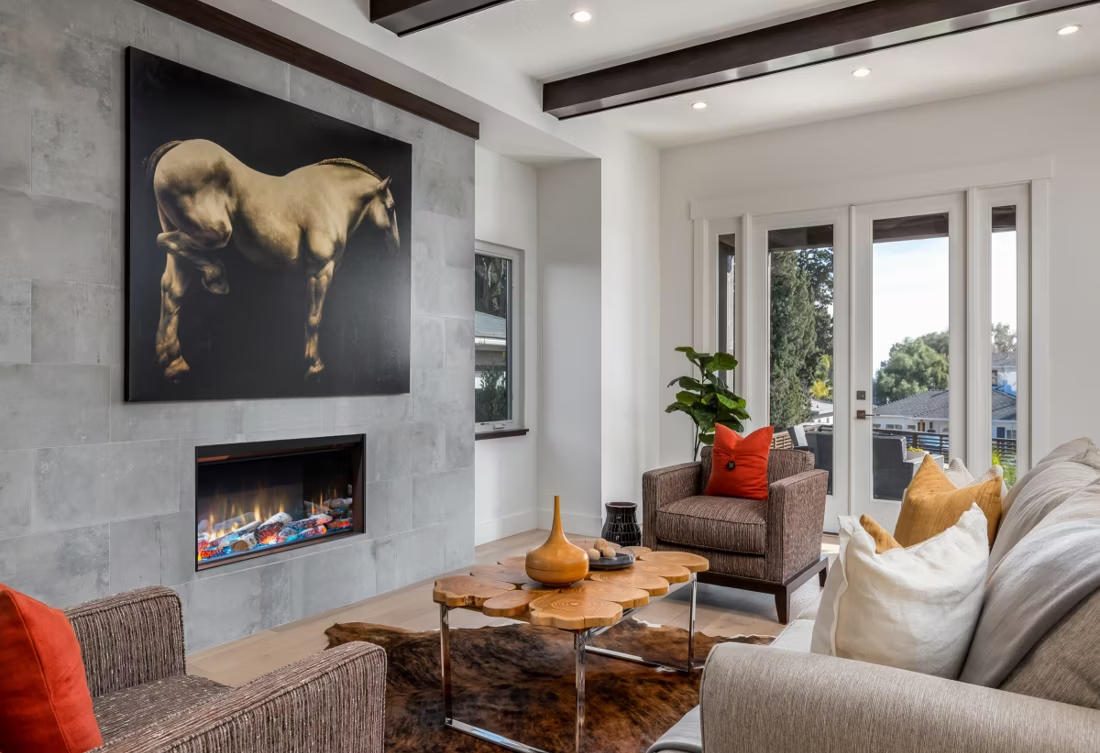
Unlike the mountain towns to the west, Fox Farm-College doesn't have easy access to timber—the nearest cutting permits are through Medicine Bow-Routt or Arapaho-Roosevelt National Forest, both more than an hour's drive away—and most homes in this newer, subdivision-built community were never framed with a masonry chimney. That's part of why wood and pellet stoves are essentially absent here, while electric and gas have become the standard choices. Electric fireplaces in particular fit well in finished basements, primary bedrooms, and additions where running a gas line or venting isn't practical—plug in a unit or wire in a dedicated circuit and you get heat and flame effect with zero exterior venting.
Three steps. No salesperson until you're ready.
Tell us about your project
Your zip code, your situation, and the fuel you're leaning toward—or let the answers point you to one.
See what's actually available
The brands dealers within 100 miles genuinely carry—real options, never a catalog mirage.
Get your dealer & Project Guide
A trusted local dealer, plus the free Project Guide & Parts List that names every component of the job.
Frequently Asked Questions
How much does an electric fireplace installation cost in Fox Farm-College?
A plug-in electric insert or freestanding stove that drops into an existing fireplace opening typically runs $500 to $1,500 installed, since there's no venting or gas line involved—just a standard outlet or a dedicated 20-amp circuit if the unit draws close to 1,500 watts. A built-in wall unit with custom framing, a mantel surround, and an electrician-run circuit usually lands between $1,500 and $3,500. Because there's no chimney or flue work required, electric is consistently the least expensive fireplace option for Fox Farm-College homeowners.
Will an electric fireplace actually heat my home through a Wyoming winter?
Not as your primary heat source, and any honest local installer will tell you that upfront. Fox Farm-College endures a long, cold winter season with average winter lows near 18°F—a serious heating load. Electric fireplaces are resistance heaters, typically maxing out around 5,000 BTU (about 1,500 watts), which comfortably warms a single room—a finished basement, a bedroom, a home office—but won't carry a whole house. Most homeowners here pair an electric fireplace with a gas or propane furnace for primary heat and use the fireplace for zone heating and ambiance.
Do I need a permit to install an electric fireplace in Fox Farm-College?
Fox Farm-College is unincorporated, so building and electrical permits run through the Laramie County Planning & Development Office rather than a city building department. A simple plug-in electric insert or stove generally doesn't require a permit since it uses an existing outlet. If you're having an electrician run a new dedicated circuit for a built-in wall unit, or making any framing changes to a wall or existing fireplace opening, that electrical work typically does require a permit and inspection. Whoever handles your installation locally will know which category your project falls into.
Why don't more homes in Fox Farm-College use wood or pellet stoves?
It comes down to access and construction. The nearest public land where you can buy a cutting permit is Medicine Bow-Routt or Arapaho-Roosevelt National Forest, both more than an hour's drive from Fox Farm-College, so self-cut firewood isn't the convenient option it is in mountain towns closer to timber. Most homes here were also built in newer subdivisions without masonry fireplaces or chimneys, which makes retrofitting a wood stove considerably more expensive than in older housing stock. Add in periodic wildfire smoke advisories in late summer, and electric and gas have become the practical default for most households in this community.
What will an electric fireplace cost to run given local electricity rates?
Fox Farm-College is served by both Cheyenne Light Fuel & Power and Black Hills Power depending on your address, with residential rates running roughly 14 to 17 cents per kWh. A typical 1,500-watt electric fireplace run on medium heat for about 4 hours an evening costs somewhere around 85 cents to a dollar a day, or roughly $25 to $30 a month if you use it every evening through the winter. That's cheaper than most people expect, and it's a big part of why electric fireplaces work well as supplemental heat for a bedroom or den rather than running the furnace harder to warm one room.
What kind of electric fireplace works best in this climate?
For genuine supplemental warmth rather than just visual ambiance, look for units with a built-in fan-forced heater rated near 1,500 watts and a thermostat, from brands like Dimplex, Napoleon, or Touchstone. A wall-mounted or built-in unit tends to hold up better than a cheap freestanding model under daily winter use in a bedroom or basement. If you're converting an existing wood-burning fireplace opening, an electric insert sized to your firebox is usually the cleanest option—no venting, no gas line, just a plug behind the unit.
Will my electric fireplace work during a power outage?
No—and that matters more in Fox Farm-College than in a lot of places, since high plains wind events and winter storms occasionally knock out power for hours at a stretch here. An electric fireplace goes dark the moment power drops, unlike a wood stove or a battery-backed gas unit. If backup heat during an outage is a real concern, it's worth pairing an electric fireplace for everyday ambiance and zone heat with a separate gas or propane heat source, or at minimum keeping a generator ready for winter storm season.
Can I convert an existing wood-burning fireplace to electric?
Yes, and it's a common project for the handful of Fox Farm-College homes built with a traditional fireplace opening. An electric insert sized to fit your existing firebox slides in, plugs into an outlet inside the firebox, and gives you flame effect and supplemental heat without chimney sweeping, wood storage, or venting maintenance going forward. Because there's no gas line or venting work involved, this is typically the fastest and least expensive fireplace conversion available—often finished in under a day.
Electric vs. gas fireplace—which makes more sense for my home?
Gas is the better choice if you want a fireplace that can genuinely offset your furnace and keep real heat output going through a Wyoming winter—natural gas and propane units put out 20,000 to 40,000+ BTU and, with the right ignition system, some even run during a power outage. Electric is the better choice if you don't have gas service nearby, want the simplest and cheapest installation, or mainly want ambiance and light zone heat in a bedroom, basement, or addition. Many Fox Farm-College homeowners end up with both: gas as real heat in the main living area, electric for secondary rooms where a gas line isn't worth running.
Can I put a TV above my fireplace?
Yes—with an asterisk. Fireplaces are hot and TVs don't like heat. Either put a mantel between them to deflect rising warmth, or choose a fireplace with heat-management technology that creates a cool zone on the wall above—the wall stays around 125 degrees, barely warm, while the room still gets full heat. If you like clean lines and don't want a mantel, heat management is the answer.
Do electric fireplaces actually produce heat?
Yes—most put out around 4,800–5,000 BTUs from a standard outlet, which comfortably warms a bedroom, office, or den as a comfort-zone heater. What they won't do is carry a whole house the way wood, gas, or pellet can. Think of electric as ambiance-first with honest supplemental heat: flames on with no heat in July, flames plus warmth in January.
Can a fireplace actually lower my heating bill?
Yes—by creating a comfort zone. A furnace heats every square foot of the house just to warm the one room you're in; a gas fireplace on low burns roughly a sixth of the gas a typical furnace does. Set the furnace around 55–60 degrees as a baseline, then heat the rooms your family actually uses. Families who heat this way commonly save $20–$60 a month.
Does a fireplace add value to my home?
On average, a fireplace adds back to the home about the same amount you spent installing it. Add the monthly savings from heating the rooms you actually use instead of the whole house—often hundreds of dollars a year—and the value case is strong before you even count what a fire does for how your family uses the room.
Nearby Dealers
Hearth shops serving Fox Farm-College and the surrounding area. Every listing shows whether it is a WhyFire partner, a dealer we have verified as authorized for the brands we recommend, or a local business carrying hearth products. No manufacturer pays for placement. How we verify dealers →
Capital Lumber Co.
Premium Home Selection
Harmony Hearth & Home
Electric Service in Fox Farm-College
An electric fireplace's heater draws about 1,500 watts—pennies per hour at local rates.
Cheyenne Light Fuel & Power
Black Hills Power, Inc.
Find your electric fireplace in Fox Farm-College.
Tell us about your home and we'll match you with a trusted local dealer serving Fox Farm-College, plus a free Project Guide & Parts List—the exact parts your electric fireplace project needs and who locally can install them.
Find Your Fireplace →